DJI Osmo 360 Official Launch: Everything You Need to Know
DJI officially launched its first-ever 360° panoramic camera, the “DJI Osmo 360“, on July 31, 2025 at 8:00 PM. Marketed under the tagline “An Inch Holds the Universe,” the camera highlights its 1-inch sensor and DJI's confidence in delivering top-tier image quality.
DJI Osmo 360 goes head-to-head against the Insta360 X5 — but which one will win greater market recognition? This in-depth review compares the two flagship 360° cameras across specs and features, giving you the most practical buying guide available.
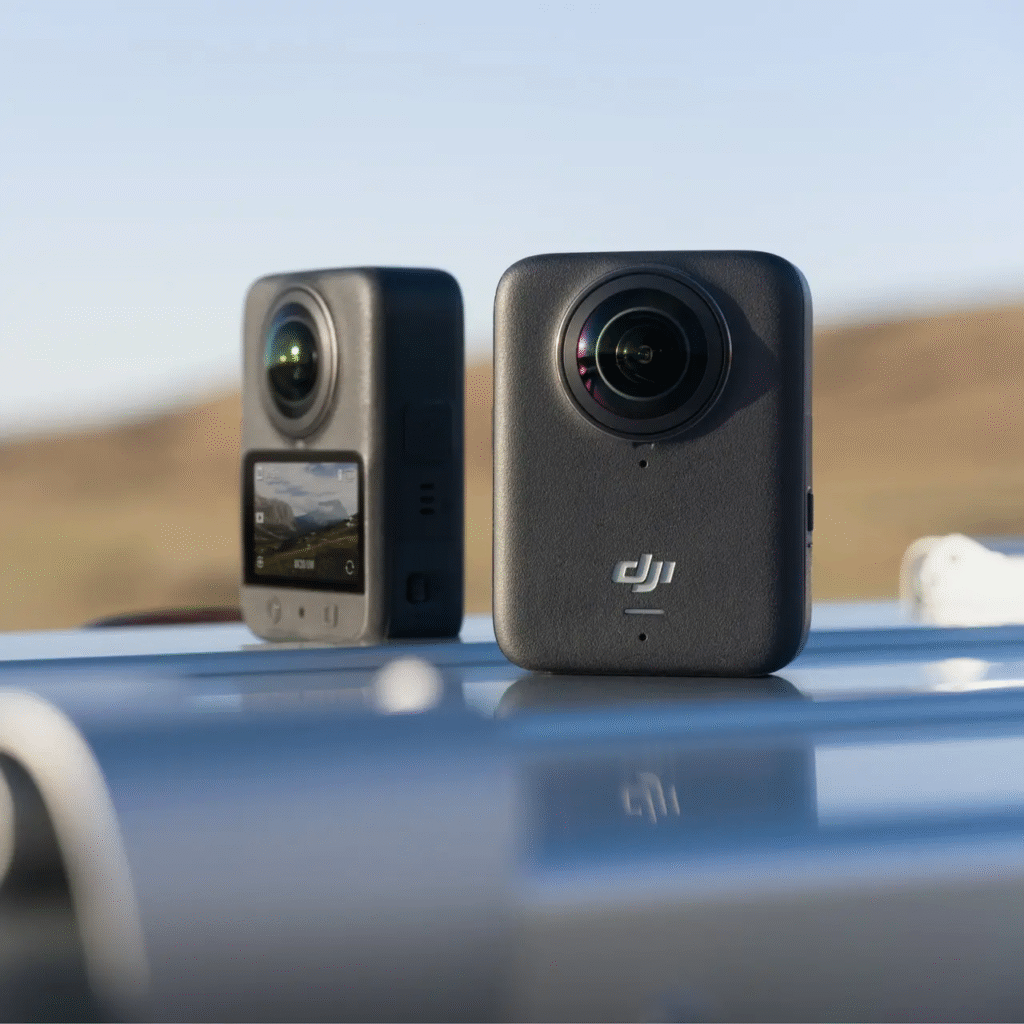
This review is comprehensive — covering design, hands-on experience, and image quality in detail. If you're interested, make sure you read all the way to the end.
DJI Osmo 360: Key Highlights
In terms of performance specs, the DJI Osmo 360 is truly a “spec monster.”
The DJI Osmo 360 is equipped with a high-capacity camera module and large battery capable of handling intensive shooting demands — delivering consistent performance whether for long-duration recording or high-quality image processing. If you need a 360° camera built for serious creative output, the DJI Osmo 360 is well worth considering.
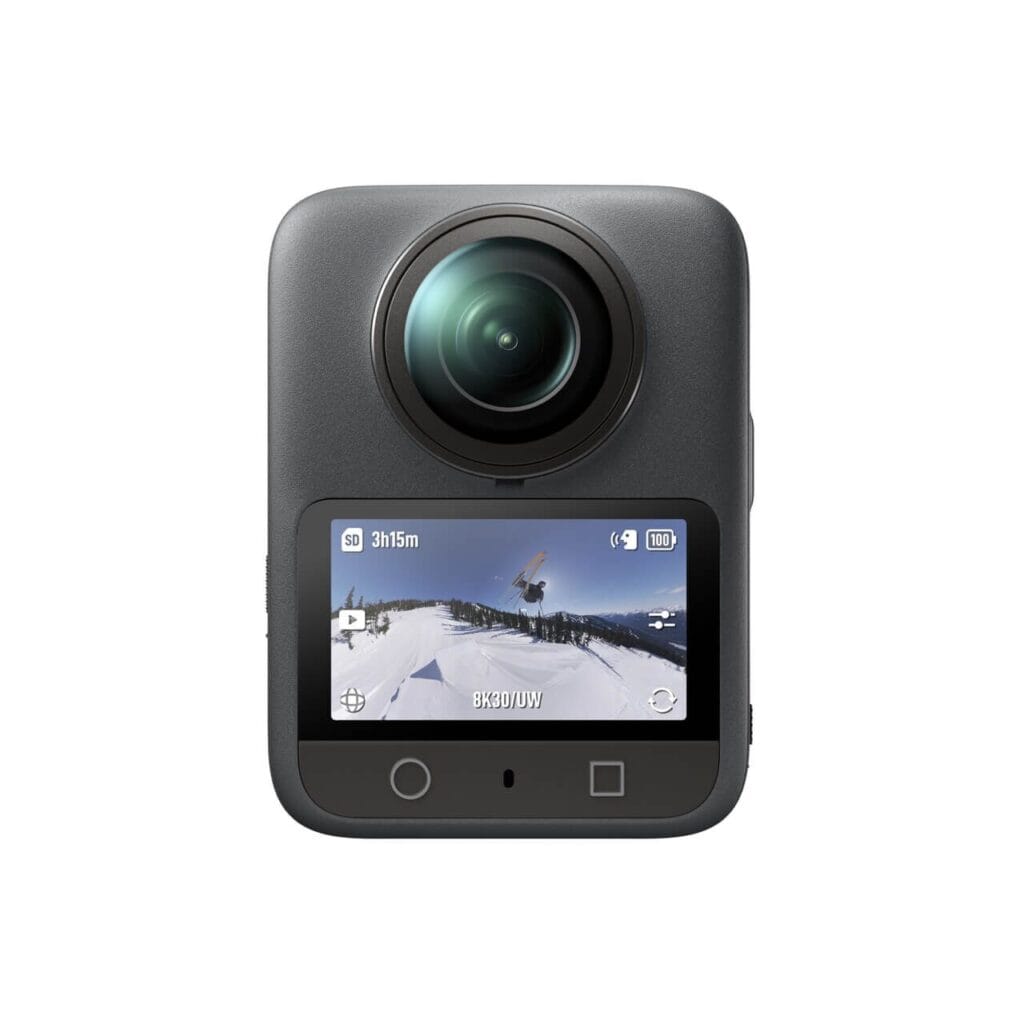
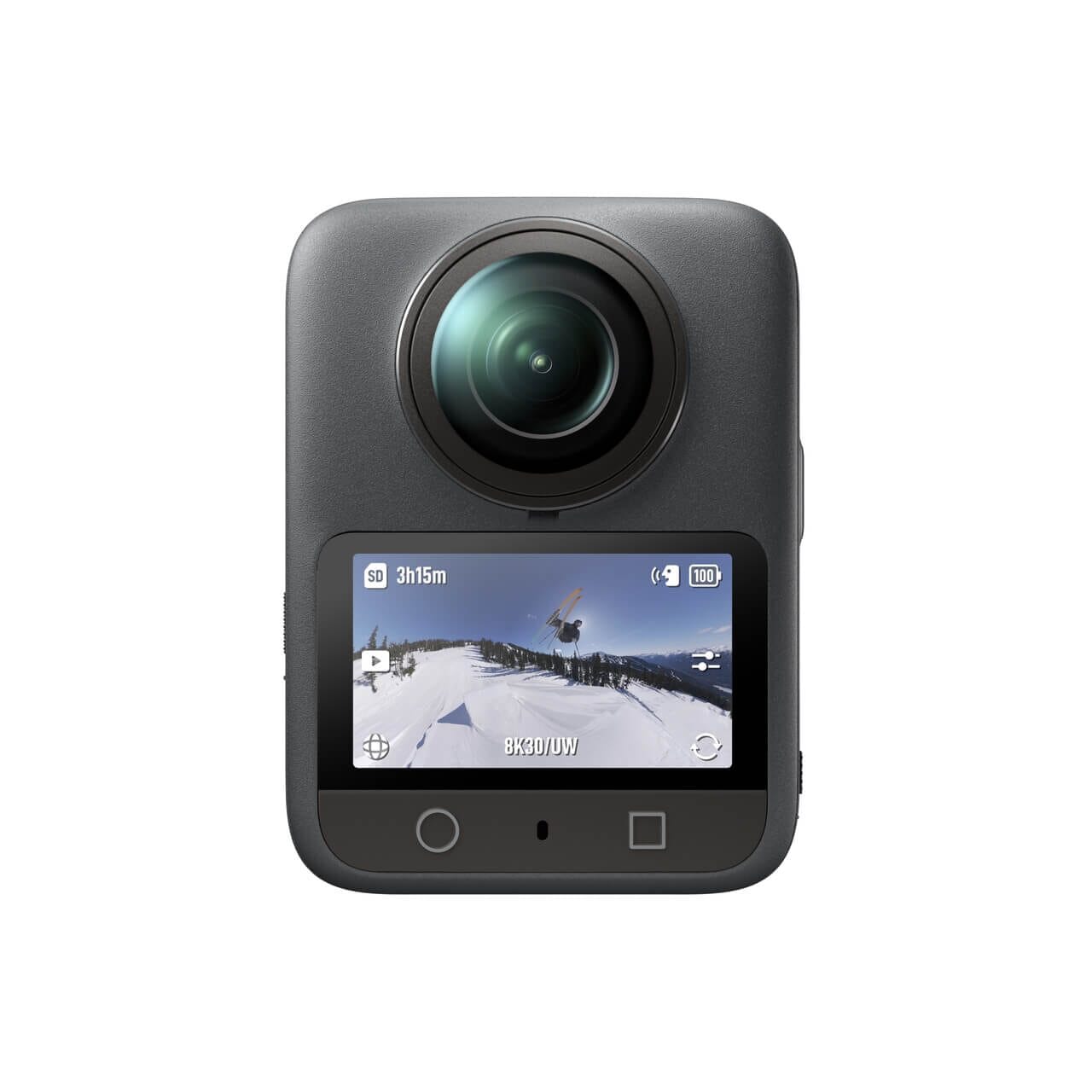
DJI Osmo 360
A flagship dual 1-inch sensor 360° panoramic camera that redefines professional 360° filming. Whether for everyday Vlogs, extreme sports, or travel panoramas, it effortlessly captures cinematic footage.
DJI Osmo 360 Specifications at a Glance
Everything you need to know about this 360° camera's top-tier specs and shooting capabilities.
4K / 120fps at 170° FOV
In short, the DJI Osmo 360's core specs can be summarised in three key highlights:
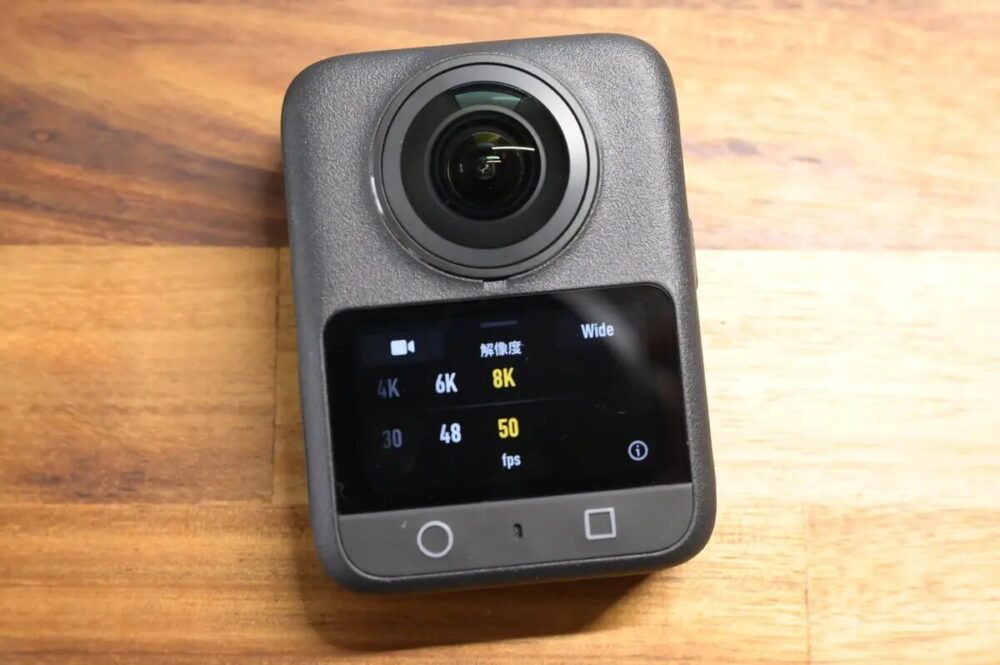
- Shooting Performance: Supports 8K 50fps HDR video — delivering smooth 2× slow-motion footage even at maximum resolution.
- Battery Life: Long-duration shooting without worrying about overheating or running out of power.
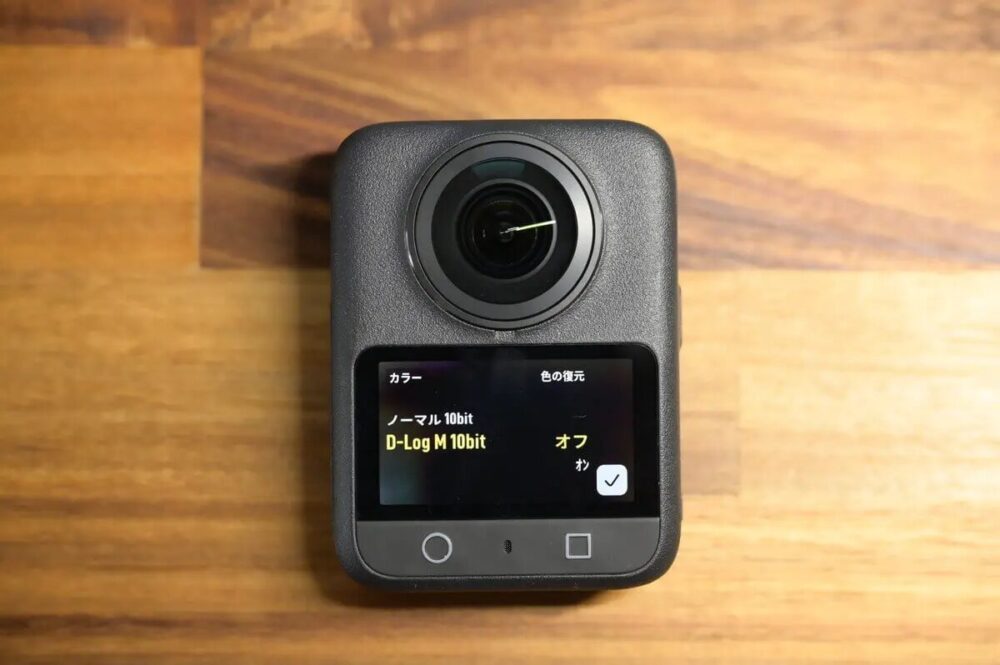
- Colour Grading: 10-bit colour depth support for preserving fine colour detail in post-production.
The 8K spec enables smoother footage and better slow-motion performance. With HDR enabled, it's ideal for selfies or 360° videos where portrait recording quality matters.
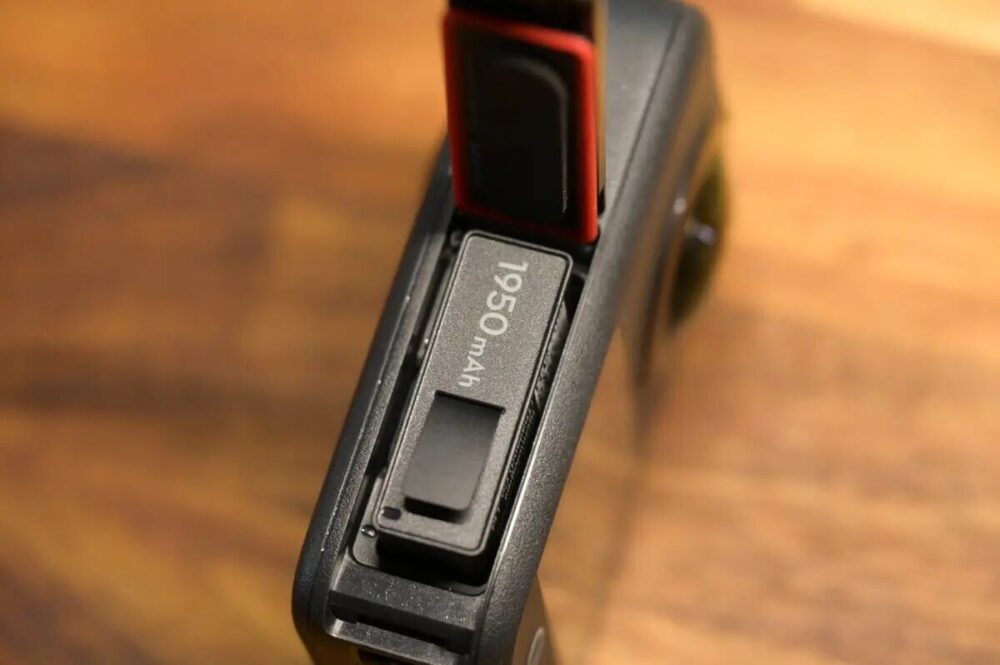
Battery capacity is 1950mAh.
10-bit colour depth support dramatically increases colour grading flexibility, resulting in richer and more detailed video footage.
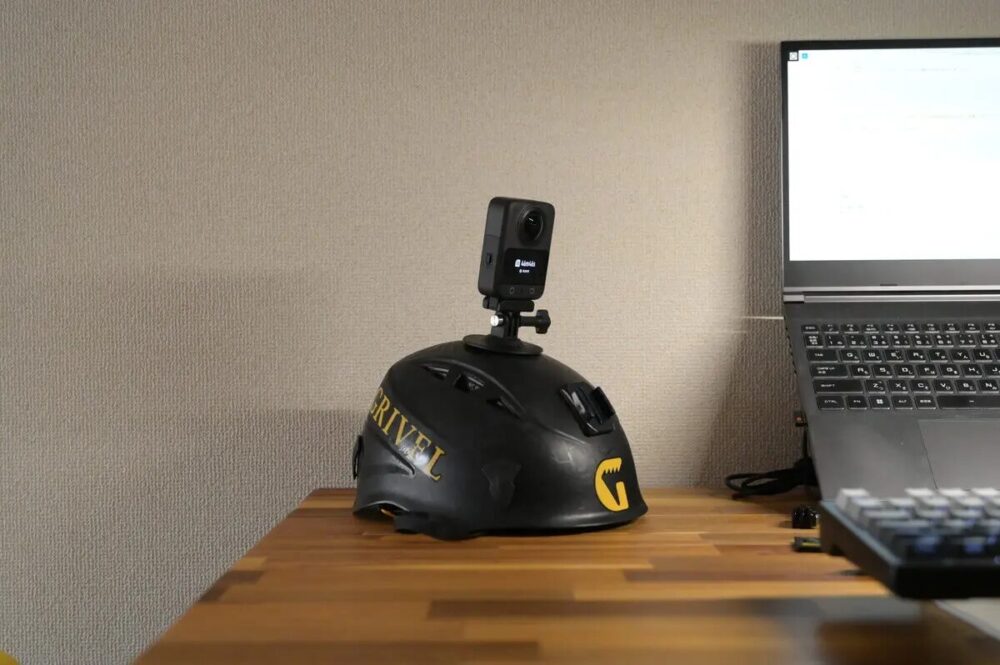
Battery endurance and compact design make the DJI Osmo 360 ideal for outdoor enthusiasts and helmet-mounted action shooting.
In conclusion, the DJI Osmo 360 is the ideal choice for users who:
- Want high-end specs at a reasonable price
- Plan to do in-depth video post-production editing
- Prioritise a lightweight form factor for helmet-mounted shooting
Although the Osmo 360 has become the undisputed “spec monster” of the 360° camera world, as someone who has been using 360° cameras extensively since the Insta360 X3, I believe the Insta360 X5 — whether at 8K or 5.7K — delivers a simpler and more efficient recording experience overall.
If you prioritise the following, the Insta360 X5 has a clear edge:
- “Shoot and share” high-quality footage
- A camera that's easy to pick up for beginners
- An intuitive, user-friendly companion app
- Interchangeable lenses and a rich selection of accessories
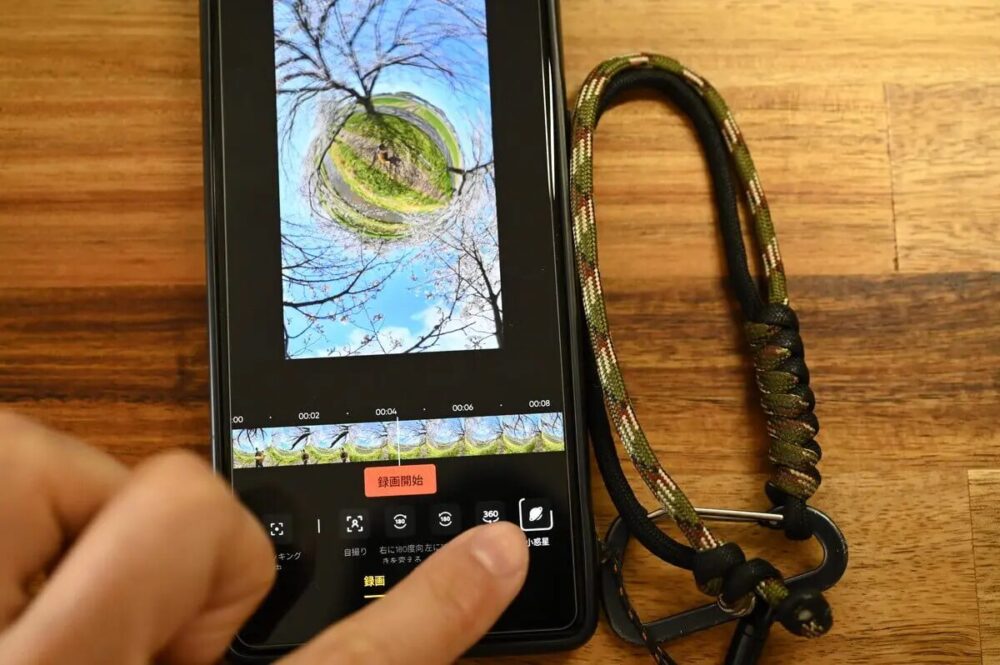
360° camera beginners typically want to capture high-quality footage without complicated settings or extensive post-production work.
Think of it like cooking: the DJI Osmo 360 provides premium ingredients and lets you cook your perfect dish from scratch;
the Insta360 X5 is more like having a powerful AI chef — great results without the hassle. Next, I'll explain why the X5 is the true beginner-friendly 360° camera that anyone can master quickly.
Insta360 X5: Key Highlights
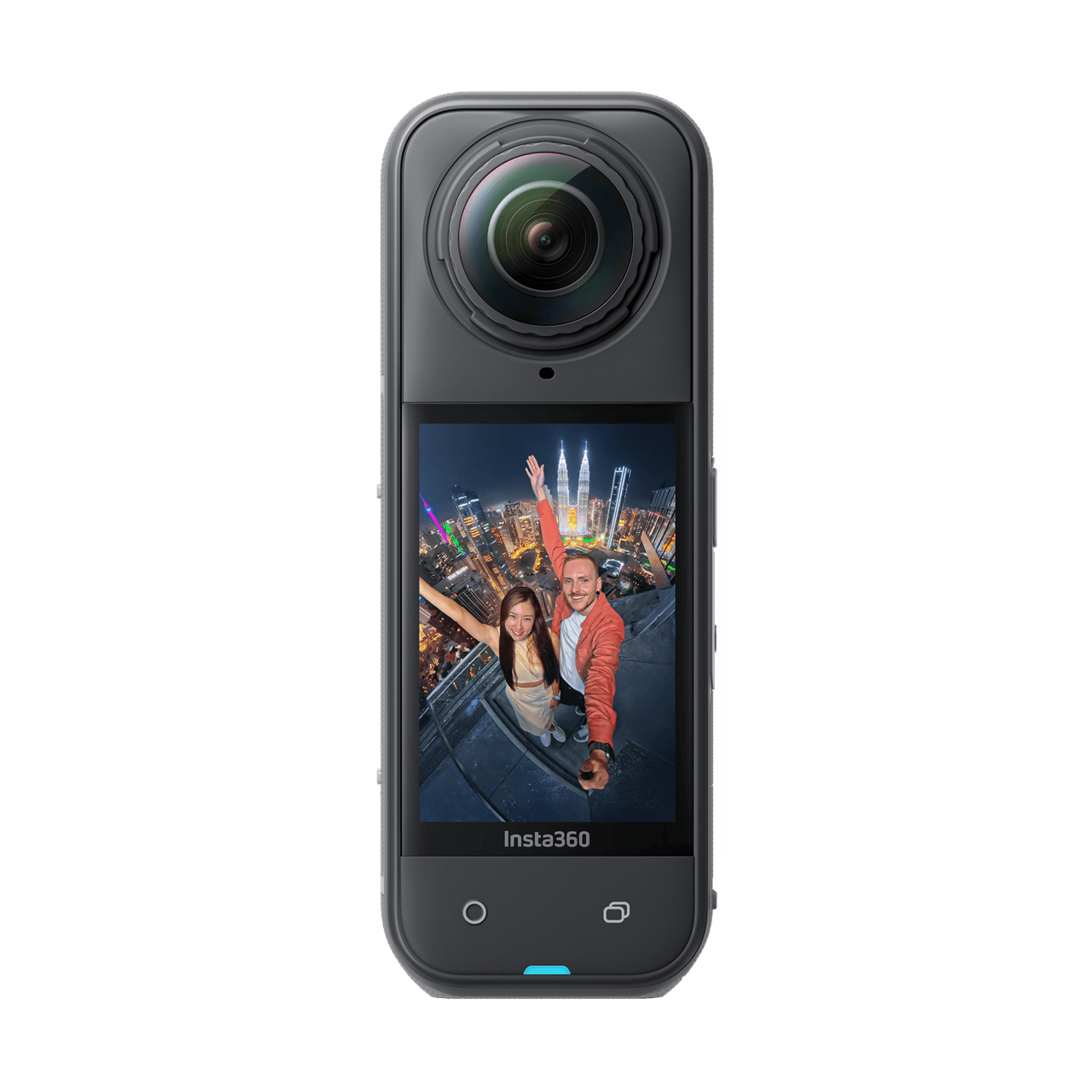
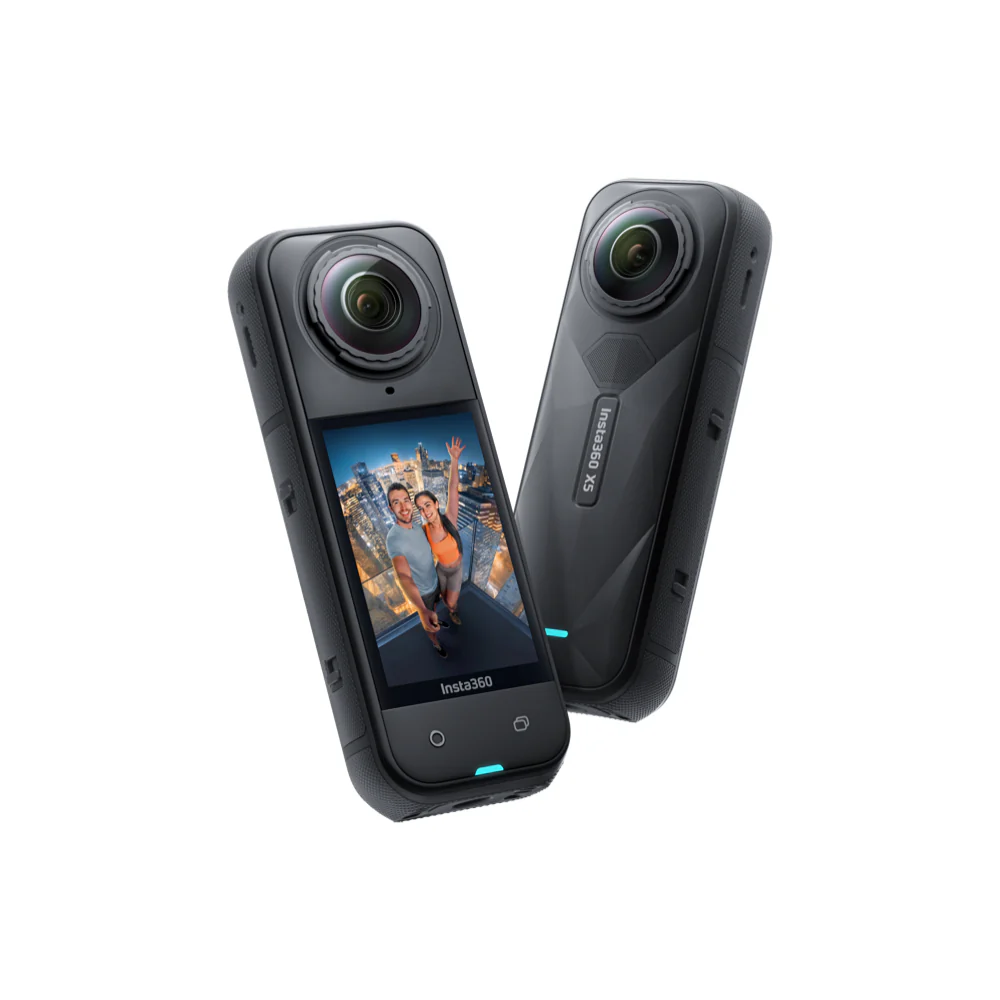
Insta360 X5
Insta360's next-generation 360° action camera featuring dual large sensors, top-tier stabilisation, 8K image quality, and an unparalleled shooting experience — redefining the performance ceiling for 360° cameras.
Insta360 X5 Specifications at a Glance
A complete breakdown of the flagship 360° camera's powerful specs and shooting capabilities.
360° Camera Buying Guide: What to Look For
These are the 9 core criteria I consider essential when choosing a 360° camera. The review sections that follow will explore each of these in detail, helping you find the camera that truly fits your needs — because every user's scenario and priorities are different, so the weight you give each criterion will naturally vary.
Key Criteria for Choosing an Action Camera
When selecting a 360° or action camera, prioritise evaluating these 9 key areas.
Specs Comparison: DJI Osmo 360 vs Insta360 X5
| Insta360 X5 | DJI Osmo 360 | |
|---|---|---|
 |  | |
| Price | USD $549.99 | USD $549.99 |
| Weight | 200g | 183g |
| Battery | 2400mAh | 1950mAh |
| Charging | 20 min → 80% 35 min → 100% | 12 min → 50% |
| Screen Size | 2.5 inches | 2.0 inches |
| Lens | Interchangeable lens design | Fixed lens |
| Waterproofing | 15m | 10m |
| Operating Temperature | -20~40℃ | -20~45℃ |
| Custom Quick Button | ||
| Gesture / Voice Control | ||
| Sensor Size | 1/1.28″ | 1″ |
| Video Quality | 8K 30fps 5.7K+ 30fps 5.7K 60fps 4K 60fps (single lens) | 8K 50fps 6K 60fps 5.7K 60fps 4K 120fps (single lens) |
| Photo Resolution | 72MP | 120MP |
| Aperture | F2.0 | F1.9 |
| Single-Lens FOV | 170° | 170° |
| Audio | Built-in mic with wind shield | Osmo Audio microphone |
| External Mic | Insta360 Mic Air | DJI Mic 2 |
| Battery Life (8K/30fps) | No official data yet; personal test result: 88 minutes Using X5 Ultra Battery: approx. 95 minutes | 100 minutes |
| Battery Life (5K/30fps) | Up to 185 minutes in endurance mode, with fast charging support | No official data available yet |
| Mount | Quick-release mount 1/4″ thread mount | Quick-release mount 1/4″ thread mount |
| 10-bit Colour | ||
| Editing App | Insta360 Studio Insta360 App More editing templates and AI features | DJI Mimo |
| Cloud Storage |
Insta360 X5 vs DJI Osmo 360 Specs Comparison
Looking at the key specs, both the DJI Osmo 360 and Insta360 X5 are market-leading 360° cameras, each with their own strengths.
The Osmo 360 features a 1-inch sensor, 10-bit D-Log M colour profile, and built-in storage — making it well-suited for professional creators who prioritise low-light performance and post-production flexibility. By comparison, the Insta360 X5 offers an interchangeable lens design, AI-assisted editing, InstaFrame and other creative features, catering to content creators who value ease of use.
While the DJI Osmo 360 outperforms the Insta360 X5 in sensor size and audio capture, I personally believe the Insta360 X5 still holds the competitive edge.
There are two key reasons: First, Insta360's extensive accessory ecosystem. The DJI Osmo Action 5 Pro currently offers 43 accessories, with only around 30–40 of them compatible with the Osmo 360. The Insta360 X5, on the other hand, already has up to 97 accessories available, covering a wide range of sports and creative scenarios. For motorcycle riding, you need a GPS Remote with Built-in Mic; for diving, you depend heavily on specialised gear like the Invisible Dive Case Pro. In terms of accessory breadth and application range, the X5 has a clear advantage.
Second, video quality and ease of use. “Good video quality” means more than just 8K recording — it also means clarity in daylight and at night, smooth footage, and accurate colour. In short: does the final video actually look good? Some cameras boast impressive specs on paper, but real-world results don't always match — issues like over-sharpening, screen flicker, or lens fogging can undermine the experience.
In the sections that follow, I'll dive deep into the differences and distinctive features of these two 360° cameras.
Design Comparison: DJI Osmo 360 vs Insta360 X5
The Insta360 X5 is taller and more elongated, while the DJI Osmo 360 has a more square profile.
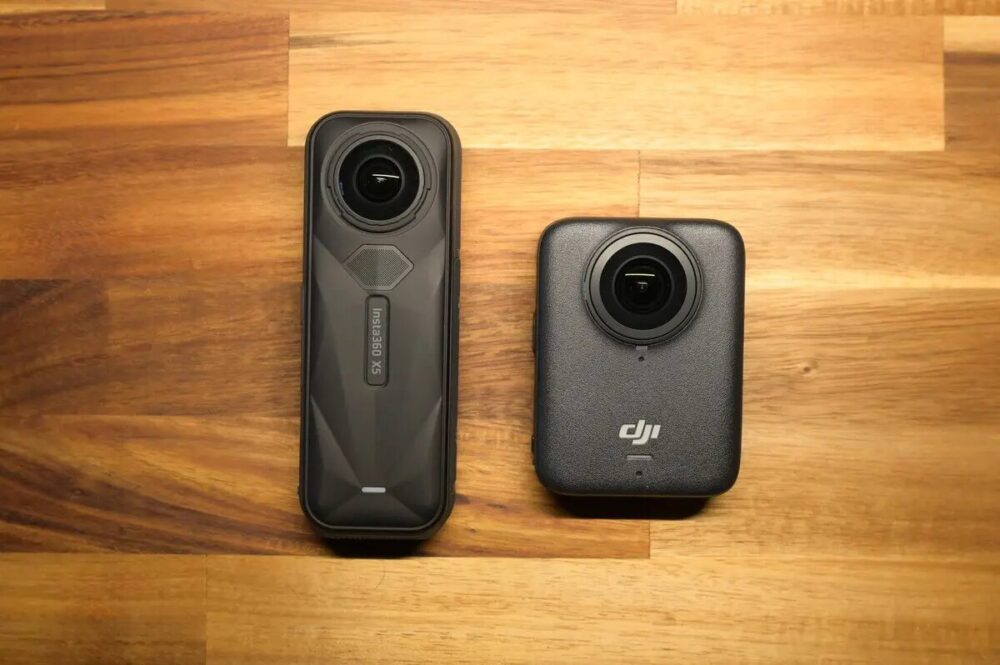
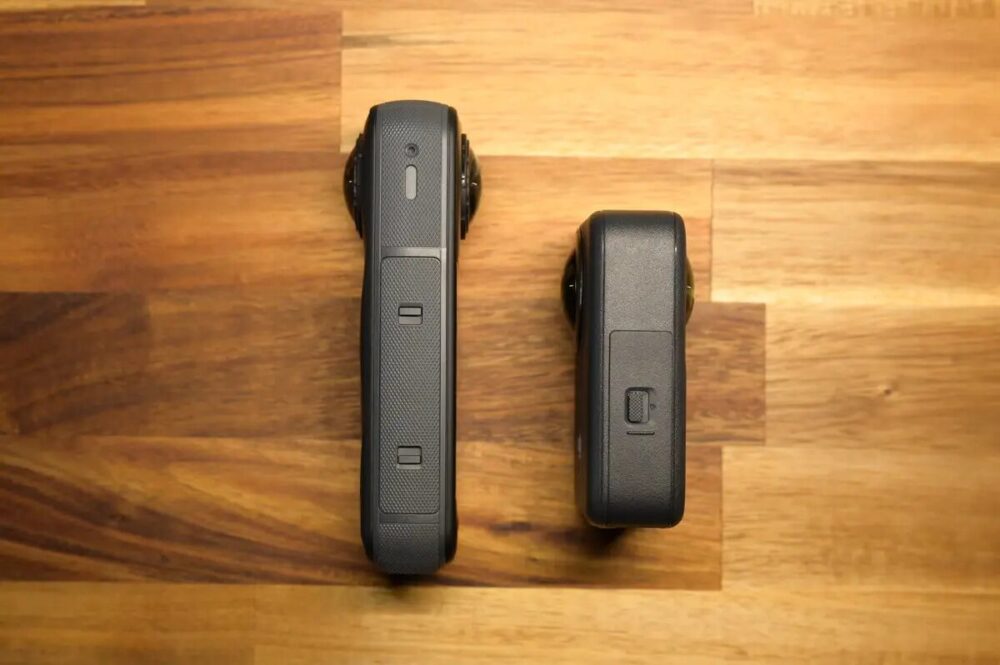
The Insta360 X5 integrates the battery into its cover, while the DJI Osmo 360 uses a separate, standalone battery.
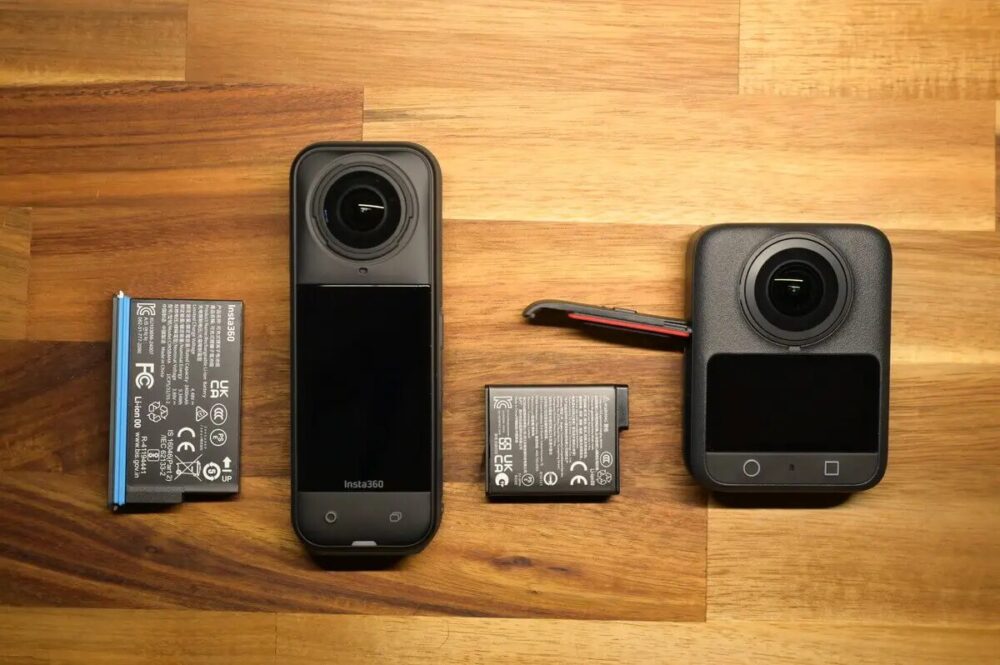
The DJI Osmo Action 5 Pro battery is compatible with the Osmo 360.
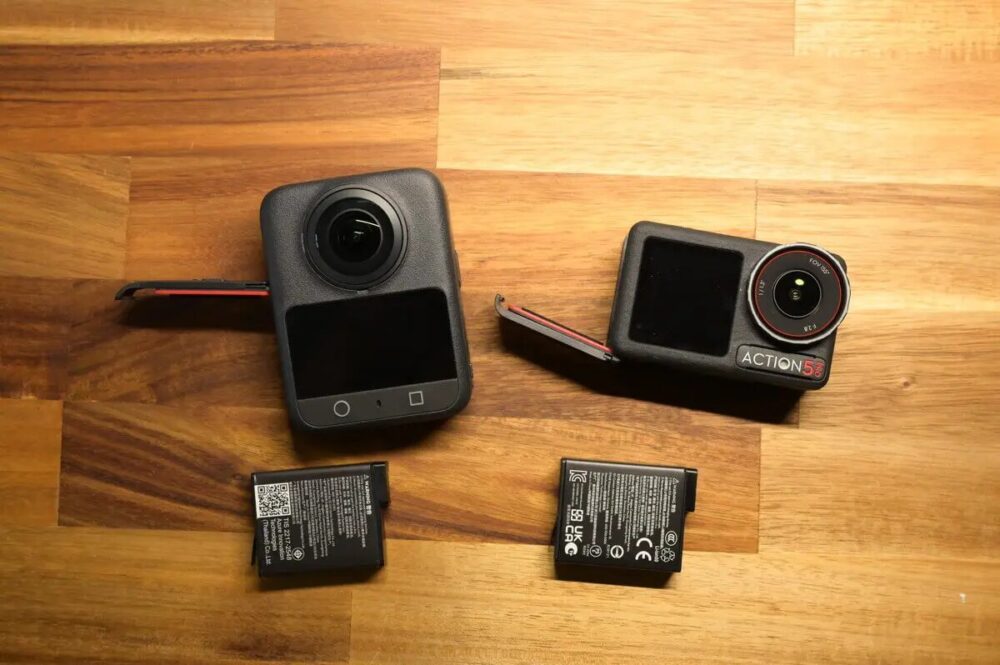
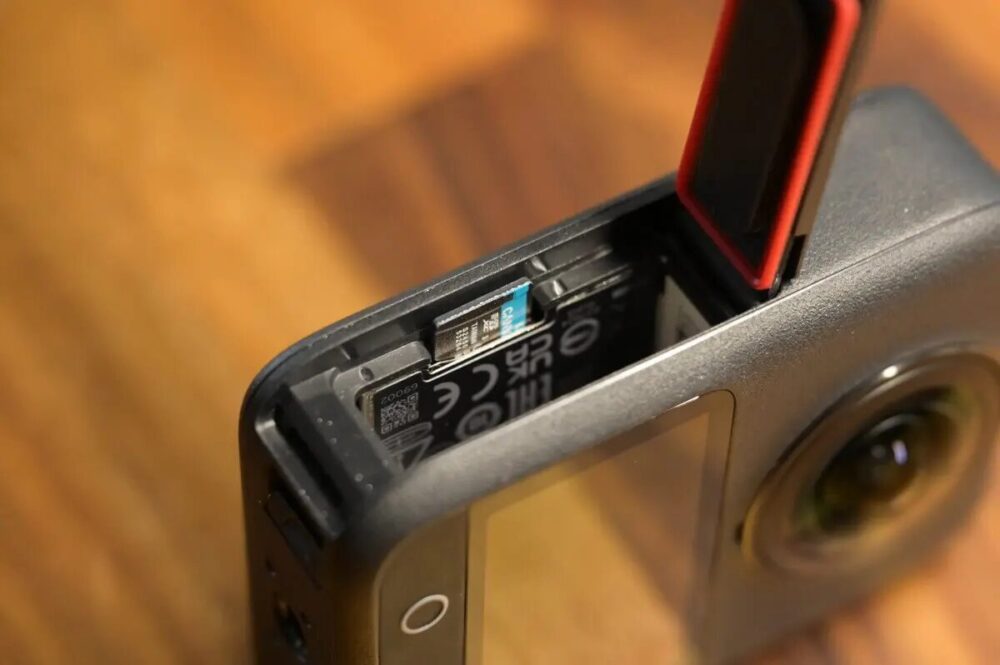
One of the DJI Osmo 360's standout advantages is its built-in 128GB storage (approximately 105GB usable), letting you keep shooting continuously even when your memory card is full or forgotten.
Both cameras use convex fisheye lenses.
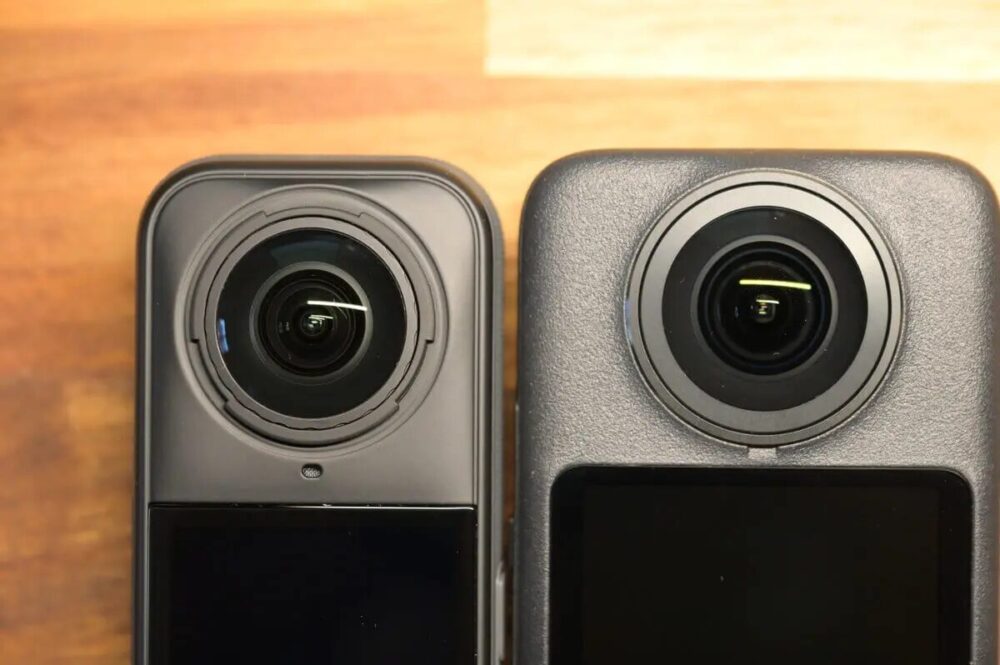
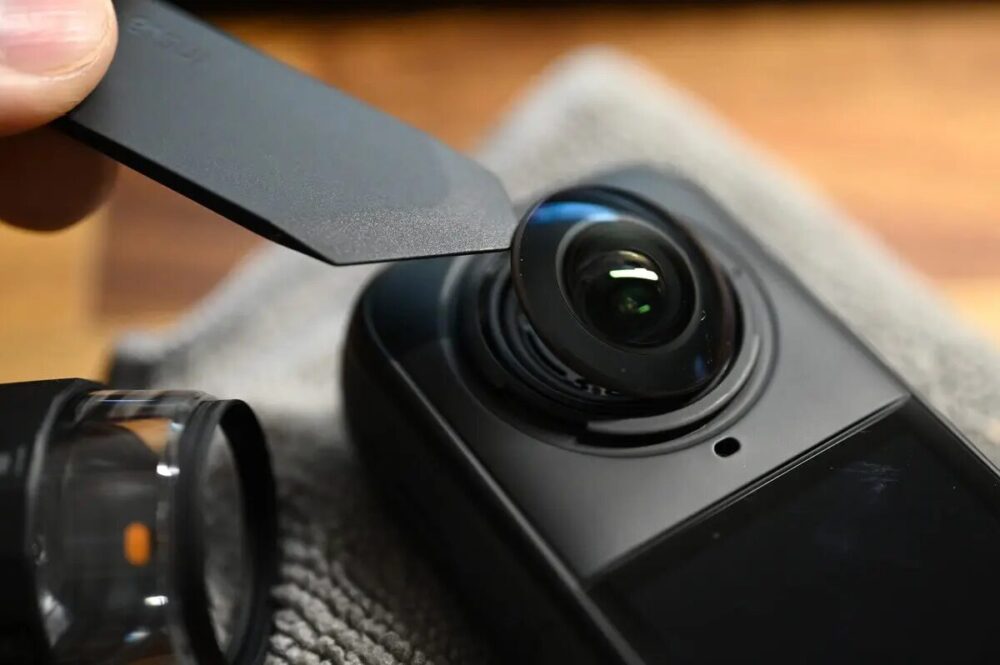
The Insta360 X5 supports user-replaceable lenses — a genuinely innovative feature given how prone 360° camera lenses are to scratches.
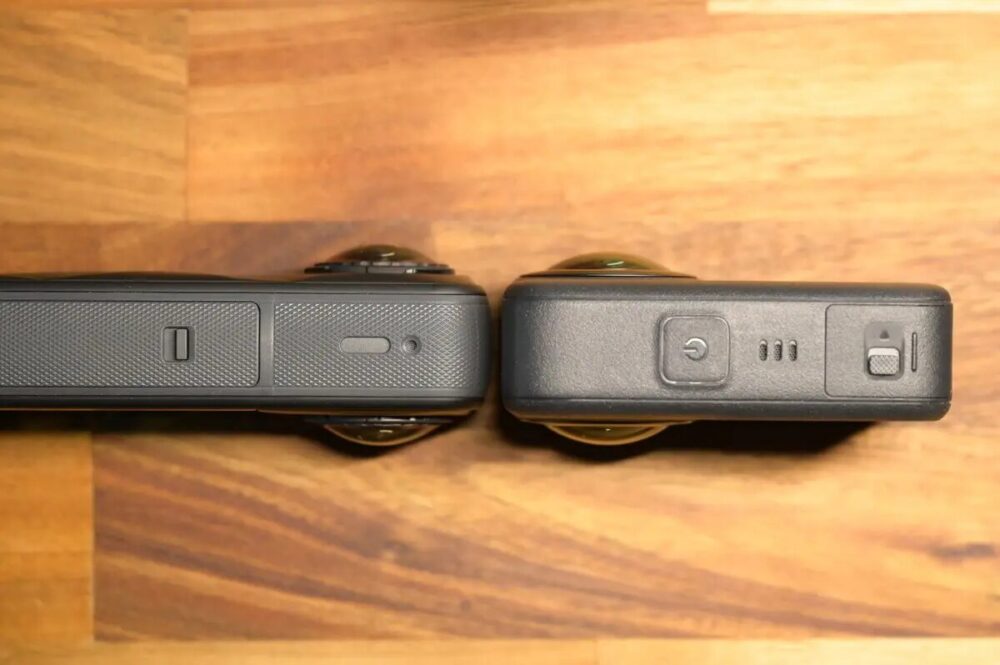
Both cameras are similar in thickness.
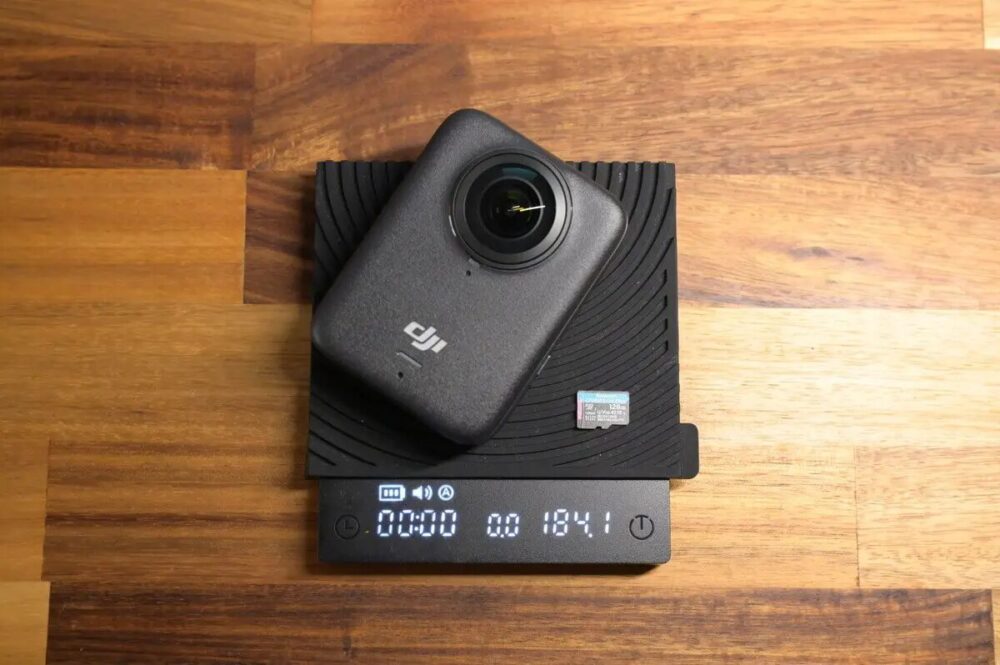
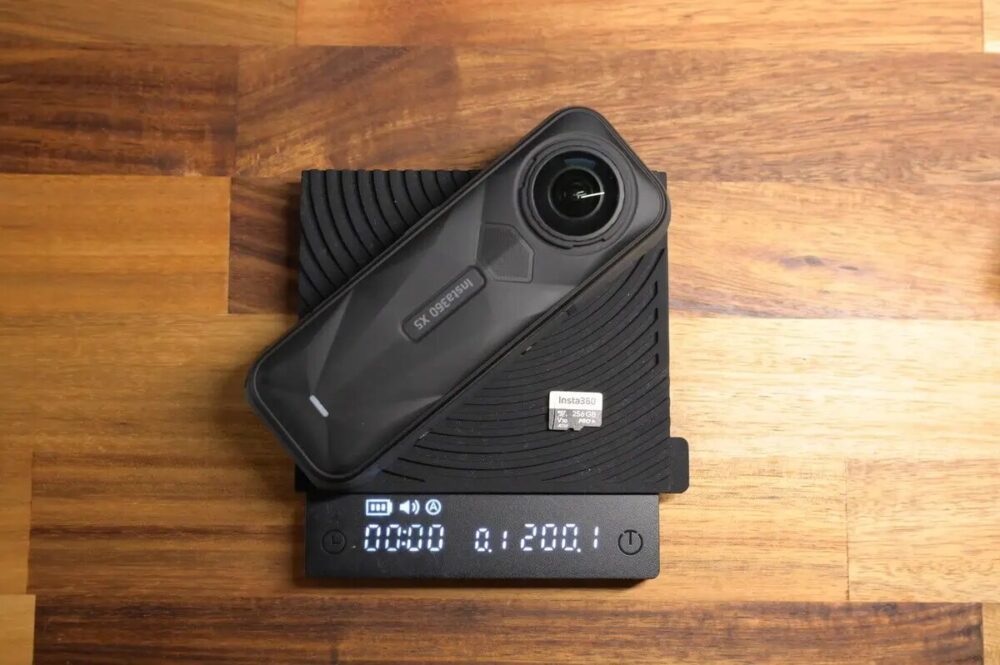
Including the SD card, the Insta360 X5 weighs 200.1g and the DJI Osmo 360 weighs 184.1g — a difference of exactly 16g.
The DJI Osmo 360's compact, square design is a clear advantage for helmet-mounted use — it takes up less space and significantly improves wearing comfort.
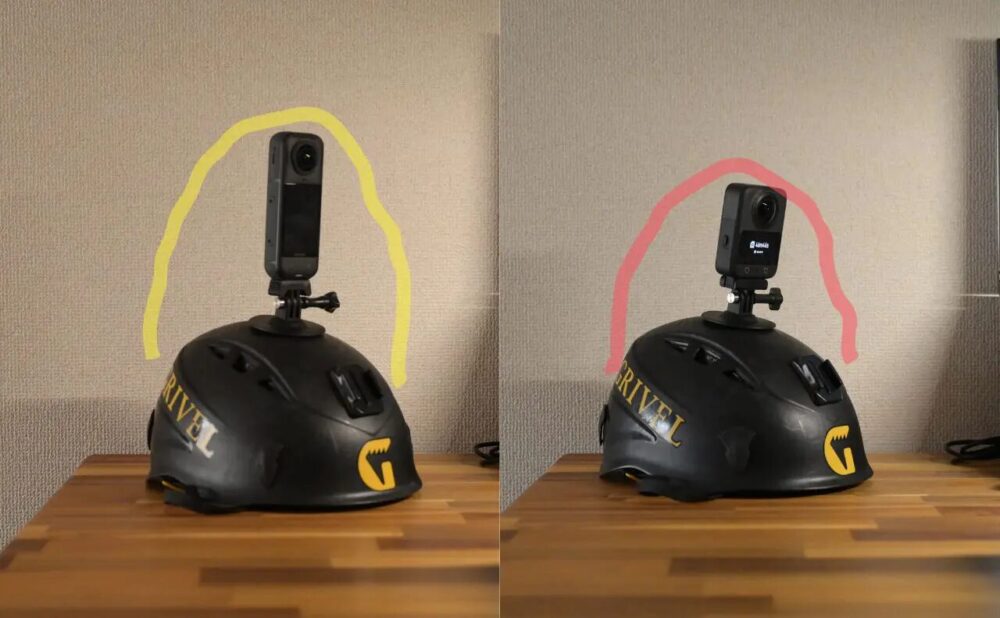
On the other hand, everyday users find the X5's vertical design more ergonomic and comfortable to operate. By contrast, the DJI Osmo 360's wider form factor means fingers can easily brush against the lens when held with one hand, which can be inconvenient.
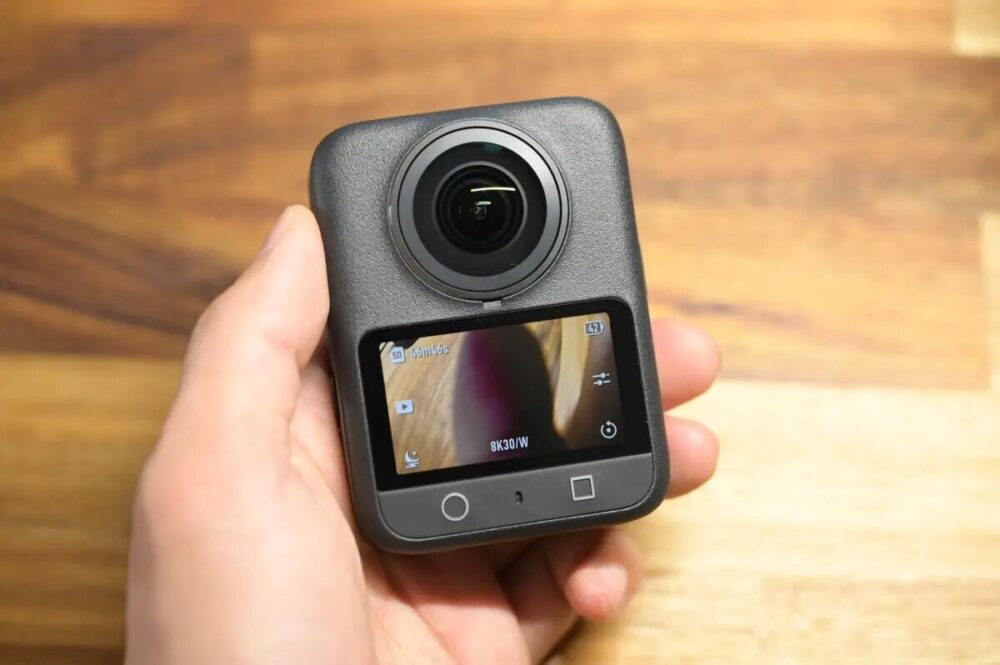
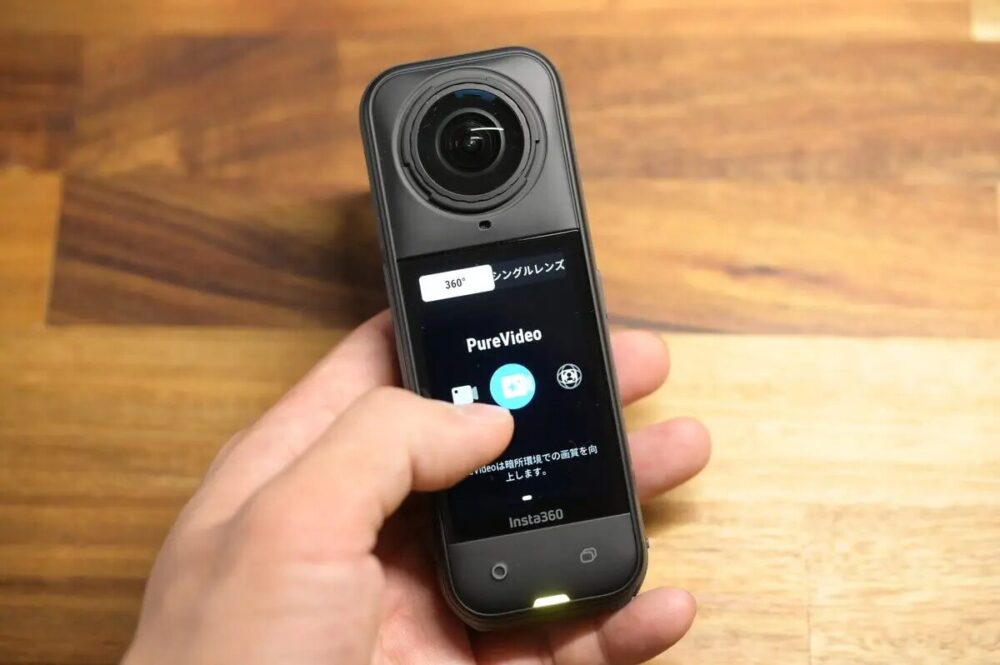
The Insta360 X5 is as slim as a smartphone — its slender design makes one-handed operation effortless, even for users with smaller hands.
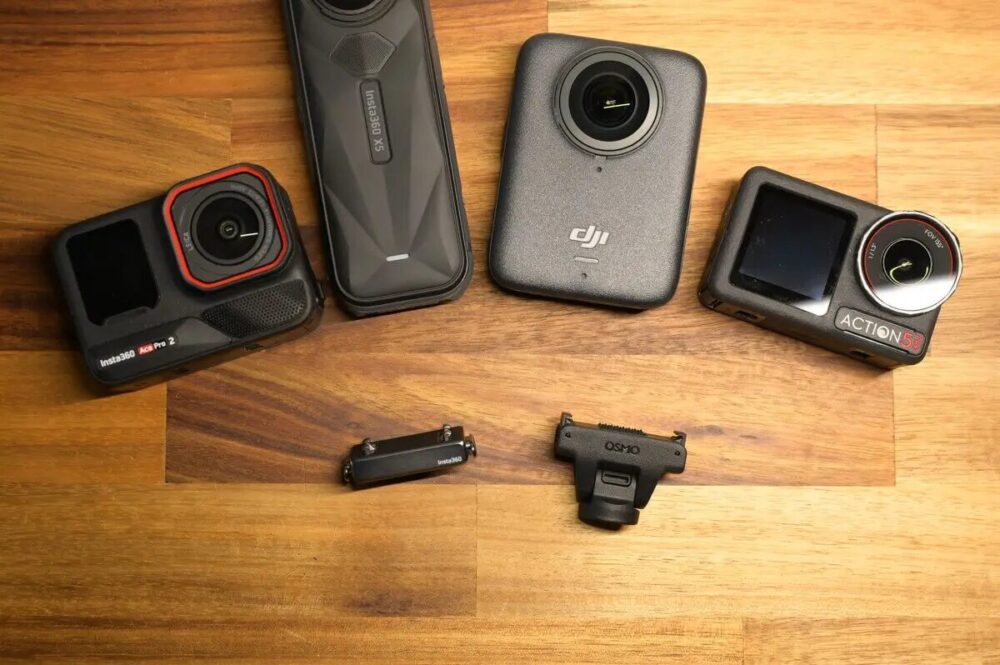
Both the X5 and Osmo 360 support magnetic quick-release mounts.
My overall impression from the design comparison:
- The Osmo 360 is better suited for helmet-mounted and professional action shooting
- The X5 is more comfortable and practical for everyday use
Image Quality Comparison: DJI Osmo 360 vs Insta360 X5
Video Quality Comparison
Image quality is ultimately a matter of personal taste — different people prefer different styles. Let's start with the differences: this footage was shot on a hot, sunny afternoon in August at 2:00 PM. Both cameras were set to their default 8K mode, with white balance and saturation left unadjusted. The Insta360 X5 delivers vivid blue tones, while the DJI Osmo 360 leans toward warmer tones.
On a bright, sunny day, the sky colour is actually closer to the vivid blue the Insta360 X5 captures.
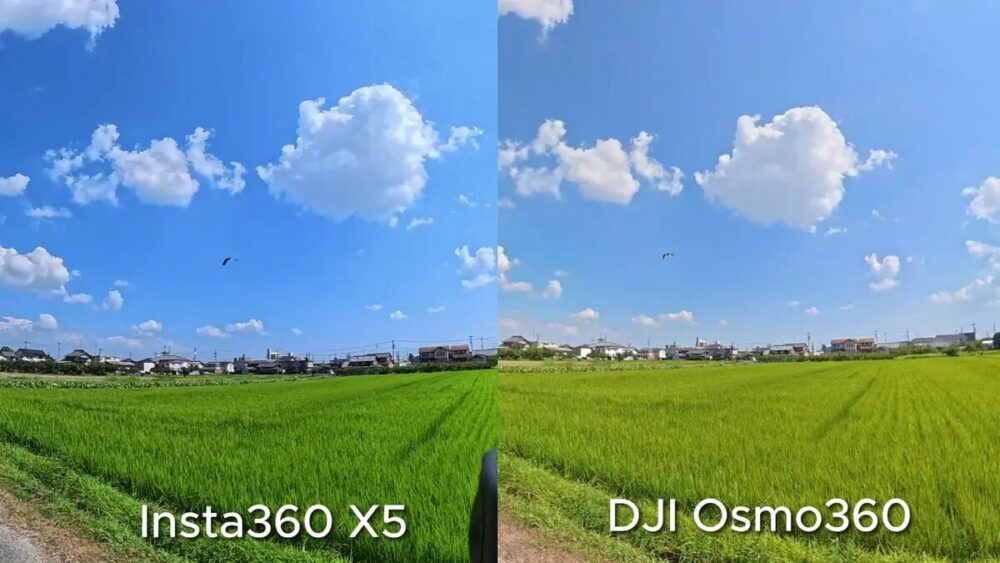
In terms of detail resolution, even though both shoot 8K, the X5 preserves texture more faithfully, giving clouds more depth and a three-dimensional appearance.
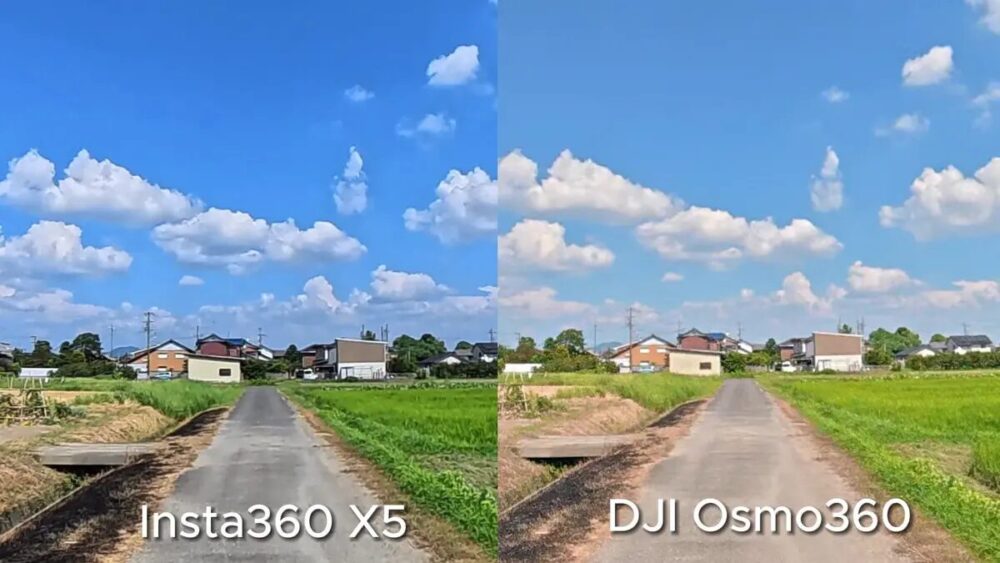
That said, the DJI Osmo 360 has HDR enabled by default, which is why it also retains colour information in distant scenes.
I find the DJI Osmo 360 captures more colour detail in the scene, and you can really feel the HDR working during selfies. The X5 often shows a white glow around the sun, whereas the Osmo 360 is less affected. Even in backlit conditions, the Osmo 360 keeps faces well-exposed and brighter. While both 360° cameras perform similarly when shooting into the light, the Osmo 360's footage is noticeably brighter overall.
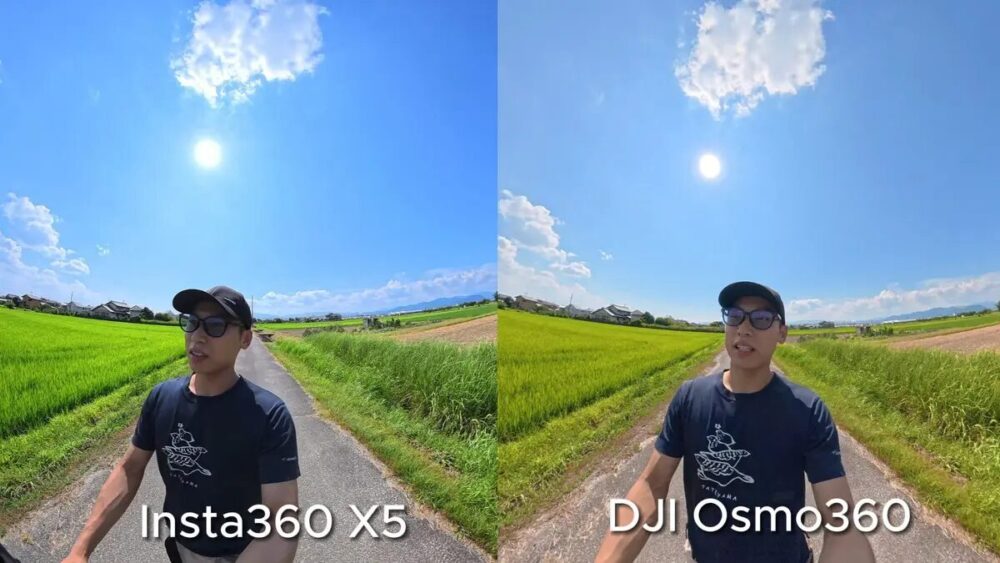
The Insta360 X5 has strong contrast that gives footage a more “camera-like” look; the DJI Osmo 360 has softer contrast, producing a more flattering, portrait-friendly feel.
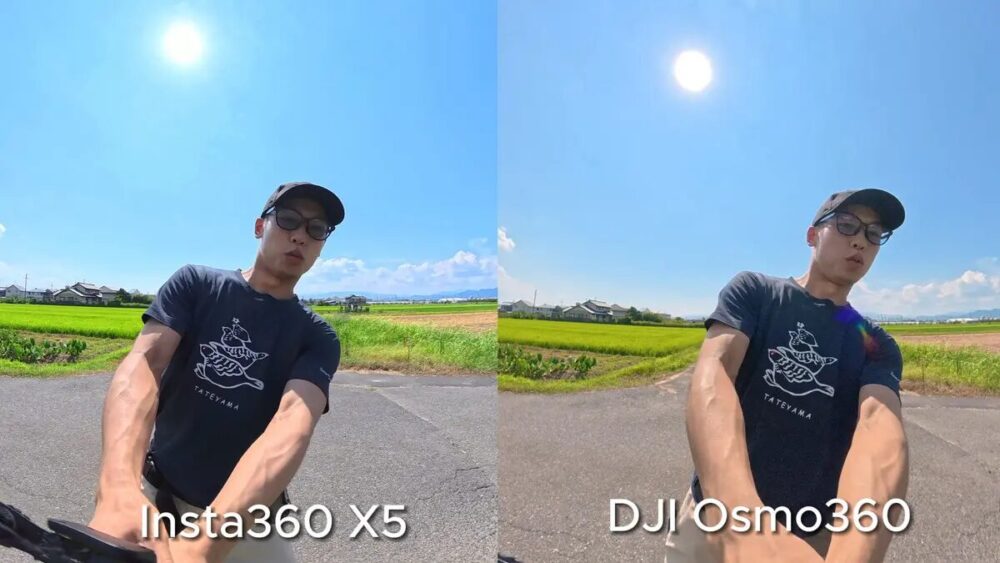
When taking selfies in strong backlit conditions, the DJI Osmo 360 really impresses — sky colour remains consistent whether shooting with or against the light, thanks to the always-on HDR.
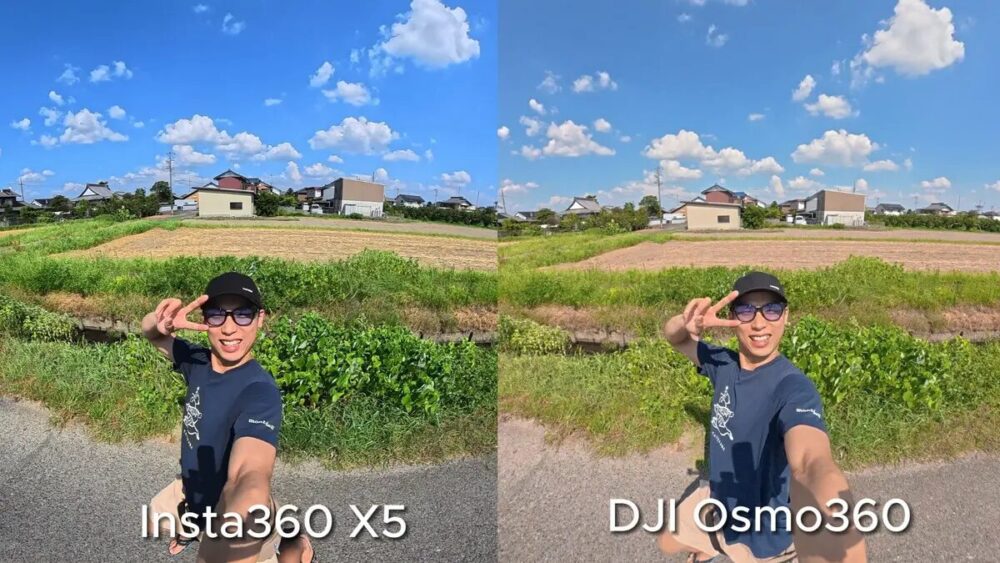
One thing worth noting: with HDR enabled, shadow areas can exhibit some noise, and facial details become more visible — my right side of the face looked slightly rough in some shots, a common trade-off with HDR when lifting darker regions. The Insta360 X5 achieves higher resolution in 8K mode, likely because HDR is not engaged, allowing full sensor output.
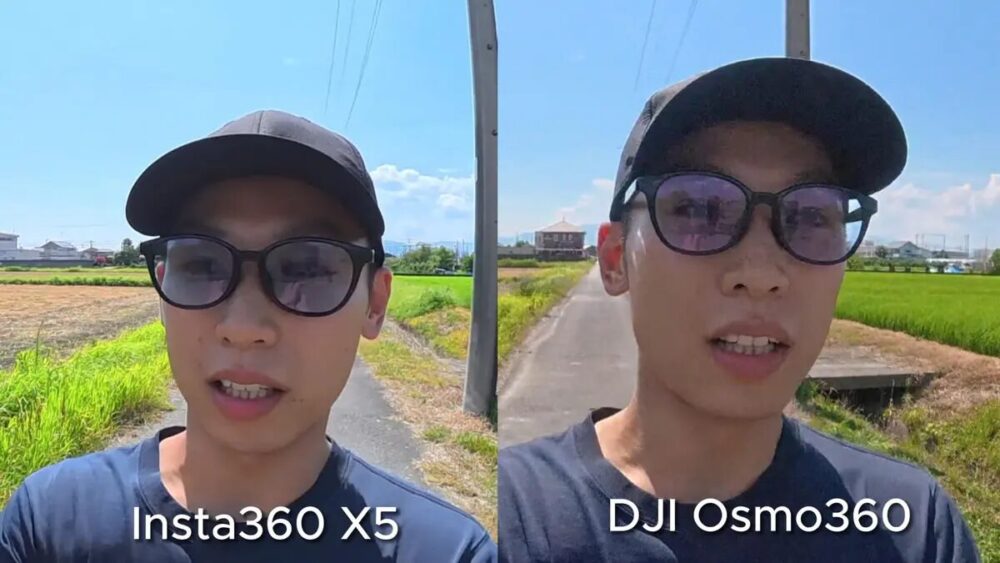
Since the X5 needs to drop to 5.7K to enable HDR, we'll compare that specifically in the next section.
HDR Comparison
In my own shooting routine, I prefer using the Insta360 X5 in 5.7K HDR mode rather than 8K, so I record almost everything at 5.7K in daily use.
With HDR enabled, the overall visual style of the Insta360 X5 becomes much closer to that of the DJI Osmo 360 — with only minor white balance differences — and the overexposed white glow around the sun is significantly reduced. It also noticeably softens dark circles in selfies, improving skin tone rendering.
While neither camera delivers perfect backlit performance, both produce results that are more than satisfactory for selfie scenarios and everyday shooting needs.
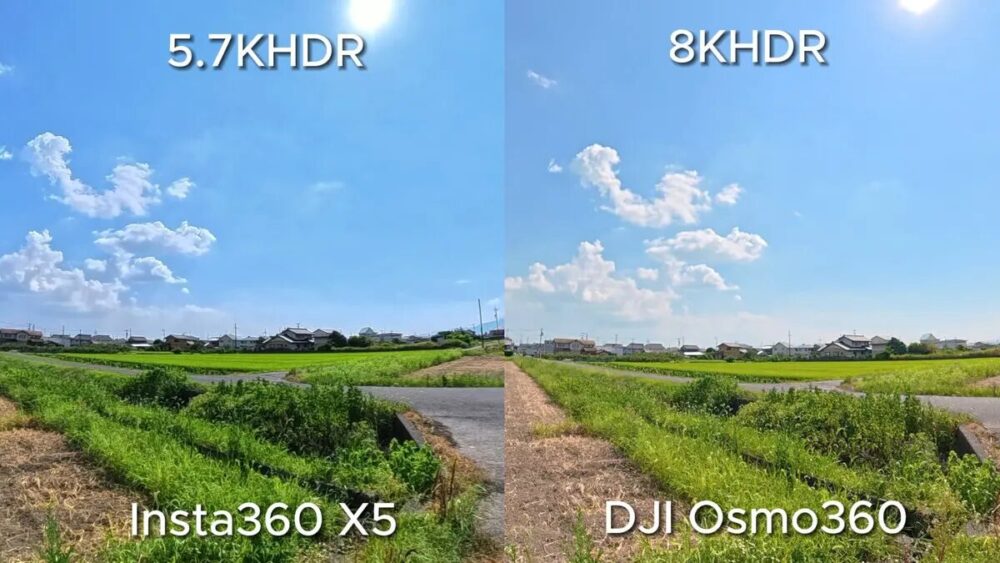
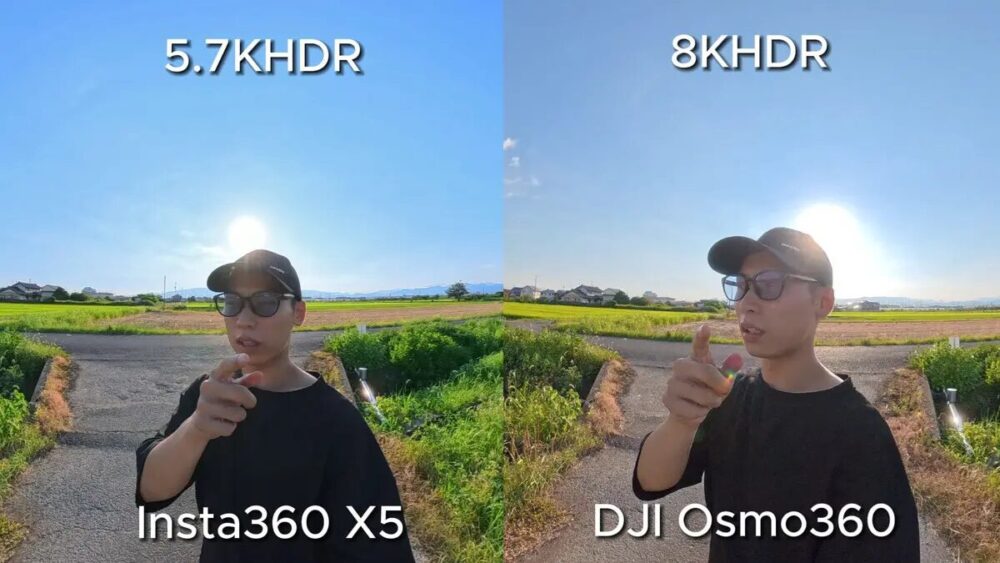
At 5.7K HDR, the X5 is great for selfies —
but does dropping to 5.7K hurt image quality?
Honestly, not really. Even at 5.7K, the X5 still excels at rendering cloud texture and fine detail in grass and open fields. Although the DJI Osmo 360 also uses HDR, its lower contrast gives footage a softer, more subdued HDR look. Zoomed in, the Osmo 360 at 8K does show finer architectural detail in the distance — though this may partly be due to its lower contrast making subtle details more visible.
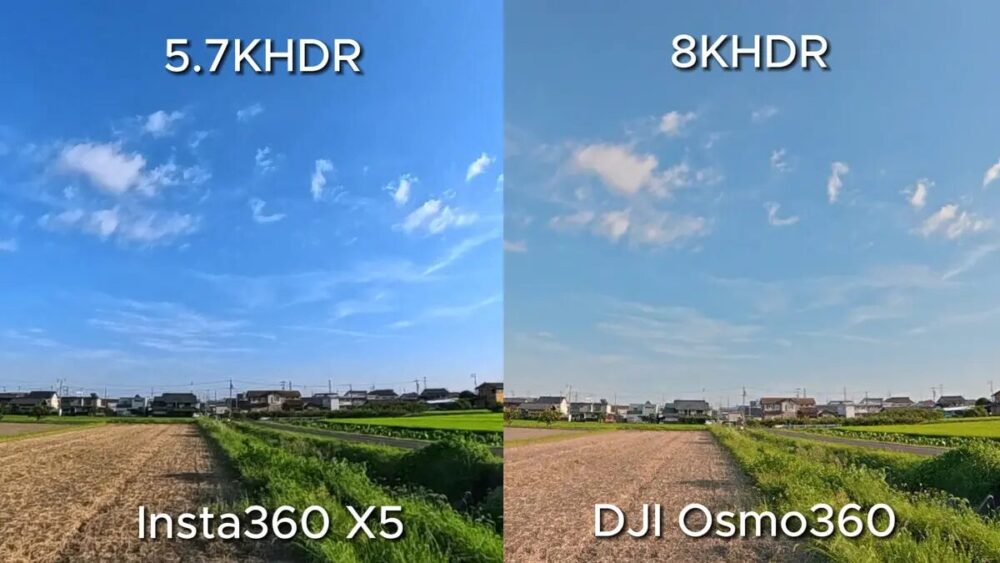
The Insta360 X5 excels in contrast and depth, making it the better choice for landscape and scenery shots. However, if selfies are your primary focus, the DJI Osmo 360 is a strong contender. For outdoor enthusiasts who don't prioritise selfies, I personally prefer the X5.
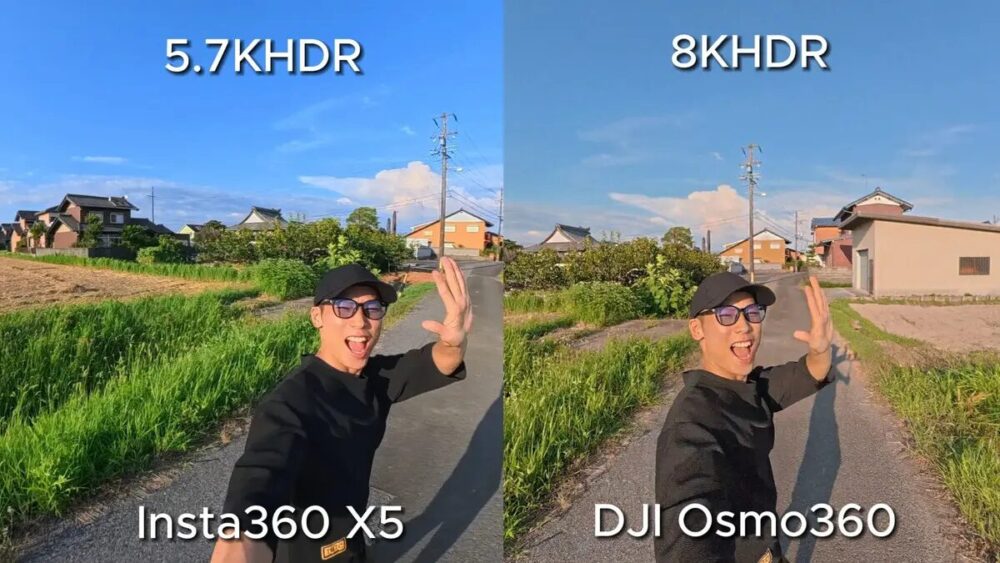
On colour accuracy, the Insta360 X5 feels truer to life. Surfaces like asphalt look more natural in X5's colour rendition — both the tone and detail are closer to what the eye actually sees. In HDR photo mode, the X5 also handles sun exposure and overexposure more effectively, as shown in a photo I took at 5 PM — the X5's backlighting and overexposure control was clearly superior.
The Insta360 X5 also features an “Adaptive Tone” mode that quickly adjusts high-contrast areas, improving rendering in challenging lighting conditions for a more natural result. When enabled, the system automatically optimises highlight and shadow detail — ideal for shooting in direct sunlight or mixed light/shadow environments. However, enabling Adaptive Tone appears to accelerate the X5's heat build-up, making it less suitable for extended continuous shooting over an hour.
Here's a comparison video showcasing the X5's HDR performance:
Low-Light Performance: DJI Osmo 360 vs Insta360 X5
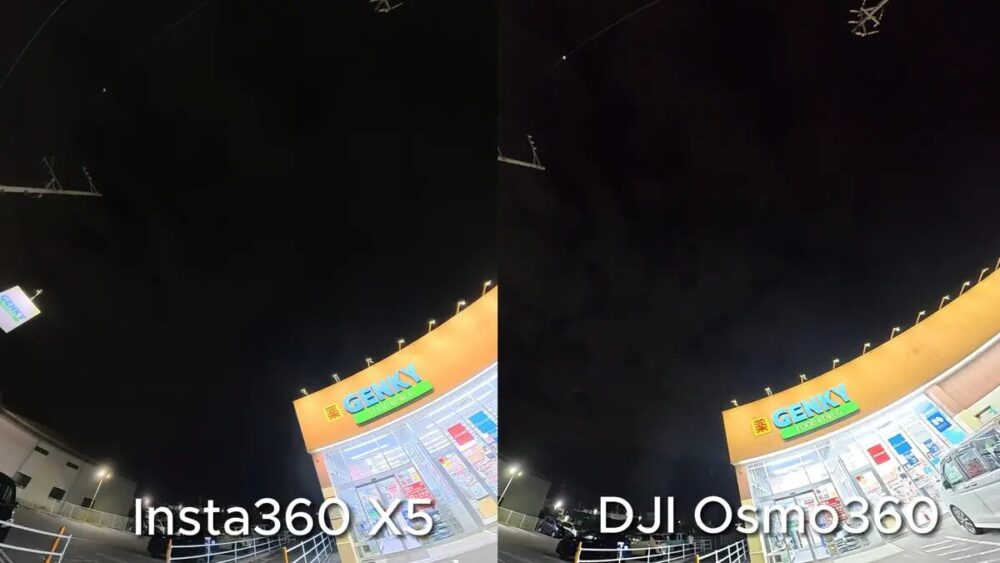
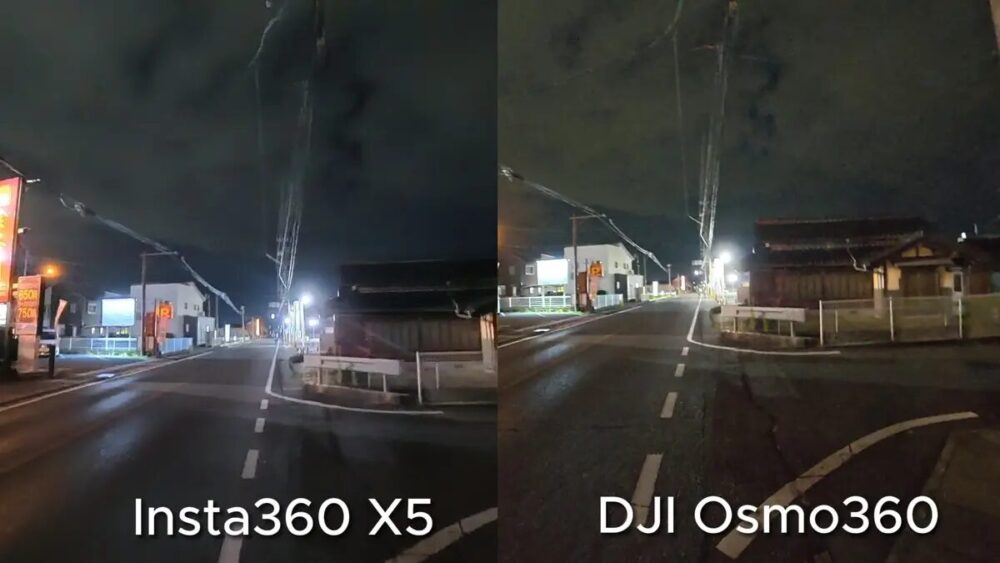
Performance differences are most apparent in night shooting, so understanding each camera's low-light output will help you decide which colour rendering approach suits you better.
When it comes to night shooting, the Insta360 X5 comes out on top. Dark areas stay appropriately deep without being contaminated by external light sources, and highlight detail is preserved. Zooming in, the DJI Osmo 360 shows some overexposure in bright areas, while the X5 retains more complete colour information and resolution.
The Insta360 X5's colour accuracy and light control in dim conditions is outstanding, and the wide-angle lens delivers excellent image quality too.
Insta360 X5 Advantages
Ergonomic Vertical Form Factor
Although the Insta360 X5 is 16g heavier than the DJI Osmo 360, its vertical design actually makes it more comfortable to hold. One-handed operation is more secure and less prone to slipping. For me, these ergonomic advantages outweigh a few extra grams — the overall feel-in-hand is simply better. If you're primarily shooting short-form content for Instagram or YouTube Shorts, the tall vertical screen also makes it much more intuitive to review your recordings.
Smooth Touchscreen Experience
The DJI Osmo 360 starts up faster, but the Insta360 X5's swipe gestures feel noticeably smoother. Both are among the most user-friendly action cameras on the market, and intuitive operation is a strength they share.
HDR Colour Rendering
Although the DJI Osmo 360 has higher specs on paper, I personally feel the X5 delivers superior image quality in practice. In particular, the X5 gives you the freedom to toggle between high-performance HDR and pure 8K resolution. The DJI Osmo 360 does support HDR in 8K, but its performance feels like it sits somewhere between the X5's HDR mode and its native 8K mode — slightly behind in both.
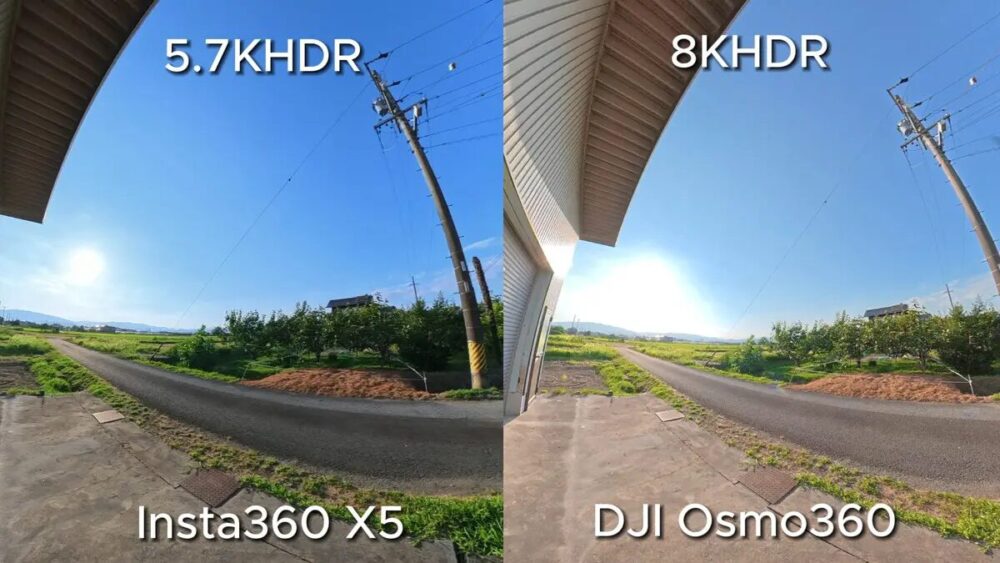
Superior Landscape Image Quality
I feel the DJI Osmo 360 is better suited for selfie-focused shooting, while the X5 is the stronger choice for landscapes. For me, a 360° camera is primarily for capturing scenery and people — not just selfies. The right combination of resolution and contrast is what truly brings out beautiful, vivid, and immersive imagery.
InstaFrame Mode
With a traditional 360° camera, you always need to reframe your footage after shooting — selecting and cropping the portion you want to use from the 360° recording before sharing. With the Insta360 X5, InstaFrame mode lets you skip the reframing step entirely.
The Insta360 App
Looking purely at hardware specs, some metrics on the Insta360 X5 fall short of the DJI Osmo 360 — but its most outstanding advantage lies in its exceptionally user-friendly companion app. Even users with zero experience using a 360° camera can get up to speed quickly.
This ease of use is a core strength that Insta360 has developed through years of deep focus on the 360° camera space. The Insta360 App makes the entire workflow — from recording to editing to posting on Instagram or YouTube — smooth and seamless. If you're not confident in your video editing skills and want an efficient, stress-free experience, the Insta360 X5 is the more suitable choice.
Low-Light Performance
The Insta360 X5‘s night shooting mode is genuinely impressive — which is hardly surprising.
In fact, Insta360 has long outperformed DJI in low-light colour accuracy and light management. Even before the X5 launched, the brand had already applied its proprietary PureShot technology to models like the Ace Pro 2, demonstrating a deep-rooted expertise in low-light imaging. Overall, the Insta360 X5 not only delivers consistently strong night shooting quality, but its companion app also runs reliably — giving creators in dark or low-light environments both the image quality and the software stability they need to shoot with confidence.

DJI Osmo 360 Advantages
Compact and Lightweight
For everyday travel, the Insta360 X5's vertical profile is easier to hold; but the DJI Osmo 360‘s compact, square design makes it much easier to mount on a helmet. Just like the Osmo Action 5 Pro, DJI has strong appeal among extreme sports enthusiasts.
Instant Startup
While the Insta360 X5 feels smoother to navigate, the DJI Osmo 360‘s lightning-fast startup is a compelling advantage in its own right. The DJI Osmo 360 boots up in 0 seconds — or more precisely, it's ready in -0.1 seconds.
High-End 8K 50fps Specs
The DJI Osmo 360‘s flagship specs are genuinely impressive. Shooting at 8K by default — with 50fps and HDR enabled — places significant demands on the camera, yet it handles it all without overheating and with solid battery endurance. If its app and desktop software could be made a bit more stable, it would be near-perfect.
Selfie Performance
While the Insta360 X5 excels at landscape footage, the DJI Osmo 360‘s lower-contrast rendering actually works better for selfies. Thanks to its strong tolerance for backlit conditions, it effectively suppresses lens flare and ghosting.
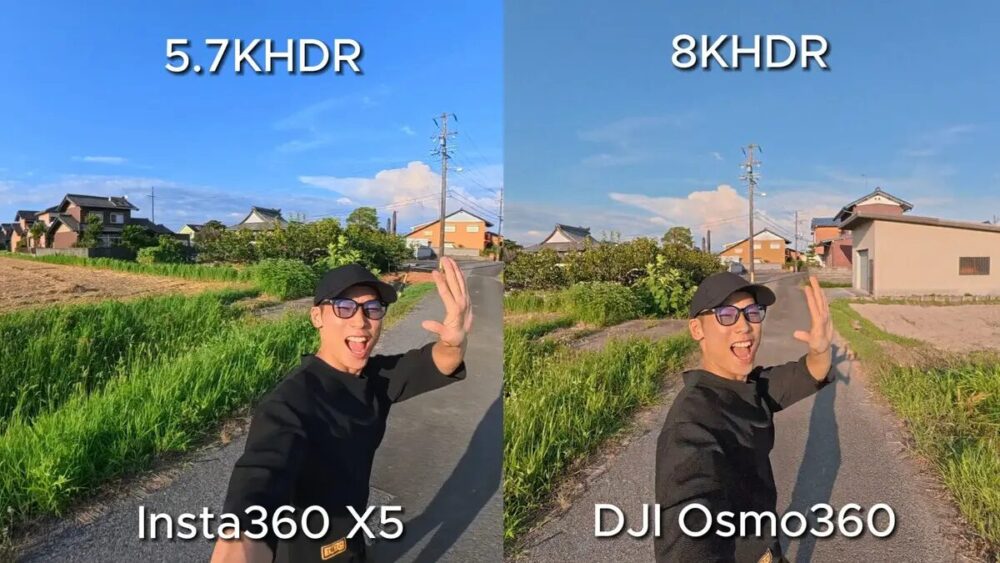
Battery Life, Built-in Storage & Dual Microphone
Another advantage of the DJI Osmo 360 is its battery longevity. Despite a 1950mAh capacity, it sustains nearly two hours of continuous recording — longer than the X5. It supports both a microSD card and 105GB of built-in storage (equivalent to approximately 90 minutes of 8K/30fps or 4 hours of 4K/30fps footage). It can also connect two wireless microphones simultaneously, compared to just one on the X5.
That said, Insta360 has since released an Ultra Battery for the X5 (2700mAh), which brings the X5's battery life up to a comparable level once upgraded.
10-bit Colour for Greater Editing Flexibility
As discussed earlier regarding HDR and noise management, if you have professional post-production needs, DJI may be the better fit. The DJI Osmo 360 supports 10-bit recording with Log colour profiles in Pro mode, preserving maximum colour detail and luminance range — giving you far greater creative freedom in grading and editing.
I'm currently learning DaVinci Resolve specifically to take full advantage of the DJI Osmo 360's footage potential and unlock the benefits of its superior post-production headroom.
DJI Osmo 360
A flagship dual 1-inch sensor 360° panoramic camera that redefines professional 360° filming. Whether for everyday Vlogs, extreme sports, or travel panoramas, it effortlessly captures cinematic footage.
Drawbacks: DJI Osmo 360 vs Insta360 X5
With all the positives covered, let's now look at the weaknesses of both the DJI Osmo 360 and the Insta360 X5.
DJI Osmo 360 Drawbacks
Drawbacks
7Insta360 X5 Drawbacks
Which 360° Camera Should You Buy?
How to Choose the Right 360° Camera
For a 360° camera, Insta360 X5 is my top recommendation.
It excels across multiple core evaluation criteria — delivering outstanding results in image quality, shooting experience, and post-production workflow alike.
While the Insta360 X5 carries a slight price premium over the DJI Osmo 360, the added quality of experience it delivers makes it anything but overpriced. From shooting to editing to sharing, it gives you satisfaction that exceeds its price tag — making it an exceptional value-for-money creative partner. The X5 also frequently goes on sale with 10% discount promotions, bringing the price gap between the two cameras down to a very manageable level.
Why Choose the Insta360 X5?
The Insta360 X5 is not only intuitive and smooth to operate as a hardware device — its companion app and desktop software are also reliably stable. It lets you freely toggle HDR on or off, and its AI-powered adaptive lighting technology ensures high-quality panoramic footage across varying and challenging lighting conditions, with no friction in the shooting experience.
What's more, the X5's night shooting and underwater recording capabilities are excellent — requiring minimal setup to capture outstanding images from dawn to dark. From every angle, the Insta360 X5 is solidly built and is the ideal entry point for anyone new to 360° or action cameras.
For beginners entering the 360° camera world, the Insta360 X5 is the first choice I'd recommend.
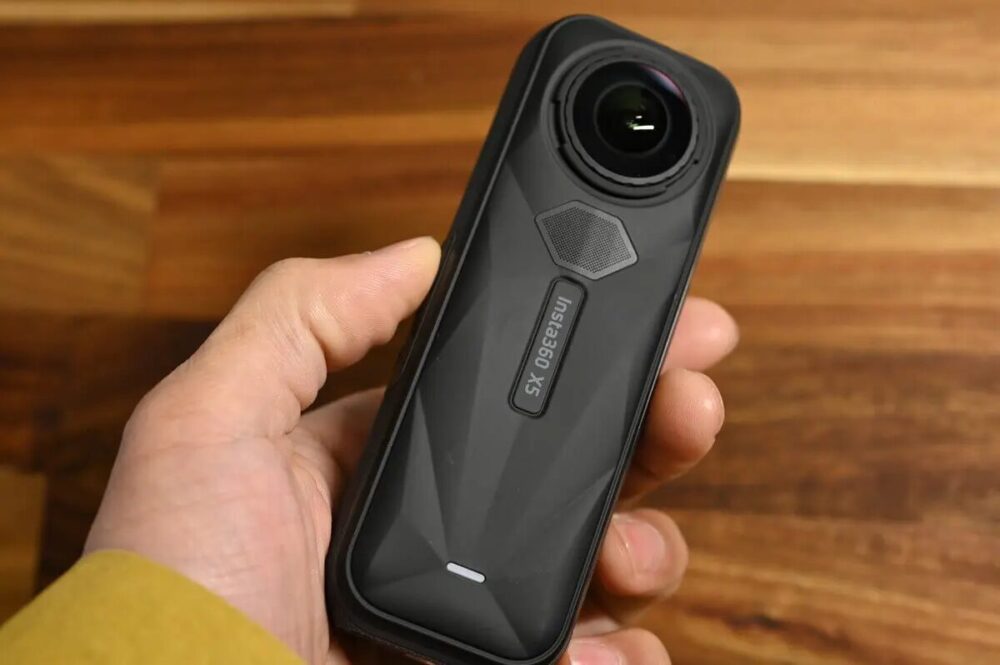
Insta360 X5
Insta360's next-generation 360° action camera featuring dual large sensors, top-tier stabilisation, 8K image quality, and an unparalleled shooting experience — redefining the performance ceiling for 360° cameras.
Why Choose the DJI Osmo 360?
If you have solid editing skills and the right shooting environment, the DJI Osmo 360 is the top choice — especially given its competitive price.
For existing X3 or X4 owners, the DJI Osmo 360 offers a distinct enough character that owning both cameras would be a genuinely enjoyable combination. For action sports users in particular, the Osmo 360's compact form factor is a compelling advantage.
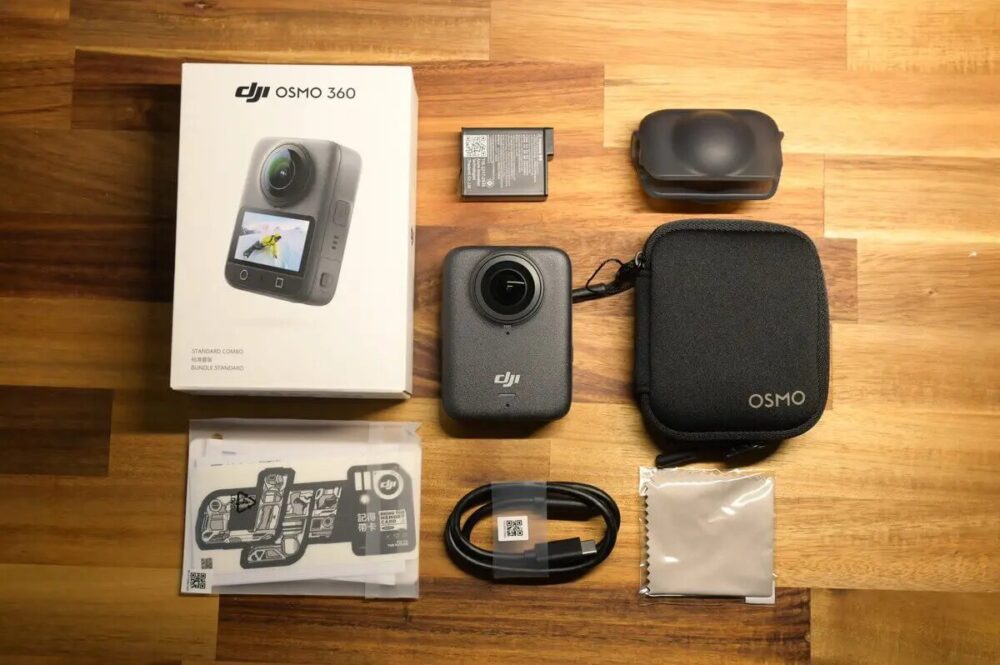
DJI Osmo 360
A flagship dual 1-inch sensor 360° panoramic camera that redefines professional 360° filming. Whether for everyday Vlogs, extreme sports, or travel panoramas, it effortlessly captures cinematic footage.