Want to capture breathtaking moments while diving? A high-quality waterproof action camera lets you effortlessly document the beauty of the underwater world — from vibrant coral reefs and schools of fish to your own diving silhouette — turning every dive into footage worth watching again and again.
This guide breaks down the key factors to consider when choosing an underwater action camera, and recommends 5 top-rated dive cameras — all released between 2025 and 2026, representing the latest models available on the market. A detailed spec comparison is also included to help you quickly find the best underwater action camera for your needs, so you never have to worry about missing a shot on your next dive.
Why Do You Need a Dedicated Diving Action Camera?
Underwater filming and land-based shooting are fundamentally different. While a smartphone paired with a waterproof case may work on a budget, it often falls short during deeper dives. Here are the three major challenges of underwater videography:
3 Major Challenges of Underwater Videography — Why Phones Fall Short
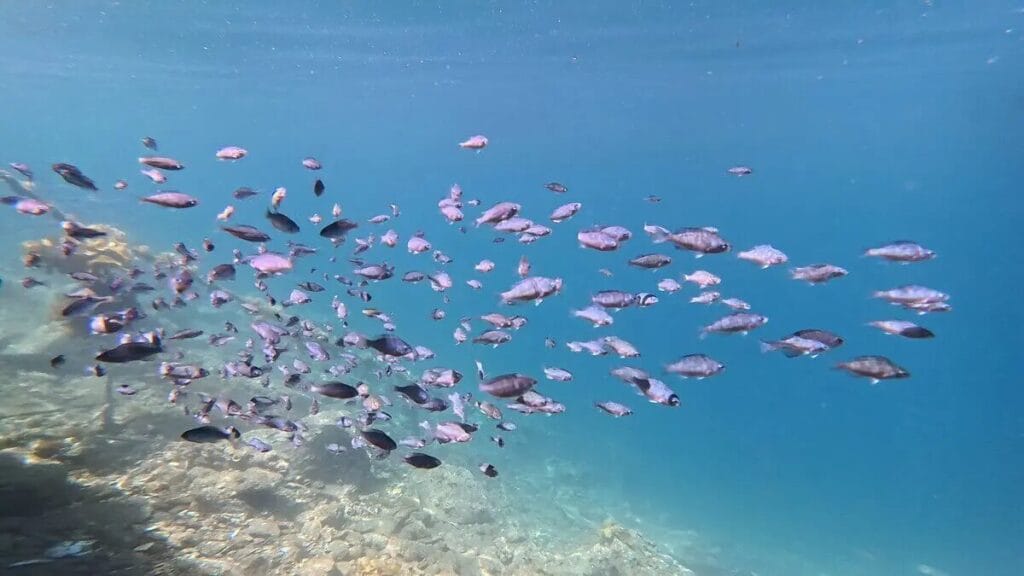
Choosing an action camera with solid waterproof ratings and excellent underwater image quality is essential. Whether you're snorkeling, freediving, or scuba diving, a purpose-built underwater camera ensures you capture clear, color-accurate footage every time.
6 Key Factors When Buying a Diving Action Camera
Before purchasing a dive camera, keep these 6 essential criteria in mind: waterproof depth, image quality & color accuracy, low-light performance, ease of use underwater, battery life, and after-sales support.
Diving Action Camera — 6 Key Buying Criteria
Waterproof Depth
Snorkeling / Freediving → Bare camera waterproofing of 10–20 meters is sufficient
Scuba Diving / Deep Diving → A dive bundle with a dive case is recommended, offering 50–60+ meters of waterproofing
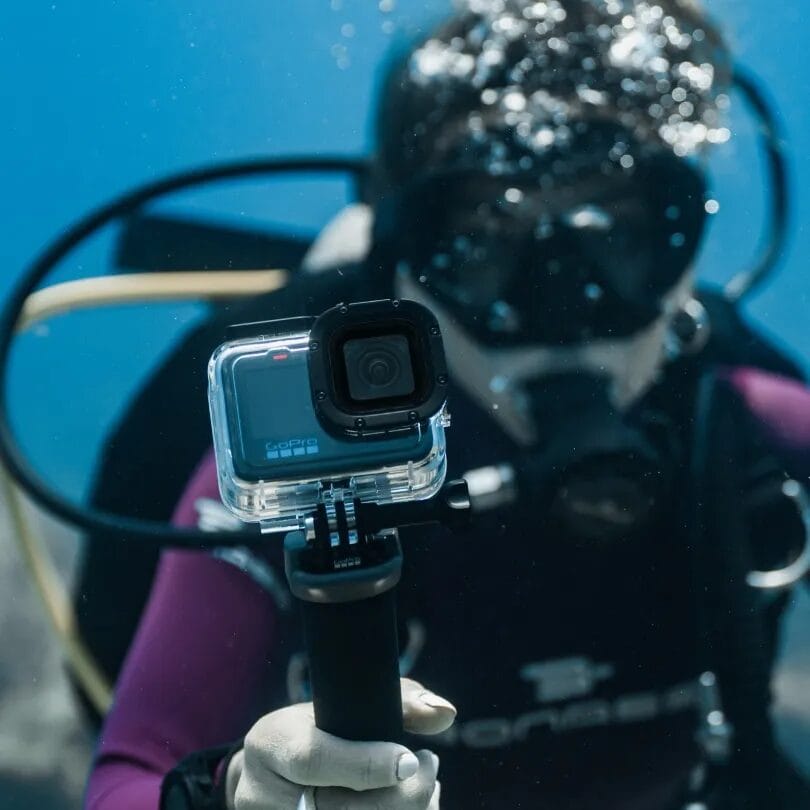
Image Quality & Color Reproduction
Choose a camera that accurately reproduces underwater blue tones and supports HDR or AI color correction for sharper, more natural-looking footage
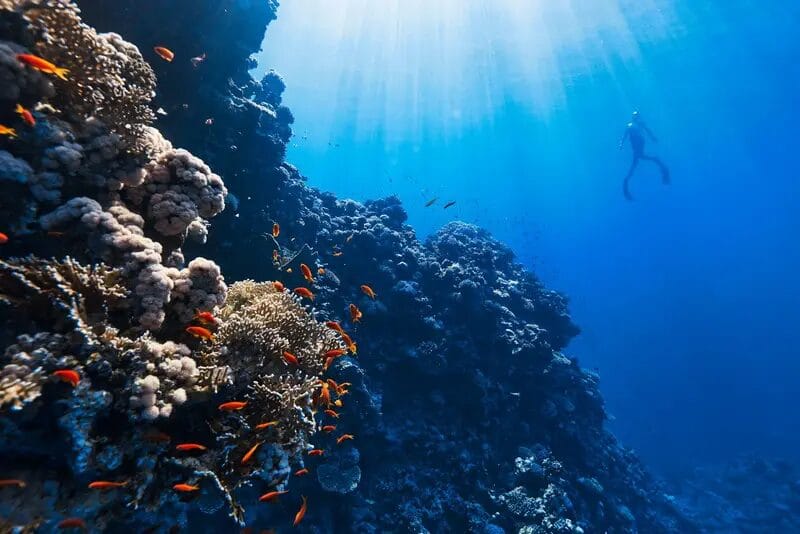
Low-Light Performance
Deep-sea recording is often light-deprived — look for a camera with a large sensor or a dedicated low-light optimization mode
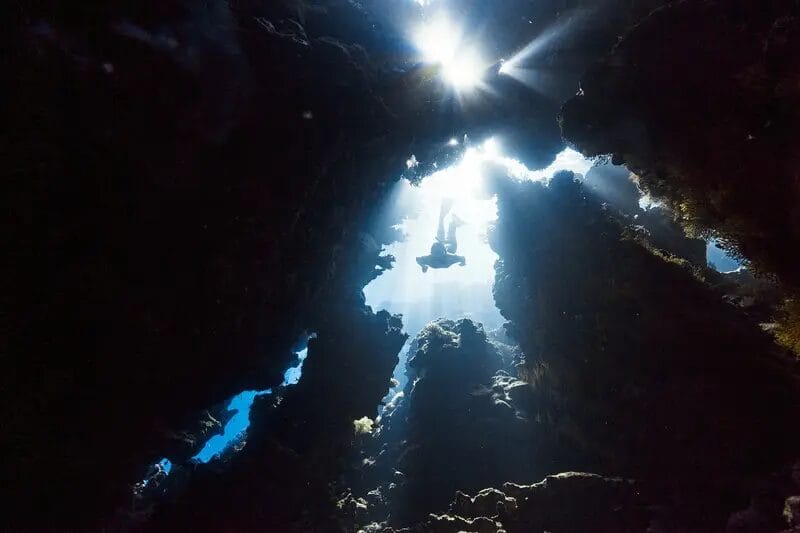
Ease of Use
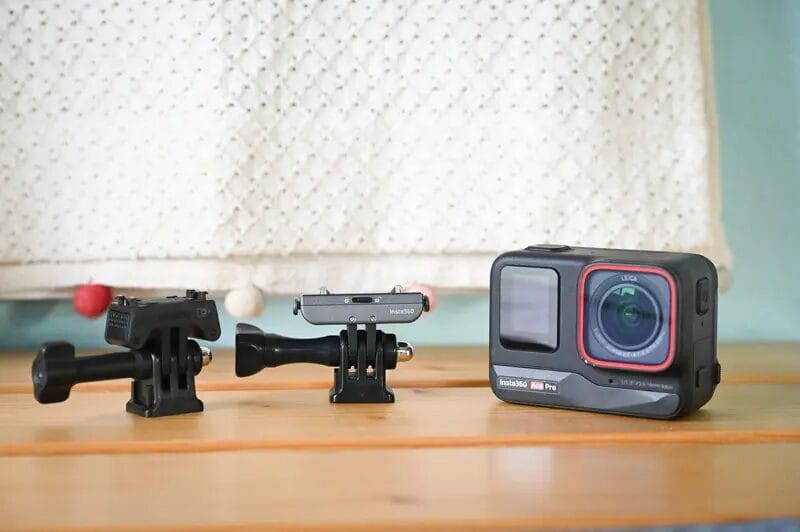
Quick-release mount support, a clear display, and large buttons → safer and more convenient to operate underwater
Battery Life
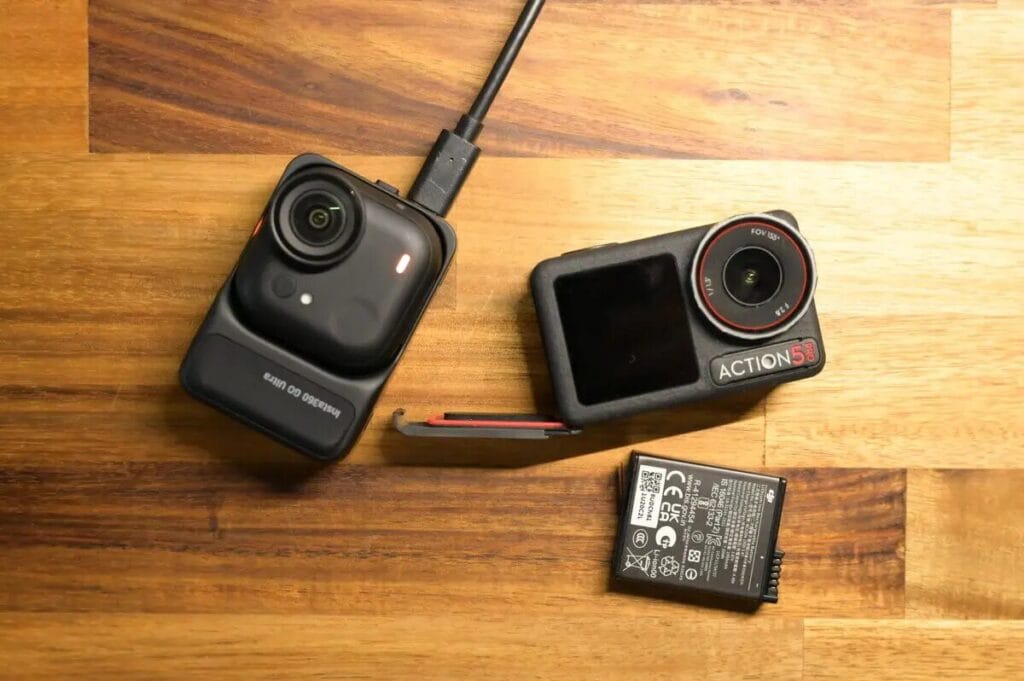
Dive sessions typically last 1–2 hours — battery life should be at least 100 minutes (150+ minutes recommended), with a battery capacity of 1800mAh or above
After-Sales Support & Warranty
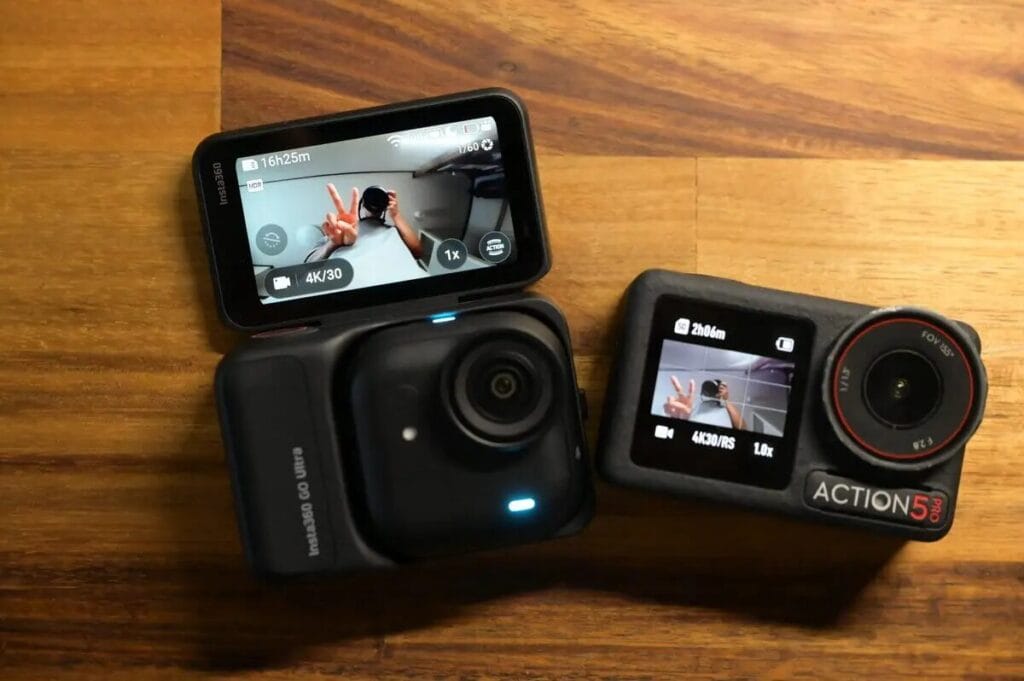
Established brands — such as the three leading action camera manufacturers DJI, Insta360, and GoPro — typically offer reliable after-sales support and are far more dependable than budget alternatives.
Top 5 Best Dive Cameras for 2026
Dive Camera Spec Comparison
← Scroll left/right to view full table →
| Model | Bare Waterproof | Dive Case | Resolution | Battery | Battery Life | Underwater Color | |
|---|---|---|---|---|---|---|---|
| Ace Pro 2 | 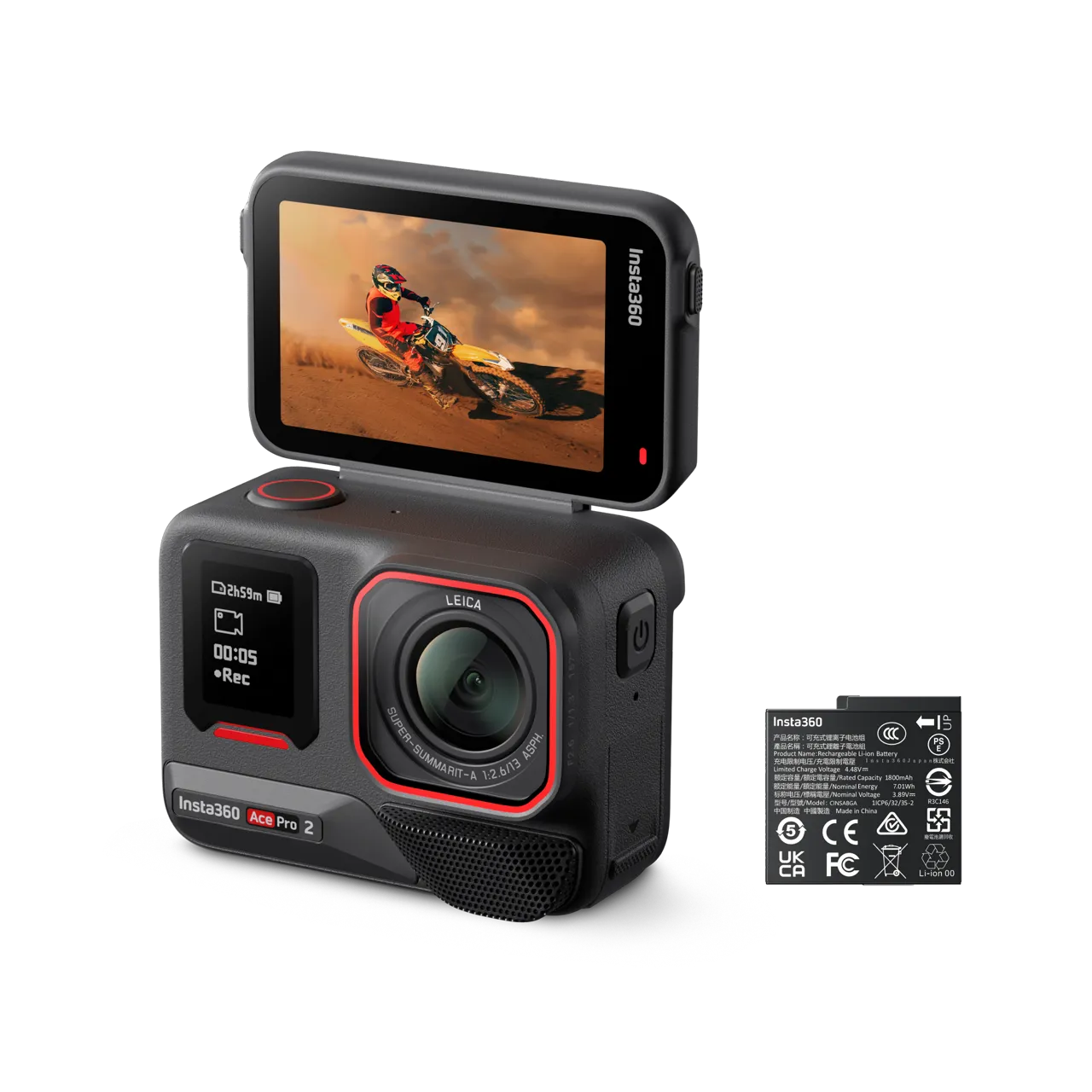 |
12m | 60m | 8K30fps 4K120fps |
1800mAh | 112 min (4K@30fps) |
Aqua Vision 2.0 |
| Action 5 Pro | 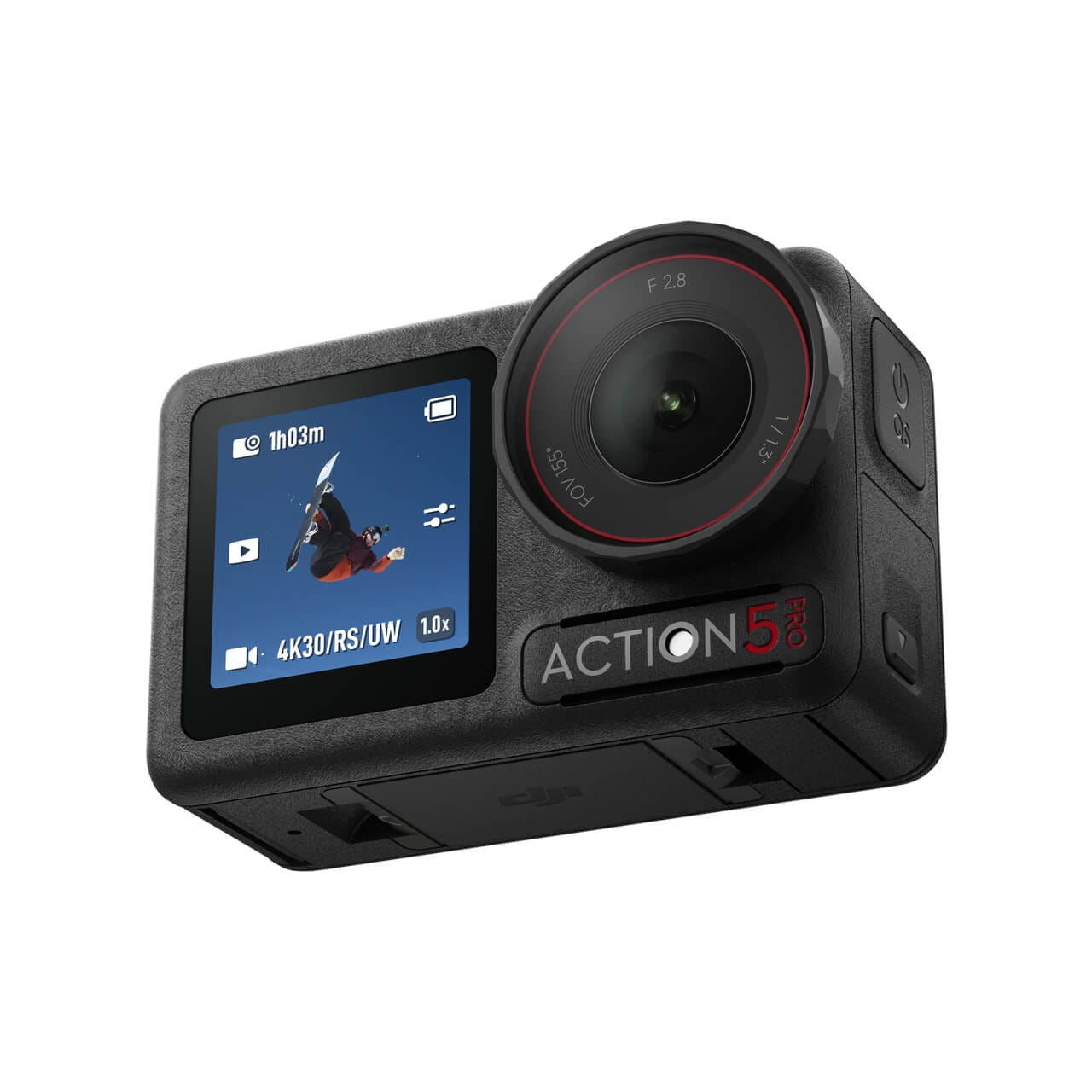 |
20m | 60m | 4K120fps | 1950mAh | 240 min (1080p@24fps) |
— |
| X5 |  |
15m | 60m | 8K30fps 4K60fps |
2400mAh | 185 min (8K@30fps) |
Aqua Vision 2.0 |
| X4 |  |
10m | 50m | 8K30fps 4K60fps |
2290mAh | 135 min | Aqua Vision 2.0 |
| HERO 13 | 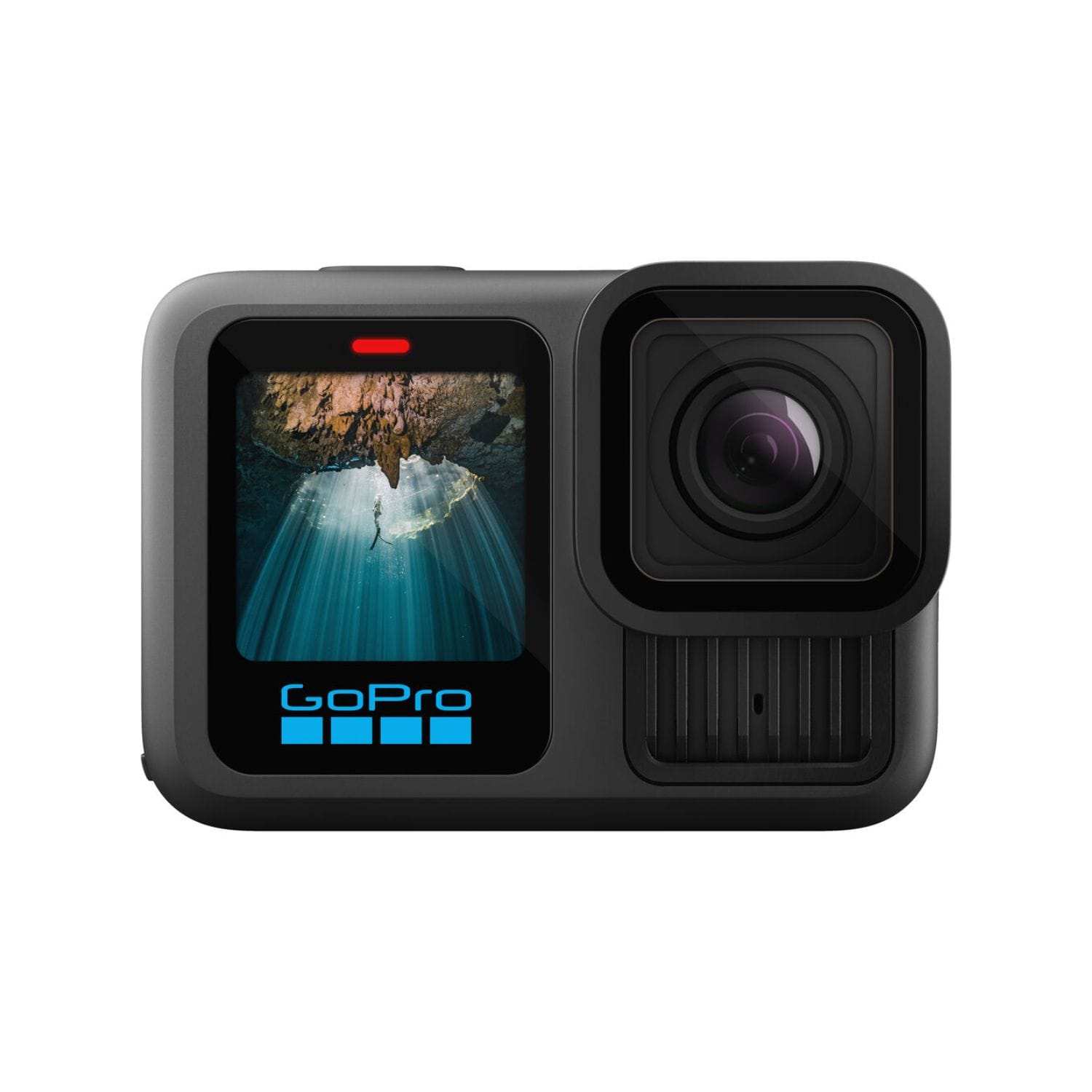 |
10m | 60m | 5.7K60fps 4K120fps |
1900mAh | 90 min (5.3K@30fps) |
— |
Beyond the core specs, price is also a key consideration when choosing a dive camera. Dive bundle prices currently range from NTD $16,060 to $21,718 (HKD $3,300 to $4,600) — the price gap between brands isn't significant, so pay closer attention to what accessories are included in each bundle.
Insta360 X5 is the priciest option of the bunch, but it's also the only brand to offer two distinct dive bundles — one for snorkeling and one for deep diving (the Premium Dive Bundle and the Invisible Dive Bundle), making it the most accessory-complete option ahead of DJI and GoPro.
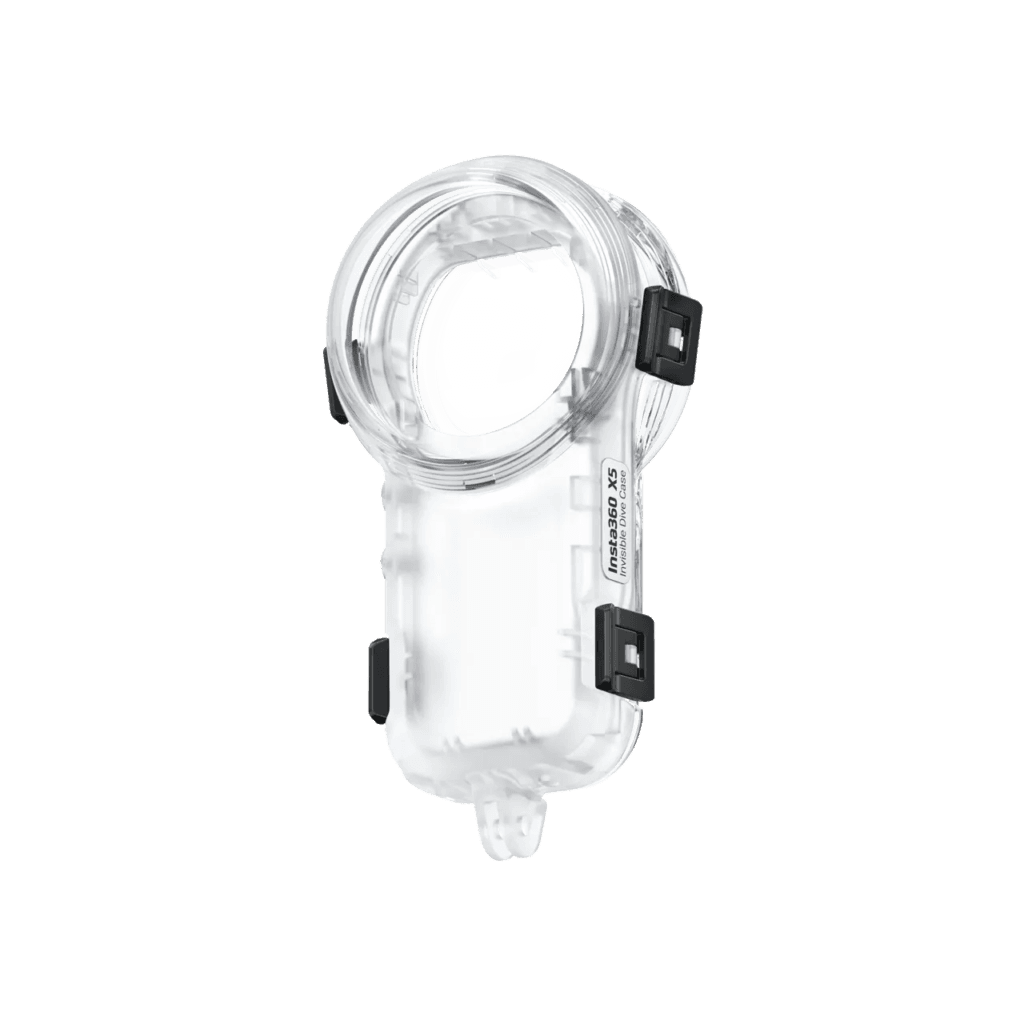
Ideal for deep diving where external light cannot reach
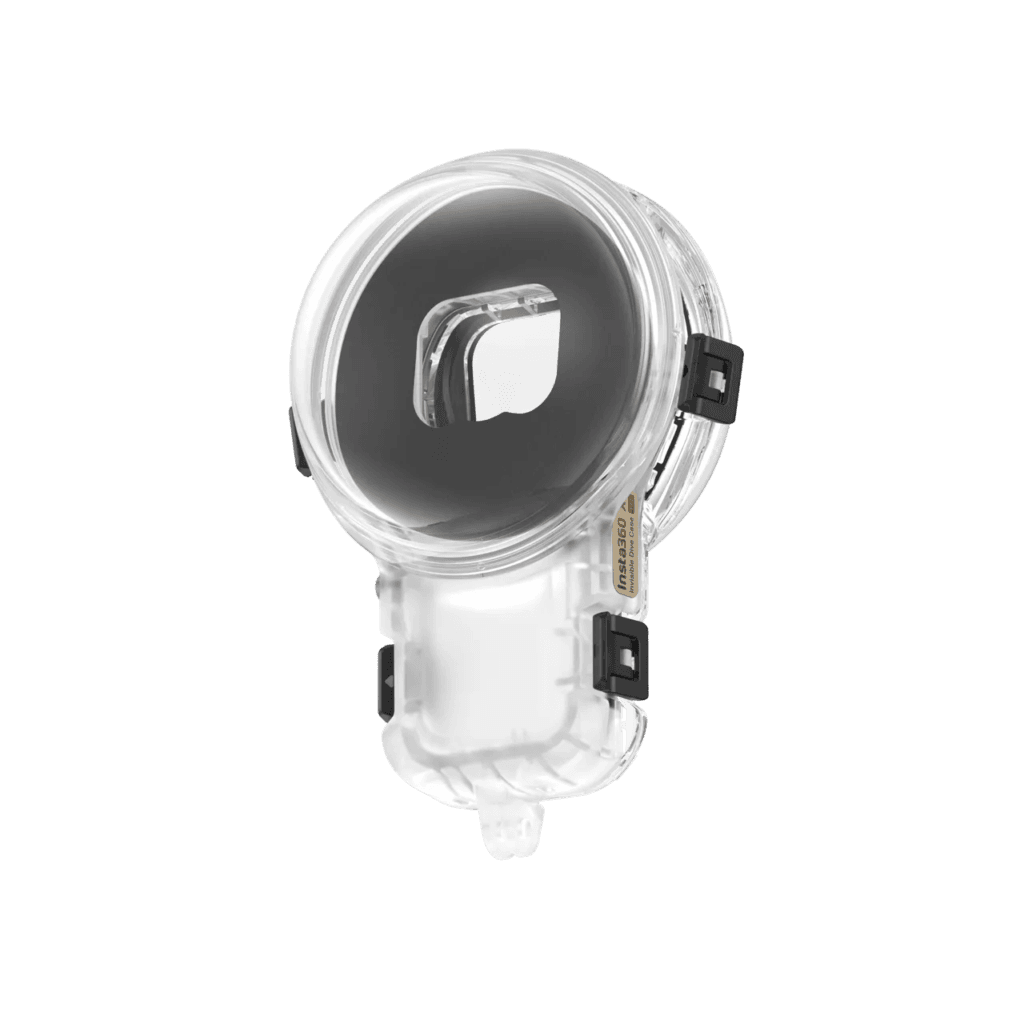
X5 Premium Invisible Dive Case
Automatically detects and activates dive case mode — ideal for shallow diving and snorkeling
Dive Bundle Price Comparison
| Model | Dive Bundle Price – USD | Included Accessories |
| Ace Pro 2 Dive Bundle | $513 | Wind Cap (pre-installed) 2× Batteries Standard Mount Mic Cap USB-C Cable 128GB Memory Card Dive Case Buoyancy Handle |
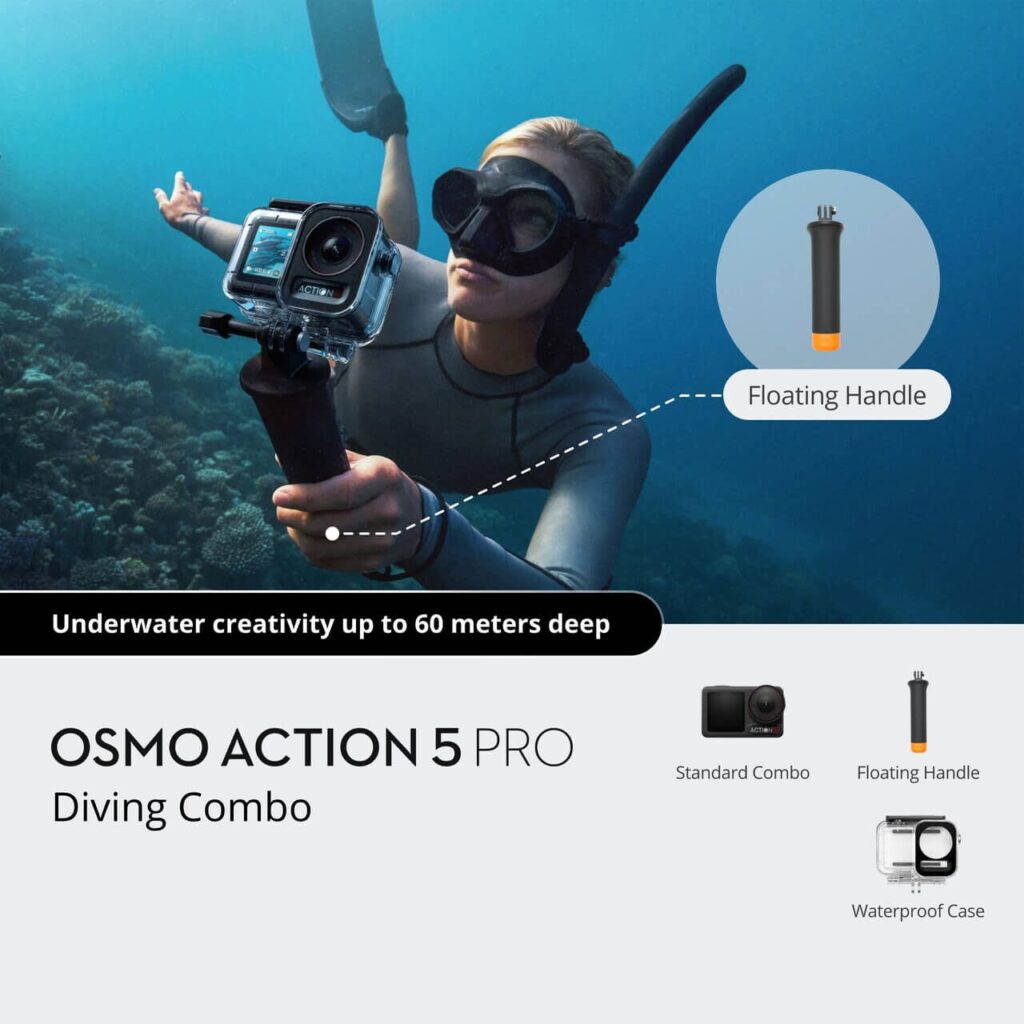
| Action 5 Pro Dive Bundle | $418 | Waterproof Case Buoyancy Handle Anti-Fog Inserts |
| X5 Invisible Dive Bundle | $700 | Lens Cap 114cm Invisible Selfie Stick Invisible Dive Case Buoyancy Rod Selfie Stick Wrist Strap |
| X5 Pro Dive Bundle | $720 | Lens Cap 114cm Invisible Selfie Stick Premium Invisible Dive Case Buoyancy Rod Selfie Stick Wrist Strap |
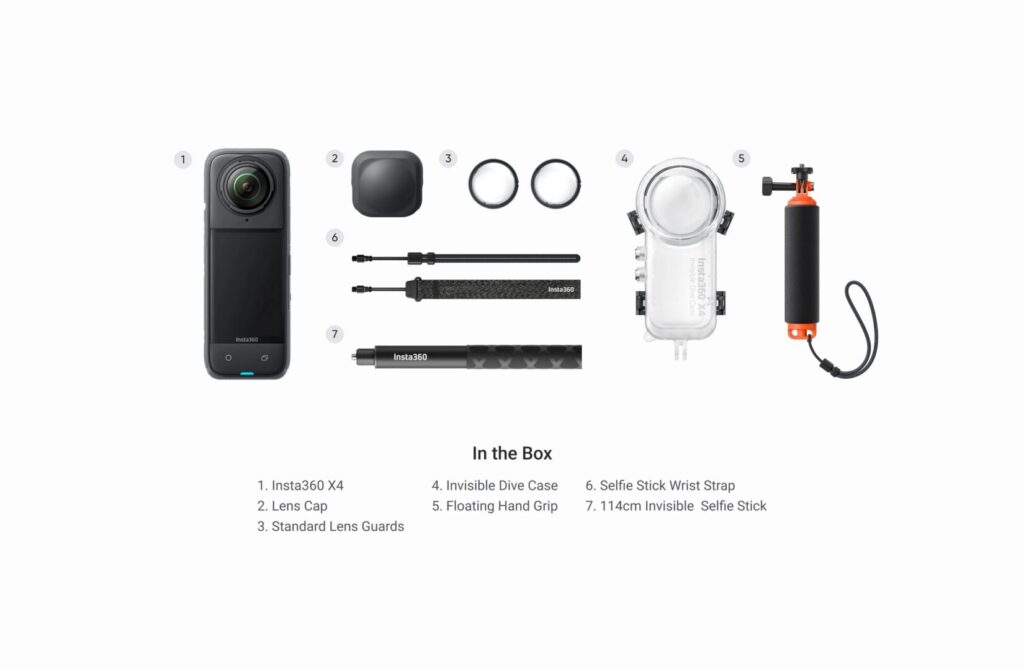
| X4 Dive Bundle | $575 | Standard Lens Guard 114cm Invisible Selfie Stick Invisible Dive Case Buoyancy Rod Selfie Stick Wrist Strap Lens Cap |
| HERO 13 Dive Bundle | $554.99 | Dive Case Extension Rod Anti-Fog Inserts Camera Bag |
Insta360 Ace Pro 2
Pros & Cons
- Dedicated Dive Mode
- AI color correction for automatic image optimization
- Outstanding low-light image quality
- Quick-release mount support
- FlowState stabilization
- Flip-out screen design
- Shorter battery life compared to DJI Osmo Action 5 Pro
Is It Good for Diving? 🤿
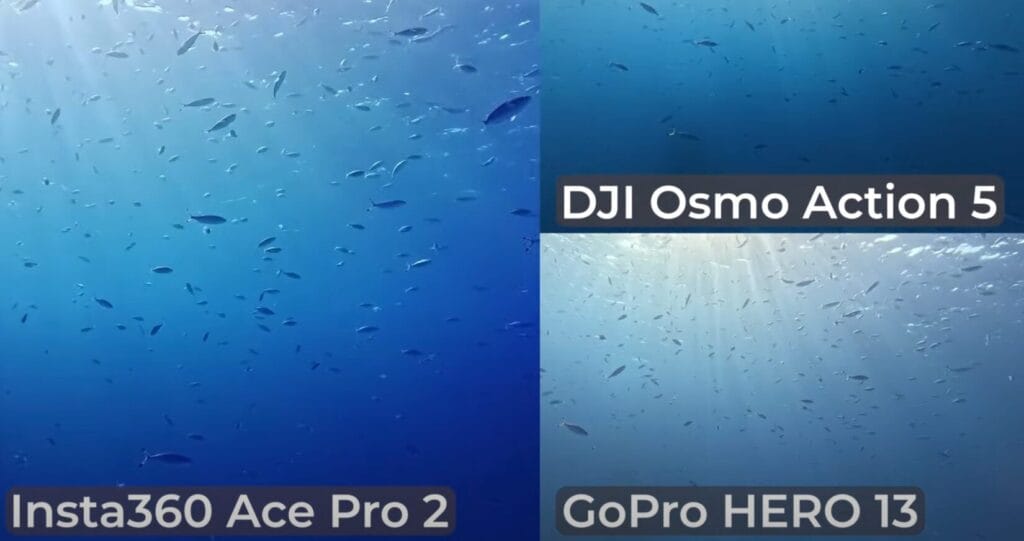
When it comes to dedicated diving action cameras, my top pick is the Insta360 Ace Pro 2. Its biggest strength lies in its exceptional low-light shooting performance, paired with powerful AI-driven color correction that delivers sharp, vibrant footage even in the dim conditions of deep water. Since underwater lighting is often several times darker than on land, if you're chasing the best possible image quality and true-to-life color accuracy, the Ace Pro 2 is undoubtedly the most compelling option available right now.
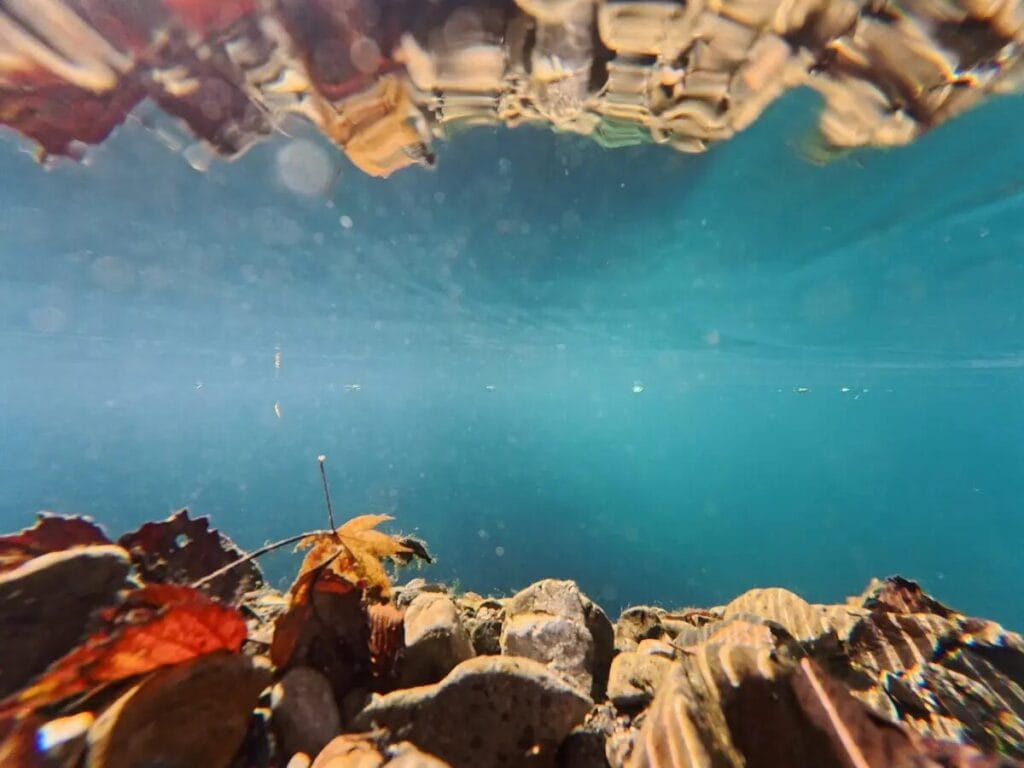
In terms of handling, the Ace Pro 2 features a quick-release mount system that requires no fiddly screwdriving. This makes swapping accessories underwater far more reassuring — no worrying about loose parts or dropped components — and in practice, it's more practical than what DJI or GoPro offer.
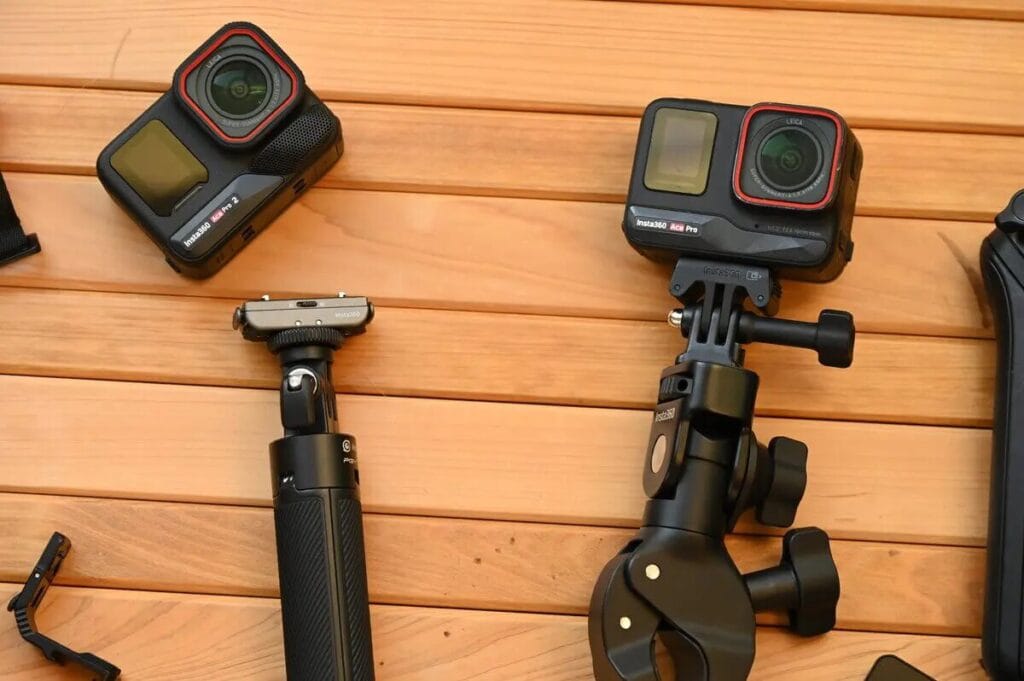
Worth noting is that the Ace Pro 2 even features a dedicated “Dive Mode,” which automatically optimizes color temperature, tone, and tonal gradation. Combined with Insta360's onboard AI assistant, footage captured underwater retains natural color and balanced contrast.
Additionally, the Ace Pro 2 is the only model available in a white color option
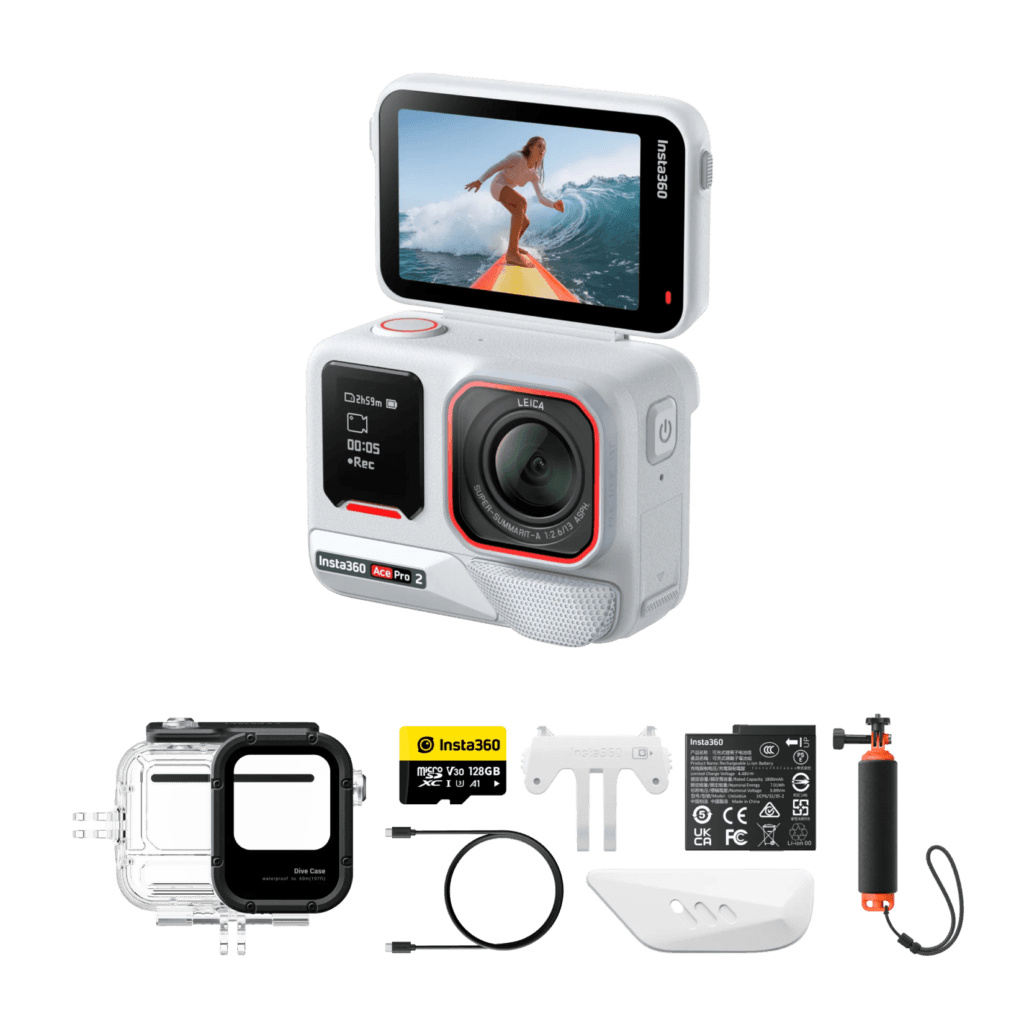
Up to 29% off on the official store + Ships within 2 days ⚡️
DJI Osmo Action 5 Pro
Pros & Cons
- 20m bare waterproofing
- Exceptional battery life
- 10-bit color with Log shooting support
- Quick-release mount support
- Buttons are harder to press; overall operation flexibility is average
- Notable limitations in image quality in low-light environments
Is It Good for Diving? 🤿
After the Ace Pro 2, my second recommendation for a dive action camera is the DJI Osmo Action 5 Pro.
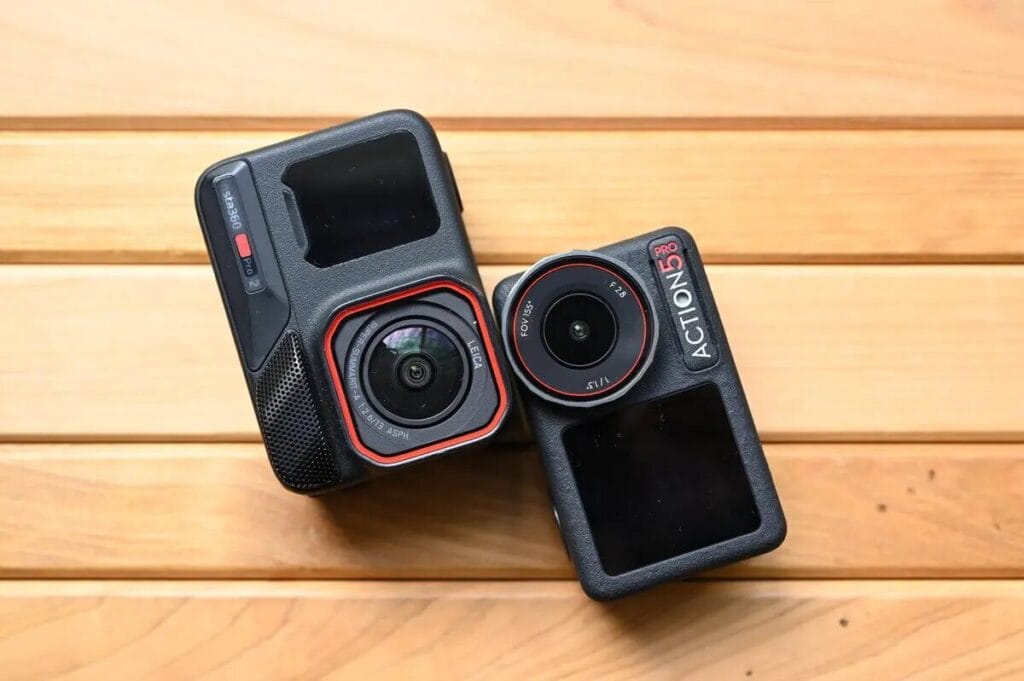
The Ace Pro 2 shoots in 8-bit color, while DJI shoots in 10-bit — capable of rendering up to one billion colors, with noticeably richer tonal gradation. Especially when shooting in D-Log mode, DJI's color depth is far more nuanced, giving you much greater flexibility for fine-tuning or applying cinematic color grades in post. That said, looking at straight-out-of-camera footage, I personally prefer the natural blue tones of the Ace Pro 2.
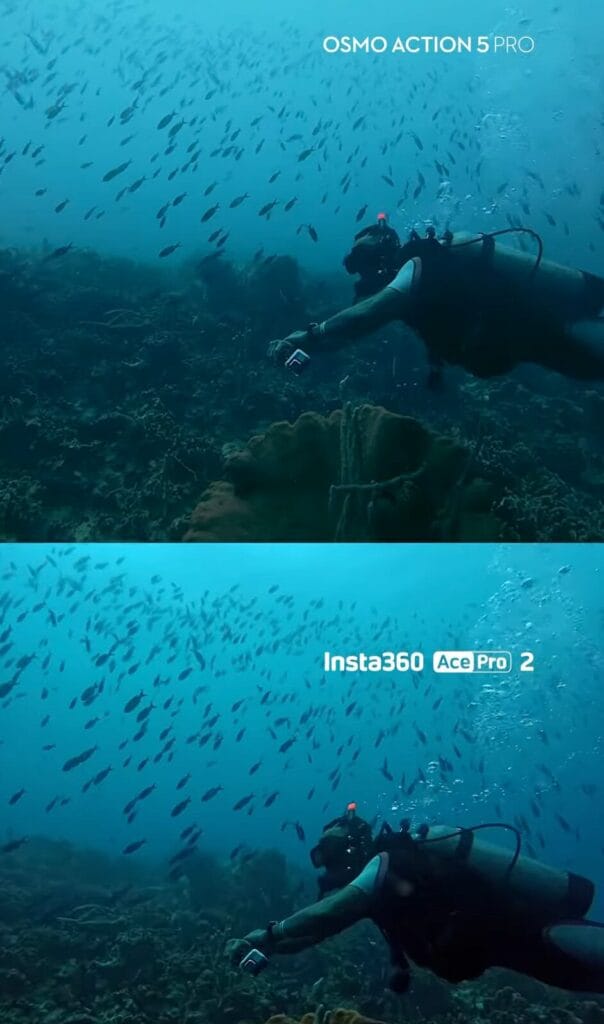
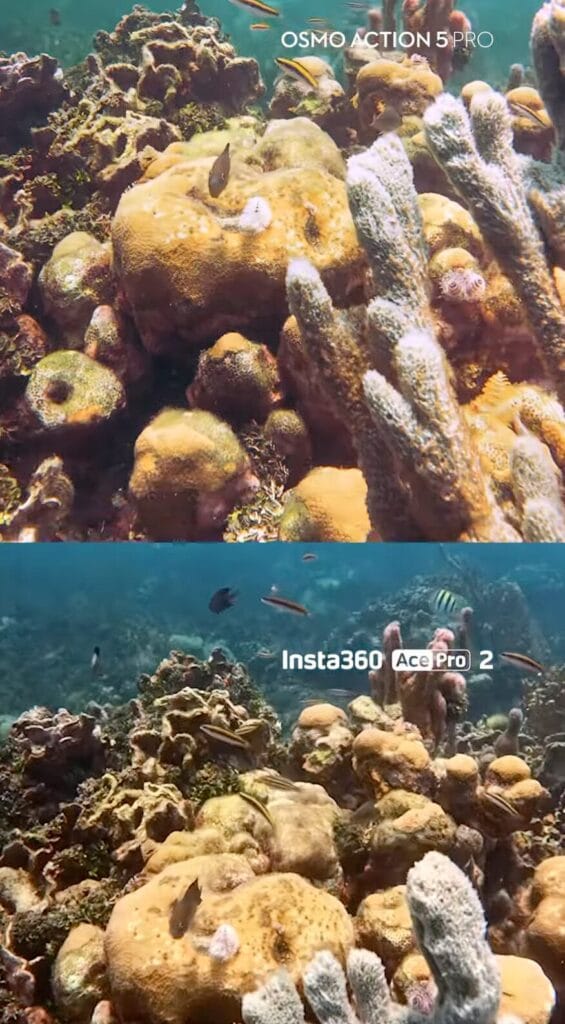
Footage courtesy of @solidostudio
Honestly, most people don't actually bother editing their footage. In that case, a camera like the Ace Pro 2 — which uses AI to automatically produce beautiful colors — is far more practical in everyday use. You shoot, and it's ready to share. In contrast, DJI's advantage lies in giving creators who know color grading the freedom to develop their own visual style. In terms of hardware design, the DJI Osmo Action 5 Pro also features quick-release mounts, similar to the Ace Pro 2.
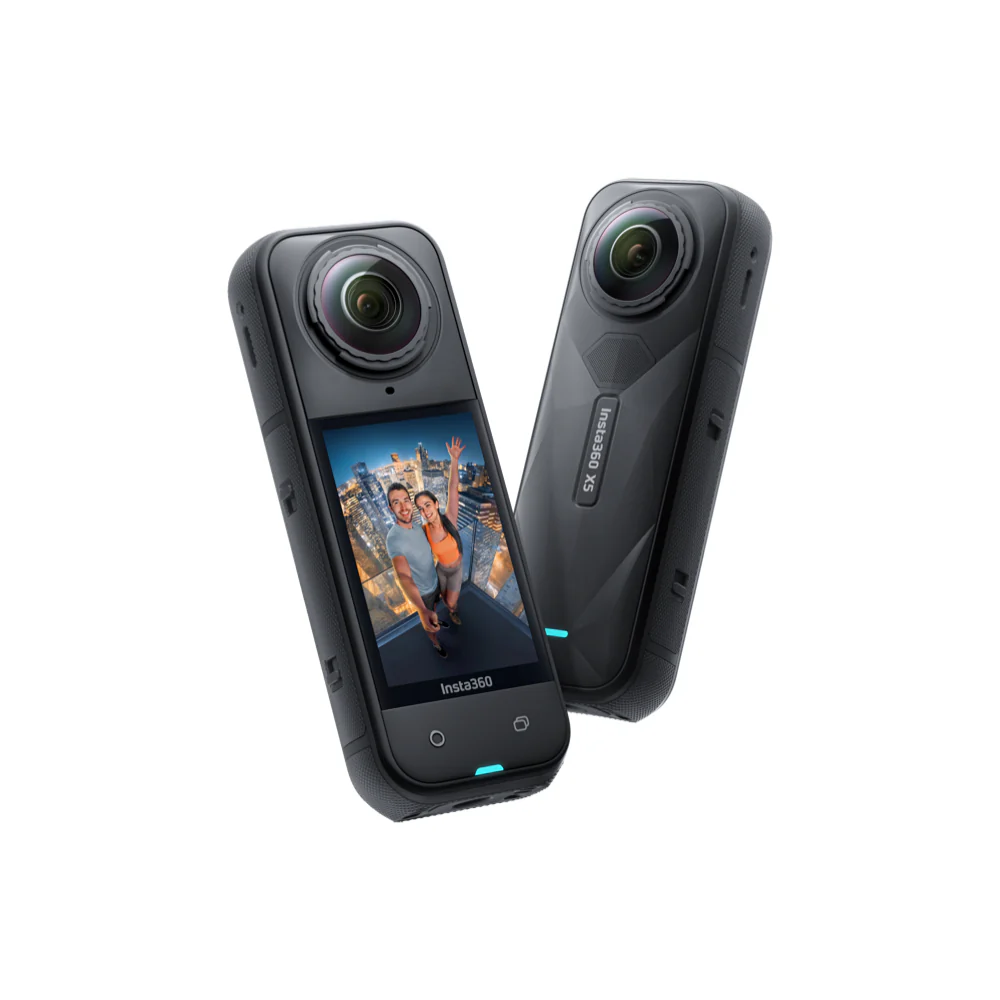
Insta360 X5
Pros & Cons
- Records 8K 360° panoramic video
- PureVideo AI noise reduction for exceptional low-light performance
- 185-minute ultra-long battery life
- Up to 60m waterproof with dive case
- Dedicated Dive Mode
- FlowState stabilization
- Auto-framing & AI reframing: automatically selects the best shots, saving significant editing time
- Higher price point
- Low-light image quality falls slightly short of the Ace Pro 2
Is It Good for Diving? 🤿
If you want to capture 360° panoramic video underwater, the Insta360 X5 is your ideal choice.
Even in the harshest underwater conditions, it delivers stunning clarity, stability, and detail in 8K 360° video. For divers who want to shoot immersive panoramic footage or ultra-wide recordings, there's virtually no better underwater action camera than the X5. Whether night diving or weaving through complex coral reefs, the X5 maintains excellent performance in low-light conditions that leave other cameras struggling.
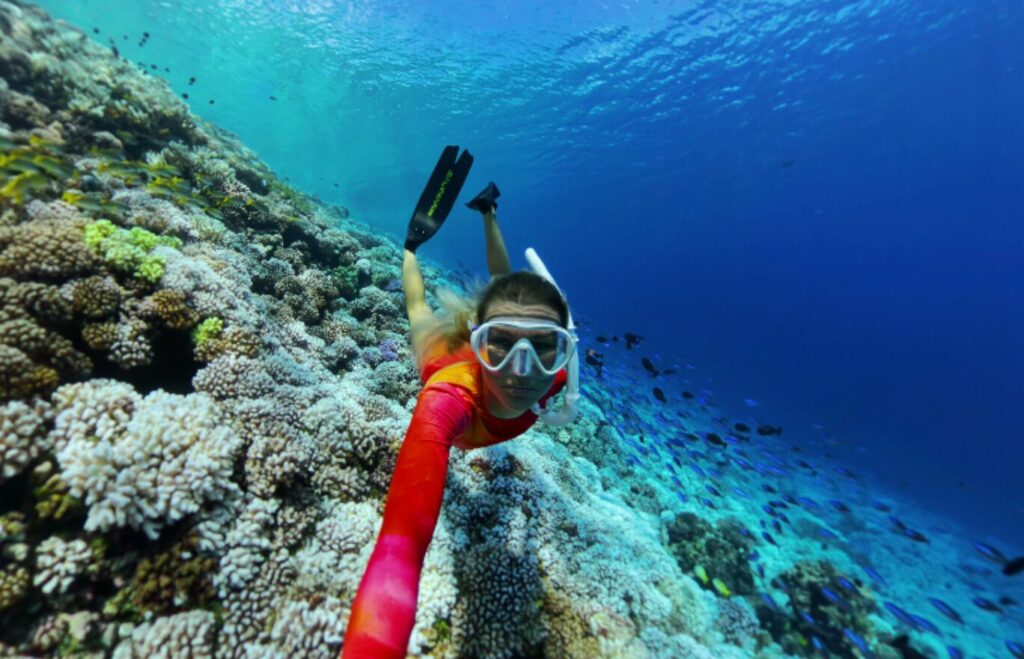
In PureVideo mode, the X5 automatically enhances shadow detail, delivering cleaner and more refined footage even in murky or dimly lit waters. Add to that its 185-minute ultra-long battery life (in endurance mode), and you can confidently shoot through an entire dive trip without interruption.
X5 Premium Dive Bundle vs. Invisible Dive Bundle — Which Should You Choose?
First, the contents of both bundles are identical except for the dive case itself
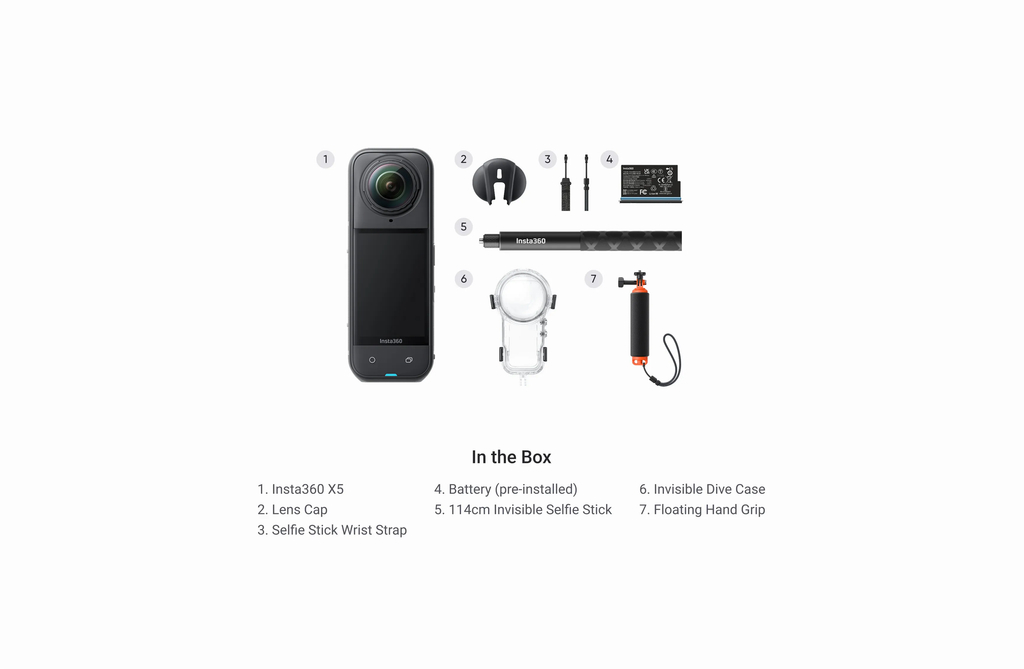
- Shallow Diving → Premium Dive Bundle, waterproof up to 50m (164ft)
- Deep Diving → Invisible Dive Bundle, waterproof up to 60m (197ft)
X5 Premium Dive Bundle (Best for Snorkeling)
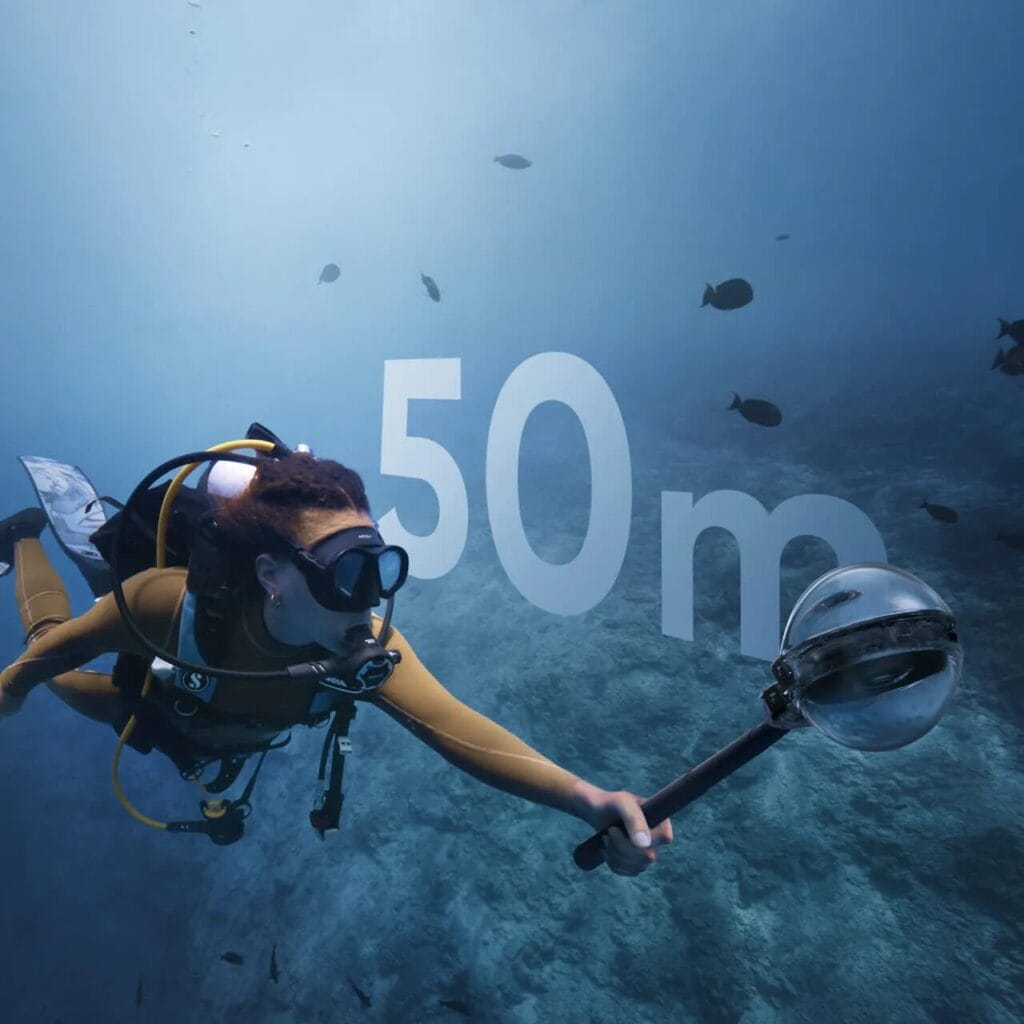
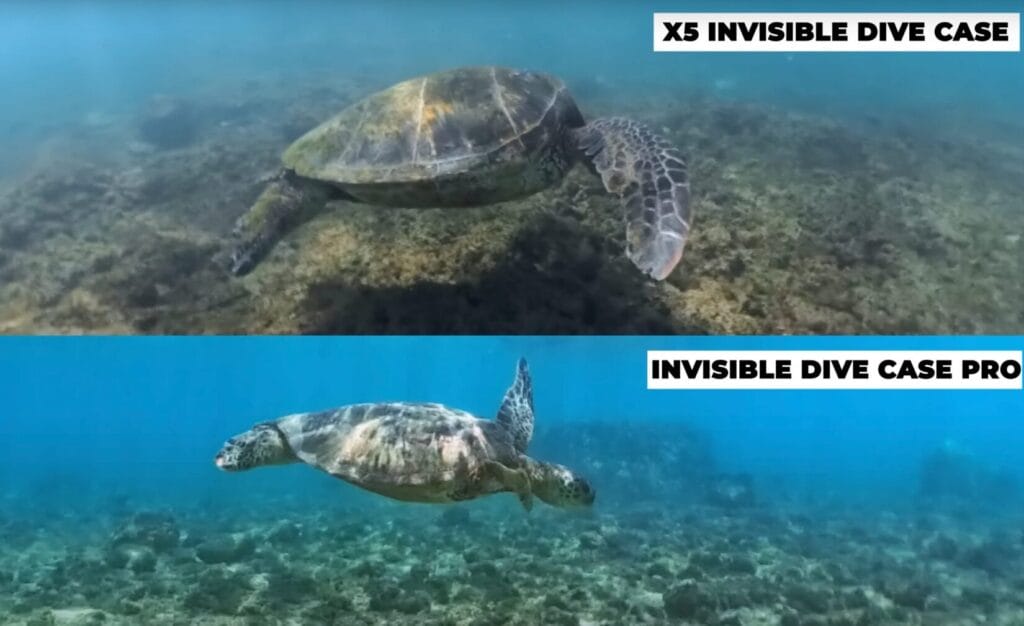
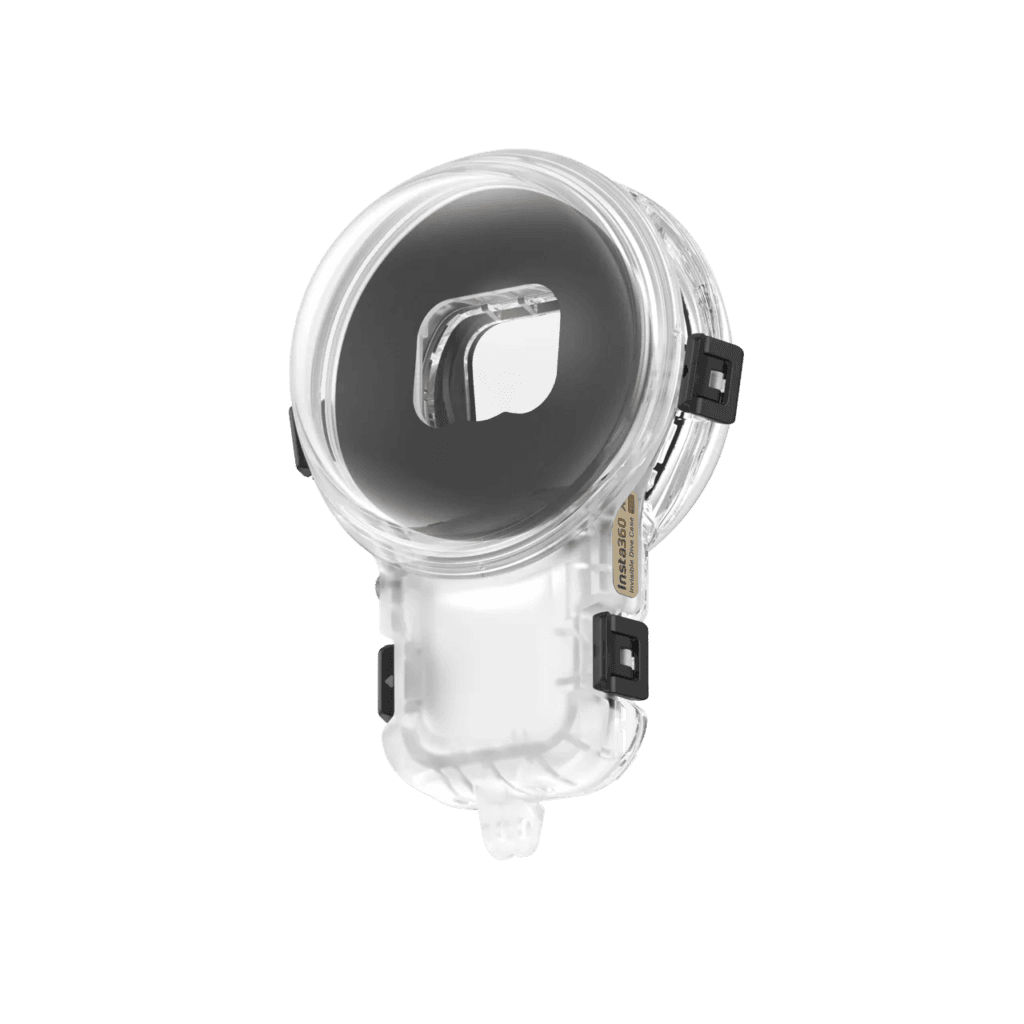
Insta360 X5 Premium Dive Case
Engineered for underwater shooting — high light transmission, distortion-resistant construction — letting you capture crisp, true-to-life high-quality footage beneath the surface.
Up to 27% off on the official store + Free gift with purchase via our link 🎁
X5 Invisible Dive Bundle (Best for Deep Diving)
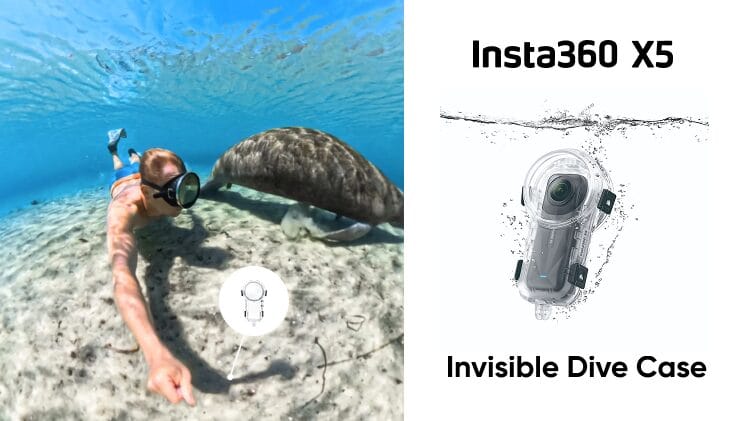
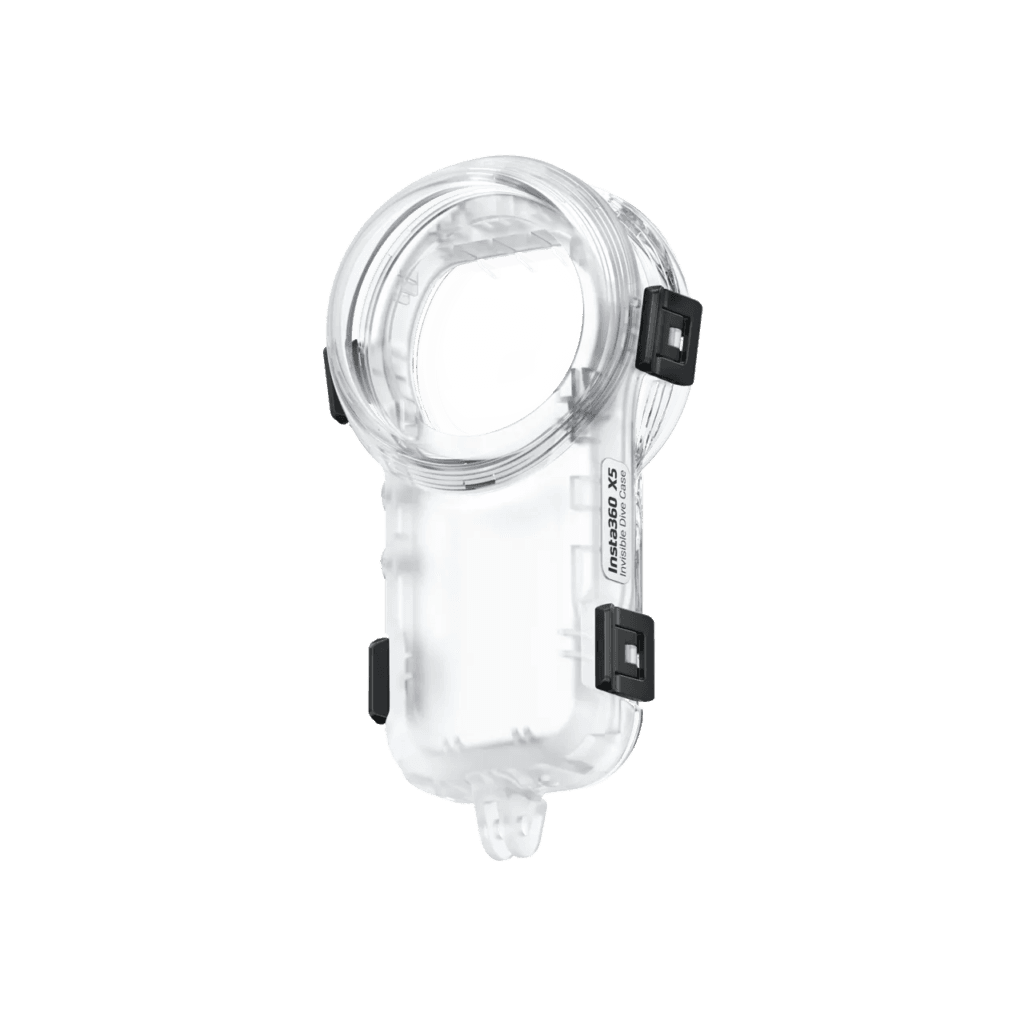
Insta360 X5 Invisible Dive Case
Designed specifically for deep-sea diving — high pressure resistance and rugged construction — with a particular advantage in low-light deep-water environments.
Up to 29% off + Free gift with purchase via our link 🎁
Insta360 X4
Pros & Cons
- Records 8K 360° panoramic video
- PureVideo AI noise reduction for exceptional low-light performance
- 185-minute ultra-long battery life
- Up to 60m waterproof with dive case
- Dedicated Dive Mode
- FlowState stabilization
- Auto-framing & AI reframing: automatically selects the best shots, saving significant editing time
- Higher price point
- Low-light image quality falls slightly short of the Ace Pro 2
Is It Good for Diving? 🤿
The X4 supports 8K 360° panoramic recording, delivering sharp and crisp footage; its waterproofing and stabilization performance are both impressive, holding steady even in strong currents or surge. For divers looking to upgrade their gear without breaking the bank, the X4 is an excellent choice.
While the X4 is the previous generation to the X5, the gap in underwater recording performance between the two isn't dramatic. The X5's main advantage is its improved low-light shooting capability — but for budget-conscious divers who don't frequently go deep, the X4 remains an outstanding value-for-money option.
GoPro HERO 13
Pros & Cons
- 10-bit color + Log shooting support
- Dive Mode to prevent blue color cast underwater
- MAX Lens Mod for 177° ultra-wide field of view
- Maximum resolution capped at 5.3K; low-light image quality lags behind DJI and Insta360 models
- Shorter battery life
- Frequently out of stock
- The rear 2.3″ touchscreen is only viewable in low-light conditions
- MAX Lens Mod requires an additional purchase
Is It Good for Diving? 🤿
Like DJI, the GoPro HERO 13 also shoots in 10-bit color depth, preserving richer tonal gradation in Log mode for greater creative flexibility in post-production color grading. The latest HERO 13 even adds a dedicated Dive Mode with underwater color correction, helping to tackle the common issue of footage appearing too blue or dark underwater.
In the past, I often worried about GoPro cameras developing condensation from prolonged recording. However, the HERO 13 has made significant improvements in this area: color reproduction is more natural and accurate, waterproofing has been substantially enhanced, and condensation is essentially a non-issue (though the body can still run warm under heavy load).
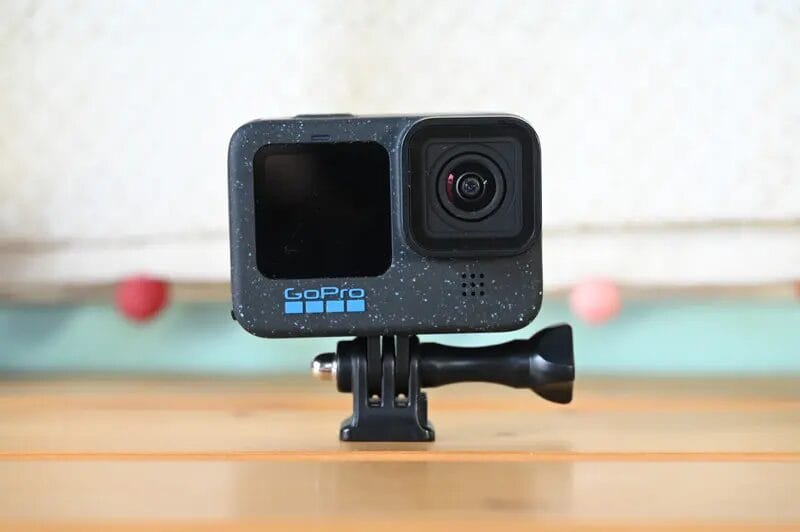
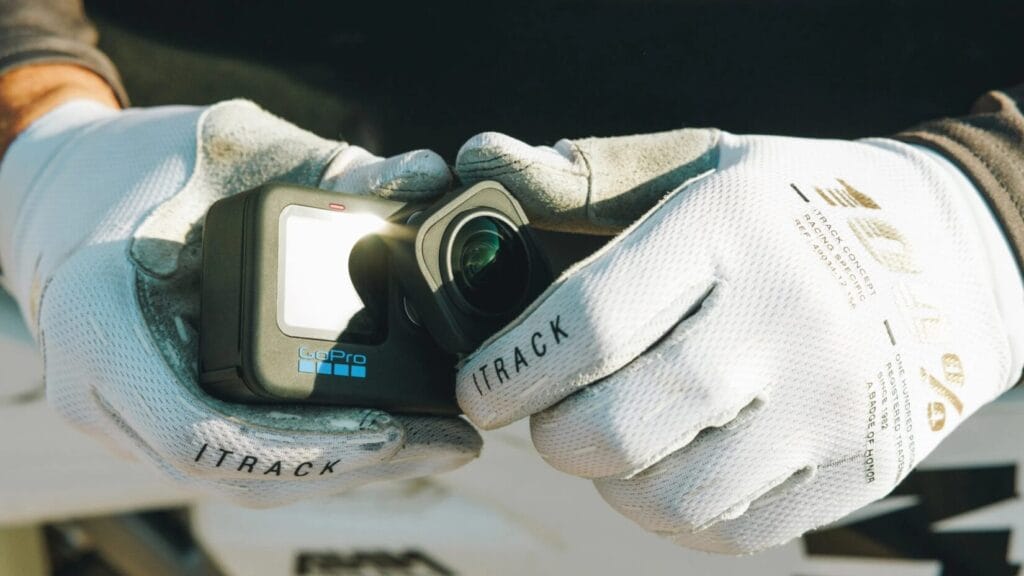
On the accessory front, GoPro uses a screw-lock mount system — while it doesn't allow for quick mid-shoot accessory swaps, it poses no real inconvenience as long as everything is properly secured beforehand. GoPro also has one exclusive advantage: the MAX Lens Mod. With this add-on ultra-wide lens, the field of view expands to 177 degrees — something no standard wide-angle action camera from rival brands can match. Compared to the full 360° coverage of the X5, however, this field of view is still somewhat limited.
Compared to the Ace Pro 2, the GoPro HERO 13's image quality is noticeably less impressive — particularly in deep-dive scenarios. Limited to a maximum recording resolution of 5.7K, footage from the HERO 13 can become visibly soft in deep-dive conditions. If deep diving is your primary use case, Insta360 or DJI would be a far better choice.
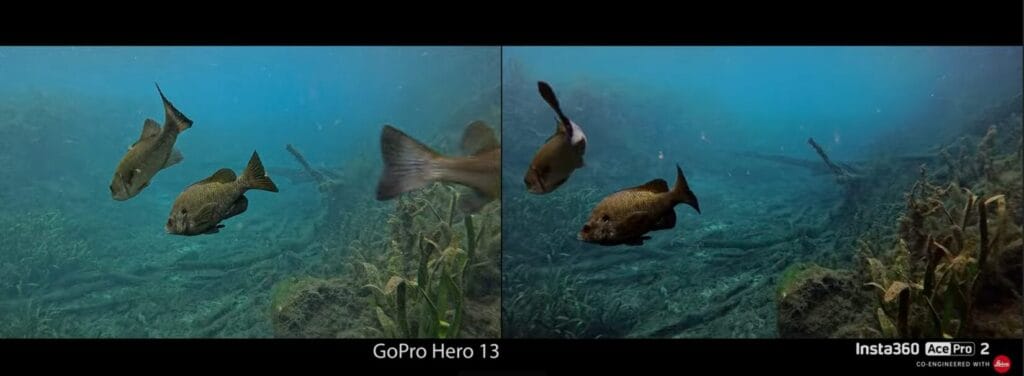
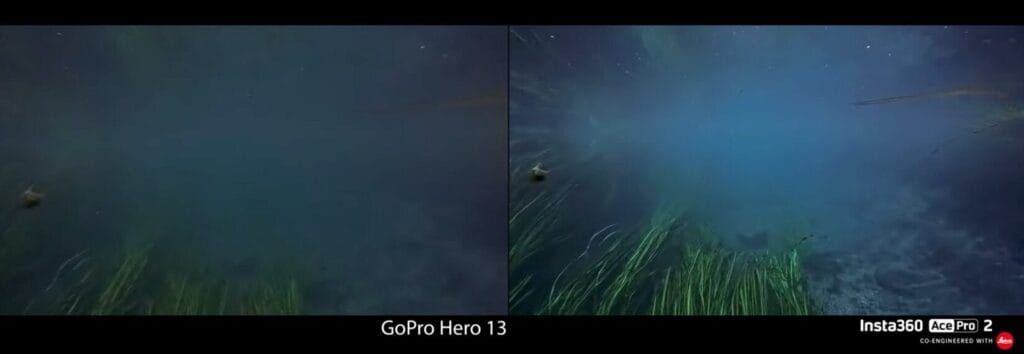
Footage courtesy of Scott Bauer Below
Underwater Action Camera Tips for Beginners
Choosing the right underwater action camera is just the beginning — don't overlook these five tips to keep your camera performing at its best while diving. Reminder: if your camera supports a Dive Mode, activate it before entering the water.
Diving Action Camera Settings — 5 Essential Tips
Master these 5 key tips to shoot more stable, brighter, and truer-to-life footage underwater — and capture professional-quality results with ease.
Frequently Asked Questions (FAQ)
- What's the difference between a dive action camera and a regular action camera?
-
The most critical difference lies in waterproof rating and pressure resistance. Regular action cameras are typically only suited for splashes or brief shallow-water use, while models designed for diving can withstand significantly greater water pressure. When purchasing, pay close attention to the rated depth — snorkeling generally requires at least 10 meters, while scuba diving calls for 50 meters or deeper, ideally with a dedicated dive case for added protection.
- What are the advantages of using an action camera for diving?
-
Waterproof & Pressure-Resistant: Safe to use bare or with a dive case in underwater environments
Wide-Angle Lens: Broader underwater field of view to easily capture coral reefs, schools of fish, and expansive scenes
Image Stabilization: Handles water movement and current — footage stays smooth and steady
Intuitive Operation: Large, easy-to-press buttons even with gloves on
Compact & Portable: Lightweight and space-efficient, easy to bring on a dive
- What is the best dive action camera for 2026?
-
Insta360 Ace Pro 2: Equipped with a Leica lens and dual AI chips, it delivers sharp, detailed footage in low-light underwater conditions — the top choice for those who demand the best underwater image quality.
Insta360 X5: 360° panoramic shooting means you'll never miss an angle — whether fish approach from any direction, every moment is fully captured. Ideal for divers who want a truly immersive underwater experience.
- What accessories do I need for dive shooting?
-
Dive Case: Essential for activities like scuba diving — provides additional pressure protection at depth
Buoyancy Rod / Buoyancy Handle: Prevents your camera from sinking if it slips from your grip
Wrist Strap or Tether: An extra layer of security to prevent accidental loss
Conclusion | Best Dive Action Cameras for 2026
Choose Based on Your Actual Needs
The key to finding the best dive camera is identifying what matters most to you — whether that's resolution, body size, budget, or required waterproof depth. Based on different priorities, here are my recommendations:
Best 360° panoramic experience: Insta360 X5
Best value for 360° shooting: Insta360 X4
Best image quality, prefer traditional wide-angle: Insta360 Ace Pro 2
Best battery life: DJI Osmo Action 5 Pro
If your needs extend beyond underwater photography and you're looking for all-around ease of use and strong specs, Insta360's lineup is absolutely worth considering. We recommend browsing Insta360's dedicated water sports page, which provides a comprehensive overview of the X4, X5, and Ace Pro 2 dive bundles — including included accessories and real-world sample footage.
X5 or Ace Pro 2 — How Do You Decide?
The deciding factor is actually straightforward: do you need 360° video? Both series deliver comparable underwater image quality, but in deep-dive low-light scenarios, the wide-angle Ace Pro 2 — with its AI dual-chip processing and larger sensor — pulls ahead.
Ultimately, the best advice is to go back to your real-world usage and choose the diving action camera that truly fits how you shoot.
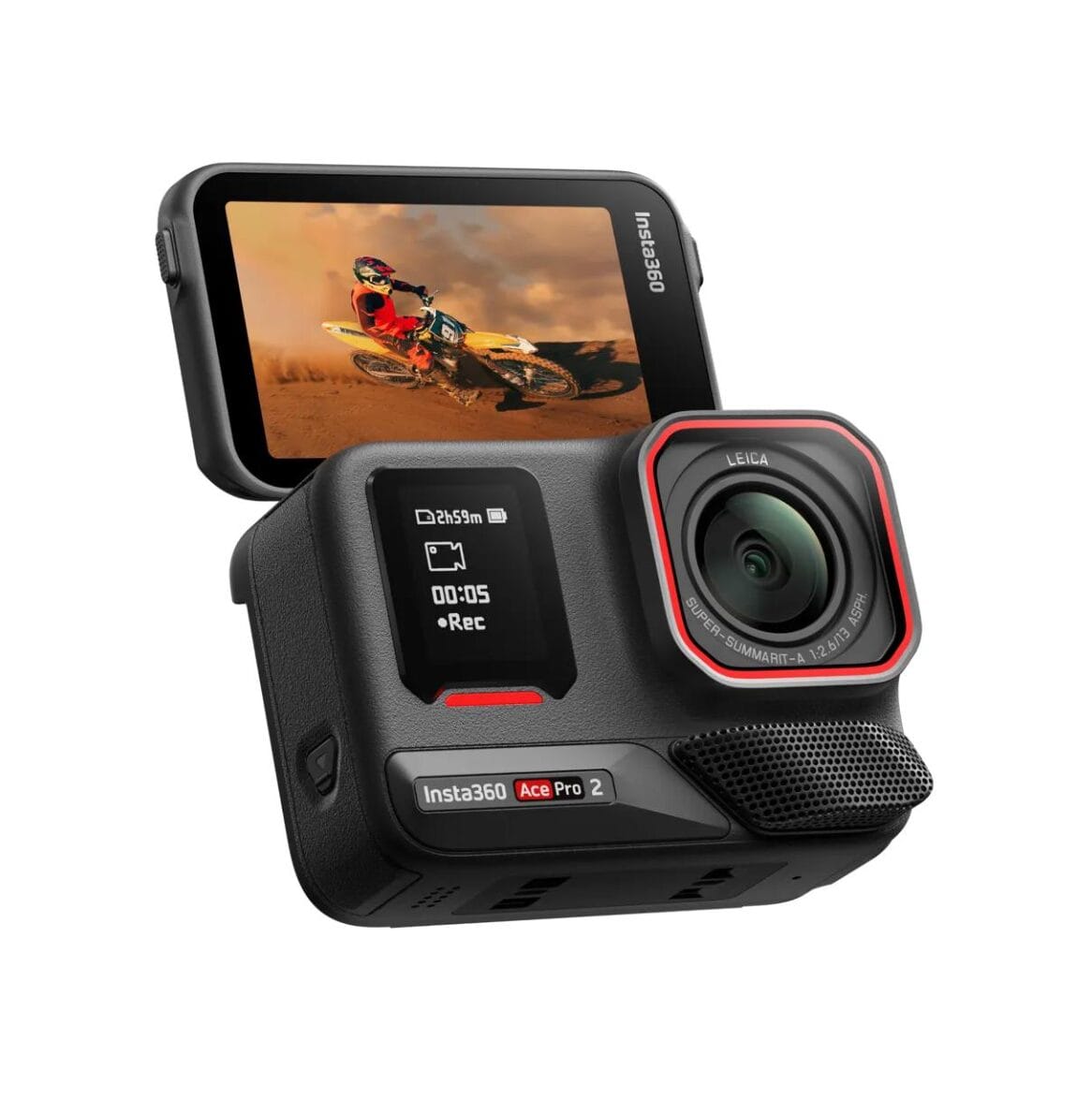
Insta360 Ace Pro 2
Co-developed by Insta360 and LEICA, this flagship action camera features a 1/1.3″ large sensor, top-tier night shooting quality, and a flip-out screen — redefining what an action camera can be.
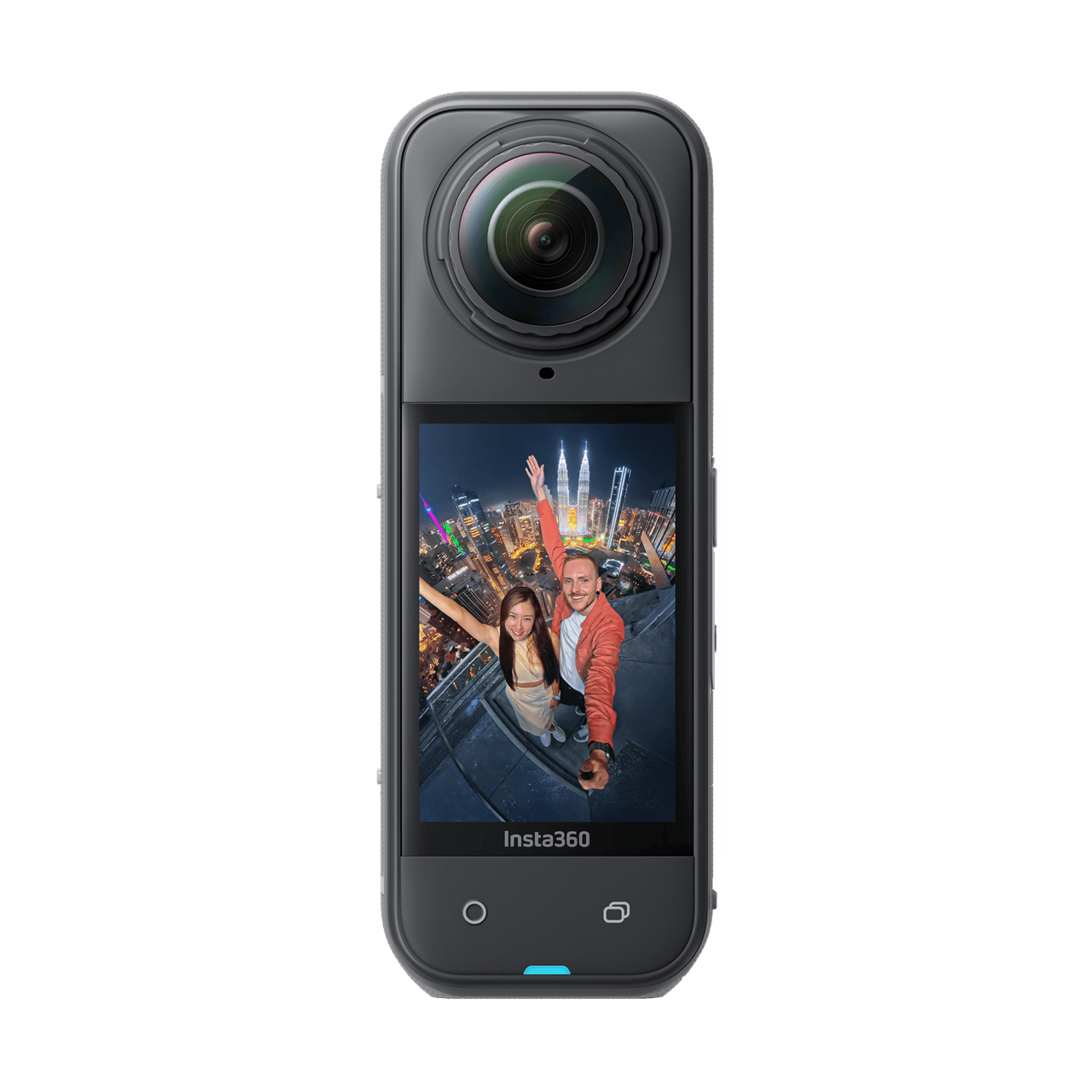
Insta360 X5
Insta360's next-generation 360° panoramic action camera — dual large sensors, top-tier stabilization, 8K resolution, and an unmatched shooting experience that sets the new benchmark for 360° cameras.