

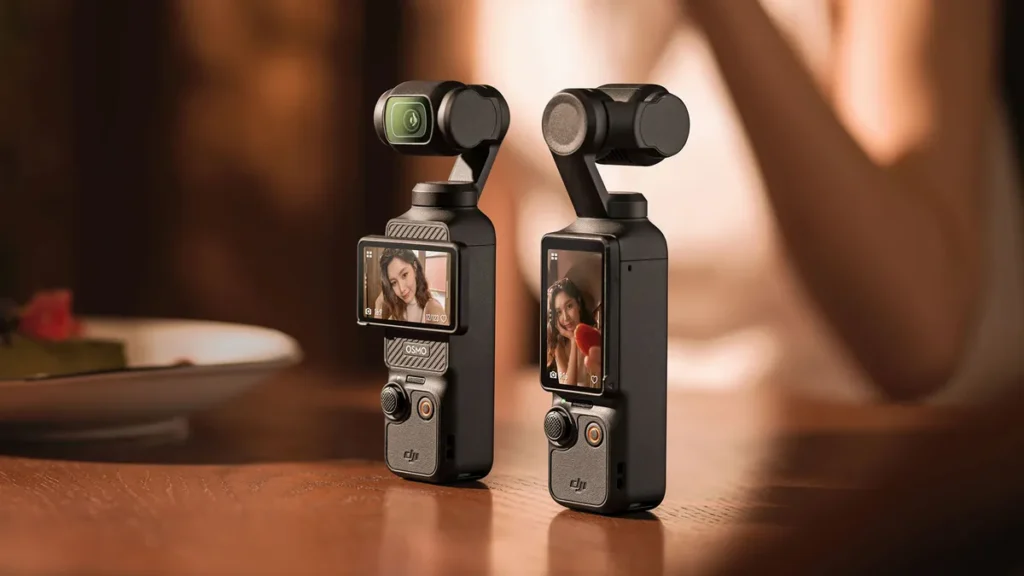
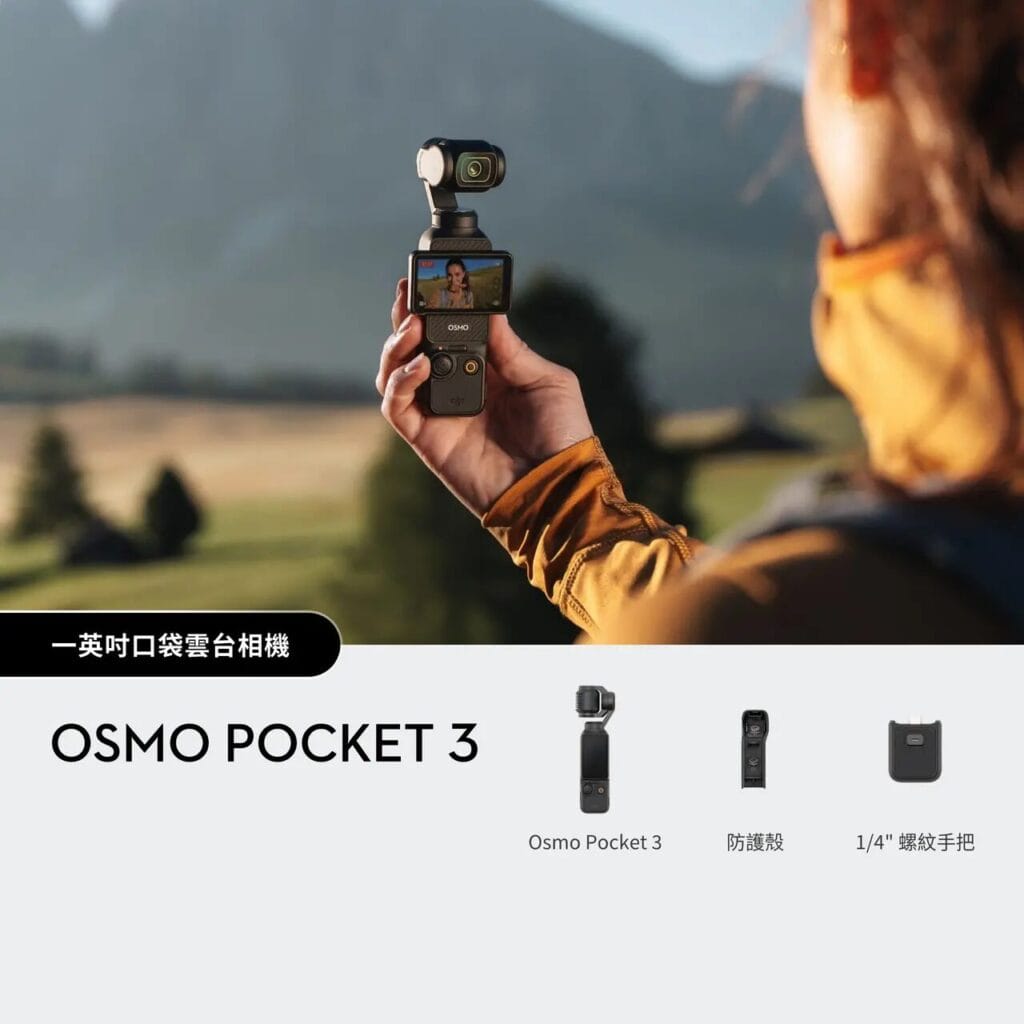
The DJI Osmo Pocket series, as one of the most popular gimbal cameras on the market, is deeply loved by vloggers and content creators for its excellent stability and portability. The DJI Osmo Pocket 3, released in 2023, brought revolutionary upgrades with a 1-inch large sensor and a rotating touchscreen, significantly improving shooting quality.RetryClaude can make mistakes. Please double-check responses.
Now the distance DJI Osmo Pocket 3 It has been over a year since its launch, regarding "When will Osmo Pocket 4 be available?" Discussions are heating up. Will the next-generation Osmo Pocket 4 revolutionize the vlog recording experience once again? What price range will it fall into? What product innovations are worth looking forward to?
Based on DJI's past product release schedules, pricing strategies, and marketing trends, this article will provide an early prediction of the DJI Osmo Pocket 4's possible release date, estimated price, and most anticipated feature upgrades (dual lenses + variable aperture + significantly increased battery life).
DJI Osmo Pocket 4 Release Date Prediction
DJI Osmo Pocket 4 Availability
As of January 2026, DJI has not officially announced any information about the Osmo Pocket 4, but there have been leaked photos of the Osmo Pocket 4, and clues can also be found in the release patterns of DJI's previous products.
| Model | Launch Date | Posting Interval |
|---|---|---|
| DJI Osmo Pocket | December 15, 2018 | First Generation Products |
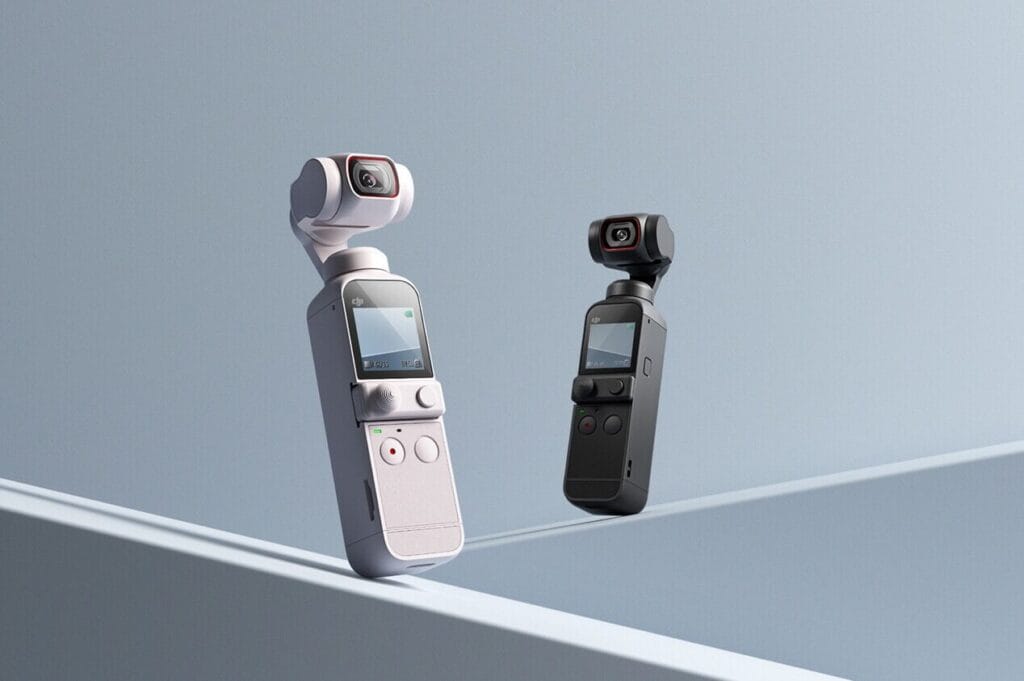
| DJI Osmo Pocket 2 | October 31, 2020 | About 1 year and 10 months |
| DJI Osmo Pocket 2 Sunset White | July 8, 2021 | limited edition |
| DJI Osmo Pocket 3 | October 25, 2023 | About 3 years (from Pocket 2) |
It can be observed that the Osmo Pocket series follows an upgrade cycle of approximately 2–3 years. Considering that DJI Osmo Pocket 3 was released in October 2023, and that its high-end features—such as the 1-inch sensor and D-Log M professional shooting mode—are already quite mature, the DJI Osmo Pocket 4 is expected to be released as early as March 2026.
此外,2026年 1月,DJI 在 德國 Amazon 短暫上線又迅速下架 Osmo Pocket 4 的商品頁面,直接實錘了這款爆款口袋雲台相機的動向——標準版將於 3 月正式登場,而大家最期待的雙攝 Pro 版,則要延後到 5 月之後亮相。
In addition to the standard version, DJI will also release a Pro version of the Osmo Pocket 4, which will focus on enhancing zoom capabilities. The two versions cater to different creative needs. The standard version is more suitable for users who prefer everyday vlogging, while the Pro version is more suitable for professional video creation. DJI's product strategy this time is quite clear, covering different user groups with a strategy of "selling volume with the standard version and enhancing the Pro version with dual cameras".
Technology maturity : Pocket 3 is already a highly complete product, but it needs time to develop more groundbreaking new features.
Market Cycle : Allow Pocket 3 a sufficient market lifecycle (2-3 years) before releasing Osmo Pocket 4.
Competitive pressure : With Insta360, GoPro, and other smartphone manufacturers continuously launching mini vlog cameras, there is a need to respond to market demands.
DJI Osmo Pocket 4 Price Prediction: The standard version is likely to be priced around USD $445–$450
As features are upgraded, the price of the Osmo Pocket series is gradually increasing.
| Model | Price | Key Points |
|---|---|---|
| DJI Osmo Pocket | HKD$2,699 TWD$11,200 | First generation PTZ camera |
| DJI Osmo Pocket 2 | HKD$2,149 TWD$9,670 | Standard Bundle |
| DJI Osmo Pocket 2 Vlog Kit | HKD$2,999 TWD$13,495 | Includes external microphone, wide-angle lens |
| DJI Osmo Pocket 2 Sunset White Limited Edition | HKD$2,899 TWD$13,045 | limited edition |
| DJI Osmo Pocket 3 | HKD$3,799 TWD$17,900 | Standard package, upgraded to 1" sensor |
| DJI Osmo Pocket 3 Vlog Kit | HKD$5,638 TWD$25,780 | Includes DJI Mic 2 and other accessories |
you can now get the Osmo Pocket 3 standard kit at a great price of HKD $3,059 / NTD $14,390
DJI Osmo Pocket 4 Standard Edition Price Prediction
Based on the above trends, I personally predict that DJI will maintain its market positioning as a "lightweight vlog camera," and the price of the standard version of the DJI Osmo Pocket 4 should fall within HKD $3,500 / TWD $14,500, a slight increase compared to the previous generation Osmo Pocket 3.
Standard version: HKD$3,500 HKD/TWD$14,500
Pro version: HKD$6,000 HKD / TWD$27,750
DJI Osmo Pocket 4 Pro Price Prediction
If the Pro version includes the following advanced features, the price may be higher, around USD $765 / USD $890.
The Pro version is the first in the Osmo Pocket series to feature a dual-lens setup, combining a wide-angle and a telephoto lens, completely eliminating the previous generation’s reliance on digital zoom and the associated loss of image quality. Whether capturing sweeping landscapes, distant concert shots, or sports close-ups, it enables lossless zoom for all scenarios.
According to leaks, the Pro version will not launch alongside the standard version in March. Its official release is expected to be delayed until May–June, meaning professional creators and heavy users will need to be a bit more patient before the Pro version becomes available.
1. ProRes or ProRes RAW recording support
2. HDR Recording
3. Dual-lens camera
4. Long-lasting battery
5. New Customize button + Zoom button.
DJI Osmo Pocket 4 Specifications Prediction: Seven Major Upgrade Directions
DJI Osmo Pocket 3 has been praised as the new generation “Vlog powerhouse” for its excellent stabilization and portability. However, it also has some shortcomings, which the next-generation Osmo Pocket 4 aims to address, primarily in terms of image quality, user experience, and battery life.
Osmo Pocket 3 Disadvantages
Image Quality
- In photo mode, the resolution is relatively low, and detail performance is not as good as professional cameras or iPhone
- Equivalent focal length of 20mm, lacking telephoto or ultra-wide-angle options similar to action cameras
feeling of use
- The 2-inch screen isn’t clearly visible under bright light, and the buttons are quite small.
- When taking selfies, you need to extend your arm far out, which can cause fatigue over time — and unlike action cameras, there’s no compatible selfie stick.
- The body and gimbal components are relatively fragile and can be easily damaged by drops or collisions.
- It’s not waterproof, making it unsuitable for use on rainy days or in humid environments.
- There’s also a noticeable startup delay: the gimbal takes a few seconds to rotate and initialize, which can cause you to miss spontaneous moments.
- Video export via DJI Mimo can be slow and sometimes unstable, requiring a constant connection — a process that’s both time-consuming and battery-draining.
- Lastly, the built-in “Beauty” effect in videos cannot be completely disabled.
Continuity and Cooling
- Short battery life: Continuous 4K recording lasts approximately 1.5 to 2 hours, which is shorter than that of wide-angle action cameras. A power bank is necessary for extended recording sessions.
- Heating issue: The device gets hot during extended use or when exporting videos
Osmo Pocket 4 Upgrade Points
The biggest improvements of the Pocket 3 were the upgrade to a 1-inch sensor, a rotatable screen, and D-Log M professional color mode. So, what shortcomings of the Pocket 3 will the next-generation Pocket 4 address, and what breakthrough upgrades will it achieve? Here are my seven most anticipated areas:
- Supports 4K/120 fps recording
It continues to feature a 1-inch sensor, optimizing nighttime image quality and supporting 4K 120fps recording, a significant improvement over the Pocket 3's 4K/60fps. With specifications on par with the iPhone 17 Pro series, its smooth, slow-motion footage easily captures dynamic details such as splashing water and human movements.
- Experience
The new model features a customizable button and a zoom button, with increased height but reduced thickness and width for easier handheld use. According to leaks, it is similar to its predecessor... Pocket 3 Compared to the Pocket 4's 179g, the Pocket 4 weighs 116g, a weight loss of 35%.
- The Pro version features a dual-lens system (similar to the iPhone 17) and supports wide-angle/telephoto switching.
Equipped with a hybrid lens similar to the iPhone 17, compatible with both wide-angle and telephoto lenses, it enhances still image quality and zoom flexibility. It also features a built-in dedicated NPU chip that automatically generates background music, transitions, and color grading within 5 minutes.
- Variable aperture
The Pro version supports variable aperture, 2-4x lossless zoom, and adjustable light intake in low light conditions.
- Battery Life
The battery life of the 20% has been improved, allowing for up to 200 minutes of recording on a single charge.
- Strengthening the Osmo Audio ecosystem
In addition to being compatible with DJI Mic 2, the microphone system has been upgraded from 3 microphones to 4 microphones, improving noise reduction and spatial stereo imaging.
- Stable Tracking
Enhanced ActiveTrack intelligent tracking with support for automatic shooting modes. While the Osmo Pocket 3’s ActiveTrack 3.0 already performs very well, there is still room for further optimization. The next-generation Osmo Pocket 4 may introduce full-pixel phase-detection autofocus, enabling faster and more accurate subject tracking.
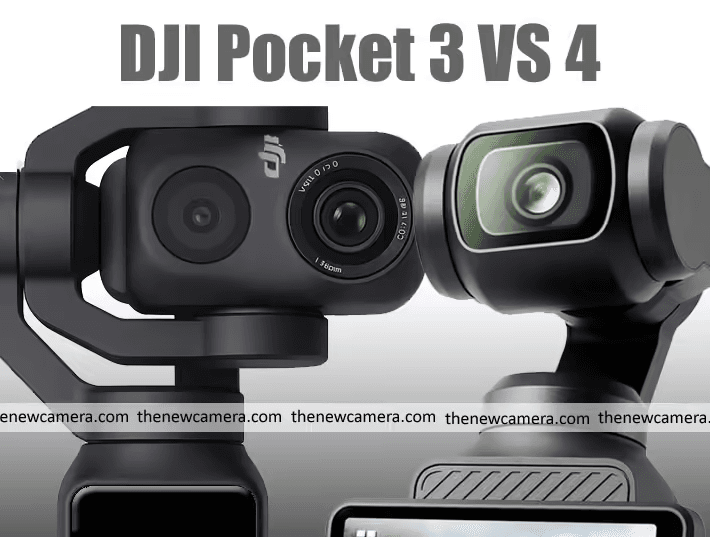
During my use of Pocket 3, I discovered a minor limitation: when the camera is paired with the DJI Mic, it cannot simultaneously provide live preview on a phone; conversely, if the phone preview function is enabled, the DJI Mic cannot be connected. If future models could support simultaneous use of wireless microphones and phone preview, it would greatly enhance shooting convenience and flexibility.
The excitement surrounding the new release is largely thanks to the impressive performance of its predecessor, the Osmo Pocket 3. Since its launch over two years ago, the DJI Osmo Pocket 3 has sold more than 10 million units worldwide, becoming the primary shooting tool for countless vloggers. However, some users have noted that the Pocket 3 has a slightly steep learning curve and requires an adjustment period. These feedback points and pain areas are expected to be further addressed and improved in the new Osmo Pocket 4.
DJI Osmo Pocket 4 Design Predictions
Reasons Why Size May Increase
Despite the successful slimming down of the body, if DJI equips the Pocket 4 with dual lenses, the head size of the gimbal will inevitably increase , and the overall height may increase compared to the Pocket 3. Considering that the Pocket series focuses on portability, the Osmo Pocket 4 can still be held with one hand and easily put into a pocket.
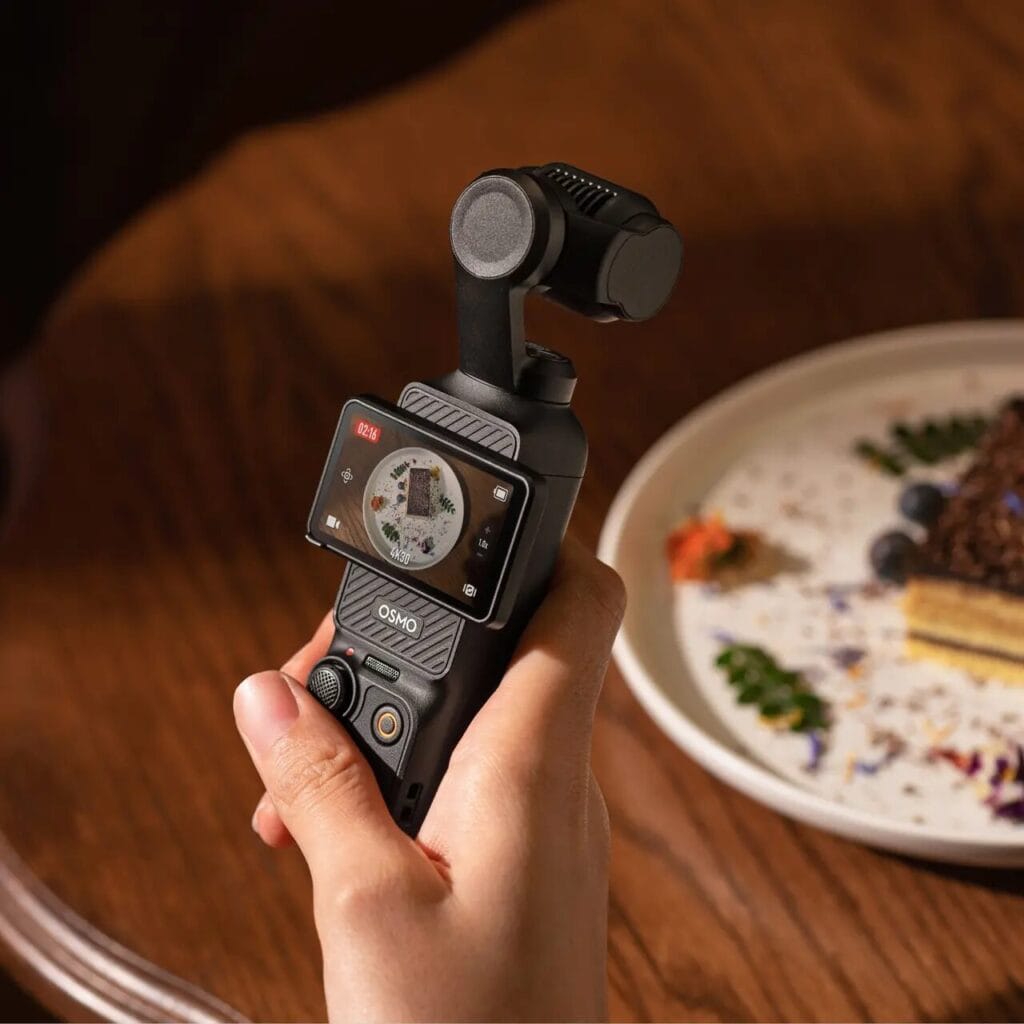
Possible Appearance Changes
✅ Larger camera and touchscreen (2.5-3 inches)
✅ Magnetic accessory connector
✅ Improved heat dissipation (supports extended recording at 4K/120 fps or 8K/30 fps)
✅ Added a new entity shortcut key (customizable Q key)
For users who already own a Pocket 2 or earlier version, the Osmo Pocket 4 is a worthwhile option.
If you're using a Pocket 2 or an earlier model, the Osmo Pocket 4, released after a three-year hiatus, is a highly recommended option.
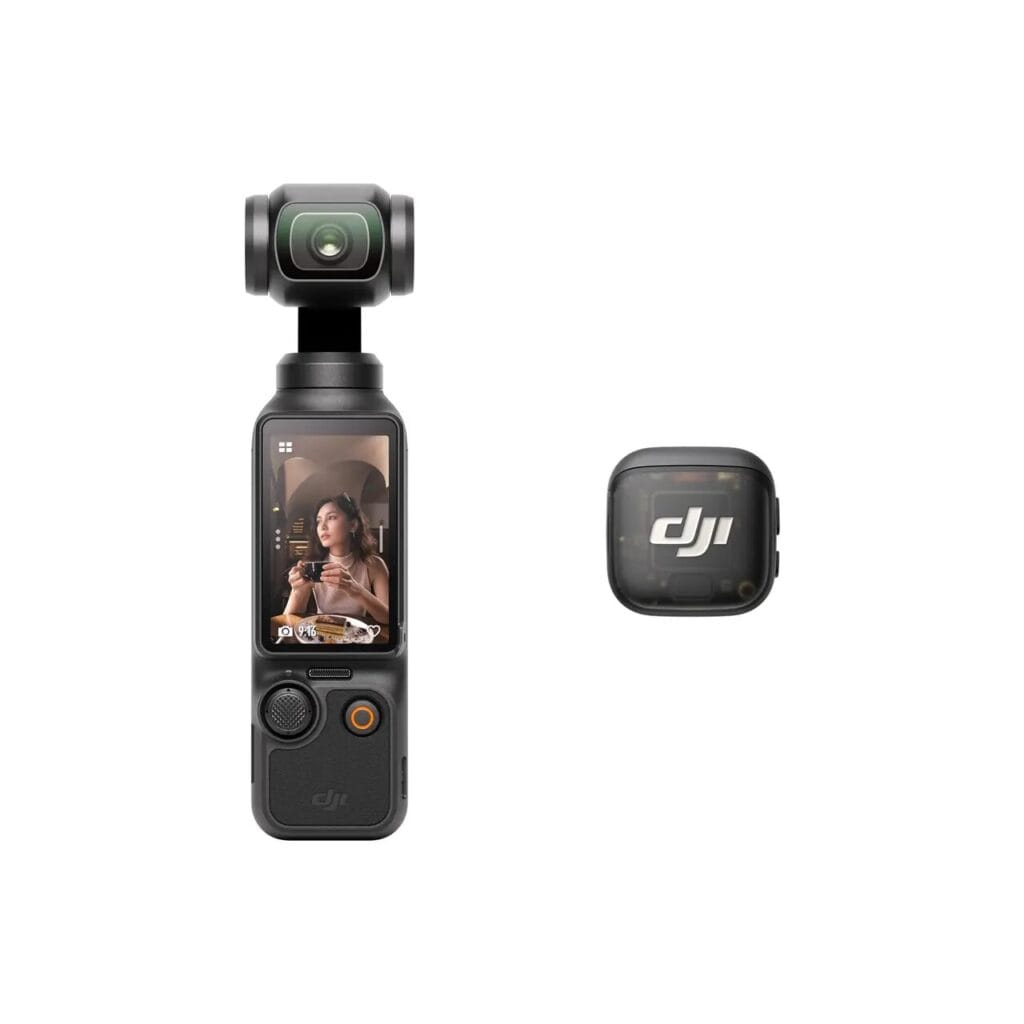
Getting an Osmo Pocket 4 means you can gain:
✅ Capture higher quality images (sensor size)
✅ Better for night shots and backlit environments (HDR and ProRes support possible)
✅ Recording Quality (Osmo Audio)
Is the Osmo Pocket 3 still worth buying?
If the following requirements are met, I think Pocket 3 It is still worth considering.
✅ Need to start recording content immediately
✅ Satisfied with the current features of the Pocket 3
✅ Limited budget
✅ Beginner who has never used a gimbal before
The Pocket 3 is already a highly finished product, with a 1-inch sensor, D-Log M, and a The 1-inch sensor, D-Log M, and rotating screen are more than enough for most creative endeavors. Get it now for the price of HKD $3,059 / NT $14,390.
This price will remain until the Pocket 4 is released.
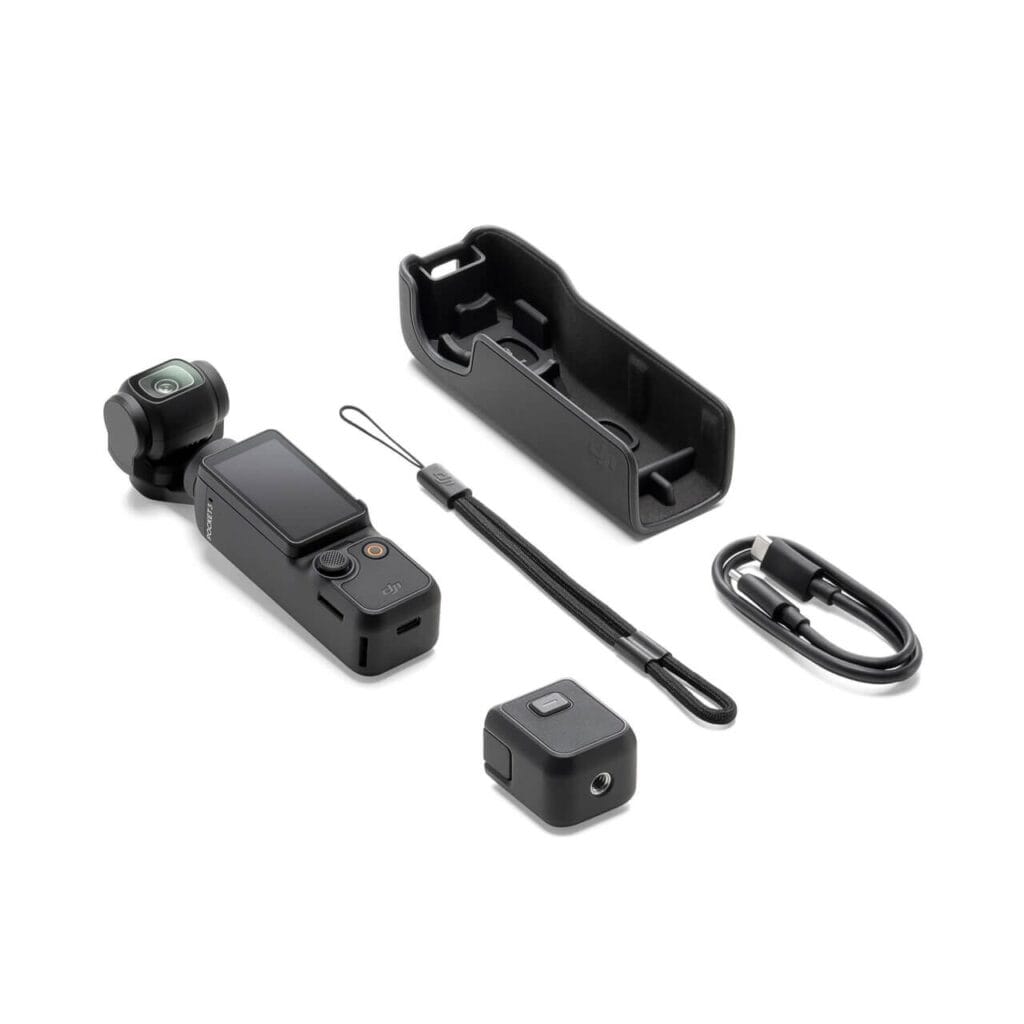
Should Osmo Pocket 3 users upgrade to a new device?
If you already own Pocket 3, whether to upgrade depends on whether Pocket 4 implements the following features
✅ Dual Lens
✅ ProRes or RAW recording
✅ Replaceable Battery
✅ Increased uptime
✅ Improved picture quality
✅ Night Shot Enhancement
If all these features are implemented, then the upgrade will be worthwhile; but if it's just a minor improvement, I personally feel that your Osmo Pocket 3 can still last for another two years.
Who Should Upgrade to the Osmo Pocket 4?
- 🎥 Vloggers & Content Creators: Improved image quality and smarter subject tracking make solo creation far more efficient.
- ✈️ Travel Enthusiasts: A lightweight, all-in-one design means long hours of travel recording without added burden.
- 👨👩👧👦 Family Users: AI features like Master Shots make it easy to capture every memorable moment of everyday life.
- 🔄 Existing Pocket 1 / 2 Users: If you’re looking for better low-light performance and an improved selfie experience, this upgrade delivers a noticeable and worthwhile improvement.
Summary: Reasons Why DJI Osmo Pocket 4 is Worth Anticipating
This article summarizes the release date, price, specifications, and market trends of the DJI Osmo Pocket 4. Currently, DJI has not officially released specific information. Based on leaked photos, the selling points of previous models, and recent market trends, the Osmo Pocket 4 is expected to feature the following key upgrades.
- The standard version will be released in March, and the Pro version will be released in May. The Pro version focuses on optimizing the zoom function (dual lenses, supporting focal length switching).
- The main sensor features a 1-inch sensor, while the secondary sensor uses a 1/1.3-inch or square-format sensor, optimized specifically for ultra-wide-angle shooting.
- Supports up to 4K 120 FPS recording, with image quality comparable to the iPhone 17 Pro.
- With deeper integration into the Osmo audio ecosystem, the microphone system has been upgraded from 3 microphones to 4 microphones, improving noise reduction and spatial stereo imaging.
- Battery capacity increased from 1300 mAh to 1545 mAh, and continuous recording time exceeded 200 minutes.
- The body weighs 116g, a reduction of 351g compared to the TP3T, featuring a lightweight design that is taller, narrower, and thinner.
- Added customizable buttons + zoom button
When faced with the choice between the "Standard Edition in March" and the "Pro Edition in May" of the Osmo Pocket 4, there's no need to agonize over it; the key is to consider your needs.
If you're just shooting travel vlogs regularly, the standard version, which launched in March, is perfectly adequate. Its 1-inch sensor, three-axis image stabilization, and excellent portability are enough to meet most shooting needs; it offers great value and is suitable for general users.
If you're a professional vlogger, travel blogger, or someone who frequently shoots concerts, sporting events, or similar content, you might want to wait patiently until after May. The Pro version's dual-lens setup, 2x to 4x lossless zoom, and variable aperture (F1.7 – F2.8) will unlock more creative possibilities and elevate the quality of your footage to a whole new level.
Regardless of how closely the final Osmo Pocket 4 matches current predictions, one thing is certain: DJI wouldn’t spend two years on a routine, incremental upgrade. As smartphone imaging continues to advance and action cameras evolve at a rapid pace, pocket gimbal cameras must inevitably redefine their own value and positioning to stay relevant.
For more information on new products, please follow us. DJI Official Website What's New
The content of this article is based on historical data and personal analysis of market trends; the actual product specifications and release date are subject to DJI's official announcement.
DJI Osmo Pocket 4 以外的選擇
DJI Osmo Pocket 3 發布後,Osmo Pocket 系列幾乎確立了其「Vlog 神機」的市場定位。
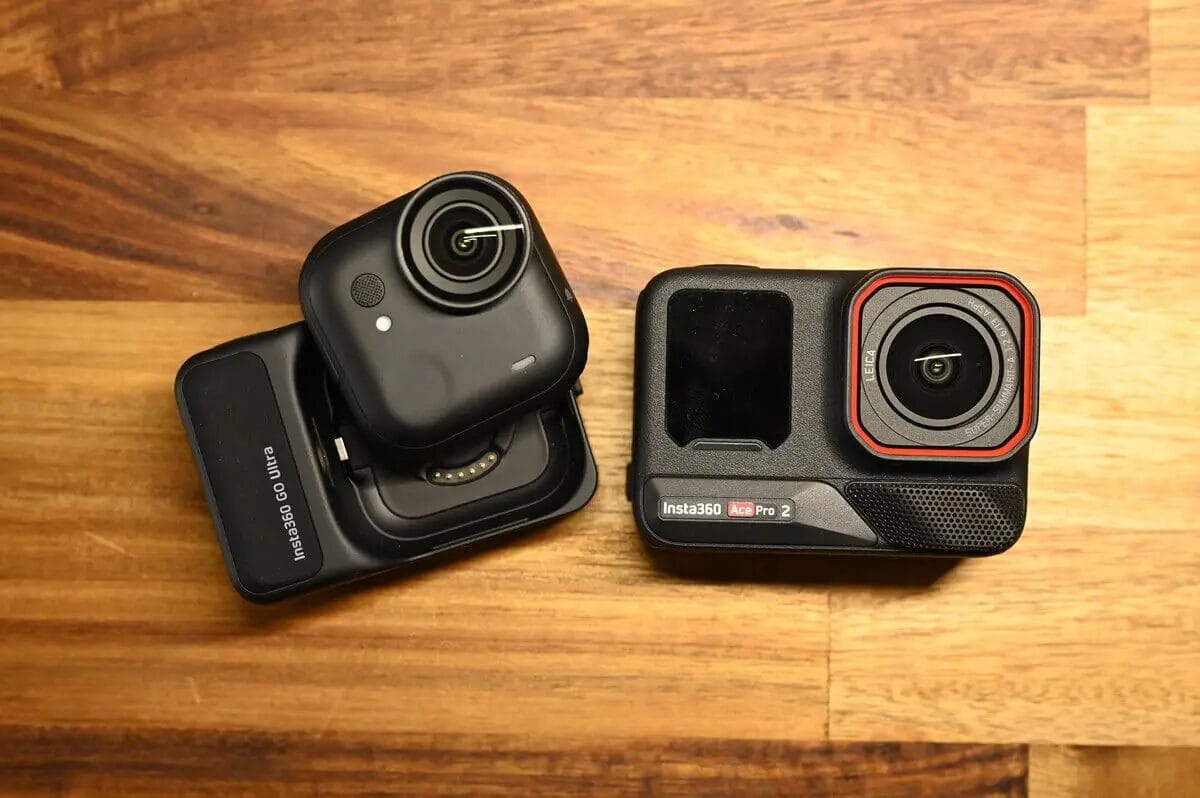
然而,雲台式相機在便攜性與續航方面仍存在先天限制,因此越來越多使用者開始轉向用「運動相機」或者「迷你相機」來拍 Vlog。比如 Insta360 的 GO Ultra and Ace Pro 2 也逐漸成為被討論的替代選項。如果你的選購優先順序不是極致畫質,而是輕量與隨身性,那麼 GO Ultra 會是一個非常值得考慮的方案。