



As someone who skis more than 20 times a year and has challenged snowboarding at altitudes above 2000 meters, I know firsthand how important a reliable ski camera is in extreme temperatures and at high speeds. Over the years, I've tested nearly 10 action cameras, using them to record my skiing so I can accurately correct the details of my movements through video playback. Therefore, for intermediate and advanced skiers, an action camera is an essential item for improving skiing skills.
If you're planning to buy your first ski camera or replace your old one, this review will take a "practical" approach to help you choose the most suitable ski camera .
Currently, the mainstream choices in the skiing world are nothing more than DJI, Insta360 and GoPro (mobile phone company) Three major manufacturers. But in this "three-way competition," how do you choose based on your skiing style (do you want to capture cool third-person panoramas, or pursue ultimate perspective stability?)? Next, I will break down the advantages and disadvantages of popular models from these three manufacturers one by one, and help you understand which one is the true "King of the Ski Resort".
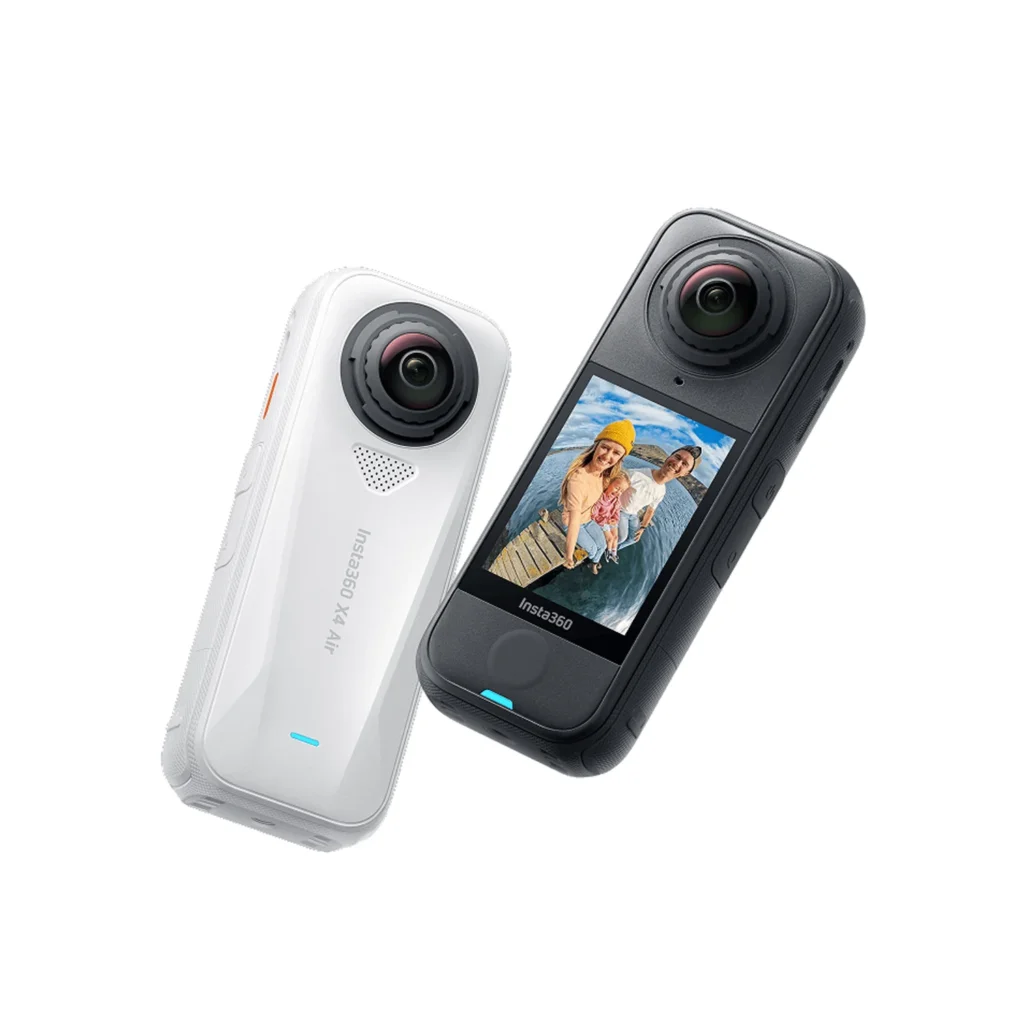
The most recommended is the Insta360 X4 Air.
If you ask me which ski camera I would recommend most for the 2025-2026 ski season, my answer is without a doubt: Insta360 X4 Air.
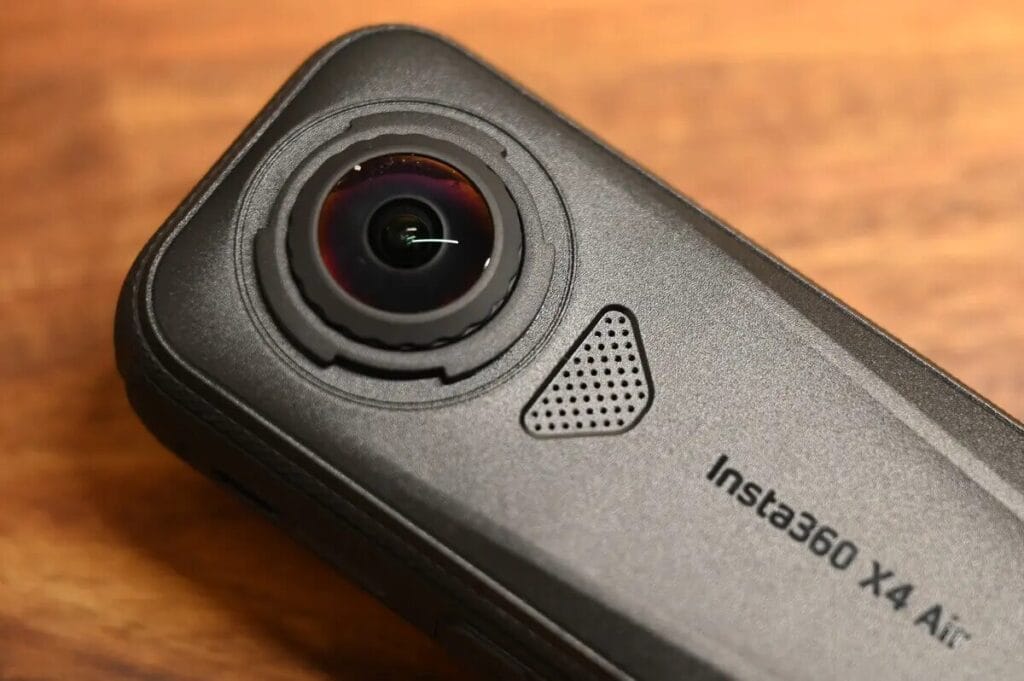
Why is the X4 Air the "standard answer" for ski cameras?
When skiing, you need to balance and follow the line, so there's no time to worry about composition. The advantage of a panoramic camera is that, compared to a regular wide-angle action camera, it has two lenses that can easily achieve this:Shoot first, then frame.Currently, there aren't many panoramic camera options on the market. After GoPro Max gradually faded from the competition, the Insta360 X series and DJI Osmo 360 series, with their powerful algorithms, have almost monopolized the ski panoramic camera market.
My four core reasons for recommending the Insta360 X4 Air:
Reason 1: A true "foolproof mode": AI automatic tracking
Previously, the biggest headache with panoramic cameras was distortion and complex post-processing. But the X4 Air has upgraded its processing chip and algorithms, and now with just "one-click automatic tracking," the software can accurately lock onto the subject, enabling quick image output and instant sharing, completely solving the hassle of editing.
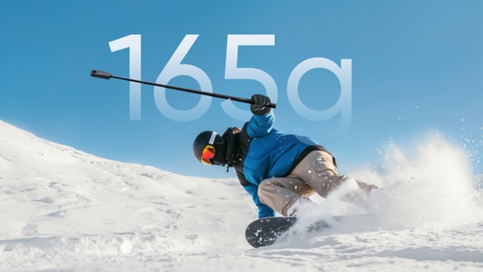
Reason 2:Extremely lightweight: weighs the same as the iPhone 17 Air
Weighing only 165g, the X4 Air feels incredibly light. When you attach it to the end of a selfie stick, you barely feel any weight, which is especially important for snowboarders who prioritize agility. You can focus entirely on gliding without worrying about arm fatigue.
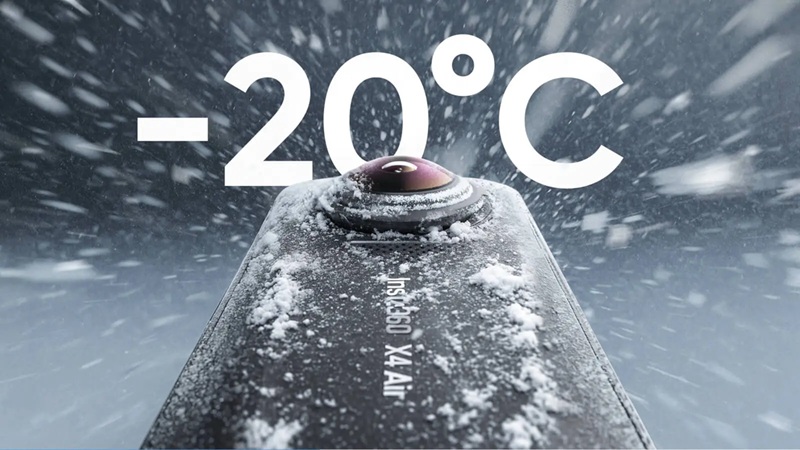
Reason 3:Cold-resistant batteries
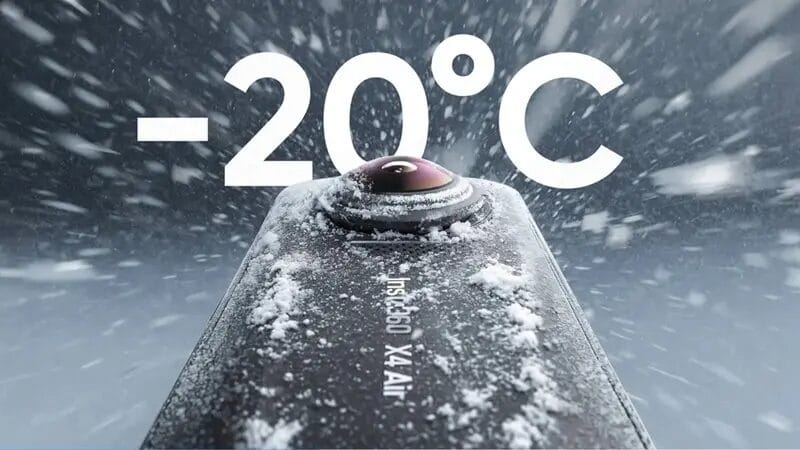
-20°C Low Temperature Battery Life: Equipped with a cold-resistant battery, it will not experience a sudden drop in power even in the coldest winter.
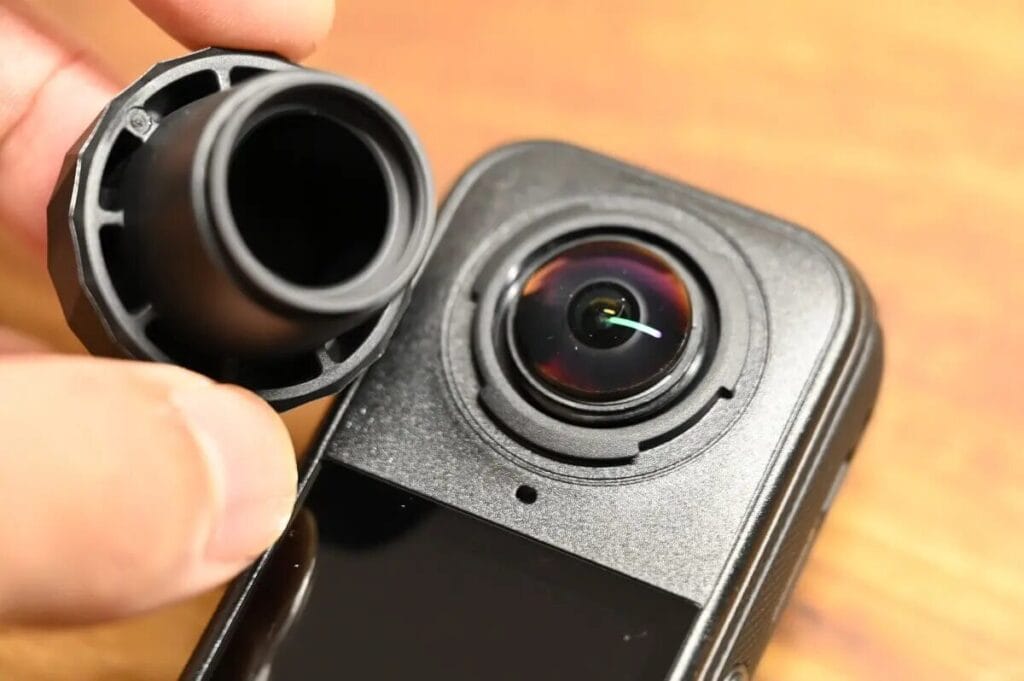
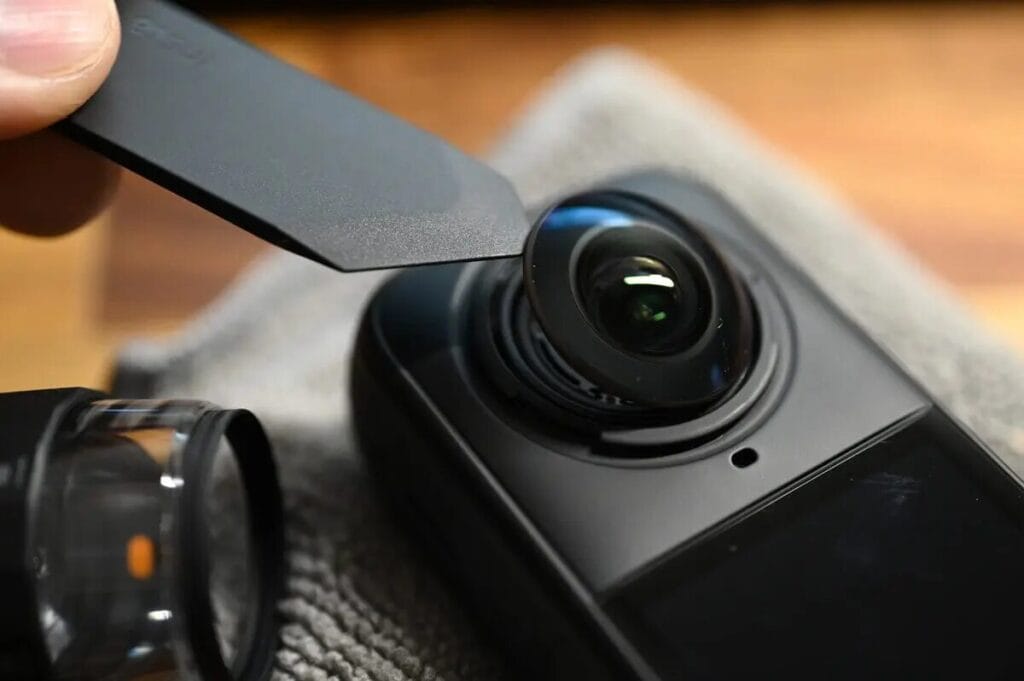
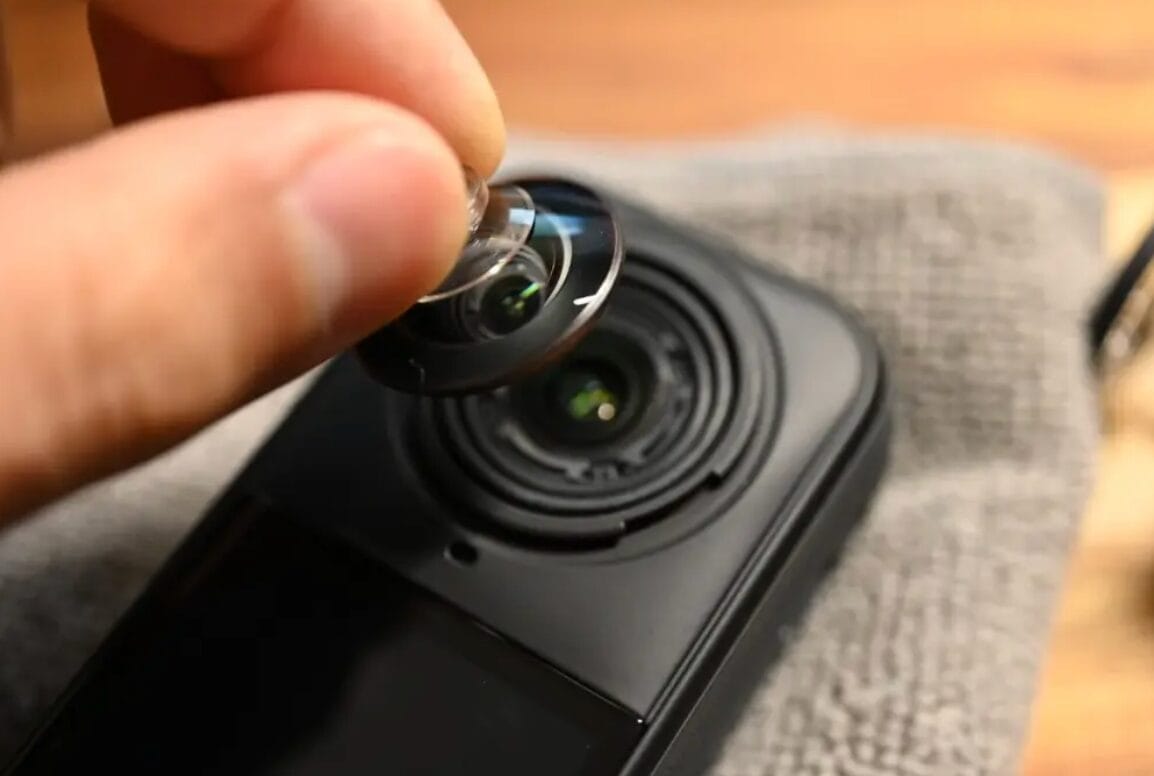
Reason 4:Replaceable lens cap
Lens damage is a skier's nightmare (I've had my share of scratches). The X4 Air's protective lens is easy to install and remove, and can be replaced in a minute in case of impact. This ski camera supports 8K HDR shooting , which is crucial on snow slopes with strong light reflections, perfectly reproducing the "snow blue" of the sky and the detailed layers of the snow.
Honest reminder: While the X4 Air performs exceptionally well, it also has two major flaws.
- Not suitable for night skating: Nighttime image quality is average.
- Slow motion limitation: Slow motion recording at speeds exceeding 3x is not supported. However, for most skiers, 50fps (2x slow motion) is sufficient to capture stylish skiing movements.
How to choose a ski action camera?
Every snow season, someone always asks me:Which action camera should I buy to film skiing?
Most reviews will tell you to choose a camera with good image stabilization and high image quality. But as a seasoned skier who skis 20 times a year and has tested nearly 5 different camera models, I want to say: those are just basic skills, not the key to whether you can shoot good videos. For actual skiers (especially intermediate and advanced enthusiasts), choosing a ski camera requires understanding the following points:
✅Use a 360° panoramic camera : Forget about composition, focus on gliding.
✅Weight is more important than image quality: Every extra 30 grams is a burden.
✅ Waterproofing
✅ Image quality 4K and aboveThe image quality is good enough on sunny days.
✅ Supports quick-release installation and various accessories
✅ Ultra-long battery life & supportLow-temperature batteries
360° panoramic camera is the preferred choice
On the ski slopes, your focus should be on your feet, not the camera. If you're considering getting your first ski camera, prioritize a 360° panoramic camera.

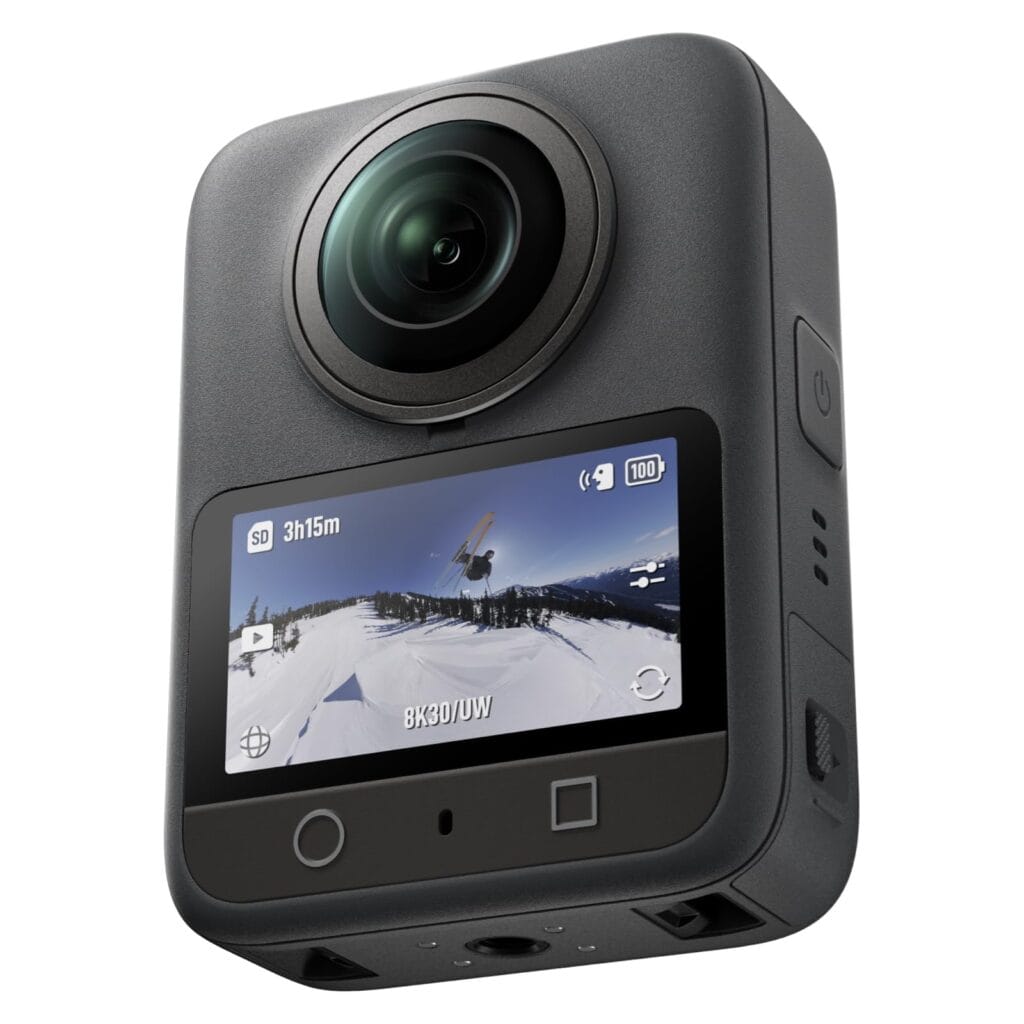
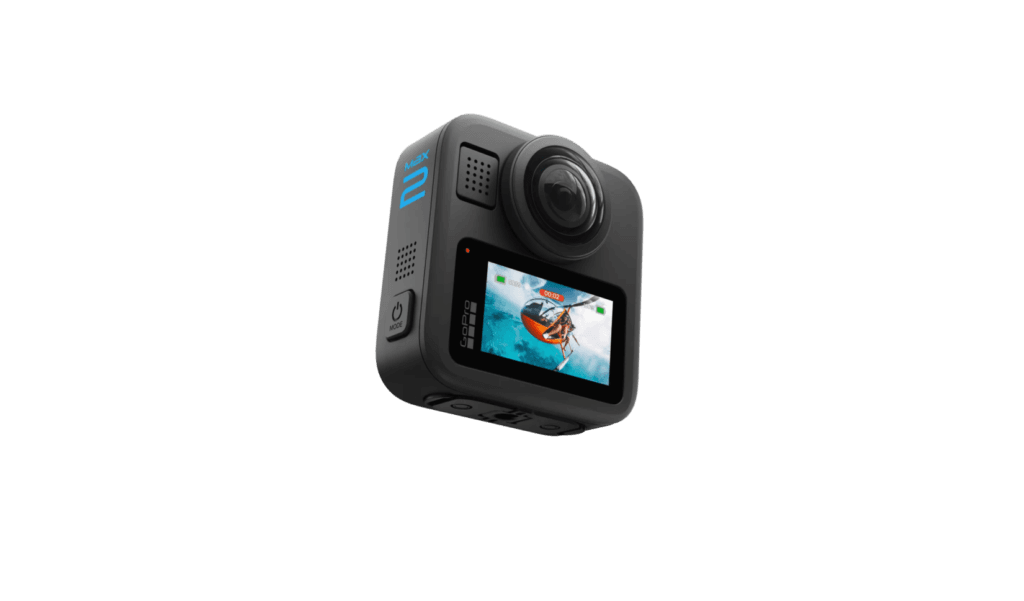
Using a 360-degree panoramic camera, simply point the selfie stick roughly to the side to take the picture.A 360° all-around view ensures that the subject will never be "cut off".It can even use algorithms to automatically hide the selfie stick, making the selfie look like a drone is following you.
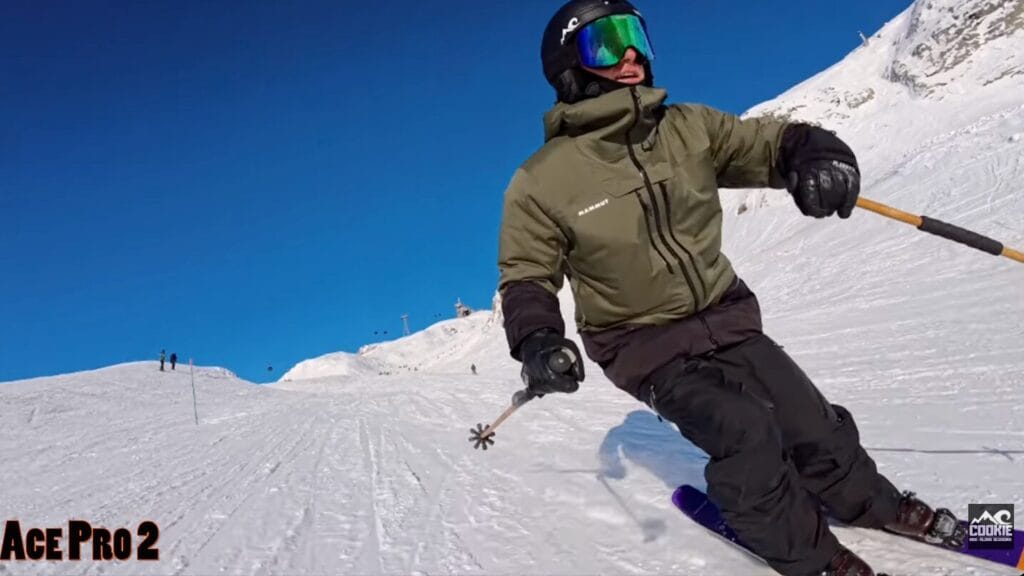
Let's look at a comparison. This is a selfie taken using a traditional action camera (such as the Insta360 Ace Pro 2). Even though it has the best image stabilization and ultra-wide field of view on the market, you still have to be constantly distracted to keep your eyes on the frame. If you're even slightly off, your movements will be incomplete.
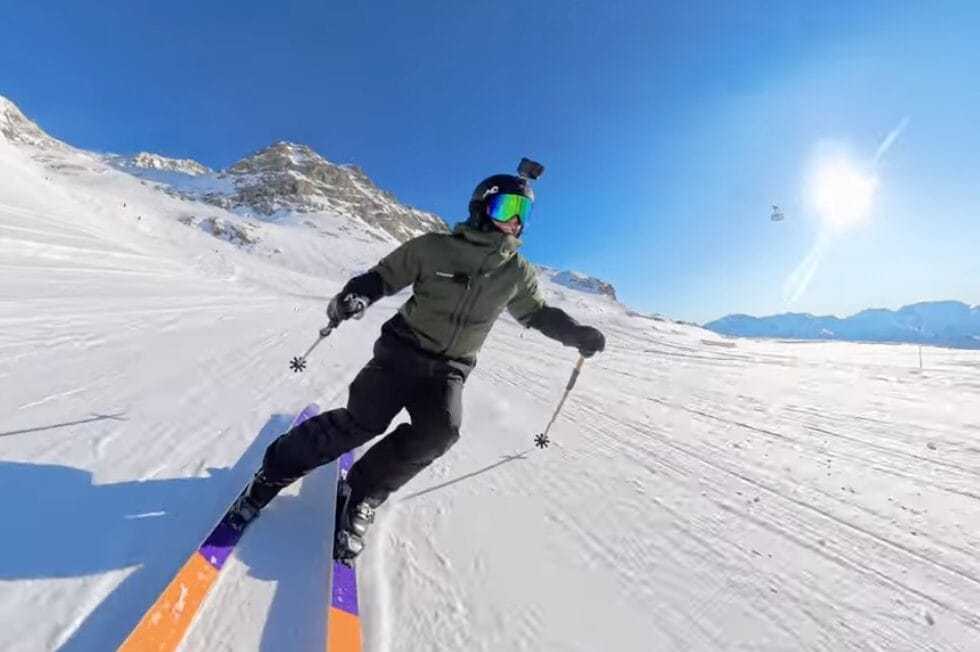
Tracking is the essence of ski footage, but also the most challenging part. Traditional cameras require the photographer to keep the subject within a 120° to 157° field of view at all times. But with a 360° camera, you can simply ski with a selfie stick, and once home, tap "Deep Track" in the app, and the software will automatically lock onto the subject. Even if the subject slides behind you, you can still rotate the camera during post-production editing to capture the perfect moment.
In conclusion, only a 360-degree panoramic camera allows you to shoot without having to think about the recording angle, truly enabling one-click shooting.
Camera weight & selfie stick length
Unlike other sports scenarios,In the purchasing logic of "skiing" cameras, "weight" takes even higher priority than image quality.
Why? Because the core of ski filming is fixing the camera to the end of a selfie stick. During regular vlog recording, the 200-gram weight is almost imperceptible in the hand; but...During high-speed gliding, the weight at the end is amplified due to the lever principle.Your arm not only has to contend with wind resistance but also maintain shooting stability. In this situation, even a 10-gram reduction in camera weight can significantly reduce muscle fatigue. Holding an action camera while skiing is the most strenuous activity.
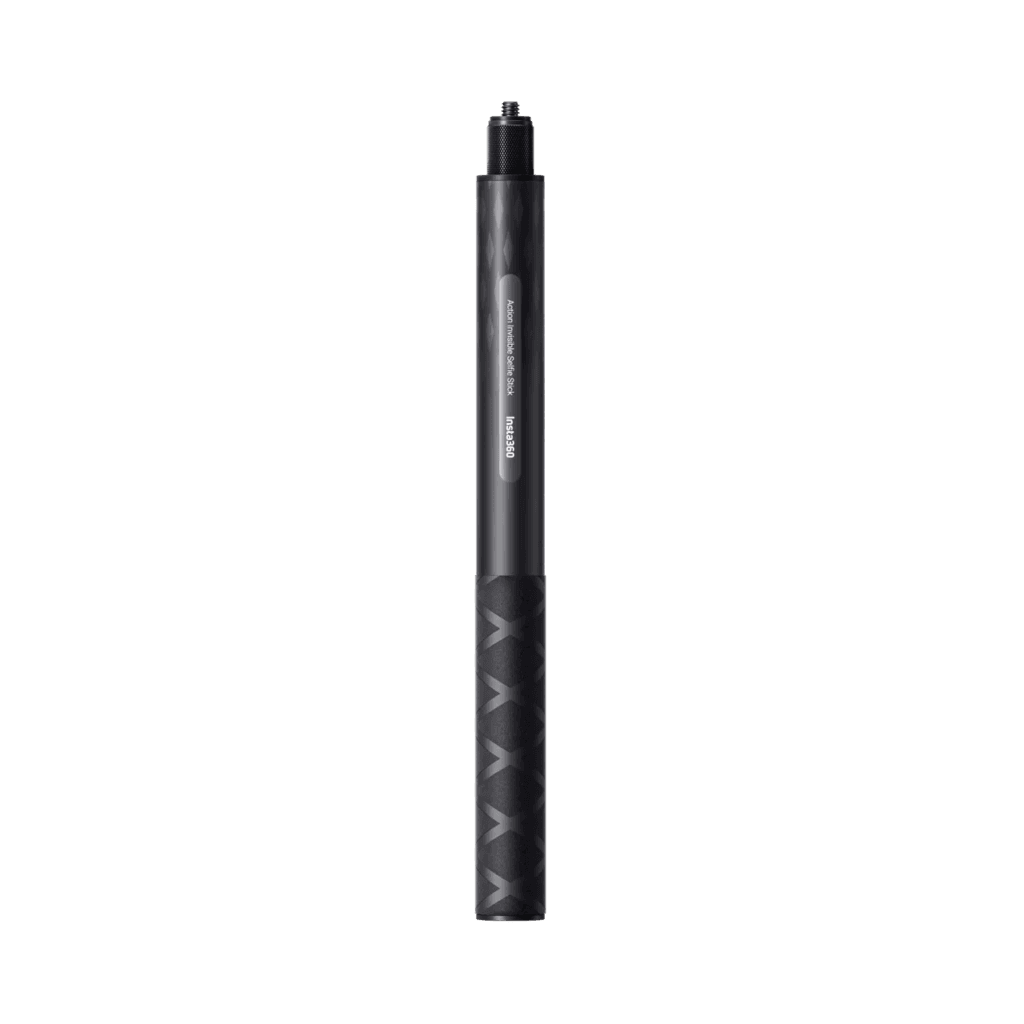
Regarding selfie sticks, here are the key takeaways I've summarized based on years of testing:The most recommended choice is the 85cm invisible selfie stick.Because it folds up so short, it can be easily slipped into a snowsuit pocket or side pocket, taking up absolutely no space.
When gliding, the lever torque generated by this short stick is small, making it the easiest to control and the first choice for "burden-free filming".
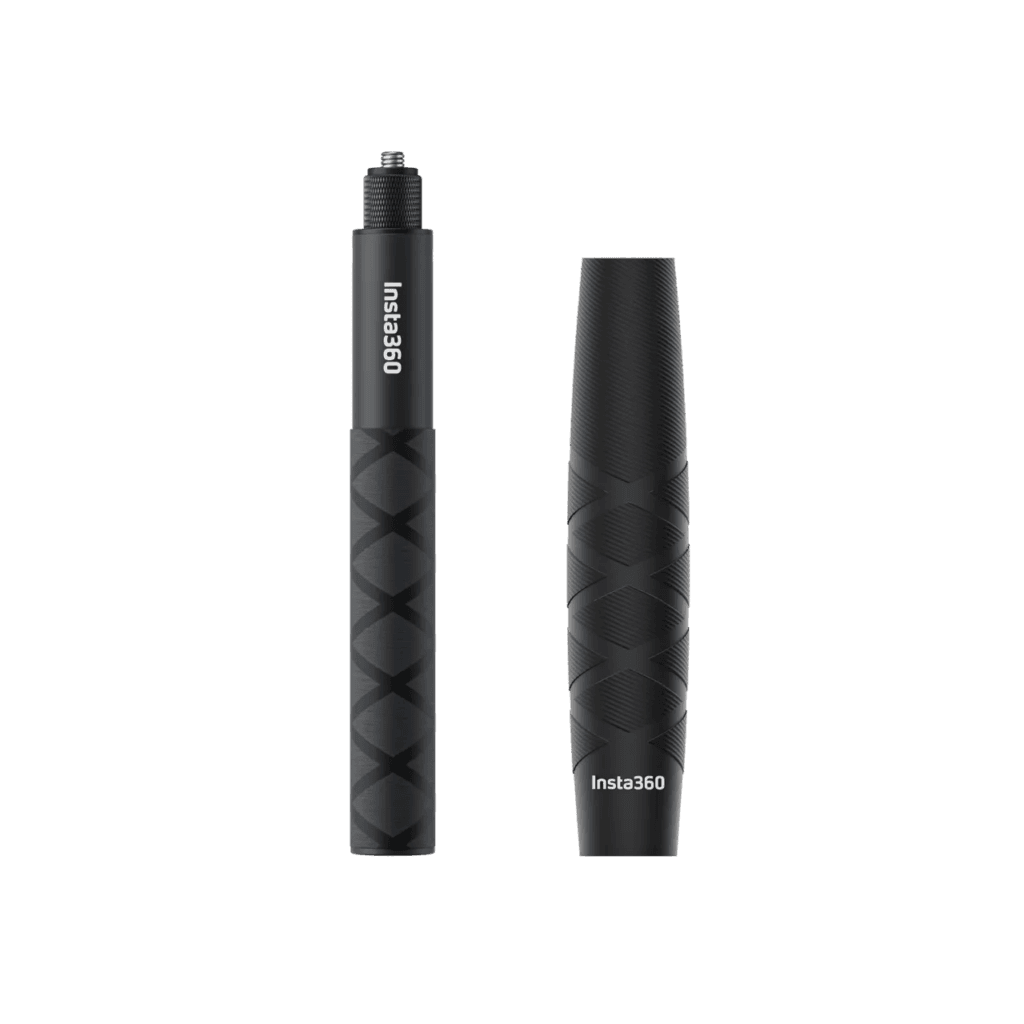
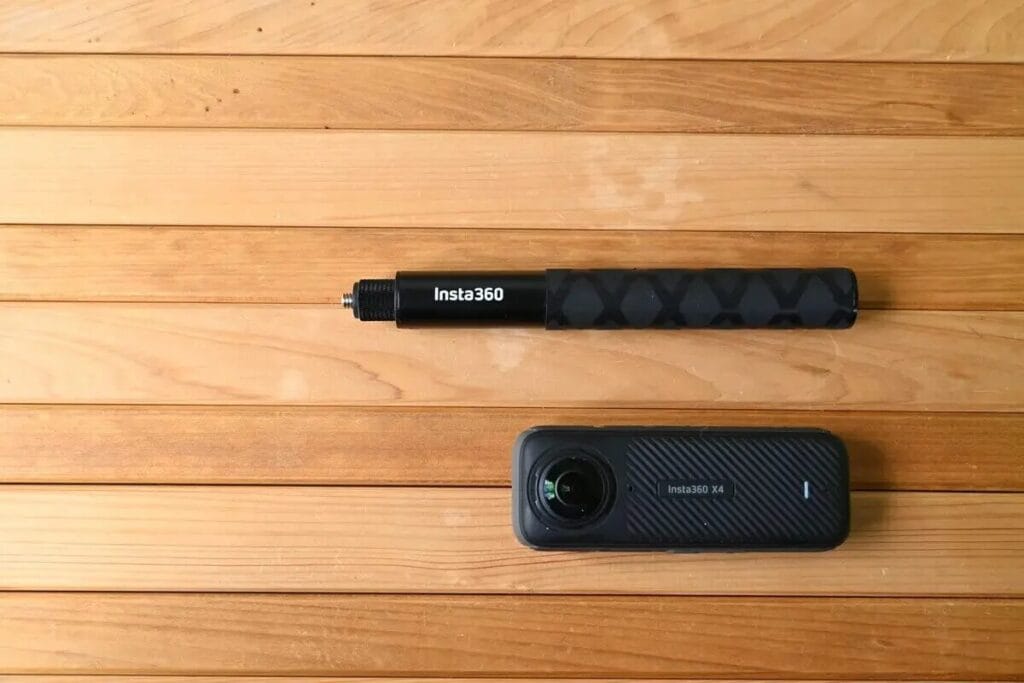
The advantage of choosing the 114m selfie stick is that it provides a wider, more "third-party perspective" view.It effectively reduces perspective distortion around the human head and feet, making the scenery more magnificent. However, its drawbacks are also obvious: it is too long when folded up, and many snow packs cannot be placed even when inserted at an angle.
If you ask me about the most practical configuration, I would recommend:Choose the lightest camera you can find, and pair it with the shortest selfie stick you can store.
I personally bring a 114cm brace for regular travel, butWhen skiing, I prefer short poles under 85cm.Because on the ski slopes, the truly good gear is the kind you'd readily pull out to take a picture. If you're looking for ultimate lightweightness and value, the only gear on the market that perfectly balances these two aspects and supports an 85cm selfie stick is... Insta360 X4 AirThe
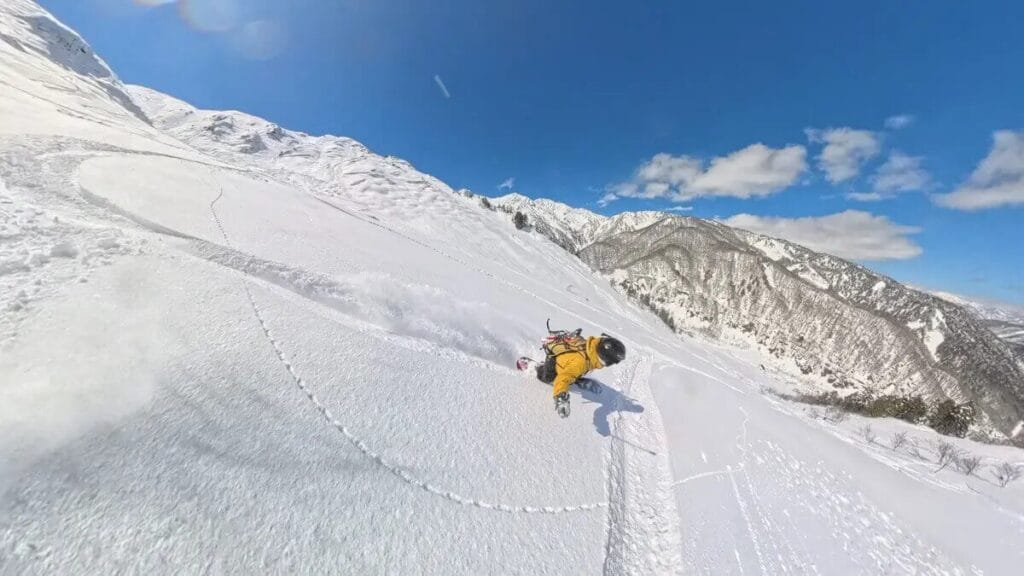
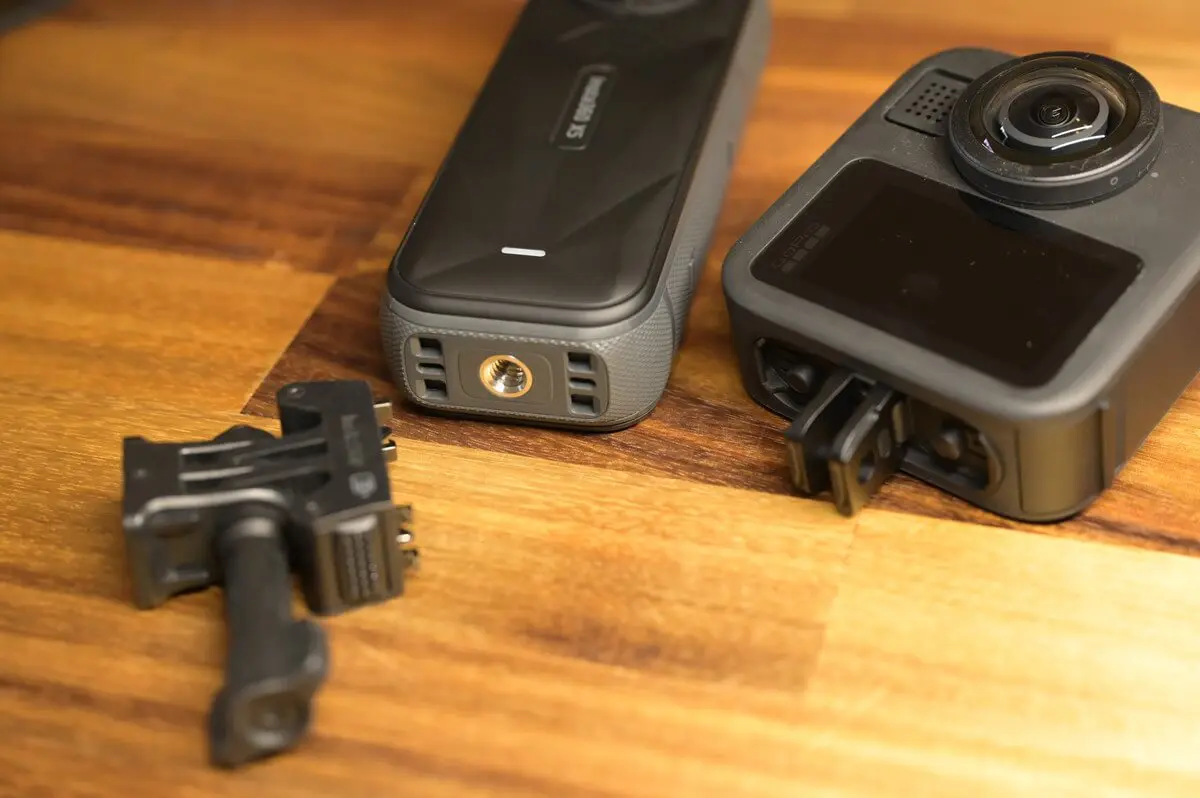
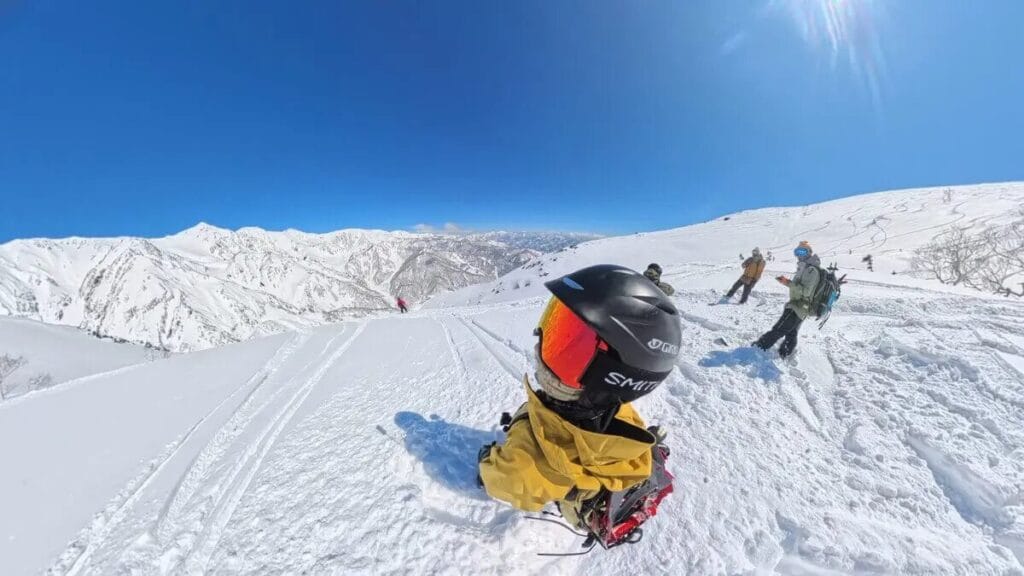
Good image quality on sunny days
If your main shooting locations are skiing or snowboarding, take my advice:There's really no need to spend a lot of money to pursue the most advanced, fully-equipped high-end flagship phone.
This may sound counterintuitive, but the reason is actually quite simple:The natural light at the ski resort is the best filter; every shot will have beautiful tones.
Skiing footage tends to have a very simple color palette, mostly consisting of pure white snow against a blue-white sky. Compared to the complex colors of forests, the dappled light and shadow of indoor spaces, or the extreme dynamic range demands of sunrises, sunsets, and night scenes, the snowy environment puts less strain on camera sensors.
For skiers, instead of blindly chasing the latest models and pursuing the ultimate image quality, choosing a "ski-specific camera" that is lighter, more cold-resistant, and more intuitive to operate is a smarter and more cost-effective option.
Cold-resistant batteries
Currently, there are three main action camera manufacturers that have established a reputation for "skiing" and "cold resistance": Insta360, DJI, and GoPro.
- Insta360 & DJI: Flagship models (such as the X5, X4 Air, and Action series) can withstand extremely low temperatures of -20°C, making them the first choice for skiing scenarios.
- GoPro's performance is somewhat lacking. Even with the Enduro low-temperature battery, the official rating only allows it to withstand temperatures down to -10°C . If you plan to visit the high-altitude slopes of Hokkaido, you must be extra careful about battery drain when using a GoPro.
Based on the specifications, I've summarized three key specifications to consider when choosing a ski action camera:
- Low-temperature battery life: In an environment of -20°C, continuous recording must be maintained for more than 60 minutes .
- Protection level: It must have at least IP68 protection to ensure that melted snow does not seep into the fuselage.
- Anti-shake technology: Electronic image stabilization (EIS) level of 3.0 or higher is required to counteract the severe vibrations during high-speed gliding.
If we refer to these three specifications, currently only Insta360 and DJI action cameras meet all the requirements.
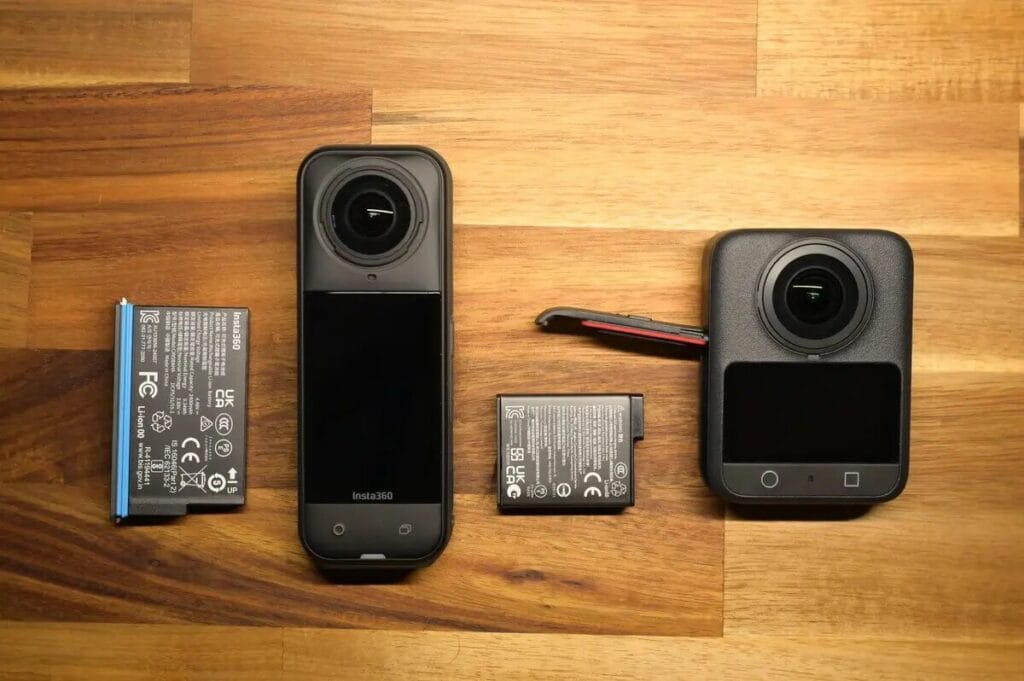
Lens hood and lens replacement
When gliding at high speeds or navigating park obstacles, it's common for cameras to fall or for lenses to rub against snow or ice. If you've chosen a camera model with a non-maintainable lens, even a small accident could render the entire lens unusable.
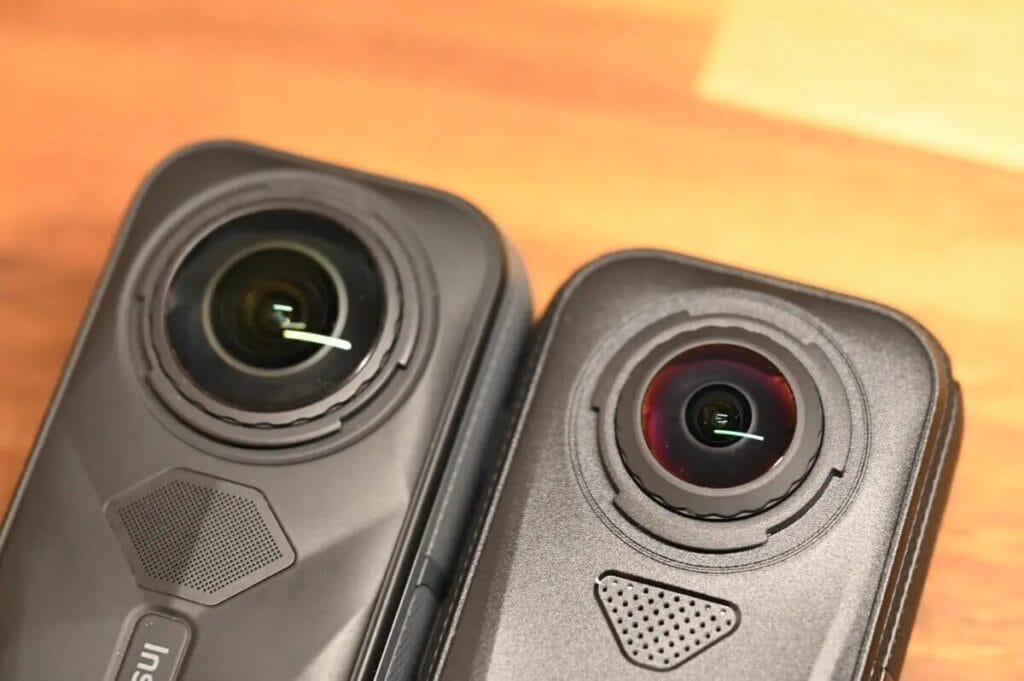
Designs like the Insta360 X4 Air come with an easy-to-remove lens protector. If the lens is accidentally scratched (which is almost unavoidable during intense shooting, and I've suffered from it myself), you can simply replace the protector in a few minutes and bring the camera back to life, instead of having to send it for repair after the shoot.
Video Postproduction
Beyond hardware performance, the success of ski cameras often hinges on their "software ecosystem." Insta360 recognized the pain points of large panoramic video files, slow exporting, and tedious editing early on. They invested heavily in developing AI-powered intelligent editing and cloud computing power, even launching a cloud storage service. The core logic is to leverage cloud processing to precisely select the most essential 30 seconds of footage from half an hour of raw material. For ordinary users, this is the ideal scenario: after recording, the app can generate a video with a single click.
Compared to GoPro and DJI, the Insta360 app offers the best user experience.
Which action camera would you recommend for skiing?
Insta360 X4 Air (Highly Recommended)
If you're choosing photography equipment for the upcoming 2025-26 season, I think... The Insta360 X4 Air is practically the only "preferred choice" on the market right now.The
Although the Insta360 X4 Air won't be available until October 28, 2025, and Insta360 hasn't yet launched a large-scale marketing campaign for the ski season, in-depth reviews focusing on "skiing real-world testing" are relatively scarce. While this might make many potential buyers hesitant, in my opinion, this is precisely where its appeal lies.It is a ski resort marvel that has yet to be discovered by the public.
Despite being so "new" that it has almost no reputation, based on my years of experience shooting skis and judging from its technical specifications, I would not hesitate to choose this camera as my first choice at the start of this ski season.
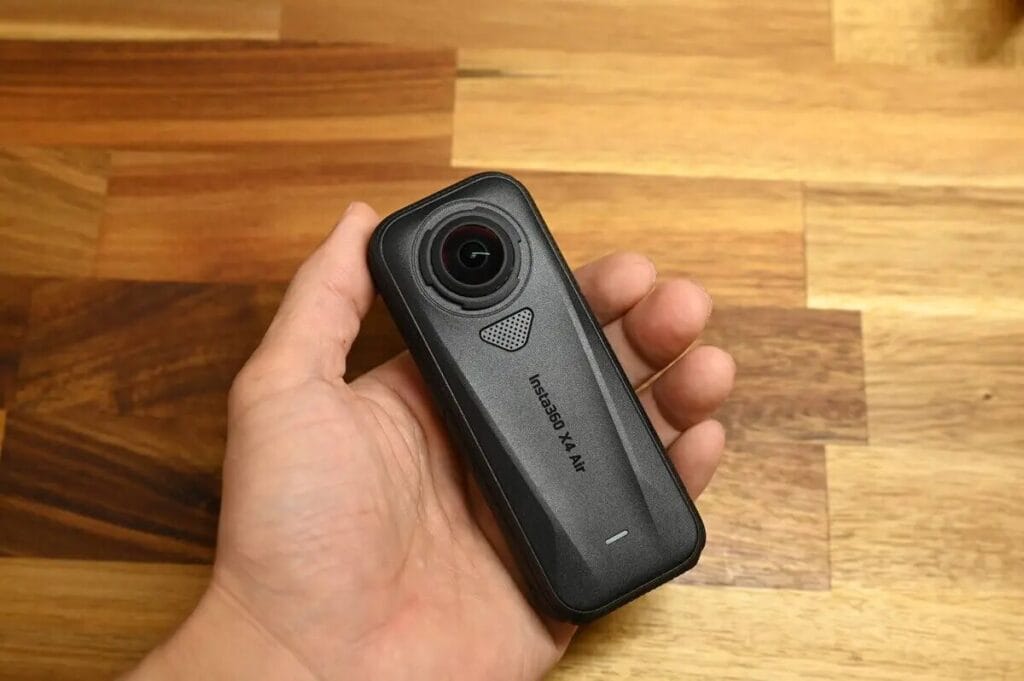
Because the X4 Air precisely addresses the core needs of skiers:Lightweight, cost-effective, with excellent image quality and wide range of uses. Although limited by the size of the image sensor, this camera is not suitable for night skiing photography, but in daytime skiing, its performance is in no way inferior to flagship models.
During gliding, every gram of the camera's weight is amplified by the lever principle. "Lightness" is a crucial factor to consider. Let's look at this set of decisive data:
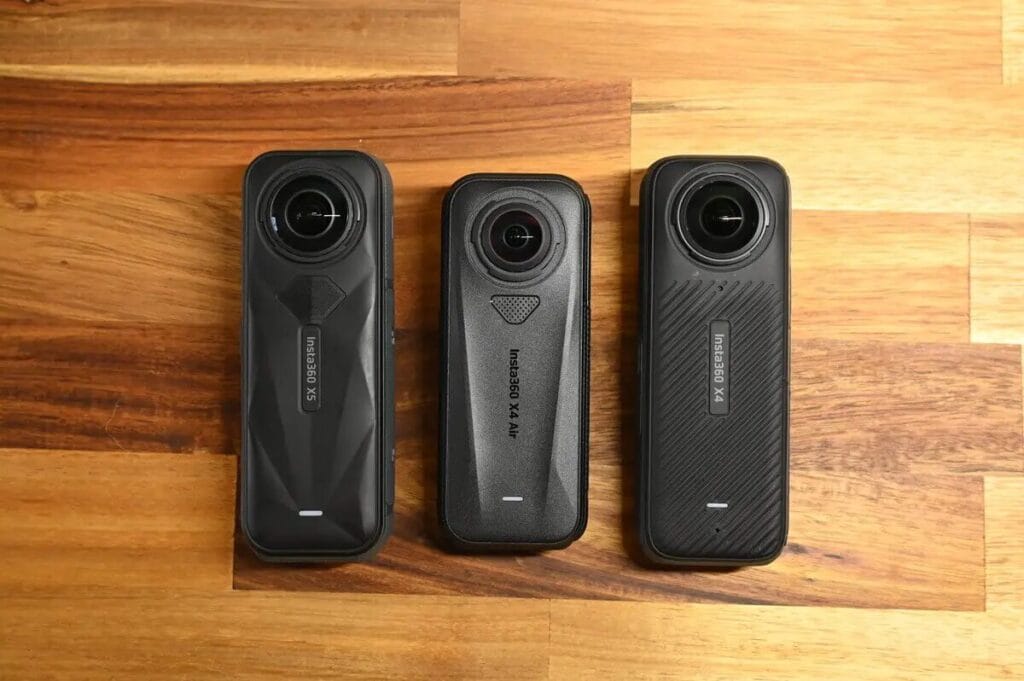
- The X4 Air is 33 grams lighter than the Insta360 X5.(165g vs 198g)
- The X4 Air is 23 grams lighter than the DJI Osmo 360.
A difference of just a few tens of grams can directly determine the soreness in your arms after a day of skiing, as well as the stability of your camera mounted on a selfie stick. Unless you have professional night photography needs, the ultra-lightweight, stable, and low-maintenance X4 Air is the smartest investment you can make this ski season. The last camera this lightweight was the Insta360 ONE X2, released in 2025—once the most popular panoramic camera in the skiing community.
| X4 Air | X5 | Osmo 360 | X4 | X3 | ONE X2 | |
|---|---|---|---|---|---|---|
| Weights | 165g | 198g | 183g | 203g | 180g | 149g |
After many years, we finally have a powerful yet lightweight camera again. I have a feeling that this season the X4 Air will take the baton from the legend and redefine the gold standard for ski photography.
Regarding dynamic imaging during the day,The X4 Air's performance is almost indistinguishable from the flagship X5.In well-lit ski resorts, it delivers incredibly detailed image quality, and even for everyday use outside of skiing, it's absolutely satisfying. I myself have used the X4 Air many times outdoors.
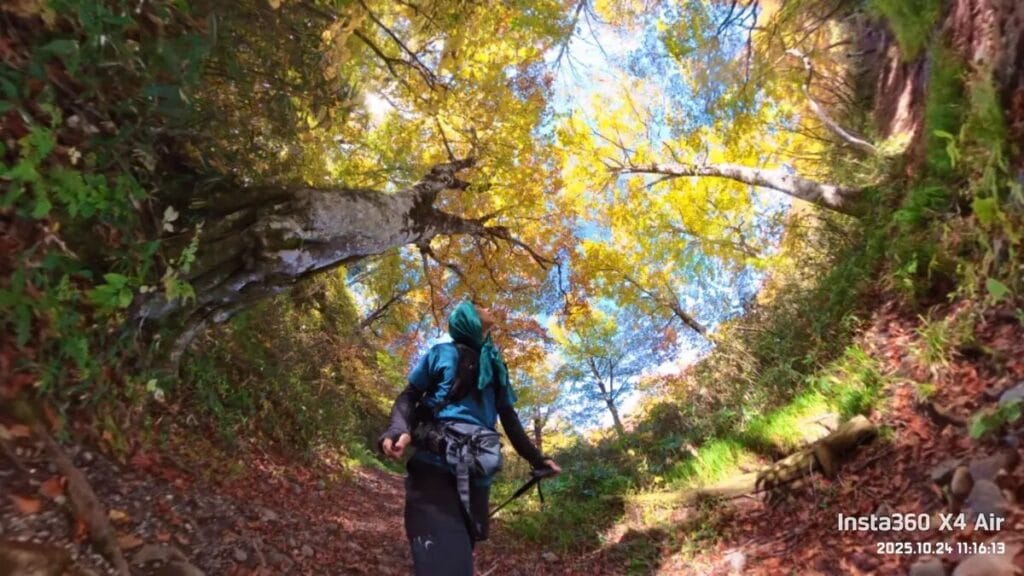
However, if you're like a professional athlete and need to demonstrate multi-rotation spins or extremely subtle freestyle techniques on a large jump, the X4 Air's 2x slow motion might not be able to capture the effect you want.
Under this extreme slow-motion requirement of 120fps (4x slow motion),DJI Osmo 360 maybe Insta360 X5 That's the advanced choice.
DJI Osmo 360
While I highly recommend the X4 Air, if your ski photography needs lean more towards showcasing "hardcore technical skills" or creating a "nighttime atmosphere," then... DJI Osmo 360 It's a better choice.
If you feel that 2x slow motion isn't enough, or if you frequently participate in night skiing, the DJI Osmo 360's advantages become apparent: its low-light performance surpasses that of the X4 Air. While it falls short compared to Insta360's flagship X5, which boasts the highest resolution and low-light performance, frankly, at night on the ski slopes, what we prioritize is "clear and beautiful images," not necessarily the highest specifications.
Among models with better low-light performance than the X4 Air,The DJI Osmo 360 is 15 grams lighter than the X5.In a skiing scenario where "weight is paramount," this difference makes me choose to rank it second.
In addition, the Osmo 360 has a thoughtful feature:It has 105GB of built-in storage space.Support approximately 1 hour of 6K high-definition recordingEven without a card, you can record about an hour of gliding.
Imagine how devastating it would be to discover you forgot your SD card when you're about to start filming in the freezing cold of a snowy field.
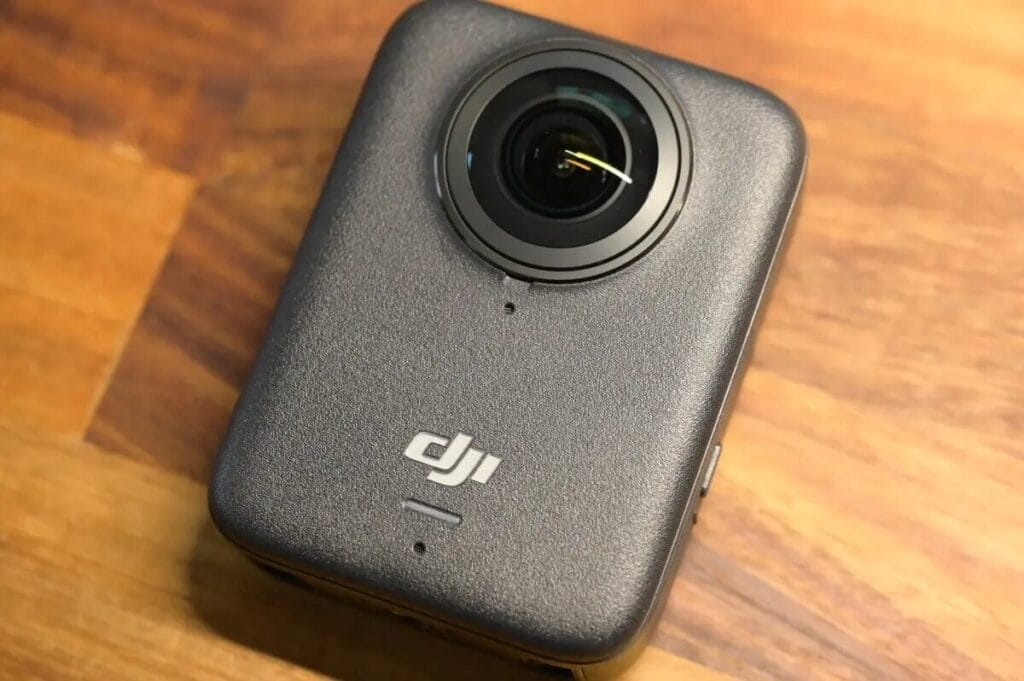
Despite the DJI Osmo 360's impressive performance, one design flaw remains a mystery to me:It doesn't even support replacing the lens cap.In the field of panoramic cameras, Insta360 products have long achieved "lens freedom," allowing users to shoot in extreme conditions without any worries. I once had an experience where the lens accidentally scraped against the ground while filming. Even a tiny bump would instantly leave a small dent on the lens, and in the panoramic stitched image, this small dent would cause a large area of image quality to be catastrophically damaged due to the principle of refraction.
If the lens is fixed, a lens malfunction means it must be repaired. However, if the lens can be replaced like on the Insta360, you can simply buy a new detachable lens kit to revive the 360 camera. If your Osmo 360 lens breaks, it's best to use DJI Care to get a replacement from the manufacturer. If that's not available, you'll need to contact DJI and pay for shipping it for repair.
Insta360 X5
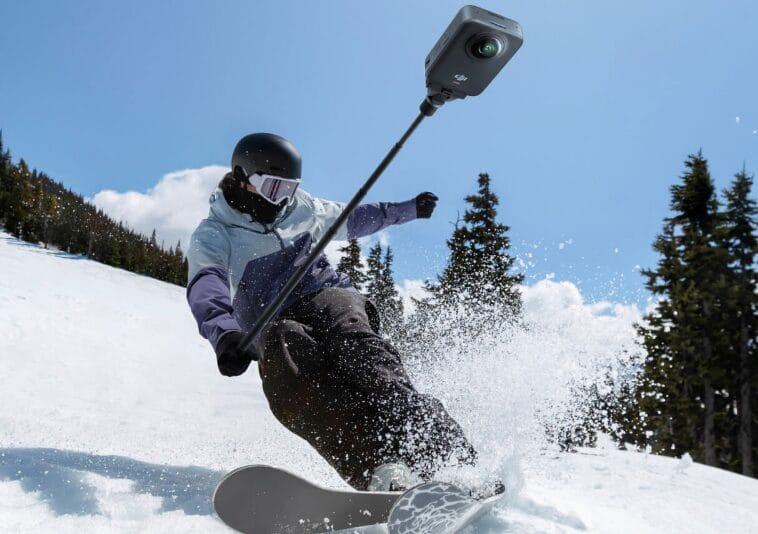
While I highly recommend the lightweight X4 Air for skiing scenarios, if you're looking for impeccable image quality and panoramic video regardless of day or night, then... Insta360 X5 It is the most recommended choice.
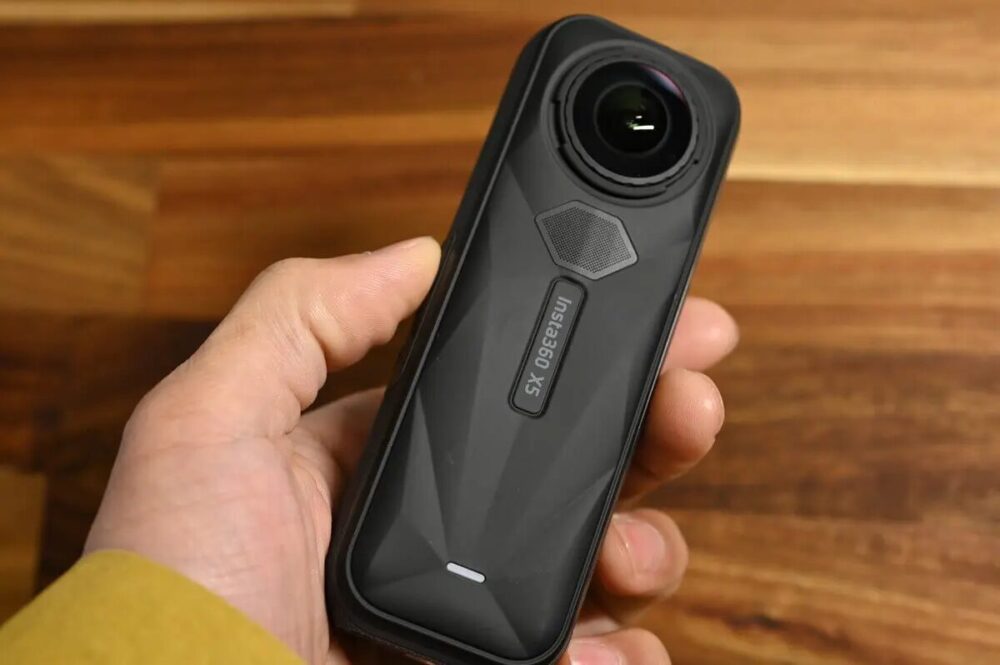
The X5 is equipped with AI Tri-Core Imaging SystemThis elevates its image quality to a new level compared to the X4 Air. On a backlit ski slope with strong light reflections, the X5 accurately reproduces details without any washed-out white areas. Benefiting from its top-notch low-light performance, the X5 also...Currently, the best panoramic 360 camera for nighttime gliding photography.With natural color transitions and excellent noise control, it's perfect for those who want to capture those special "nighttime gliding moments".
Unlike the X4 Air, the X5 supports up to 4K 120fps Filming. This means you can achieve... 4x slow motion The X5 offers smooth playback. For hardcore gamers who want to capture details of aerial grabs and spins on the big air, its specifications are indispensable. Additionally, like the X4 Air, the X5 supports self-replacement lenses, allowing for quick and easy repair even if the lens is worn during aggressive recording, eliminating the need for factory returns.

Next, we will introduce two wide-angle action cameras suitable for skiing.
While 360-degree panoramic cameras are convenient, their image quality has limitations. When you crop and enlarge a 360° panoramic video to the mainstream 16:9 aspect ratio, even if the original footage is 8K, the image quality still cannot compare to native wide-angle cameras like the Osmo Action 6 or Ace Pro 2 at the same angle. Panoramic skiing videos suffer from some loss of detail (such as snow splashes and the texture of the skis), which is a common technical bottleneck for current 360° panoramic cameras.

DJI Osmo Action 6
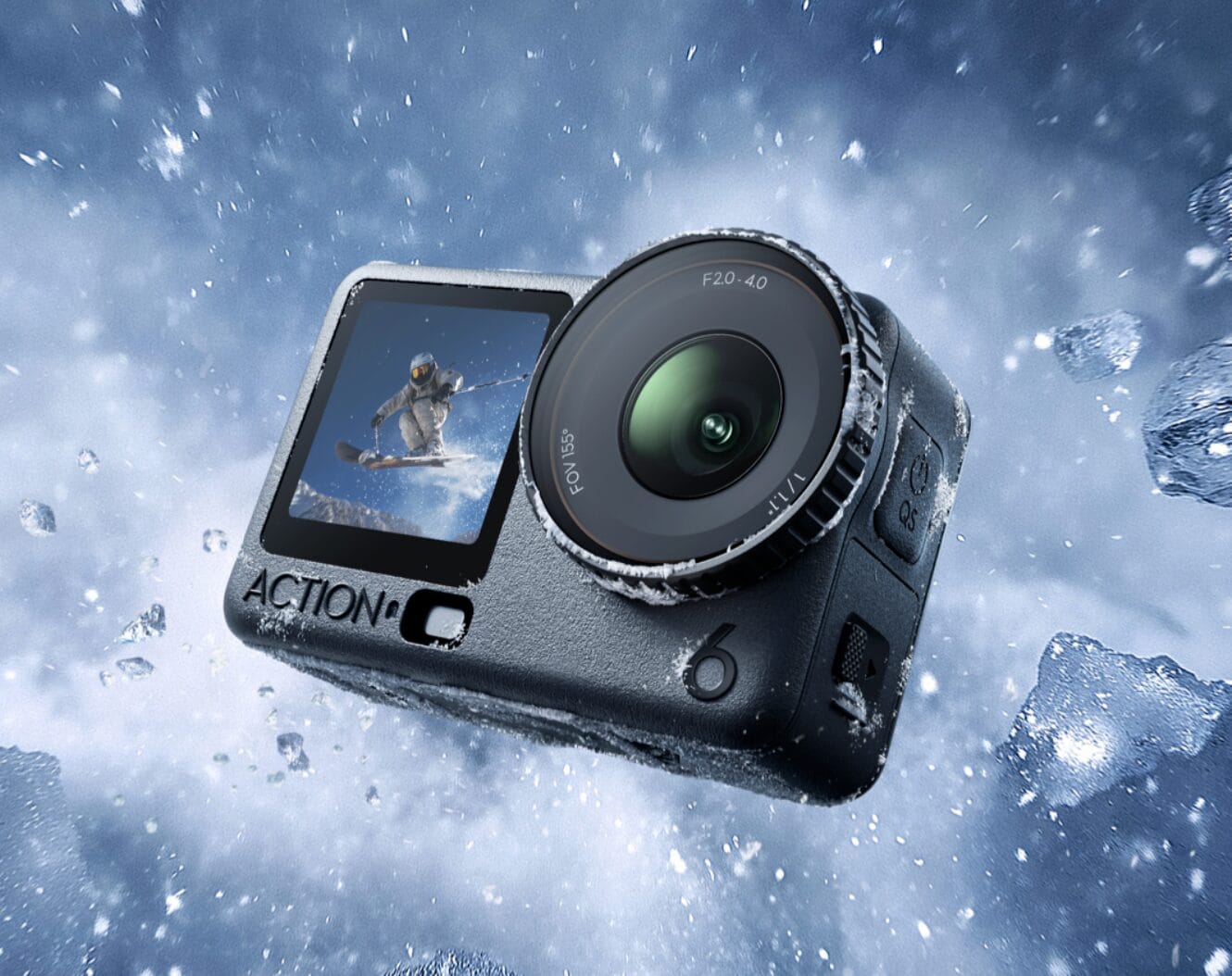
If you're using it in a skiing setting, my top recommendation for a wide-angle camera is the newly released DJI Osmo Action 6. This wide-angle action camera excels in battery life, image quality, wide-angle capability, and image stabilization.
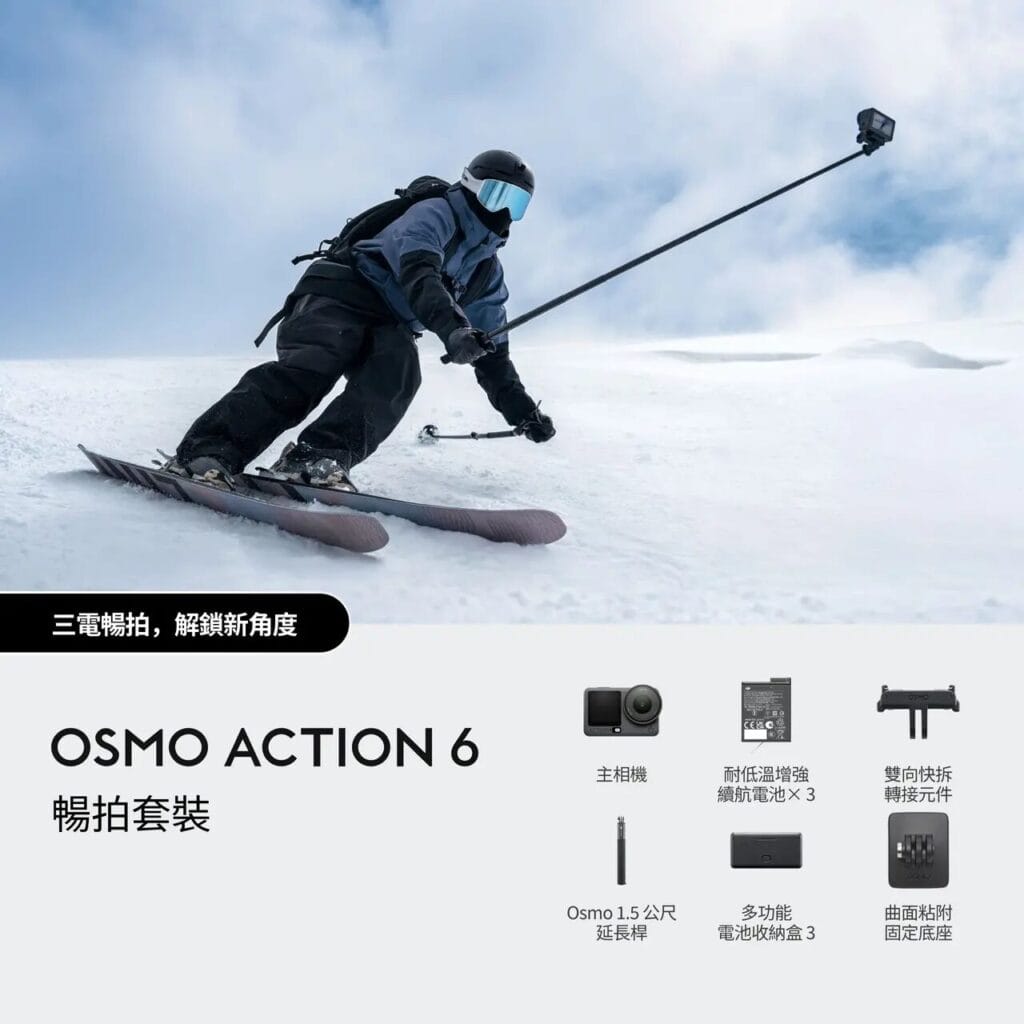
With its native -20℃ cold-resistant battery and amazing 4-hour battery life, coupled with the powerful "22-minute fast charge 80%", it can be ready to accompany you to the summit again, even if you only have time to drink a hot coffee at a rest stop.
The perfect solution for the selfie angle that skiers care about most has finally been found.The newly added 182° wide-angle lens accessory allows you to easily include your arms, skis, and the magnificent ski slope in the entire image when taking handheld selfies, with very natural control over edge distortion.
Equipped with the new RockSteady 4.0 Super Stability TechnologyThis is a game-changer in terms of hardcore data. When skiing at high speeds or tackling challenging snowy terrain, its image shake is significantly less than that of ordinary models.Reduced by 60%No matter how bumpy the ground is, the film remains smooth and stable.
Insta360 Ace Pro 2
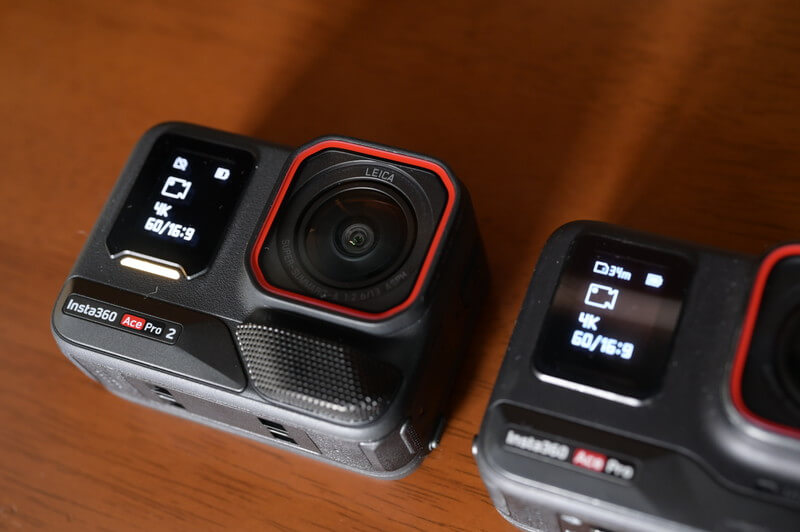
The biggest advantage of the Ace Pro 2 lies in its near-perfect "multi-functionality".
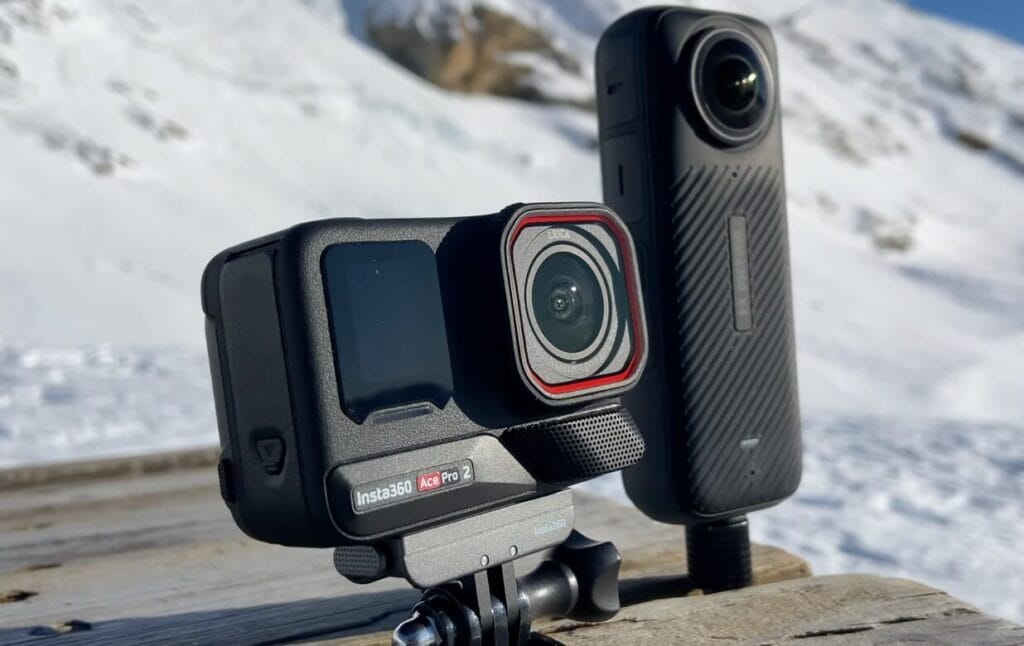
If you're looking to buy an action camera that can not only record skiing but also handle everyday tasks...High-quality Vlog cameraIf the role is [character name], and "graphics quality" is your top priority in decision-making, then... Insta360 Ace Pro 2 It's a good choice.
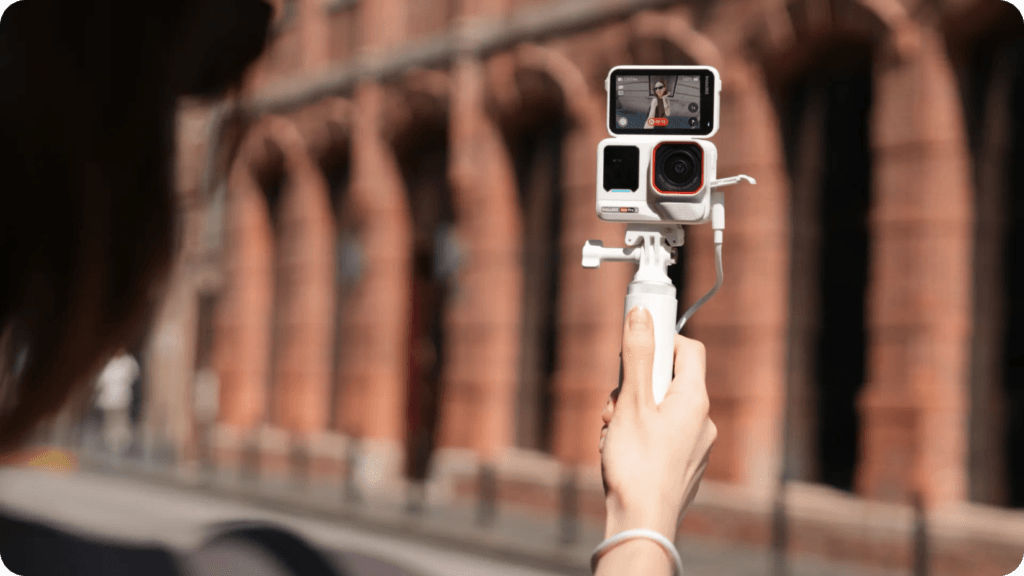
- Flip the screen: For creators who like to speak to the camera, its flip screen makes composition incredibly simple.
- Dual identity: It's an excellent vlog camera for everyday use, and on the ski slopes, mounted on a helmet, worn with a chest strap, or fixed to skis, it delivers visually stunning POV footage. In real-world testing at -20°C, the Ace Pro 2 recorded continuously for approximately 95 minutes.
Essential accessories for ski action cameras
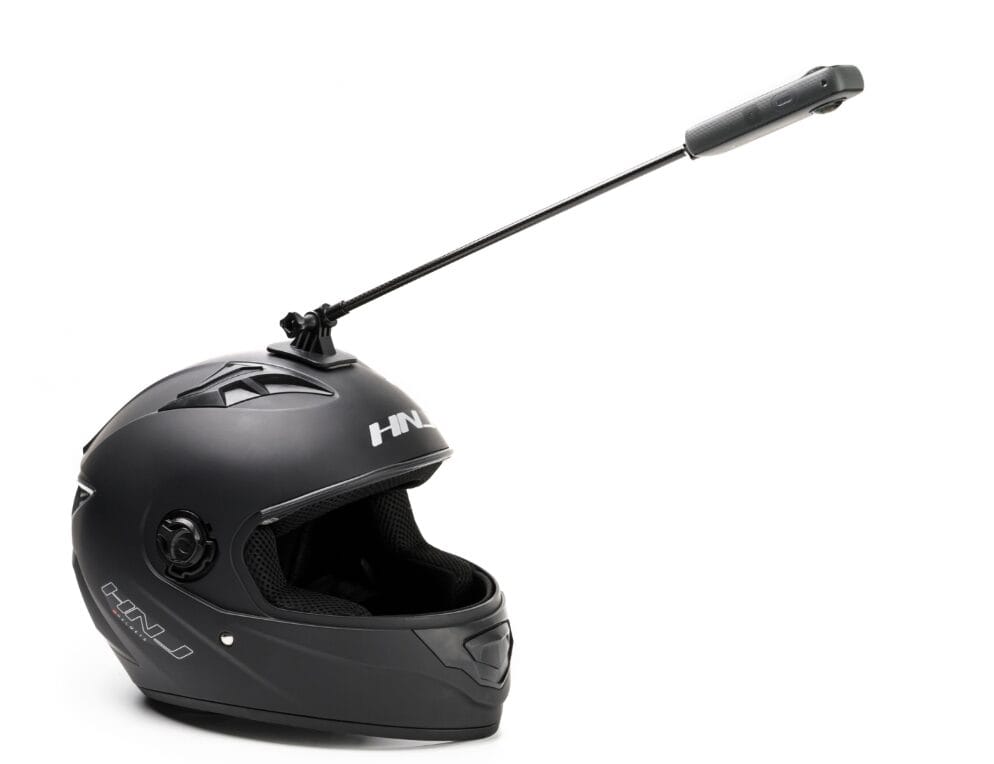
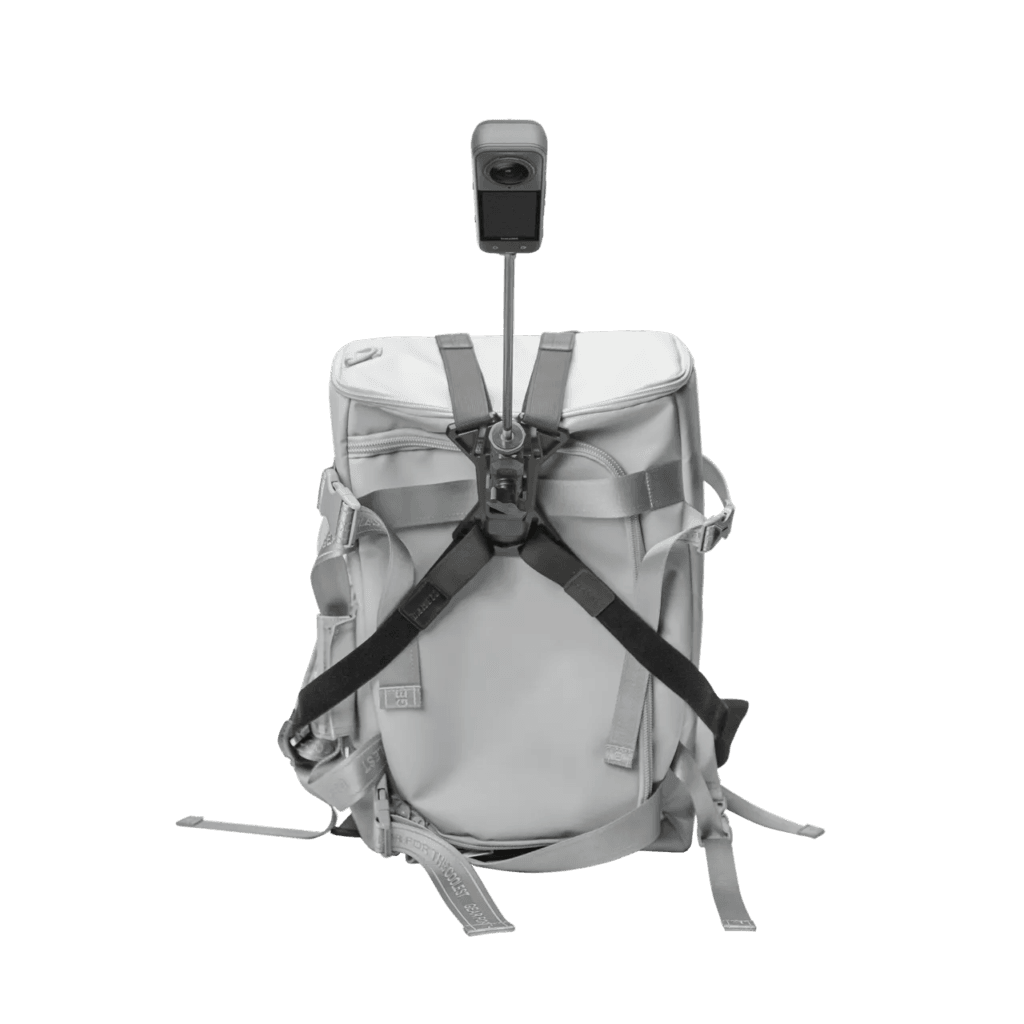
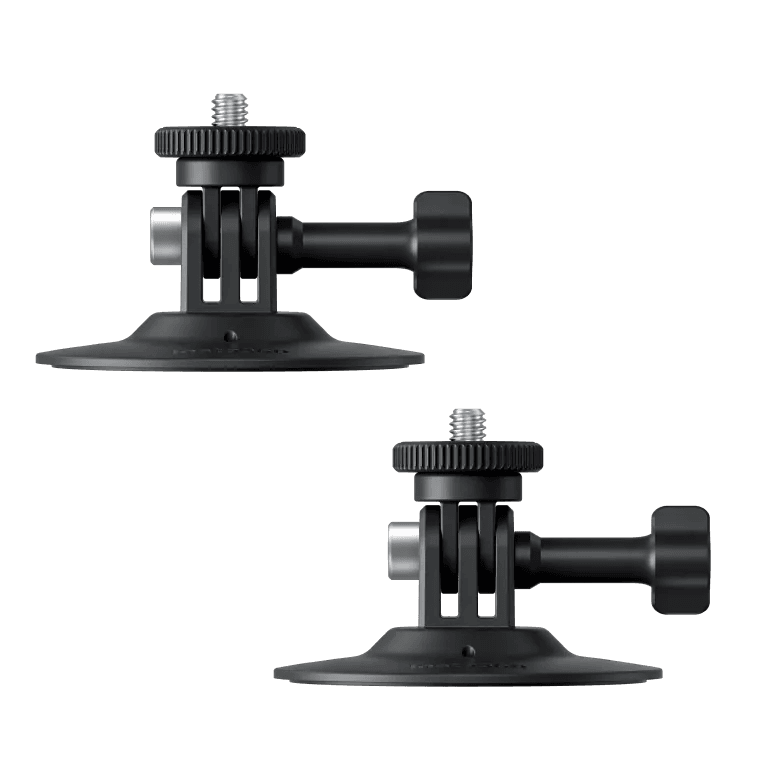
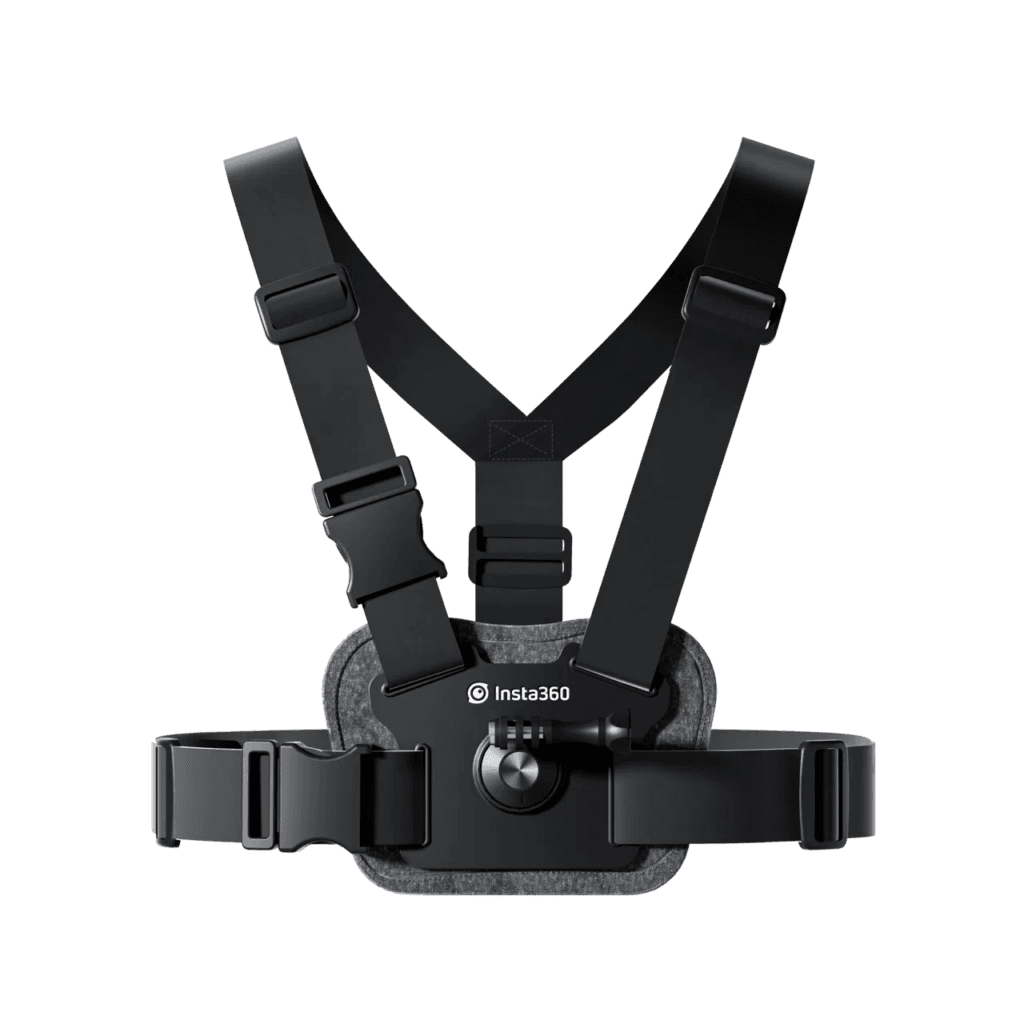
Choosing the right action camera is only the first step.Accessory SelectionIt is also the soul that determines the diversity of filmmaking perspectives. Currently in the market... Insta360 The ecosystem of accessories offered is the most comprehensive and mature. Even if you are using DJI or GoPro, you can refer to the following principles to select the corresponding accessories.
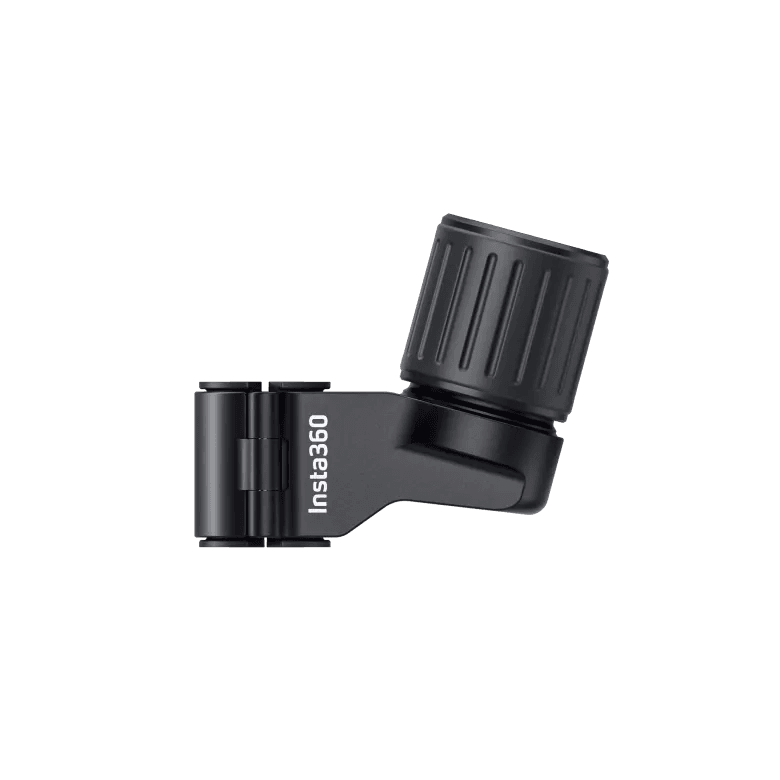
Essential equipment for skiers can be simplified into four main categories:
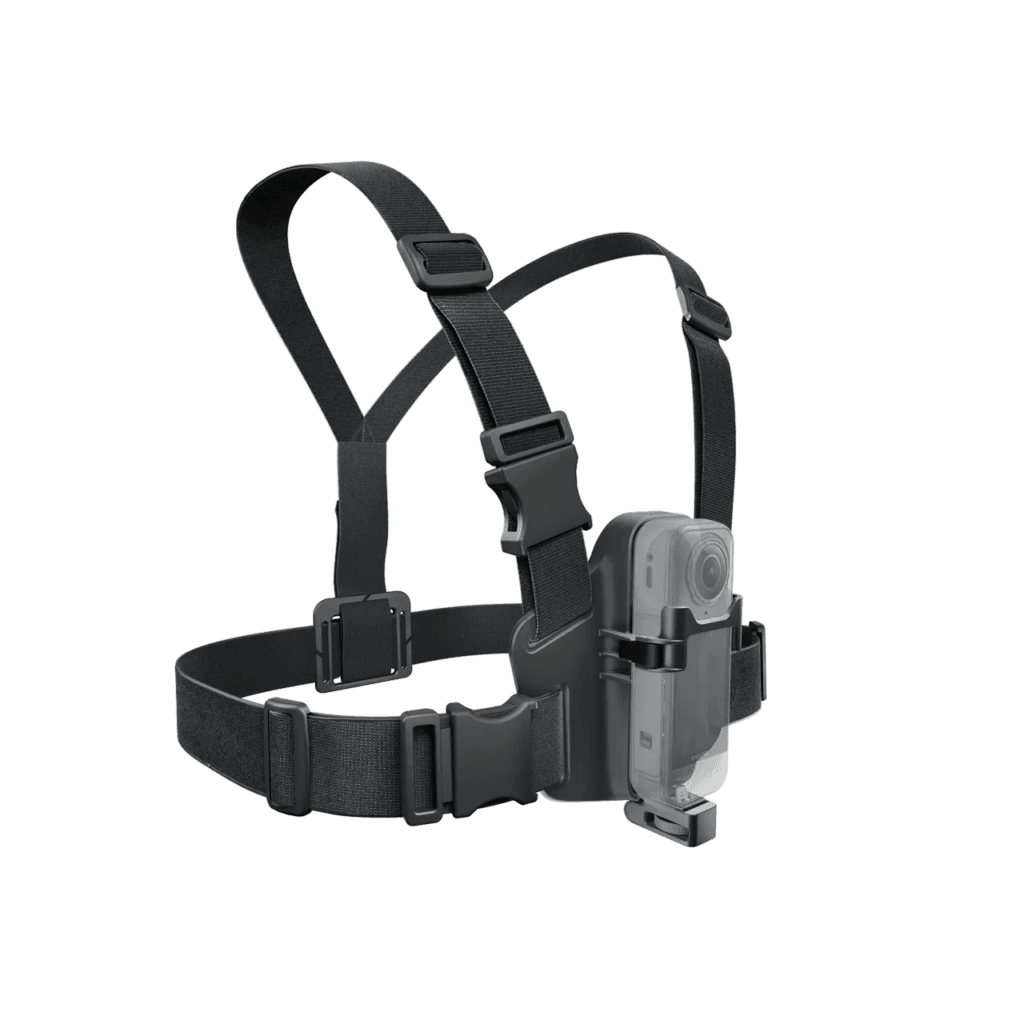
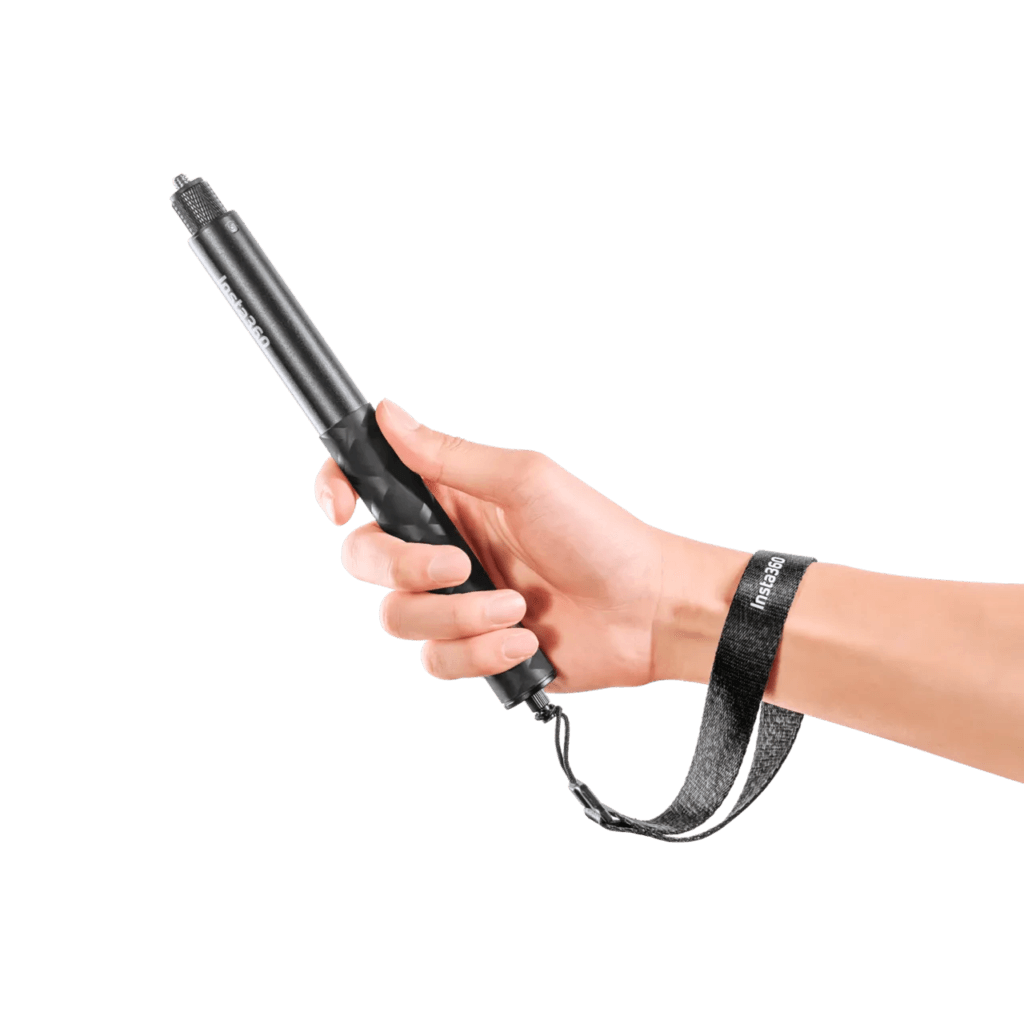
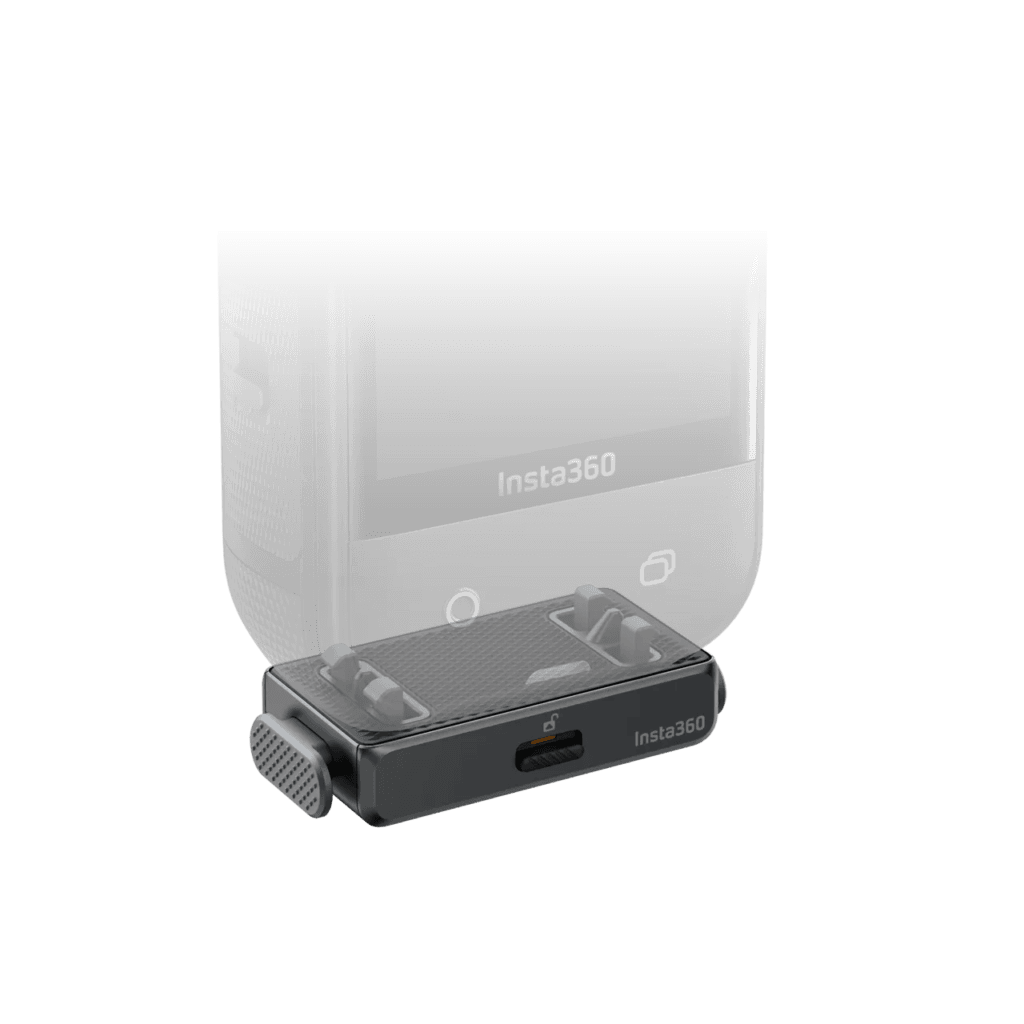
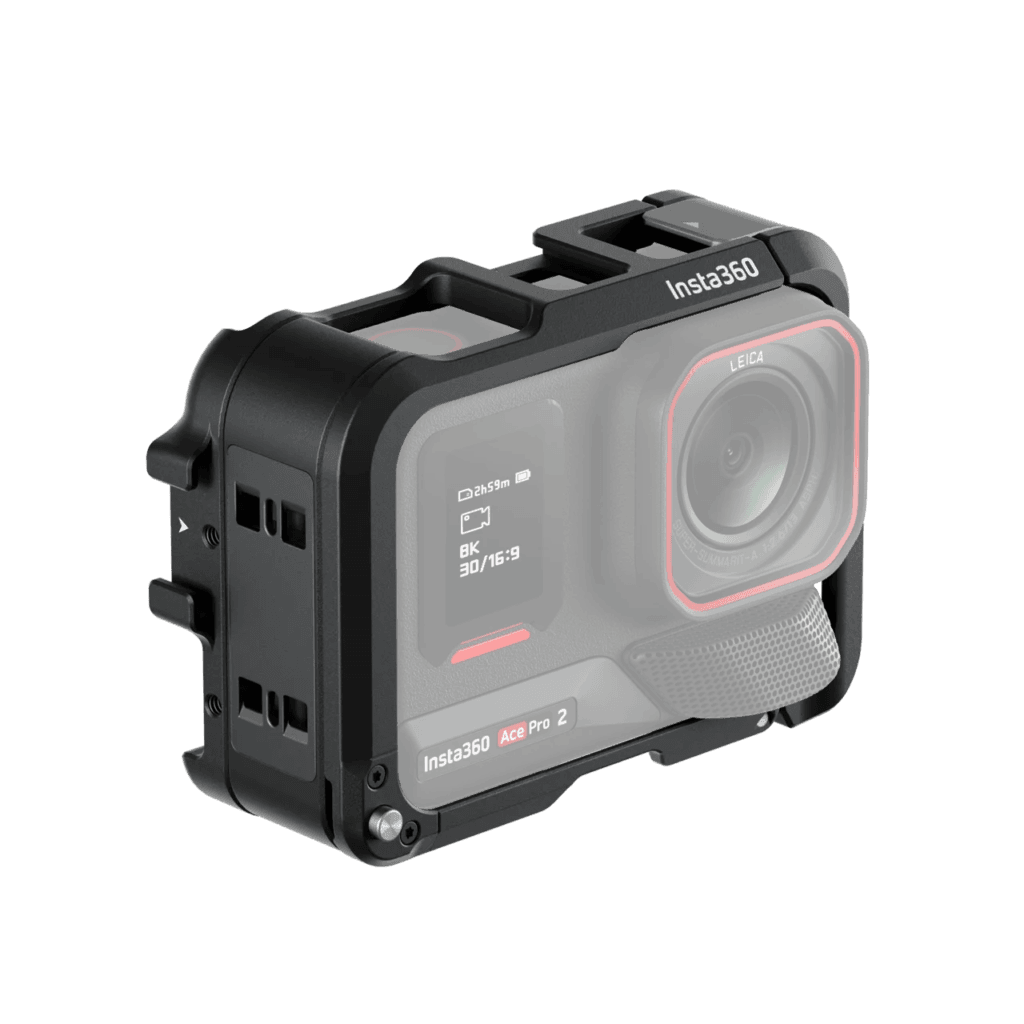
Conclusion
For a long time, Insta360 has not only maintained its leading position in the panoramic camera market, but has also demonstrated extraordinary vision in user education and market expansion. For Insta360, they are not just creating a camera for shooting videos, but also redefining "skiing video culture" through powerful AI algorithms and software ecosystem.
With the successive releases of the DJI Osmo 360 and Osmo Action 6 , the ski camera market has officially entered an era of fierce competition. For skiers, increased competition is undoubtedly a good thing: we not only have more high-performance and distinctive product options, but also more cost-effective and value-for-money products to choose from amidst brand competition.
Hopefully, this in-depth review and buying guide will be your most reliable reference as you prepare for the 2025-26 season. Choose the right camera, and all that's left is to enjoy the ride and let your lens capture your coolest moments on the slopes!