



Want to record your diving moments? A good waterproof sports camera makes it easy to capture the underwater world - whether it's colourful coral reefs, schools of fish or just diving - into a video that's worth looking back on again and again.
This review will analyse the key points of choosing an underwater sports camera, and recommend the 5 most worthwhile diving cameras, which are all on the market in 2024~2025, and are the latest models on the market, in addition to a detailed specification comparison, to help you find the most suitable underwater sports camera, so that you can dive without the need to worry about the film. You will be able to dive without worrying about your film.
Why do I need a specialised diving sports camera?
There is a fundamental difference between "underwater recording" and "land-based filming". The combination of a mobile phone + a waterproof case, although less budgetary, is often not enough for deep dives. Here are the three main challenges of underwater recording:
- Light Decay: After the water depth exceeds 5-10 metres, the natural light decreases rapidly, and the picture starts to be dark and blurred.
- Colour distortion: Red and orange light are absorbed by water, resulting in overly heavy blue-green tones and cooler tones.
- Waterproof Depth: The phone is only waterproof for shallow water splashing, and can't withstand the pressure of deep diving above 10 metres, so you need to consider getting a special camera for diving.
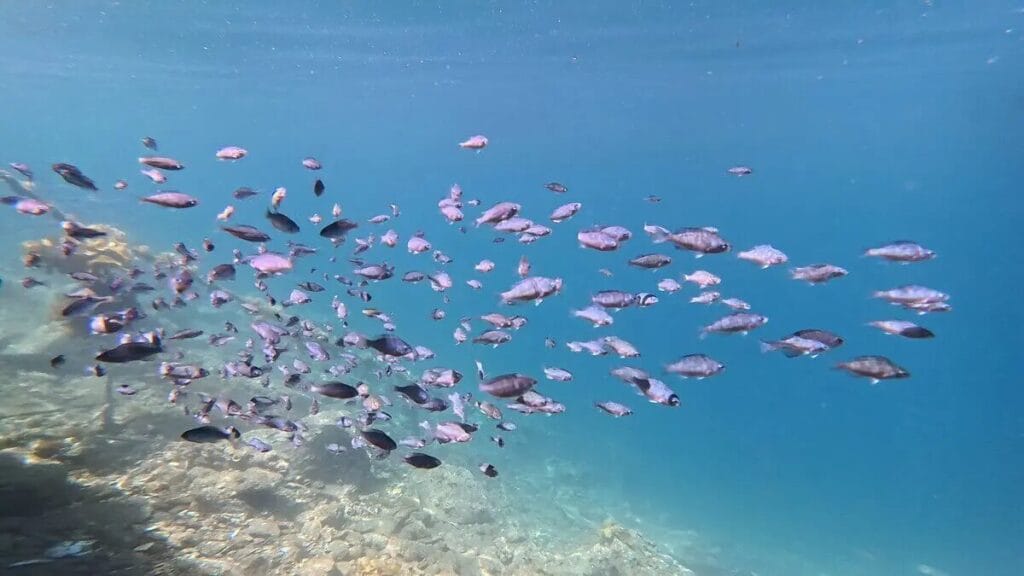
It's important to get a sports camera with the right waterproofing specifications and excellent underwater performance. Whether you're snorkelling, free-diving or scuba diving, a professional underwater camera will ensure that you get great footage with clarity and colour reproduction.
Diving Sports Camera Buying Highlights
There are 6 key points to understand before you consider getting a diving camera: "Waterproof Depth", "Picture Quality and Colour Restoration", "Low Light Night Shot Performance", "Ease of Handling in the Water", "Battery Life", and "Warranty Service".
- Waterproof depth
- Picture Quality Colour Restoration
- Low Light Night Shot Performance
- Ease of operation under water
- Battery Life
- Warranty
Waterproof depth
Snorkelling / free diving → Bare waterproofing of 10-20 metres is sufficient.
Scuba Diving / Deep Diving → Recommended to buy a diving suit with a diving shell, waterproof up to 50-60 metres or more.
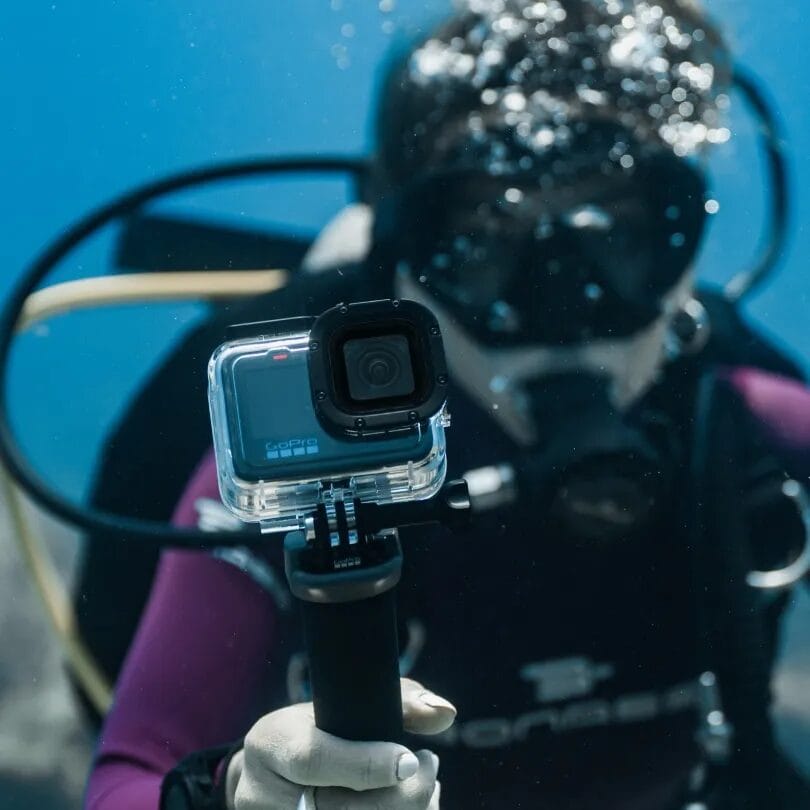
Image and Colour Representation
Choose a camera that accurately restores the blues in the water and supports HDR or AI colour correction for a more natural-looking image.
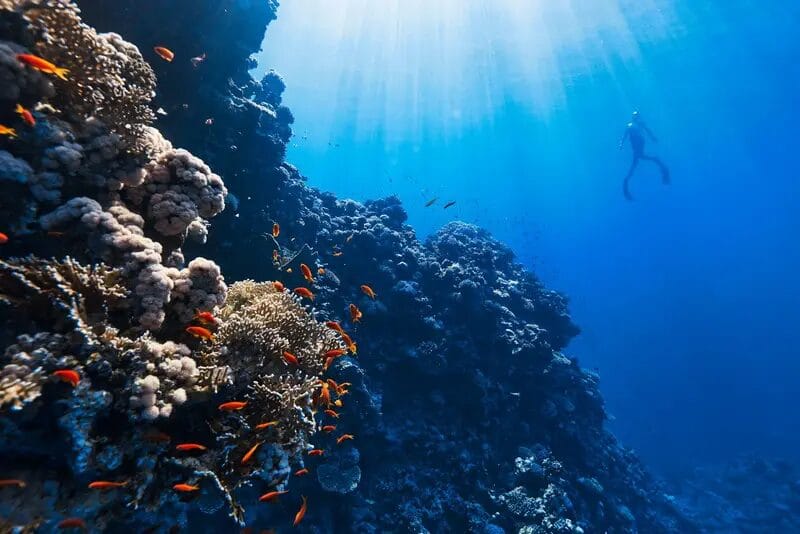
Low Light Night Shot Performance
Deep sea recordings are often poorly lit, requiring a camera with a large sensor or a low-light optimisation mode.
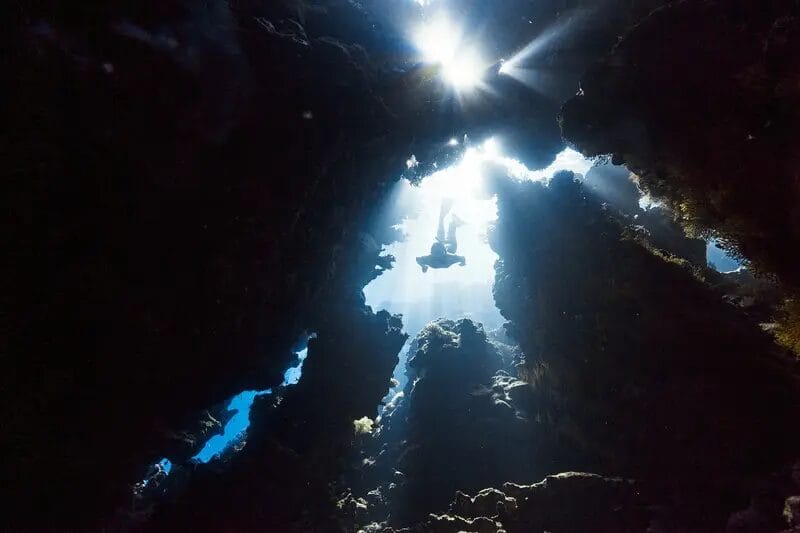
Operational Convenience
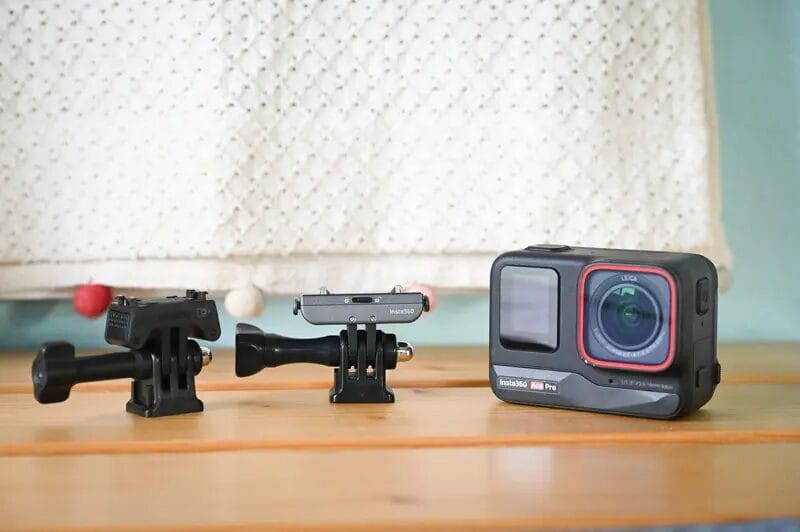
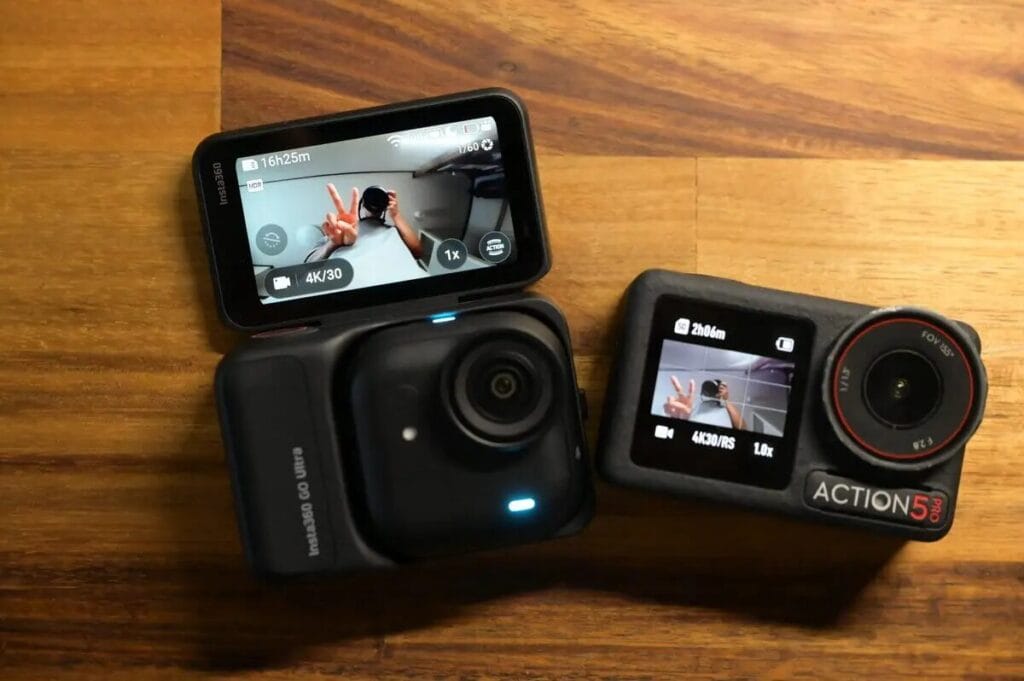
Support Quick Release BracketClear screen, large buttons → safer underwater use
Battery Life
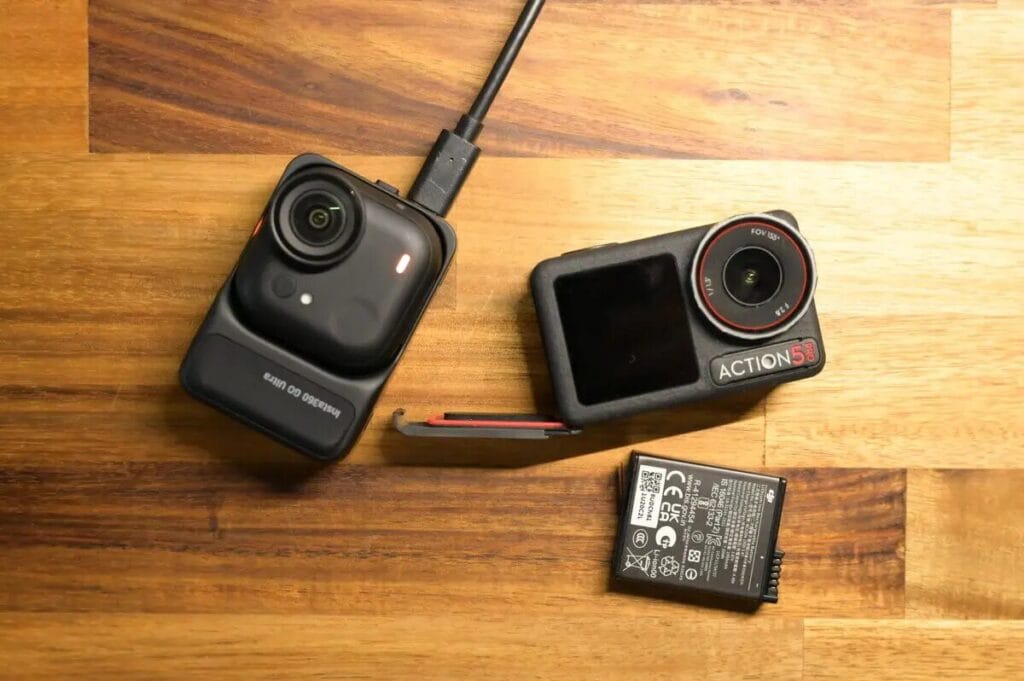
Diving activities usually last 1-2 hours, battery life should be at least 100 minutes (150 minutes or more recommended), battery capacity 1800mAh or more recommended.
Warranty
Professional brands (e.g. DJI, Insta360, GoPro) usually provide good after-sales service and are more reliable than cheap brands.
2025 Recommended Diving Cameras TOP 5
Specification Comparison
| models | Bare metal waterproof | Dive Case for Insta360 Ace Pro 2 | resolution (of image, monitor etc) | BatteryCapacity | Battery Duration | Colours in the water | |
| Ace Pro 2 | 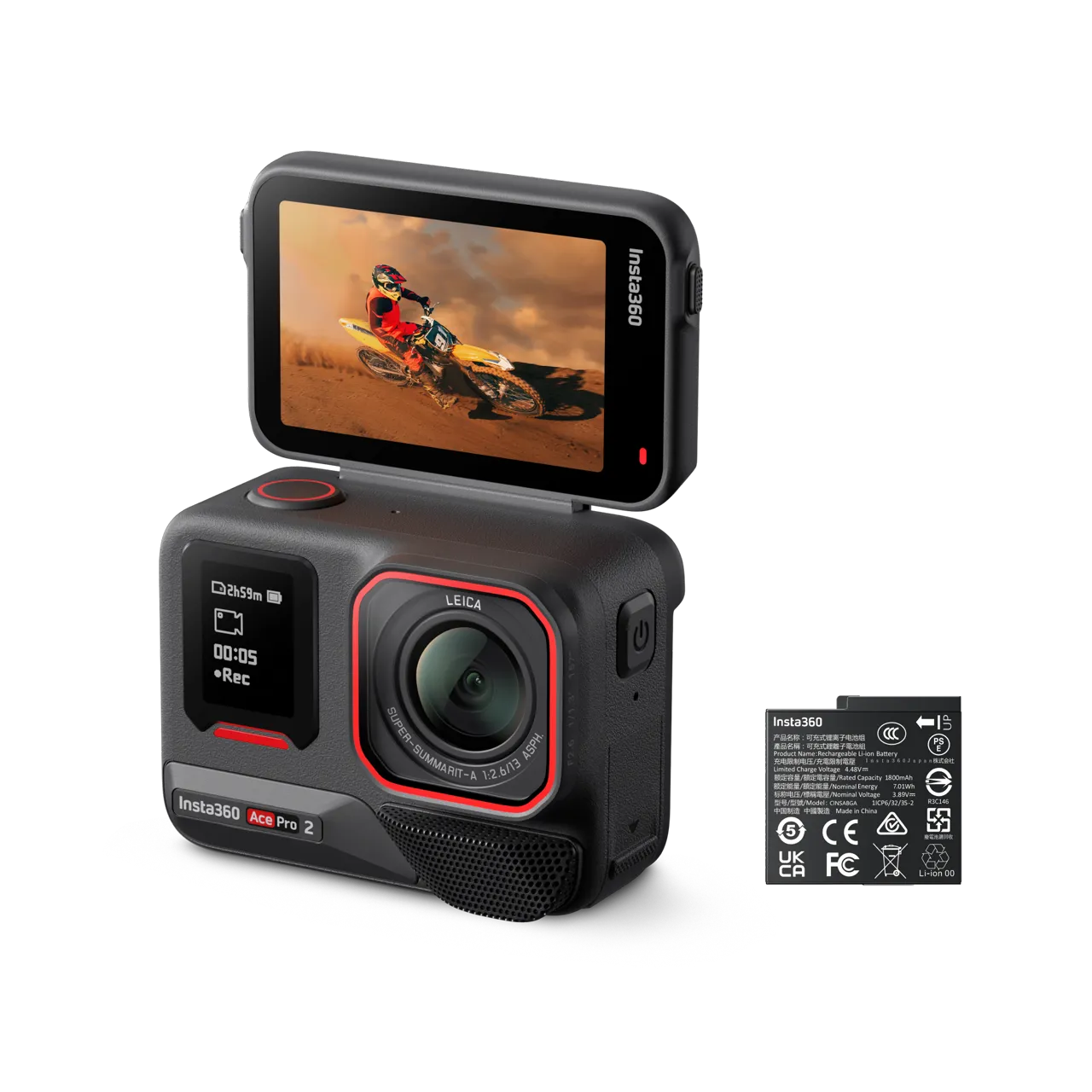 | 12m | 60m | 8K30fps 4K120fps | 1800mAh | 112 minutes (4K@30fps) 4K@30fps | Aqua Vision 2.0 |
| Action 5 Pro | 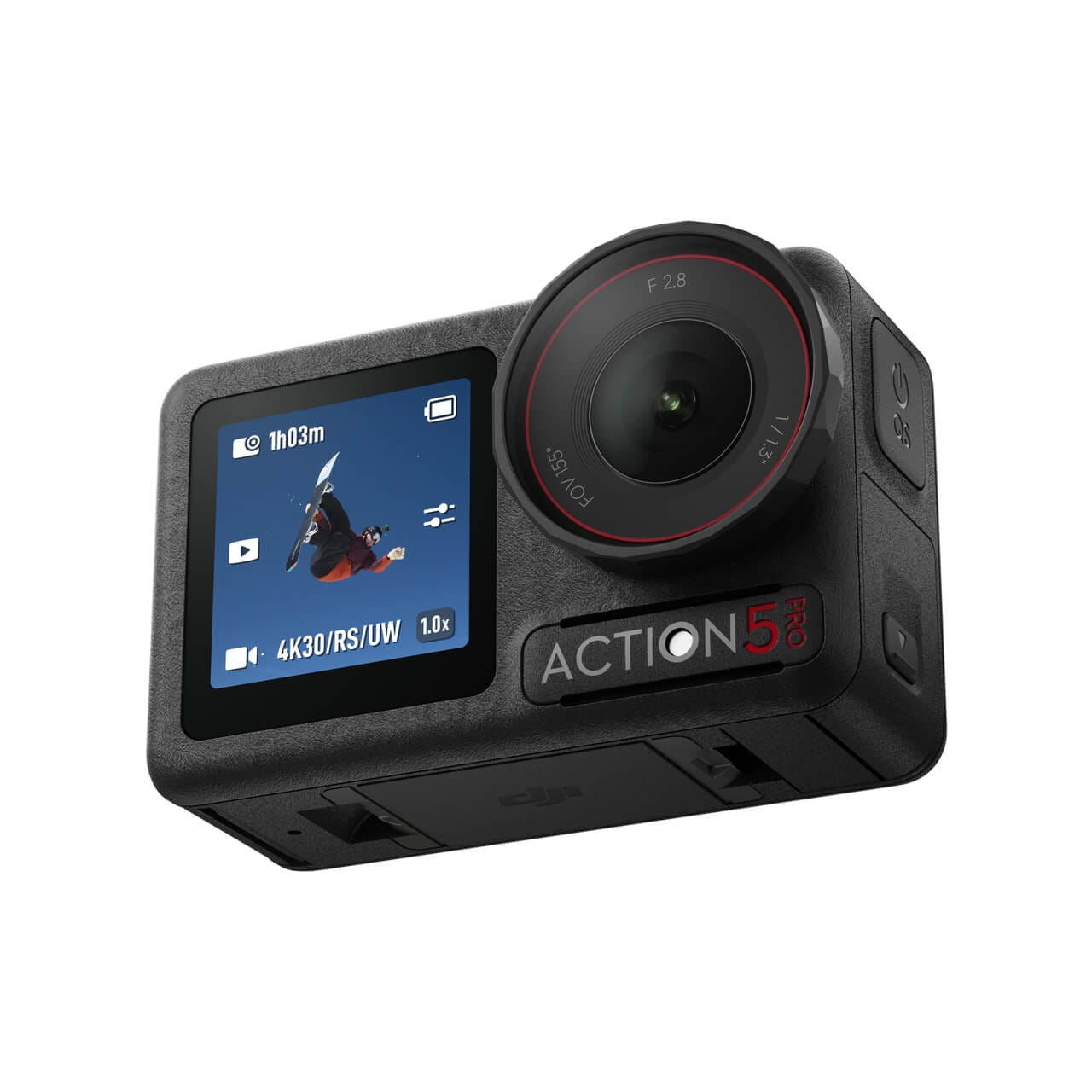 | 20m | 60m | 4K120fps | 1950mAh | 240 minutes.(1080p@24fps) | / |
| X5 |  | 15m | 60m | 8K30fps 4K60fps | 2400mAh | 185 minutes (8K30fps) | Aqua Vision 2.0 |
| X4 |  | 10m | 50m | 8K30fps 4K60fps | 2290mAh | 135 minutes. | Aqua Vision 2.0 |
| HERO 13 | 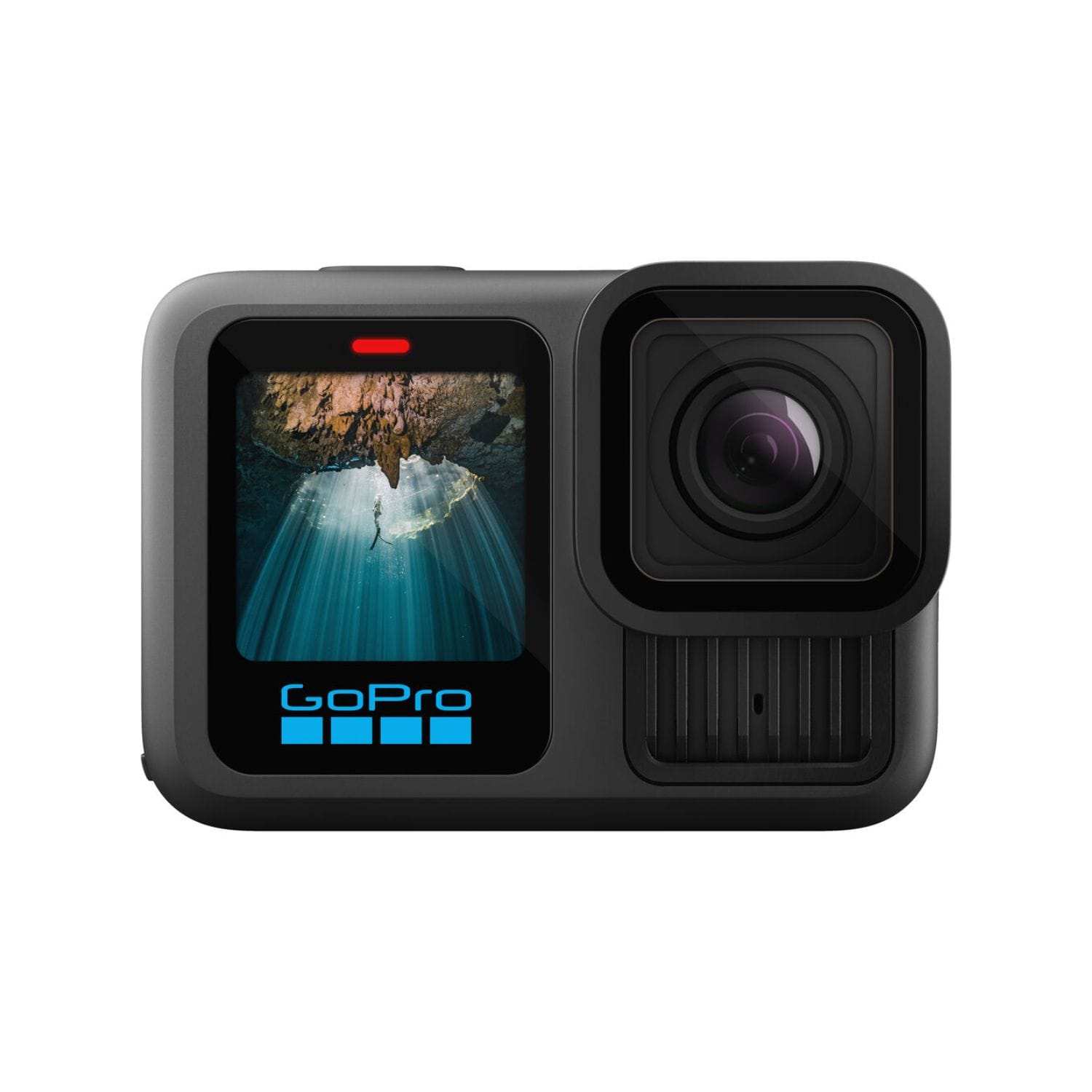 | 10m | 60m | 5.7K60fps 4K120fps | 1900mAh | 90 minutes (5.3K@30fps) | / |
Apart from the basic parameters, "price" is also an important point when choosing a dive camera. Currently, the prices of the diving kits range from NTD$16,060 to $21,718 (HKD $3,300 to $4,600), and there is no significant price difference between the manufacturers, so you should pay more attention to the accessories that are included in the kit.
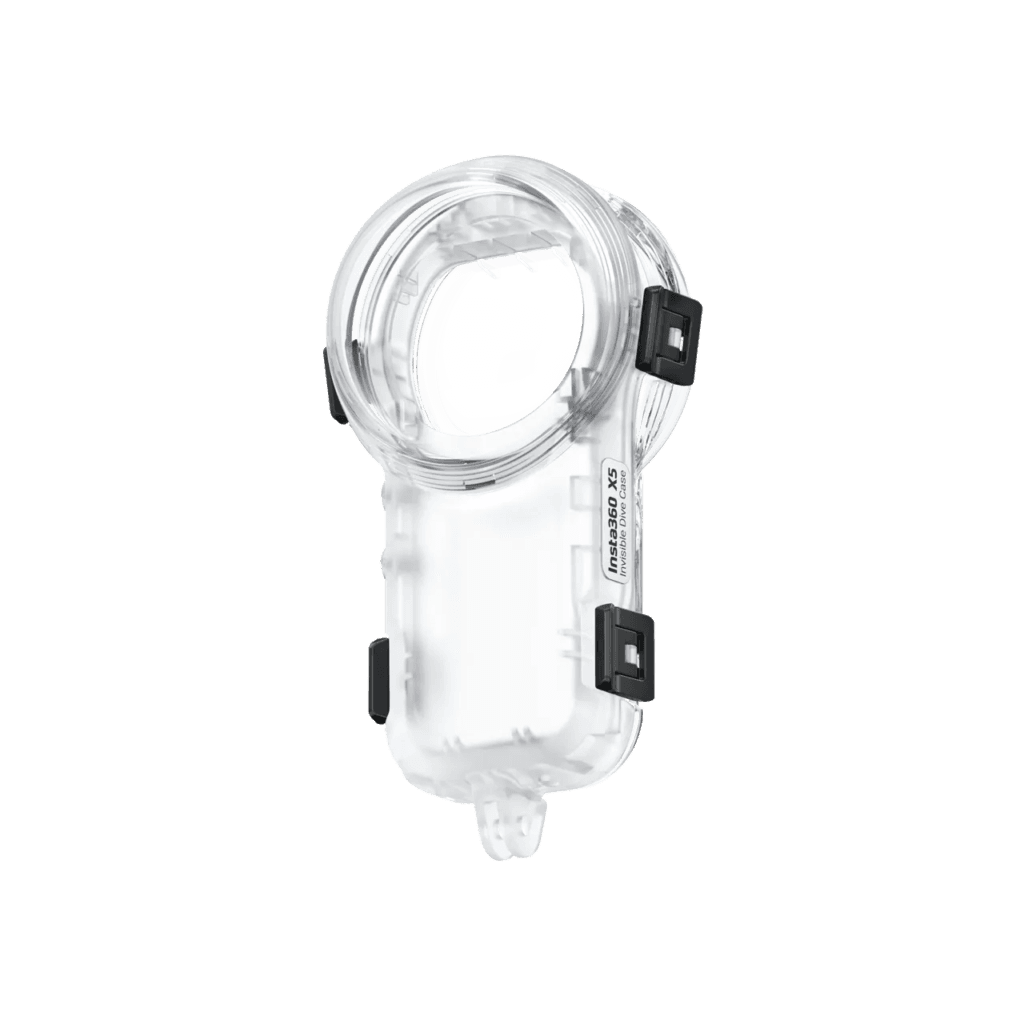
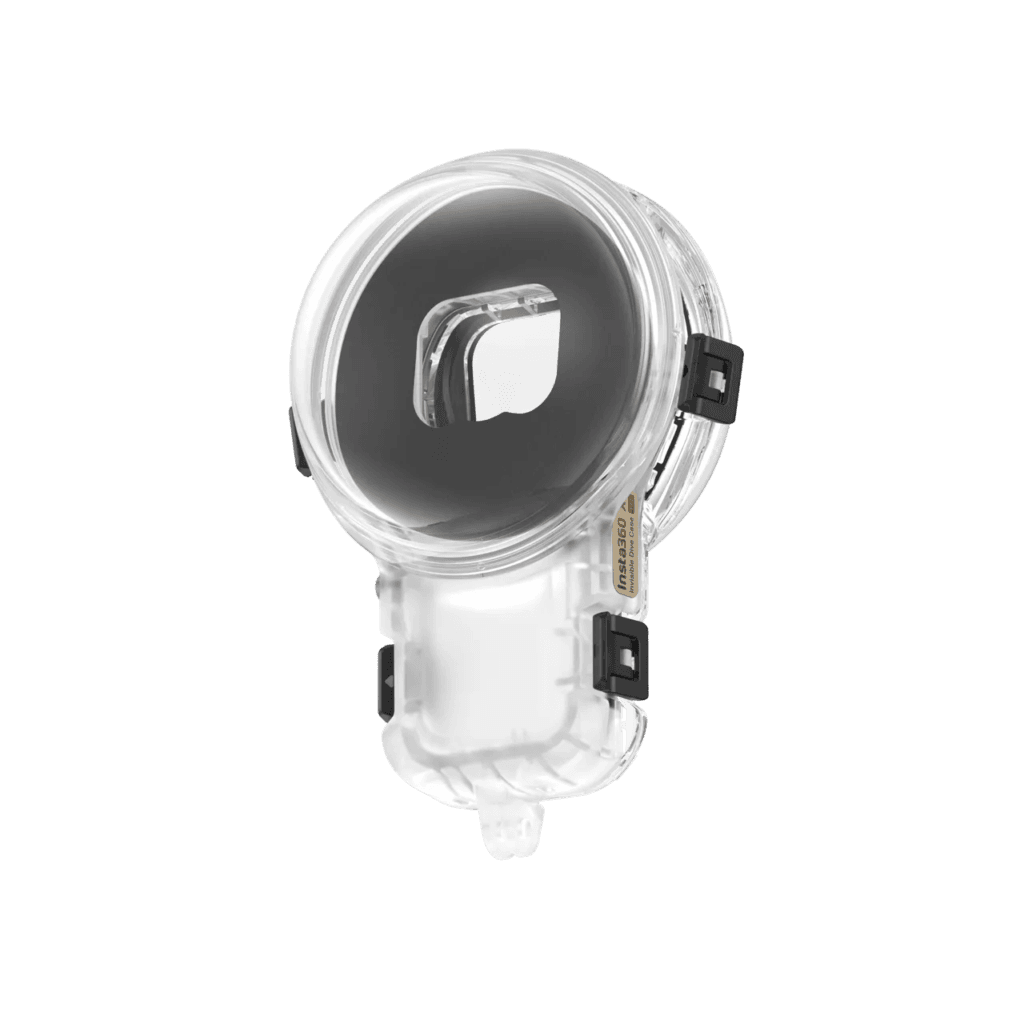
The Insta360 X5 is the most expensive of all the models, but it's also the only company to offer two dedicated dive kits (Advanced Dive Kit, Full Stealth Dive Kit) to differentiate between [snorkelling] and [deep diving]. The Insta360 X5 is the most expensive of all the models, but it is also the only one to offer two dedicated dive kits (Advanced Dive Kit and Full Stealth Dive Kit), with a wider range of accessories than DJI and GoPro.
Diving Kit Price Comparison
| models | Diving Kit Price - NTD | Diving Kit Price - HKD | Inner Bag Accessories |
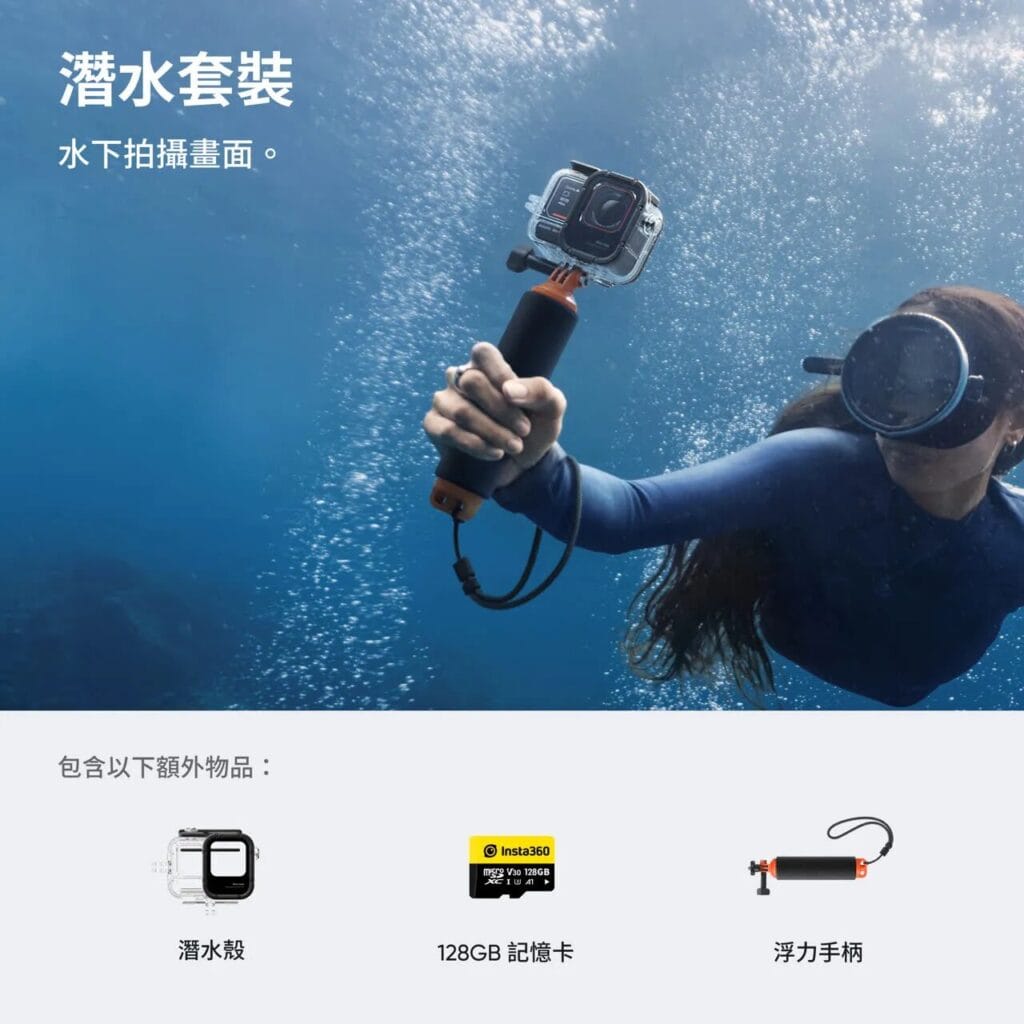
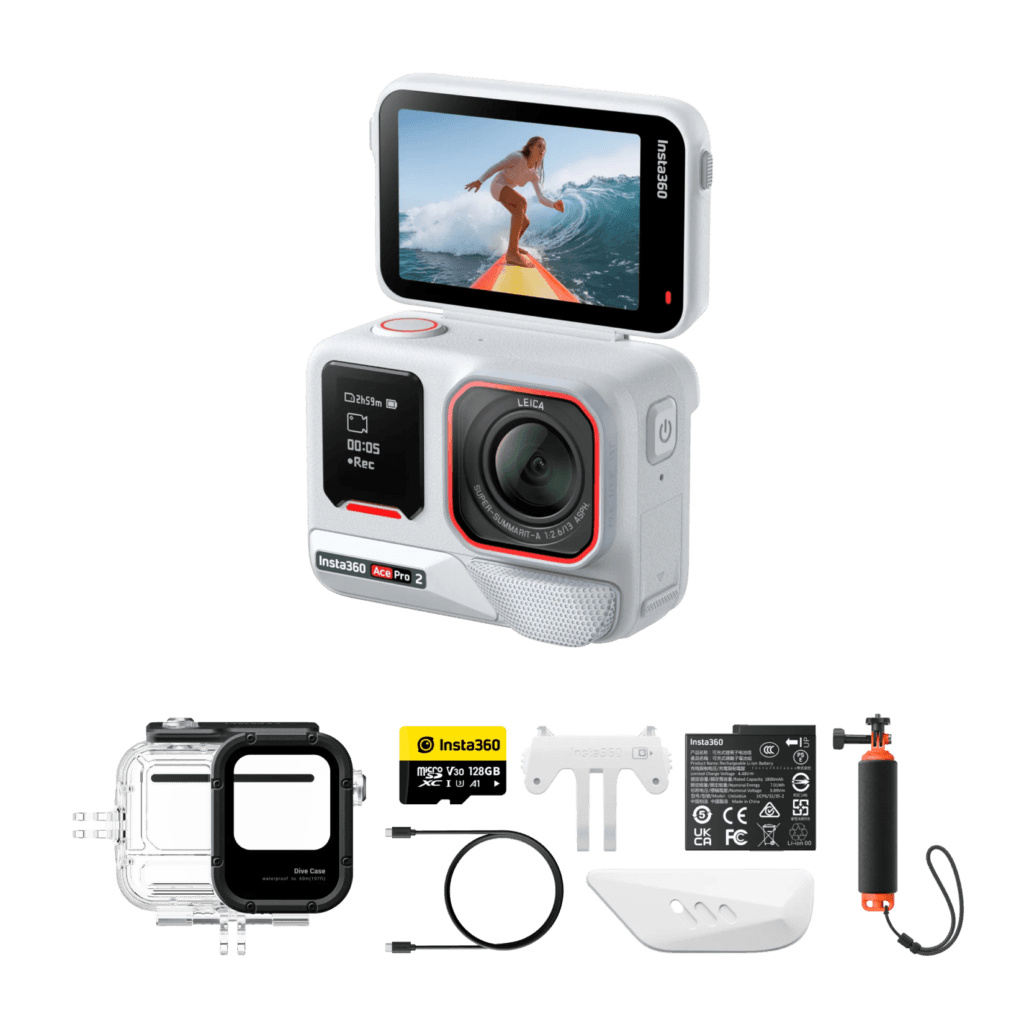
| Ace Pro 2 Dive Bundle | $17,406Limited Time Offer | $3,649Limited Time Offer | Windscreen (default pre-installed) 2x Battery Standard Bracket Microphone Hood USB-C Data Cable 128GB Memory Card Dive Case for Insta360 Ace Pro 2 Floating Hand Grip |
| Action 5 Pro Dive Bundle | $12,040 | $3,378 | Waterproof Shell Floating Hand Grip Anti-fog Foam |
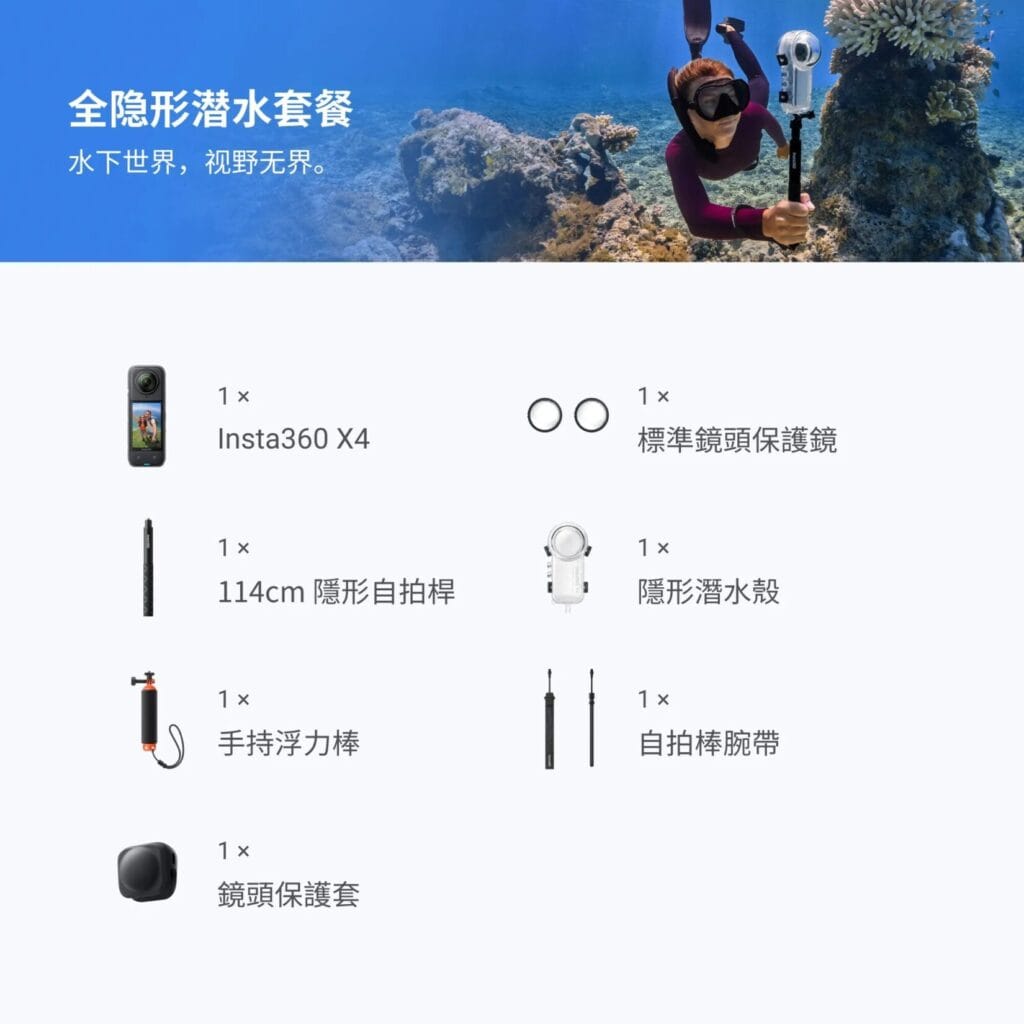
| X5 Full Invisible Dive Kit | $19,605 Limited Time Offer | $4,479 Limited Time Offer | Lens Protector 114cm Concealed Selfie Stick Invisible Diving Shell buoyancy bar Selfie Stick Wristband |
| X5 Advanced Dive Kit | NT$22,218 Limited Time Offer | $5,069 Limited Time Offer | Lens Protector 114cm Concealed Selfie Stick Advanced Invisible Shell buoyancy bar Selfie Stick Wristband |
| X4 Dive Bundle | $16,060 Limited Time Offer | $4,614 Limited Time Offer | Standard Lens Protection Lens 114cm Concealed Selfie Stick Invisible Diving Shell handheld buoyancy bar Selfie Stick Wristband Lens Protector |
| HERO 13 Dive Bundle | $18,416 | $4,470 | Dive Case for Insta360 Ace Pro 2 Extension Rods Anti-fog inserts Camera bag |
Insta360 Ace Pro 2
Pros and Cons
- Diving Mode
- AI colour correction for automatic screen optimisation
- Low light quality
- Support Quick Release Bracket
- Supports FlowState stabilisation
- Flip Screen Design
- Higher price
- Continuity is not as good as DJI Osmo Action 5 Pro.
Is it applicable to diving?
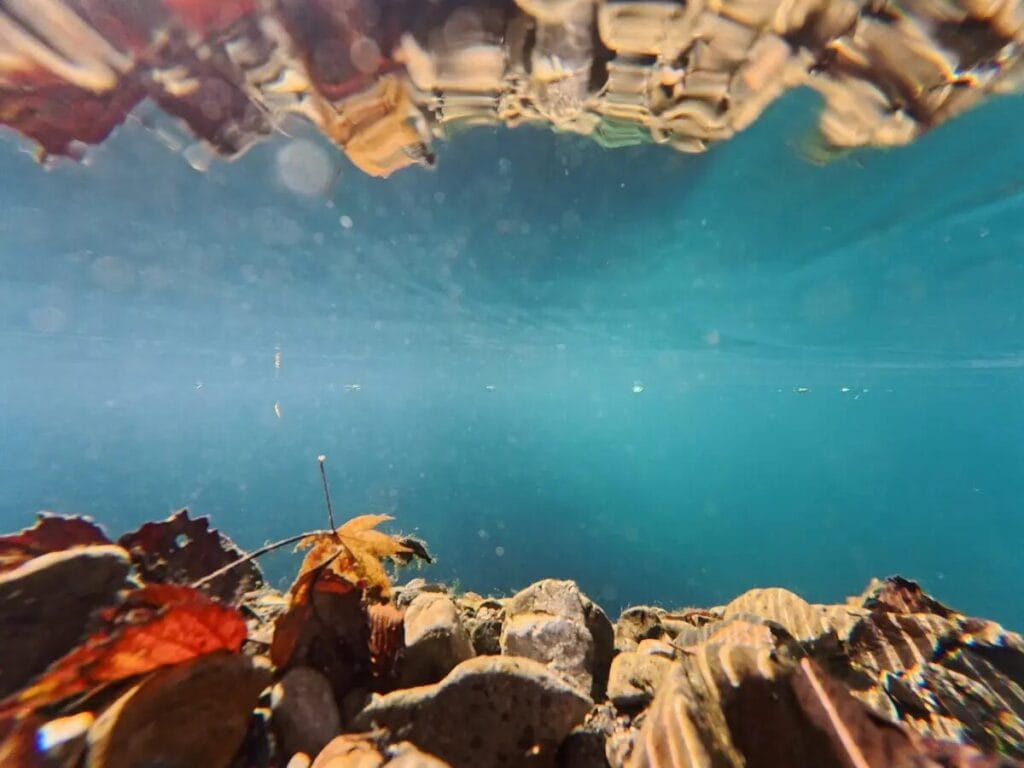
When it comes to sports cameras for diving, I recommend the Insta360 Ace Pro 2. The highlight of this camera is its excellent low-light performance, with powerful AI intelligent colour correction, which allows it to capture sharp, clear and saturated images even in deep water where light is scarce. Underwater light is often several times dimmer than on land, so if you're looking for the ultimate in picture quality and true-to-life colour reproduction, the Ace Pro 2 is the perfect choice.
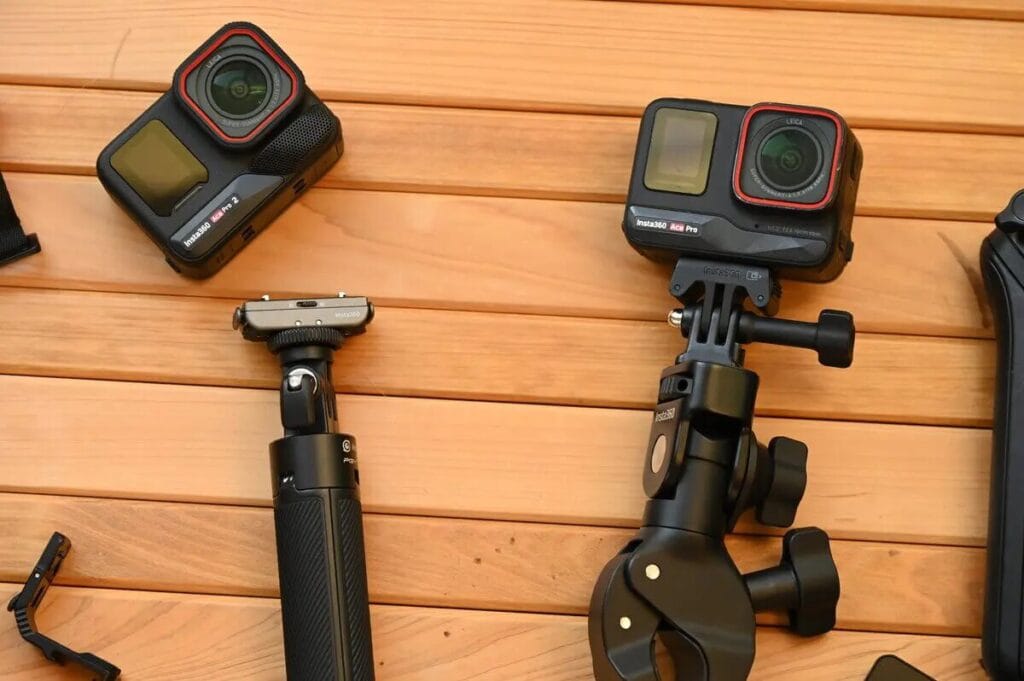
In terms of operation experience, the mounting system of Ace Pro 2 is also very convenient. It supports quick release bracket, so you don't need to turn the screws tediously. This design gives you more peace of mind when replacing accessories underwater without worrying about parts coming loose or falling off, which is even more practical than DJI and GoPro.
It's worth noting that the Ace Pro 2 even supports a dedicated "Diving Mode", where the camera automatically optimises colour temperature and tone levels. With the AI assistant on the Insta360 camera, the colours remain natural and the contrast is balanced even underwater.
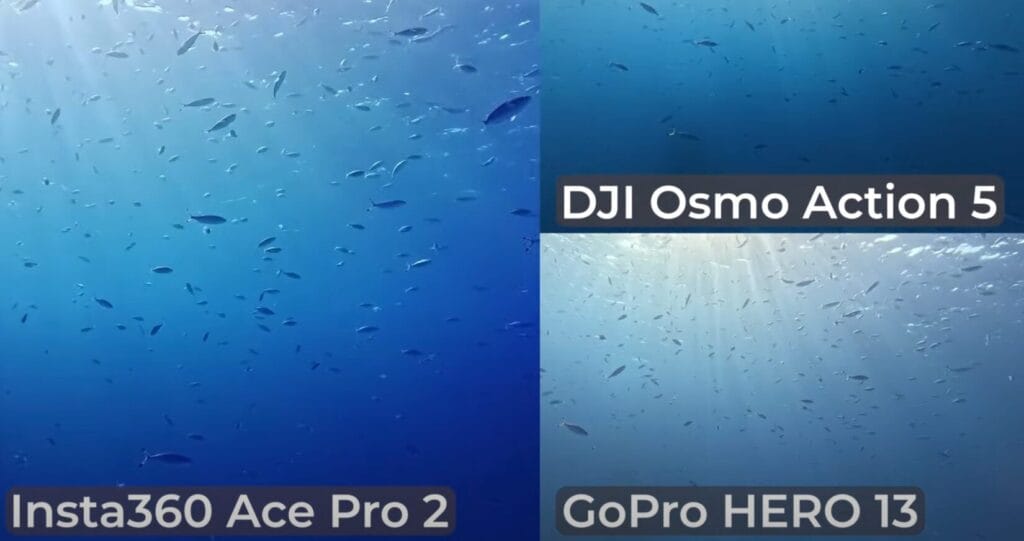
Video fromDIVEIN
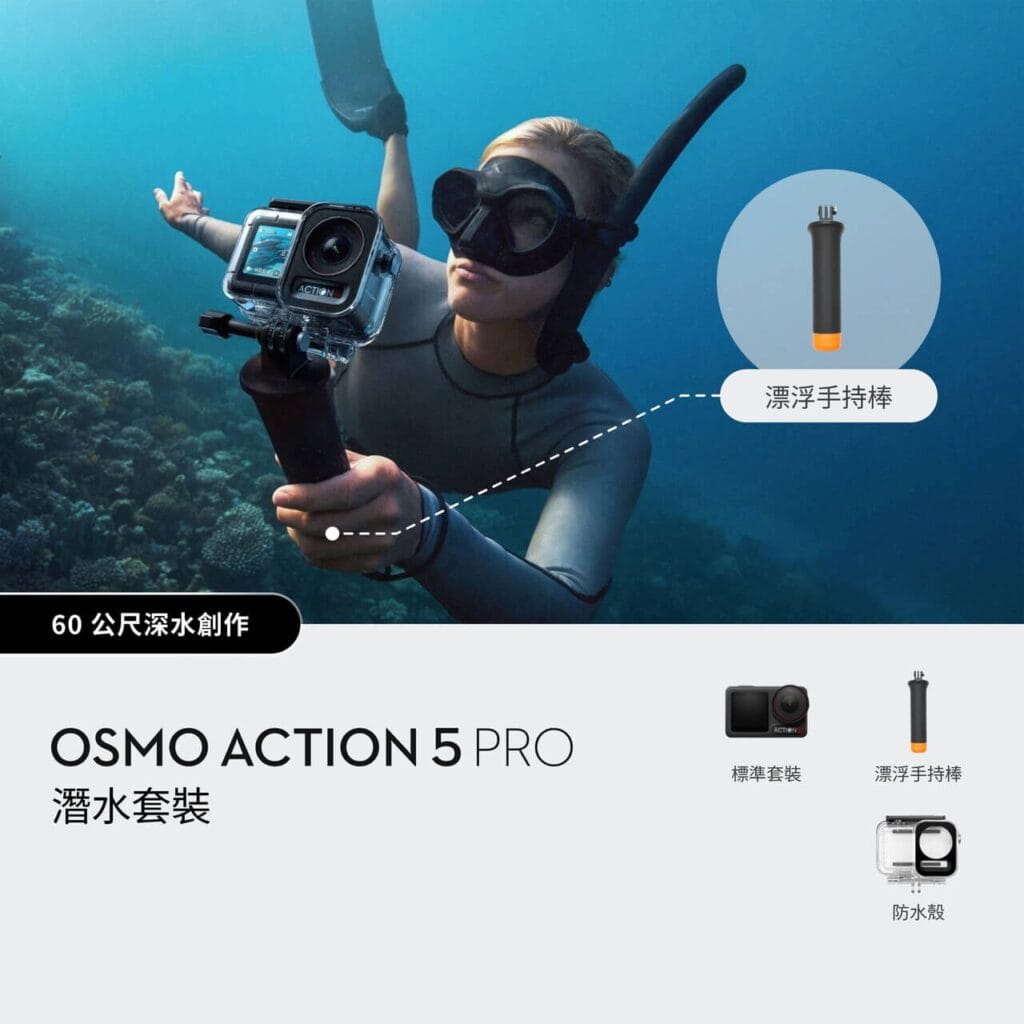
DJI Osmo Action 5 Pro
Pros and Cons
- 20 metres bare metal water resistance
- Long range
- 10-bit colour with Log recording support
- Support Quick Release Bracket
- The buttons are difficult to press, and the operation flexibility is average.
- Image quality in low-light environments is more limited.
Is it applicable to diving?
Apart from the Ace Pro 2, my second recommended dive sports camera is the DJI Osmo Action 5 Pro.
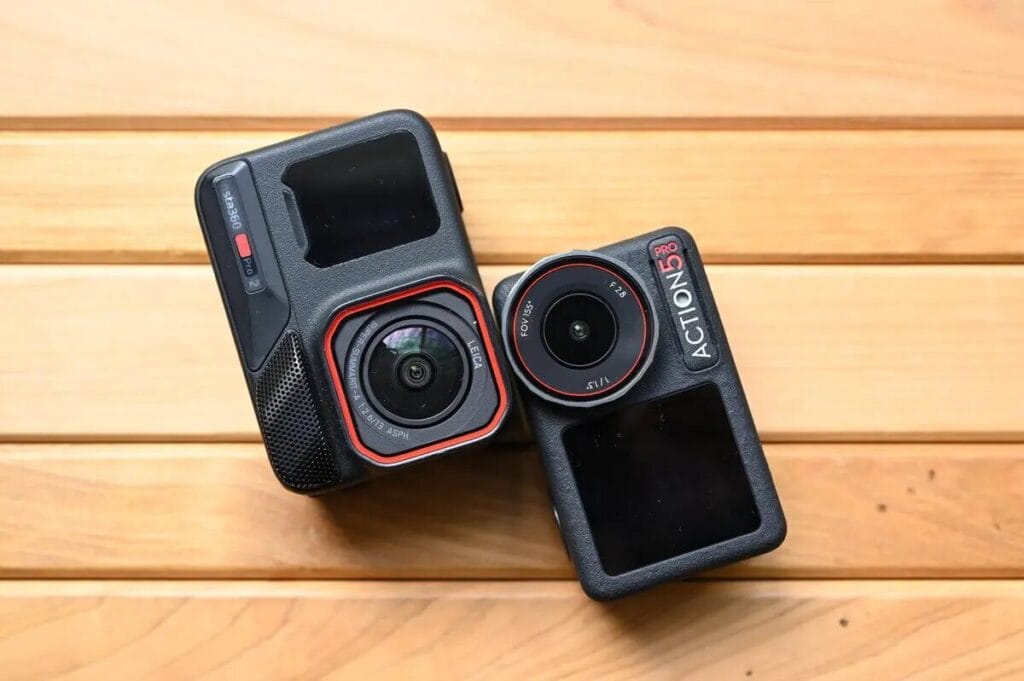
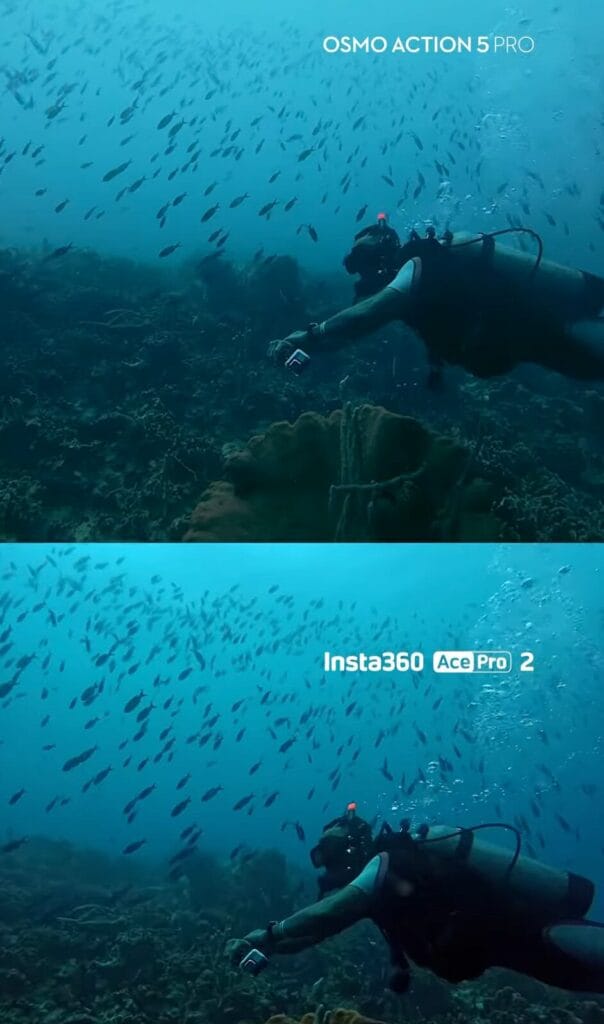
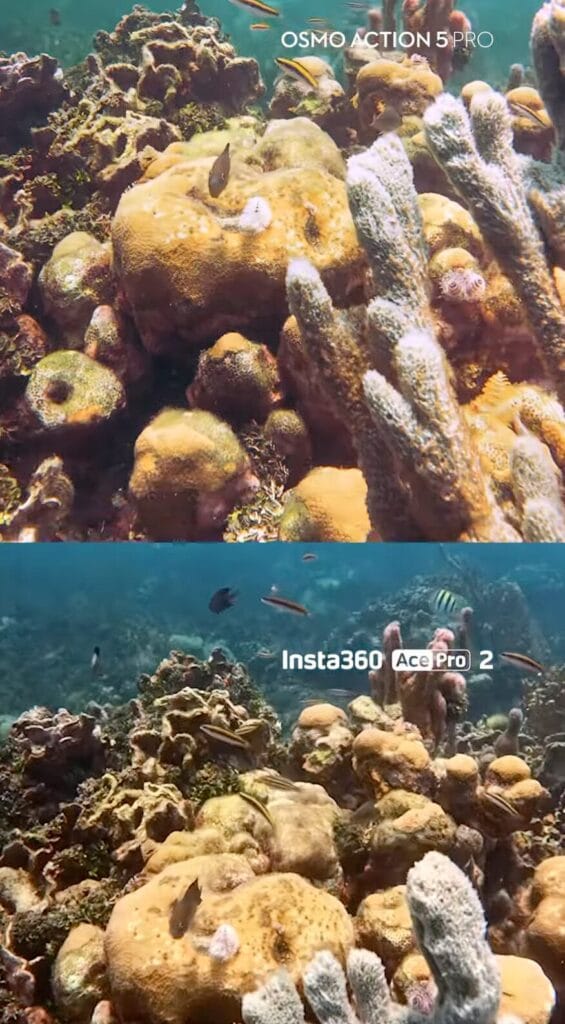
The Ace Pro 2 uses an 8-bit colour display, whereas the DJI uses a 10-bit colour display, which allows for up to 1 billion colours and more detailed images. Especially when shooting in D-Log mode, DJI's colours are more rich and more flexible for post-production fine-tuning or cinematic toning. However, I personally prefer the natural blues of the Ace Pro 2 when I see it straight out of the camera.
Video from @solidostudio
To be honest, most people don't really do much post-production of their videos. A sports camera like the Ace Pro 2, which automatically uses AI to help you create beautiful colours, is much more useful - it's ready to use right out of the box, so you don't have to spend time adjusting colours. In contrast, DJI's strength is that it gives more freedom to creators who know how to mix colours and want to play with their own style. In terms of structural design, the DJI Osmo Action 5 Pro also supports a quick release mount, similar to the Ace Pro 2.
Insta360 X5
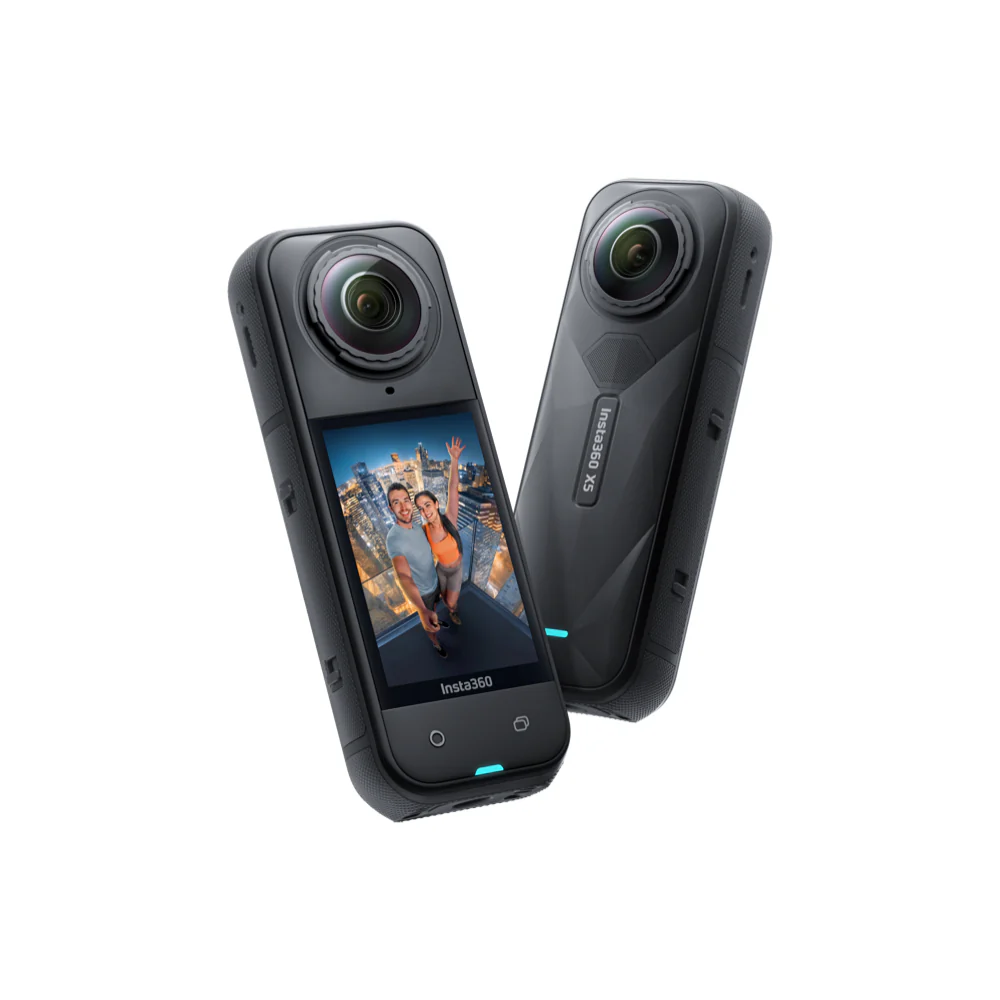
Pros and Cons
- 8K 360° panoramic video recording
- PureVideo AI noise cancellation for excellent low-light performance
- 185-minute battery life
- Water-resistant to 60 metres with a diving case
- Diving Mode
- Supports FlowState stabilisation
- Auto Framing and AI Reconstruction: Automatically selects the best image to save post-production time.
- Higher price
- Low-light quality not as good as Ace Pro 2
Is it applicable to diving?
If you're looking to record 360-degree panoramic videos underwater, the Insta360 X5 is perfect for you.
Even in demanding underwater environments, it captures stunning clarity, stability and detail in 8K 360° video. For those who want to shoot panoramic videos and ultra-wide-angle recordings, there's hardly a more powerful sports camera for diving than the X5. Whether you're diving at night or navigating complex coral reefs, the X5 excels in low-light conditions that other manufacturers struggle with.
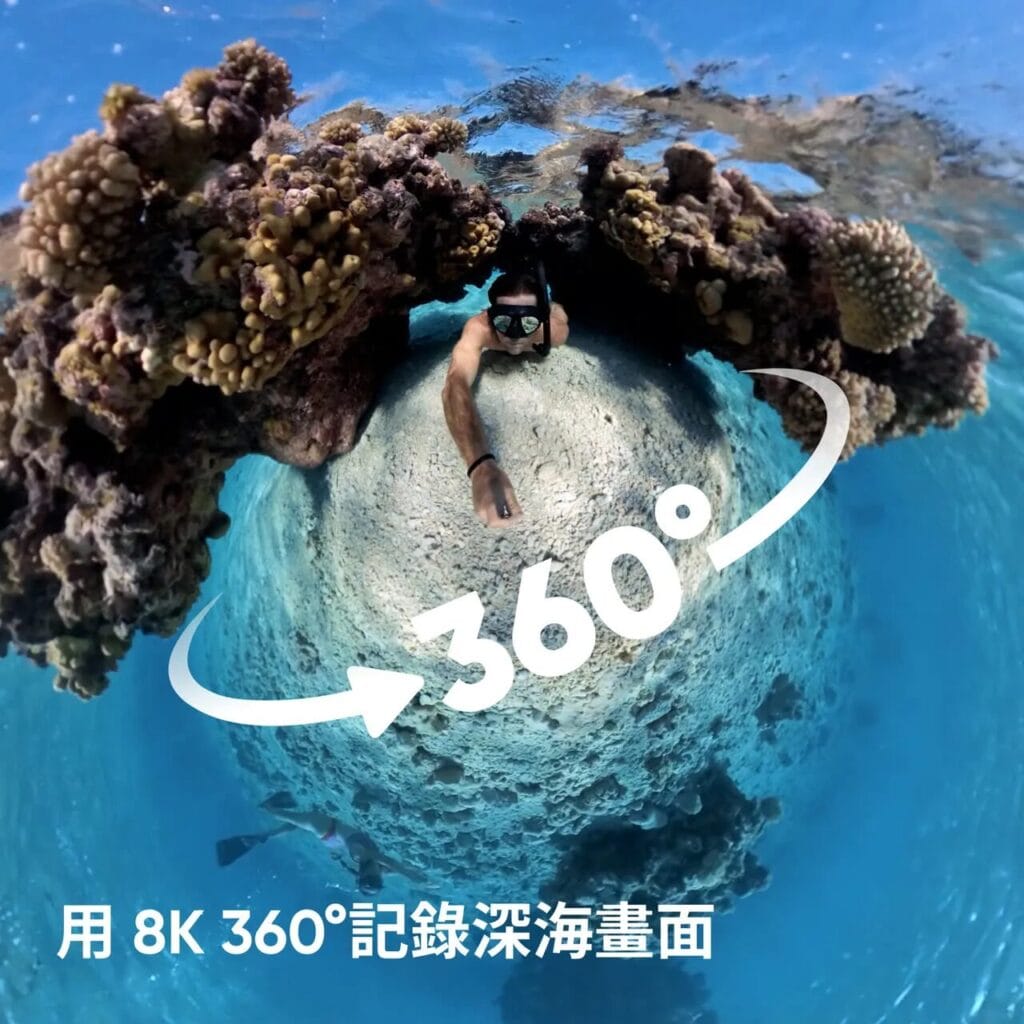
The X5's PureVideo mode automatically enhances dark details for cleaner, more detailed images, even in dimly lit waters. And with a long 185-minute battery life (in Endurance mode), you'll be able to shoot your entire dive with peace of mind.
X5 Advanced Dive Kit vs Full Invisible Dive Kit which one to choose?
First of all, the contents of the set are all the same except for the diving shells
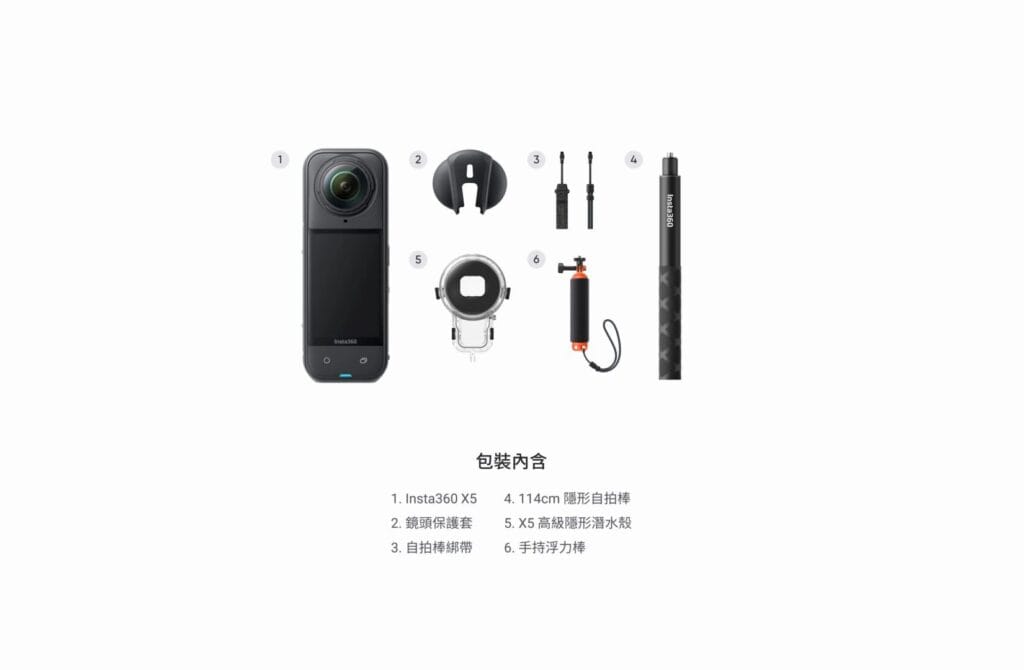
- Shallow → Advanced diving suit, waterproof to a depth of 50m (164ft).
- deep dive → Fully invisible diving suit, waterproof to 60m (197ft)
X5 Advanced Dive Kit
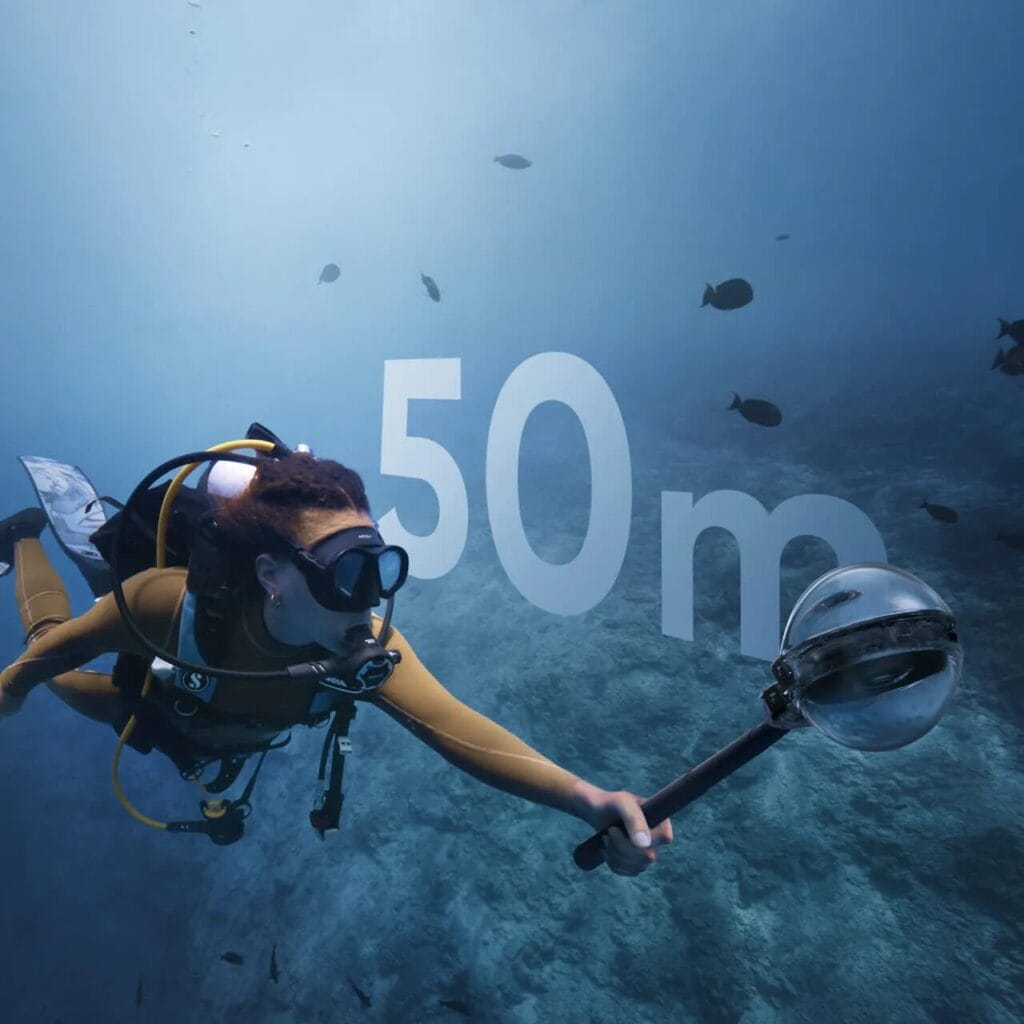
- Glass housing
- Dome design that resembles a sphere.
- Maintains true-to-life image colours in a turbid water environment.
- Effectively reduces image distortion caused by light refraction, which is common in underwater photography.
- When used in sunny, shallow water, it captures sharp, clear images with vivid colours.
- Pressure resistance is limited.,Suitable for water depths up to 50 metres
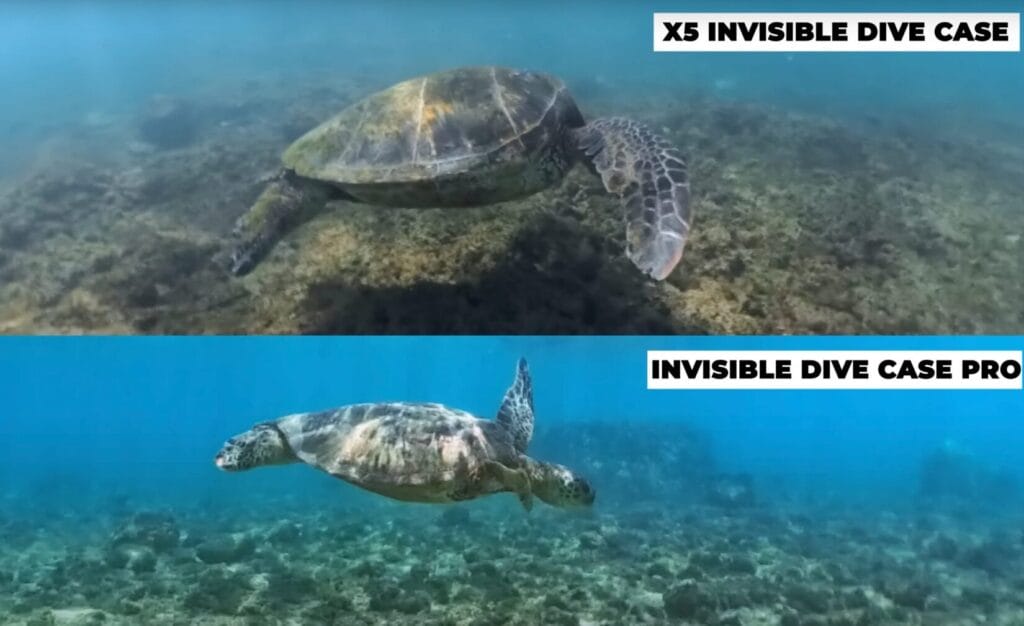
Video fromJORDAN HETRICK
X5 Full Invisible Dive Kit
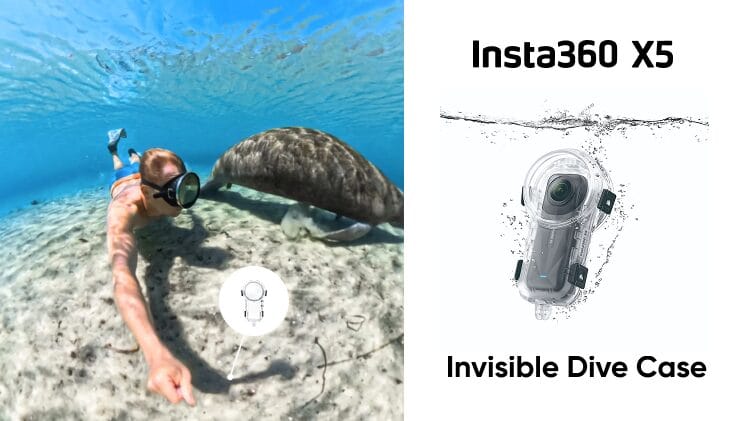
- The semi-circular dome design made of plastic material is particularly suitable for deep-sea diving where external light is difficult to reach.
- Image refraction and distortion may occur when taking pictures in shallow water where light is available.
- Rugged construction allows it to withstandUp to 60 metres of water depthTo ensure the safety of deep sea diving
Insta360 X4
Pros and Cons
- price/performance ratio
- Recording 8K 360° panoramic films
- Supports FlowState stabilisation
- 135-minute battery life
- Auto Framing and AI Reconstruction: Automatically selects the best image to save post-production time.
- Low-light quality is not as good as Ace Pro 2, X5
- Duration
Is it applicable to diving?
The X4 supports 8K 360° panoramic video recording with clear and sharp images. It is also waterproof and anti-shake, and remains stable and reliable even in currents and waves. For budget conscious divers who want to upgrade their equipment, the X4 is the ideal choice.
Although the X4 is the predecessor of the X5, there is not much difference between the X5 and the X4 in terms of underwater recording performance. The main advantage of the X5 is its improved low-light capability, but the X4 is still a cost-effective choice for those with limited budgets and fewer deep dives.
GoPro HERO 13
Pros and Cons
- Supports 10-bit Colour + Log Recording
- Diving mode to avoid bluish colour
- MAX lens module with 177-degree wide angle of view
- Maximum resolution stays at 5.3K, low-light quality not as good as DJI, Insta360 models
- Duration
- Frequently out of stock
- The rear 2.3" touchscreen can only be viewed in low light.
- MAX lens module, additional purchase required.
Is it applicable to diving?
Like DJI, GoPro HERO 13 also adopts 10-bit colour depth, which retains a richer colour gradation in Log Mode, providing more room for creativity in post-colour grading. The latest generation of HERO 13 also features a new Diving Mode that supports underwater colour correction, helping to solve the common problem of bluish and dull tones in underwater videos.
In the past, I've often worried about GoPro cameras heating up and getting condensation due to prolonged recording. However, the HERO 13 has made significant improvements in this area: colour reproduction is much more natural and realistic, and the waterproofing has been greatly improved, so there's basically no need to worry about condensation any more (although the camera still heats up a little under high load).
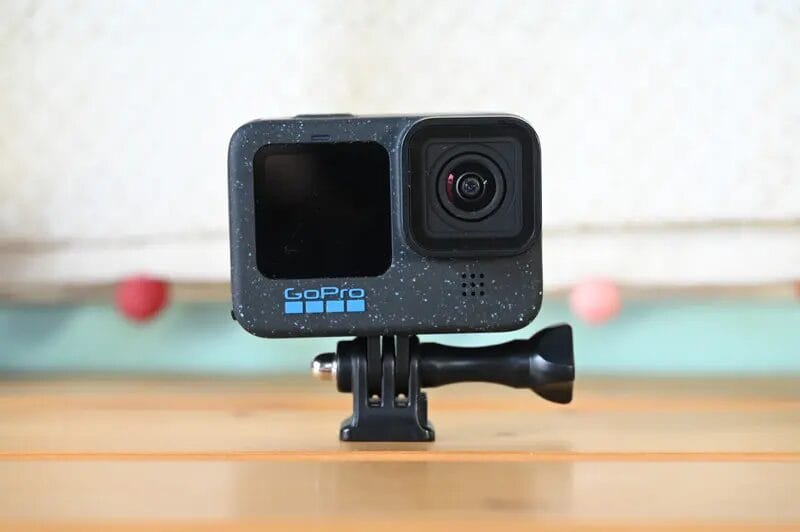
In terms of accessory design, GoPro uses a screw-on mount system, which doesn't allow for quick accessory swapping during filming, but doesn't cause too much of a hassle in practice as long as it's pre-installed properly, and an exclusive advantage - the MAX lens module, which allows you to easily switch between the two lenses. The GoPro also has an exclusive advantage - the MAX Lens Module. With the addition of this ultra-wide-angle lens, the field of view can be as wide as 177 degrees, which is hard to compete with other brands of wide-angle sports cameras. If you compare it to the X5, which is a 360-degree panoramic camera, the angle of view is a bit limited.
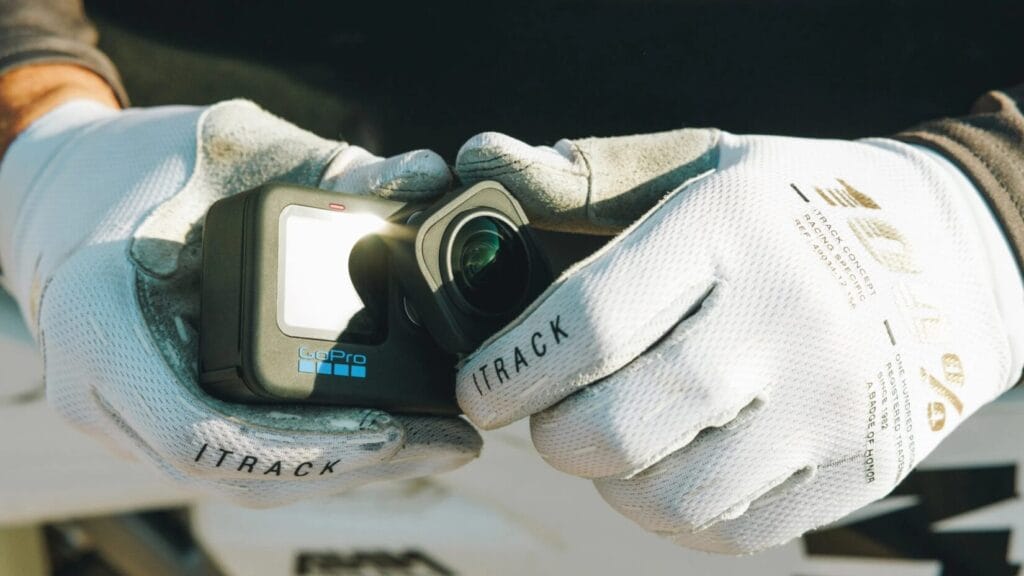
In comparison to the Ace Pro 2, the GoPro HERO 13's image quality is less impressive, especially for deep dive scenes. With a maximum recording capacity of 5.7K, the video footage of a deep dive with the GoPro HERO 13 may even become blurry. If you're mainly using it for deep diving, it's more advisable to choose between the Insta360 or DJI.
Data Ready.
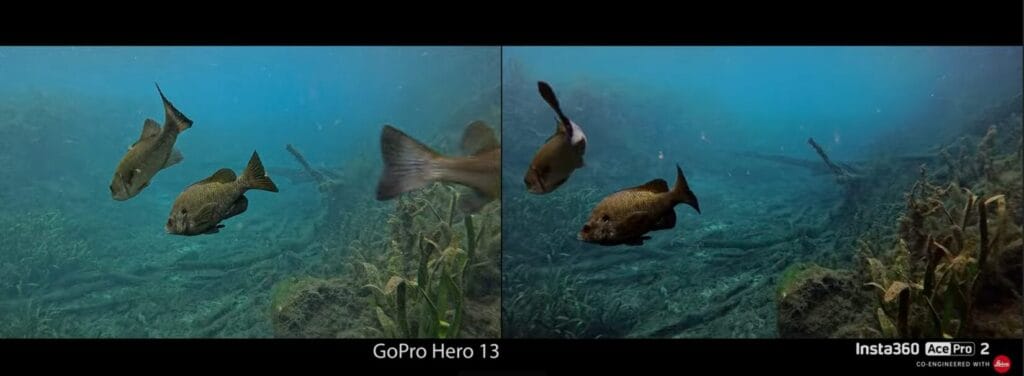
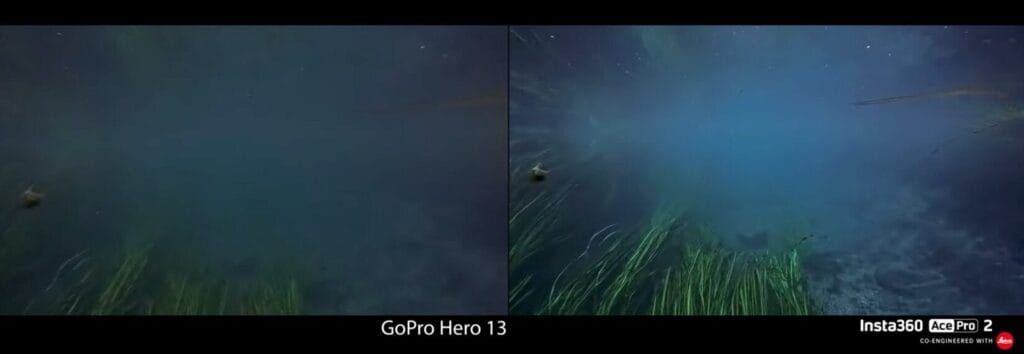
Video from Scott Bauer Below
Beginner's Tips for Underwater Sports Camera Photography
Besides choosing the right underwater sports camera, don't ignore the following five tips to ensure that your camera stays in the best condition when you are diving. Reminder: If you have a camera that supports dive mode, please turn it on before you go into the water.
1. Familiarise yourself with the operation before entering the water
Practice the basic operation on the shore before entering the water to make sure you can use it intuitively, and avoid missing out on the recording of the water's highlights.
2. Maintaining stability
Slow down and stabilise the lens when moving underwater to reduce blurring.
3. keep the light behind you
Allow the light to shine on the subject from behind for brighter and more saturated colours.
4. Using Auto Mode
For beginners, Auto Mode helps to quickly obtain accurate exposure and natural-looking colours.
5. Open Dive Mode
Enable Diving Mode to automatically correct the white balance to avoid colour casts and restore true colours.
Summary|2025 Best Diving Cameras to Buy
Choose according to actual needs
The key to choosing the best dive camera is to identify your most important needs - whether it's resolution, body size, budgetary considerations, or the depth of waterproofing required. Depending on your needs, here are my recommendations:
The quest for the ultimate panoramic experience:Insta360 X5
We are looking for panoramic recording and price/performance ratio:Insta360 X4
The most important thing is the picture quality and preference for traditional wide-angle recording:Insta360 Ace Pro 2
Focus on battery life:DJI Osmo Action 5 Pro
If your needs go beyond underwater photography and you are looking for total ease of use and excellent specifications, Insta360 products are definitely worth considering. We recommend checking out the dedicated diving page on the Insta360 website, which features a complete list of accessories and real-world results for the X4, X5, and Ace Pro 2 dive kits.
How do I choose between X-Series and Ace Pro 2?
The decision is simple: Do you want panoramic video. The two series are comparable underwater, but the Ace Pro 2, a wide-angle camera with dual-chip AI support and a larger sensor, is even better in deep-diving low-light scenarios.
Ultimately, it comes down to what you actually want to do with your camera, and choosing the one that's right for you.