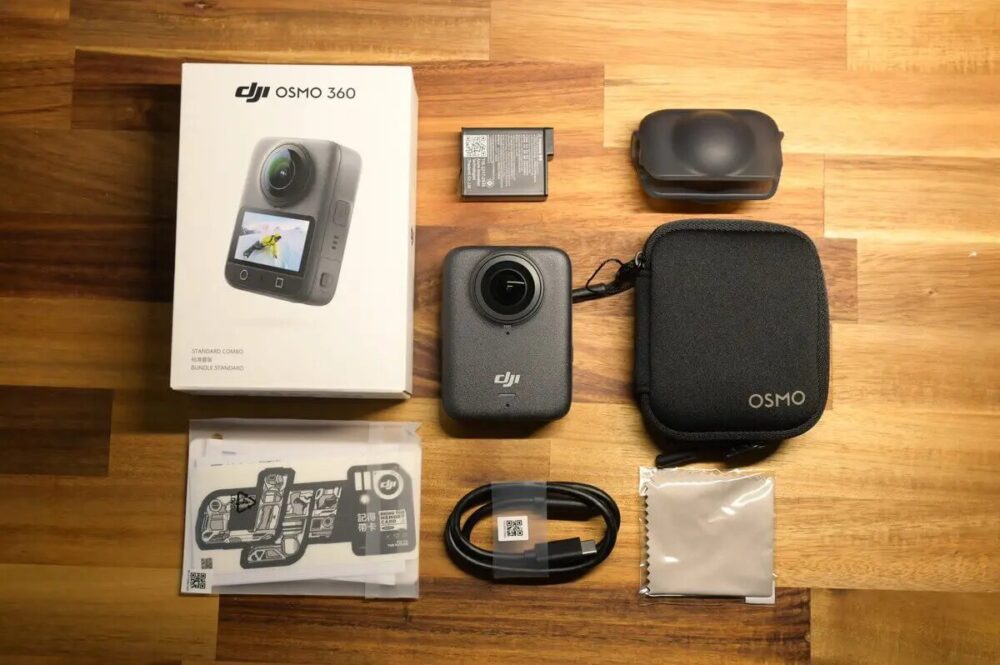



Panoramic Camera DJI Osmo 360 Released!
DJI officially unveiled its first-ever 360° panoramic camera, “DJI Osmo 360”, on July 31, 2025, at 20:00. Featuring the promotional slogan “One Inch, Infinite Perspectives,” DJI highlights the camera’s built-in 1-inch image sensor, confidently showcasing its strong commitment to delivering outstanding image quality.
2025 can be regarded as the inaugural year of a head-to-head showdown between the DJI Osmo 360 and the Insta360 X5 — but which one will win greater market recognition? This in-depth review takes a close look at the differences in specifications and features between these two flagship 360° cameras, providing a practical and comprehensive buying guide for anyone considering a 360 panoramic camera.
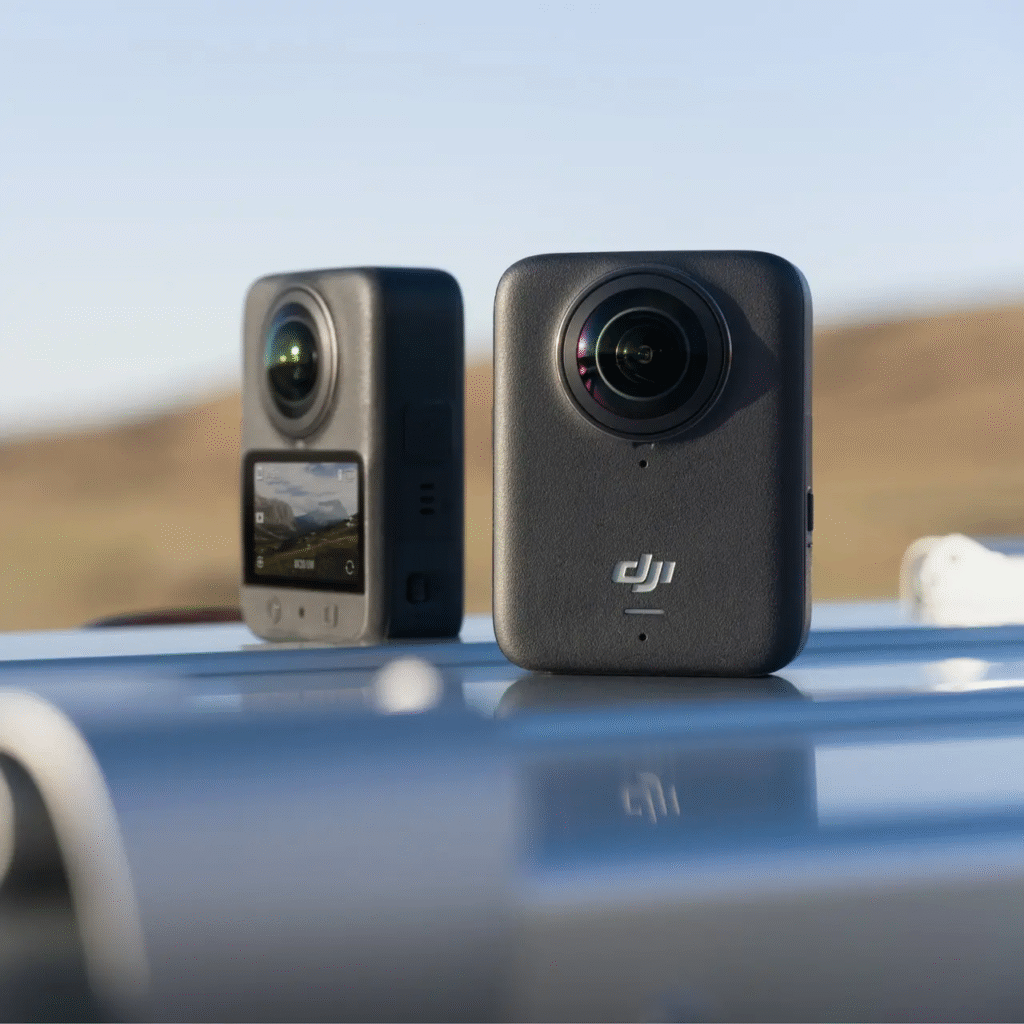
This review is comprehensive, from the appearance of the design, operating experience to the performance of the screen are detailed comparison, interested parties, do not miss to read to the end.
DJI Osmo 360 Highlights
From a performance and specifications standpoint, the DJI Osmo 360 can truly be described as a “spec monster.”
Equipped with a camera module designed for high-load shooting and a large-capacity battery, the DJI Osmo 360 delivers stable performance for both extended video recording and high-quality image processing. If you’re looking for a 360° camera capable of meeting demanding, high-intensity creative workflows, the DJI Osmo 360 is well worth considering.
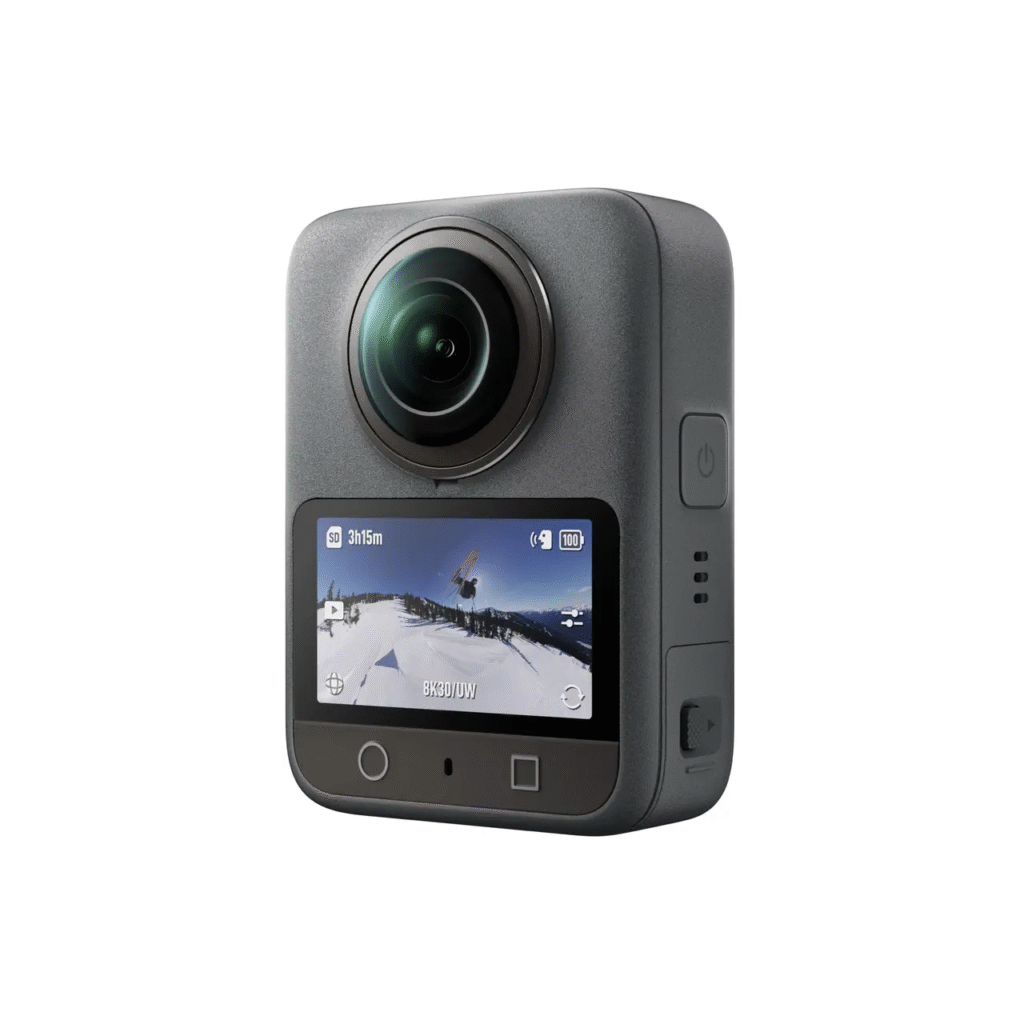
- One-inch sensor, new square high-dynamic sensor, increased utilisation 25%
- 100 min 8K/30fps continuous recording
- 1.2 Billion Pixel Panoramic Photo
- Multiple frame rate options, including 8K/30fps, 6K/60fps, 5K/60fps, 4K/120fps
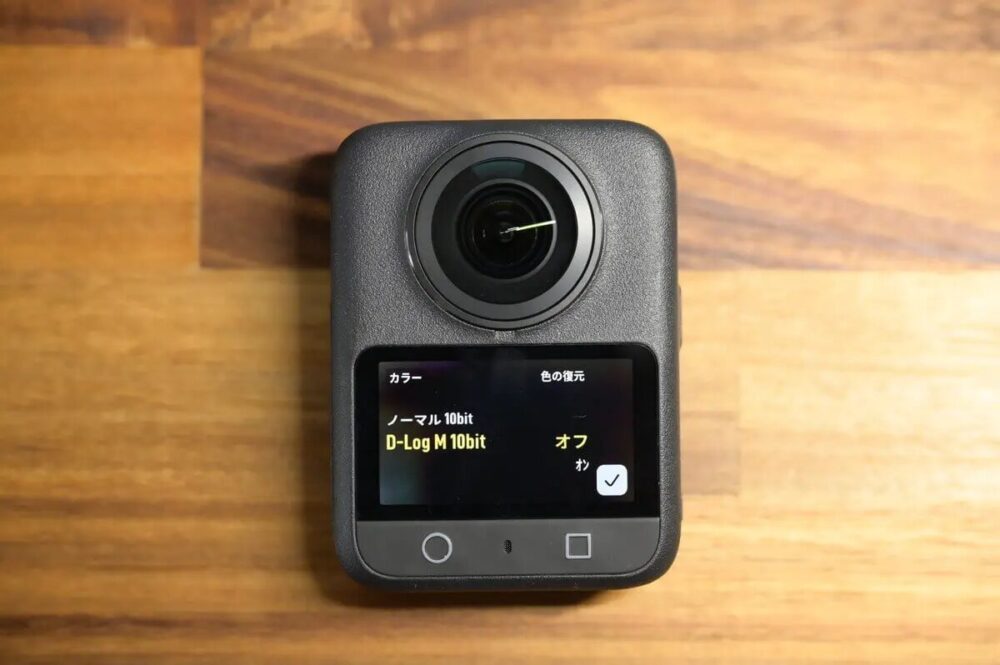
- 10-Bit D-Log MThe dynamic range of the film is improved for better colour grading.
- Osmo Audio™ Dual Microphone Direct ConnectionSupports dual microphone and two-person radio.
- Square body with F/1.9 aperture to support night shooting effect.
- 5K / 60fps 155 degree FOV
- 4K / 120fps 170 degree FOV
- 4x slow motion recording
- Supports Wi-Fi 6.0 transmission.
- Horizontal stabilisation HorizonSteady 360
- Apple Watch / Garmin dials to attract motorbike and cycling users
- Magnetic quick release design, also fits 1/4“ socket.
In short, the core specification of the DJI Osmo 360 can be condensed into three main highlights.
- Shooting Performance: Supports 8K 50fps HDR video recording, allowing you to capture smooth slow-motion footage at twice the normal speed even at the highest image quality.
- Battery Life: Designed for extended shooting sessions, with no need to worry about overheating or rapid battery drain.
- Color Grading: Supports 10-bit color depth, making it easier to preserve and restore rich color details during post-production grading.
The 8K specification allows for smoother and slower motion videos, and HDR is turned on for selfies or 360° videos with a focus on portrait recording.
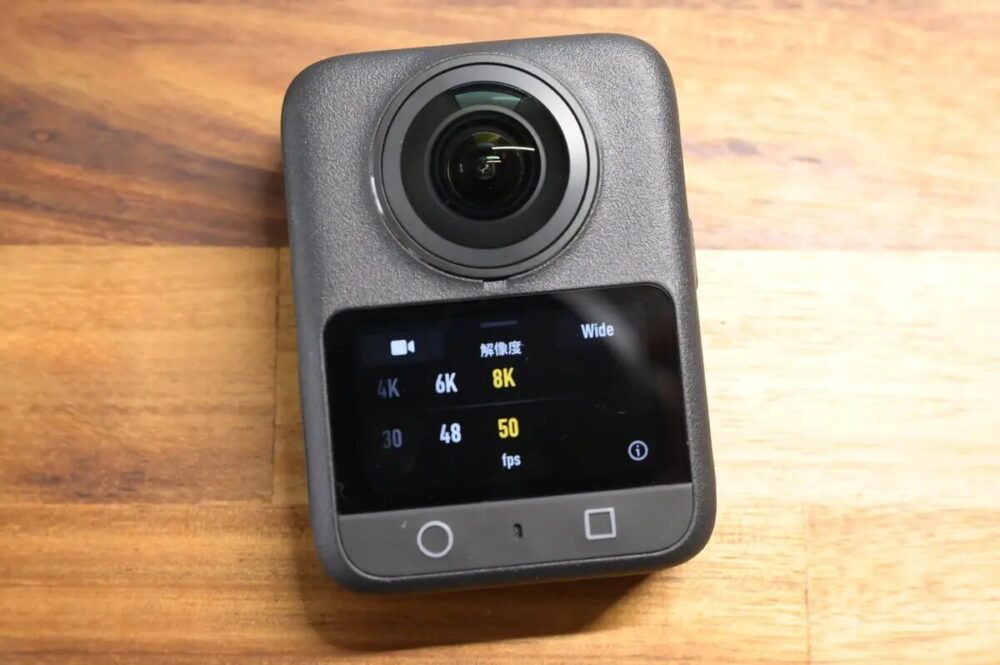
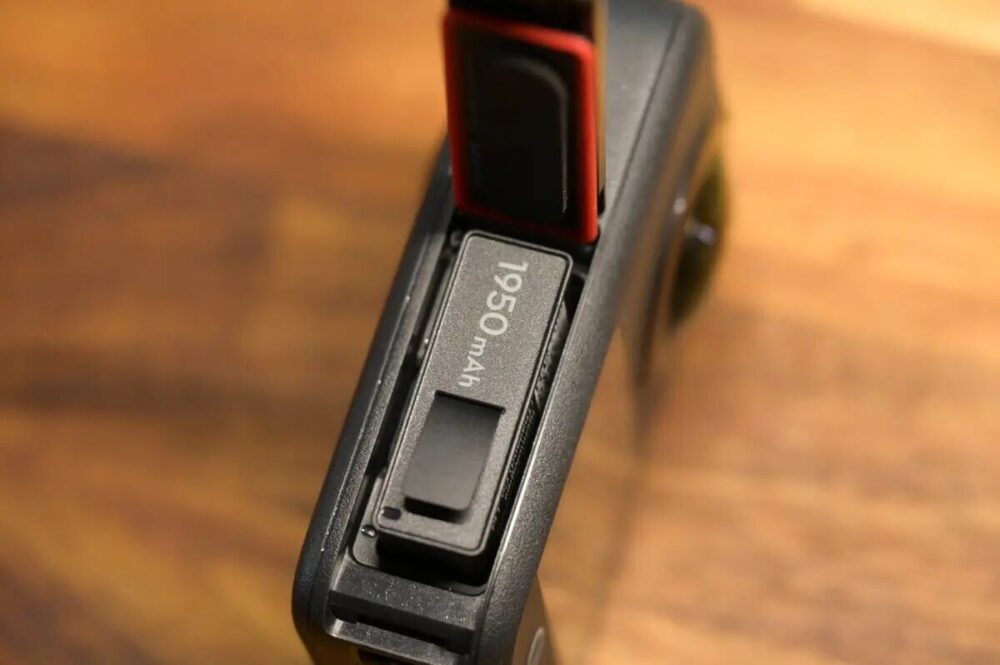
Battery capacity is 1950mAh
Supports 10-bit colour depth for greater flexibility in post-production colour grading.The film is much more detailed.
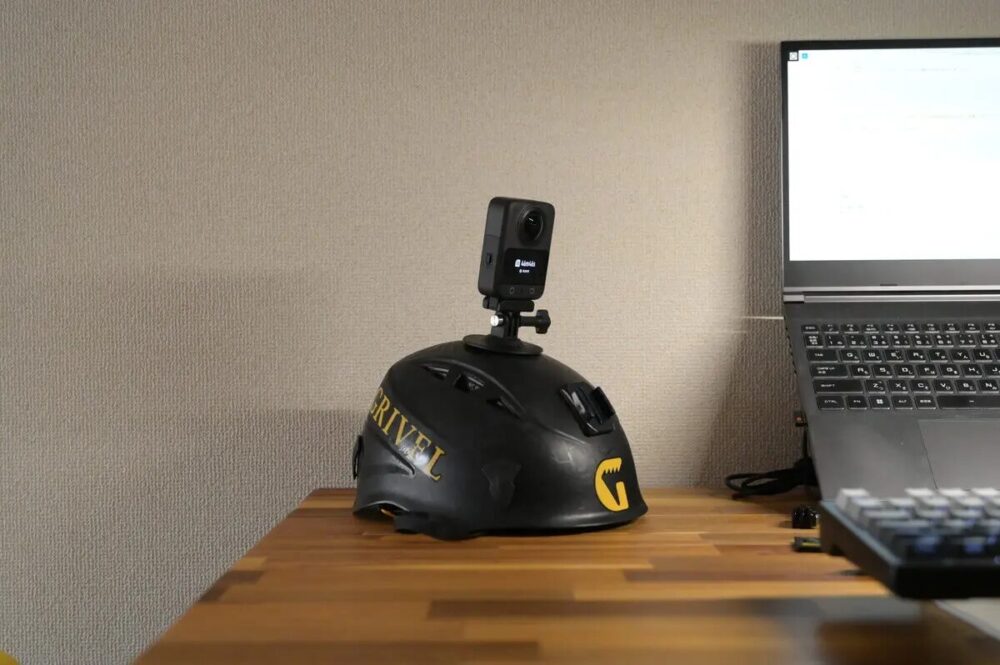
Battery life, lightweight design DJI Osmo 360 Also suitable for outdoor players and helmeted sports.
In conclusion, for users with the following needs, the DJI Osmo 360 is unquestionably the best choice.
- Want high specification at a reasonable price
- In-depth post-production editing will be carried out at a later stage.
- I want to install a panoramic camera on my helmet and use it.
Even though the Osmo 360 has become the "specs monster" of panoramic cameras, as an experienced user of 360 panoramic cameras since the Insta360 X3, I think the Insta360 X5 is a much simpler and more efficient way to record, whether it's 8K or 5.7K.
If you value the following points, the Insta360 X5 may offer greater advantages:
- High-quality "ready-to-use" images
- A camera that even a novice can get up to speed quickly
- Intuitive APP software
- Interchangeable lenses and a wide selection of accessories.
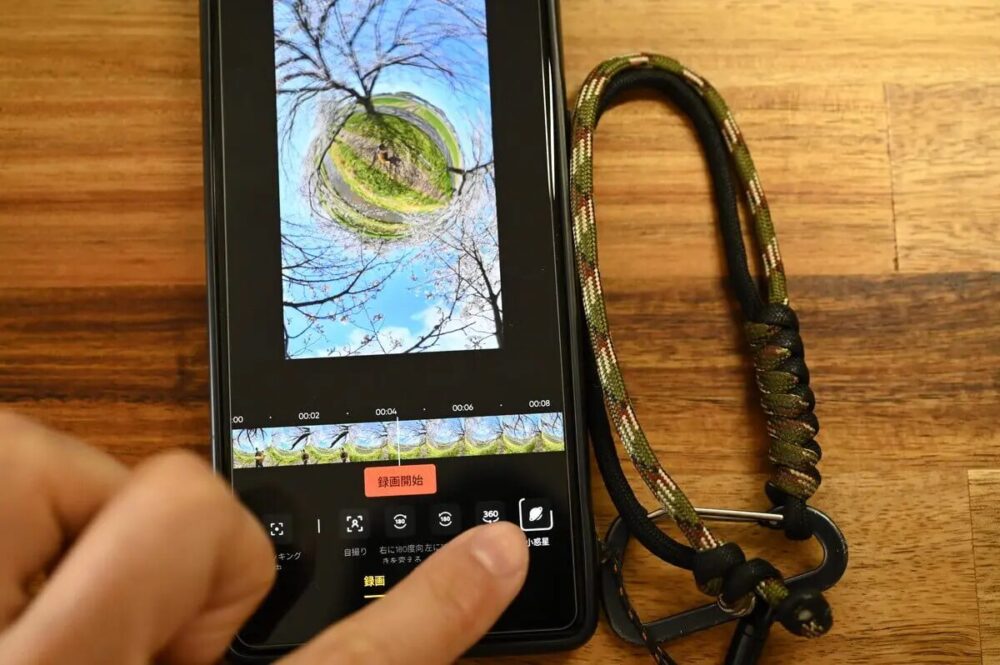
Newcomers to 360° panoramic cameras often want to capture high quality video without complicated setup or post-production.
Like cooking.DJI Osmo 360 It's about providing top quality ingredients and giving you the freedom to cook to your own taste;
Insta360 X5 It's more like having a powerful AI chef who can cook delicious food without any hassle. I'm going to explain why X5 is a panoramic camera that even a novice can get started with!
Insta360 X5 Essentials

- 1/1.28-inch sensor with AI chip: Innovative 3-chip system (1 5nm AI chip and 2 Pro image chips)
- support sth.Replaceable Lens
- 5.7K60fps HDR Recording
- Up to 185 minutes of battery lifeCompared to the X4, the 37% is upgraded.
- 20-minute quick charge
- Capture ultra-high resolution photos up to 72MP
- Supports 4K 60fps in single-lens mode. The first person perspective of the video recording
- PureVideo modeDesigned for low-light environments with AI noise reduction and dynamic range optimisation technology
- InstaFrame ModeAllows simultaneous recording of flat and 360° video.
- Adaptive Tone Automatically optimises video brightness and colour for environments with large contrasts between light and dark.
- FlowState Shock Technology includes built-in shock protection and 360° horizontal locking.
- Equipped with a multi-layer windshield, which effectively reduces wind noise through upgraded algorithms.
- Supports Insta360 Mic Air external microphone.
- The Insta360 APP is intuitive and reduces post-production hassle.
360 Panorama Camera Buying Tips
The following nine points are what I consider the core factors when choosing a 360° camera. The rest of this review will be structured around these key criteria, with detailed analysis to help you find the camera that truly fits your needs — after all, everyone’s shooting scenarios and requirements are different, so the priority of these factors will naturally vary from person to person.
- Sunny Painting
- Night Shot Quality
- Whether the filming mode is rich enough
- Camera hardware operation and experience
- Battery and Runtime
- Video Post-Editing
- Waterproofing and durability
- Weight, dimensions
- Price, price-performance ratio
Comparison of DJI Osmo 360 vs Insta360 X5
| Insta360 X5 | DJI Osmo 360 | |
|---|---|---|
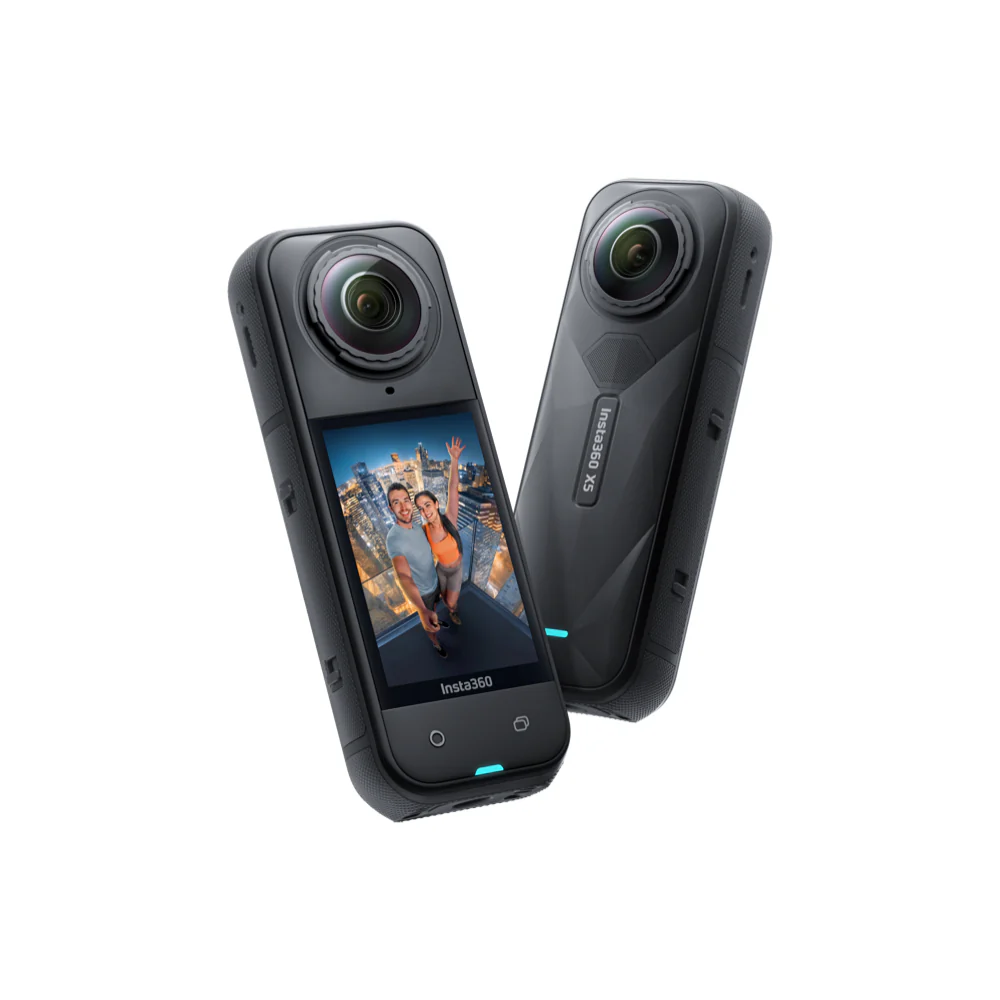 | 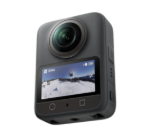 | |
| Price | HKD $3,699 (10% off special price) NT$16,490 (10% off special price) *Free Insta360+ worth NT$3,588 with 1TB of storage space | HKD $3,299 NT $13,980 |
| Weights | 200g | 183g |
| Battery | 2400mAh | 1950mAh |
| recharge (batteries) | 20 minutes → 80 per cent 35 minutes → 100% | 12 minutes → 50% |
| Screen Size | 2.5 inches | 2.0 inches |
| Lens | With removable lenses | Non-removable |
| Waterproof | 15m | 10m |
| Operating Temperature | -20~40℃ | -20~45℃ |
| Custom Q-keys | ||
| Gesture/Voice Control | ||
| sensor | 1/1.28 | 1 inch |
| Picture Quality | 8K 30 fps 5.7K + 30 fps 5.7K 60 fps 4K 60fps (Single Lens) | 8K 50 fps 6K 60 fps 5.7K 60 fps 4K 120fps (Single Lens) |
| Photo Resolution | 72 million pixels | 1.2 billion pixels |
| aperture | F2.0 | F1.9 |
| Single Lens FOV | 170° | 170° |
| radios | Built-in microphone windscreen | Equipped with Osmo Audio microphone |
| External Microphone | Insta360 Mic Air | DJI Mic 2 |
| Continuity (8K/30fps) | No official data yet, personal test result is 88 minutes. make use of X5 Enhanced BatteryAbout 95 minutes | 100 minutes. |
| Continuity (5K/30fps) | Up to 185 minutes on battery life modeThe power supply is also supported by a fast charging system. | No official figures are yet available. |
| brackets | Support Quick Release Bracket 1/4 Nut Holder | Support Quick Release Bracket 1/4 Nut Holder |
| 10bit colour | ||
| Editing Software App | Insta360 Studio Insta360 APP Provide more post-production editing templates and AI functions. | DJI Mimo |
| Cloud Storage |
Insta360 X5 vs DJI Osmo 360 Specifications Comparison
In terms of key specifications, both the DJI Osmo 360 and the Insta360 X5 are already leading 360° cameras in the market, each with its own distinctive strengths.
The Osmo 360 features a 1-inch image sensor, 10-bit D-Log M color profile, and built-in storage, making it an ideal choice for professional creators who prioritize low-light performance and maximum flexibility in post-production. In contrast, the Insta360 X5 offers a replaceable lens design along with creative features such as AI-powered editing and InstaFrame, making it better suited for content creators who value ease of use and fast, streamlined workflows.
Although the DJI Osmo 360 outperforms the Insta360 X5 in areas such as sensor size and audio capture, from a personal perspective, I believe the Insta360 X5 still holds a competitive edge when compared directly with the DJI Osmo 360.
There are two main reasons. First, Insta360 offers a far more mature and extensive accessory ecosystem. Currently, the DJI Osmo Action 5 Pro lineup includes 43 accessories, some of which are compatible with the DJI Osmo 360. However, only around 30 to 40 accessories can actually be used effectively with the Osmo 360. In contrast, the Insta360 X5 already supports up to 97 accessories, covering a wide range of sports scenarios and creative use cases.For example, motorcycle riders often rely on the GPS Preview Remote with Built-in Microphone, while underwater filming heavily depends on specialized accessories such as the Invisible Dive Case. In terms of accessory variety and real-world application scenarios, the Insta360 X5 clearly holds a stronger advantage.
Second, video quality and ease of use. When it comes to video quality, it’s not just about 8K recording. It also depends on how clear the footage looks in both daylight and low-light conditions, whether the motion appears smooth, and whether the colors are accurate. In simple terms, it’s about whether the final footage is pleasant to watch after recording. Some cameras may look impressive on paper, but real-world results don’t always live up to the specs—issues such as excessive sharpening, screen flickering, or lens fogging can still occur.
Next, I will dive into a detailed analysis of the differences and distinctive features of these two 360° cameras.
DJI Osmo 360 vs Insta360 X5
The Insta360 X5 has a taller, more vertically oriented design, while the DJI Osmo 360 features a shape that is closer to a square.
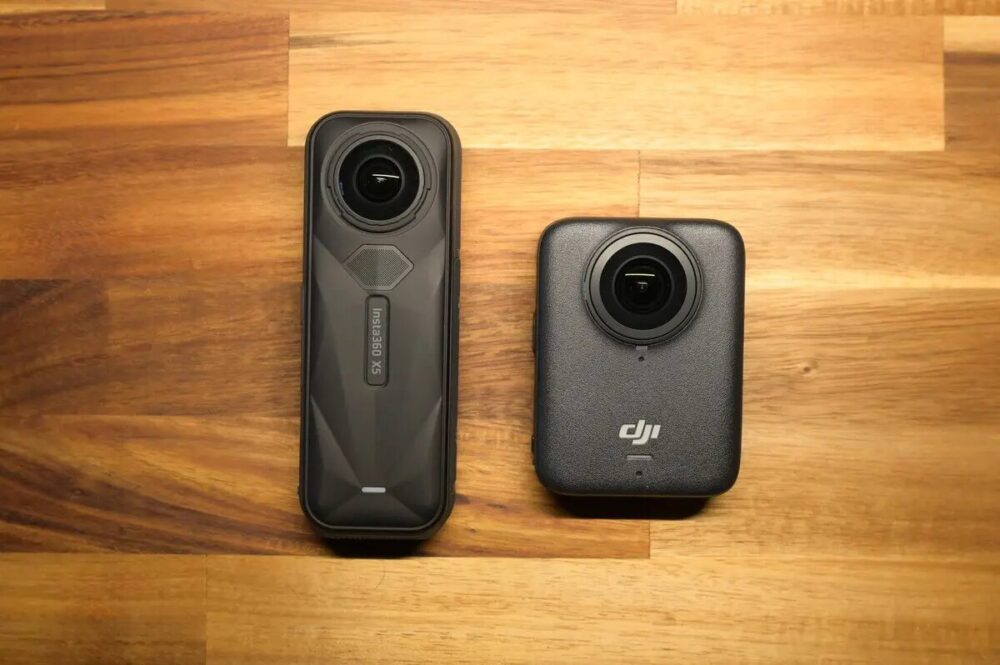
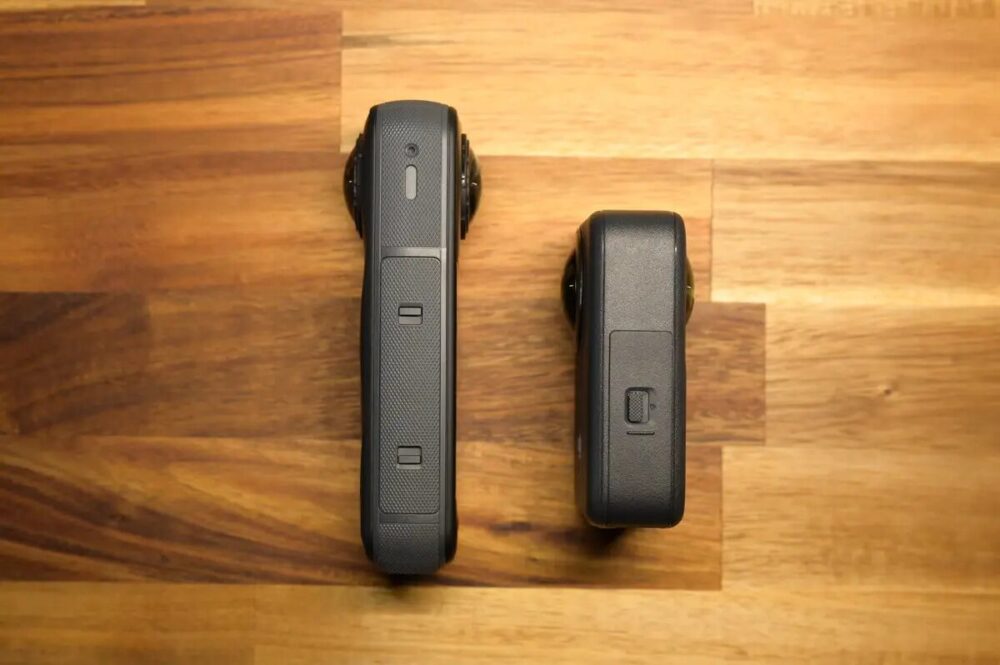
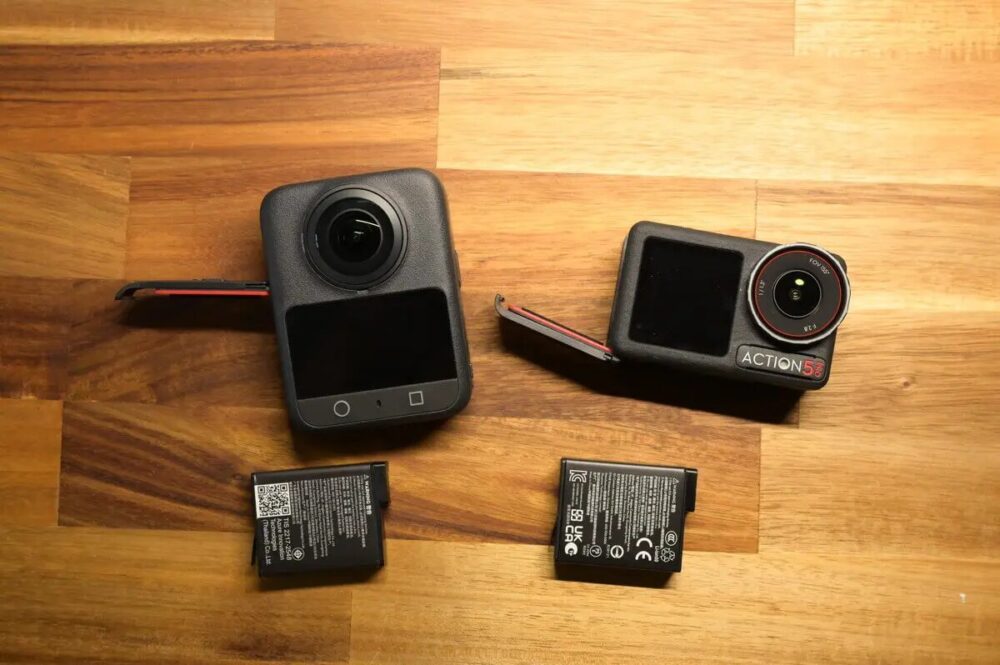
The Insta360 X5 integrates the battery into the cover, whereas the DJI Osmo 360 uses a separate, removable battery design.
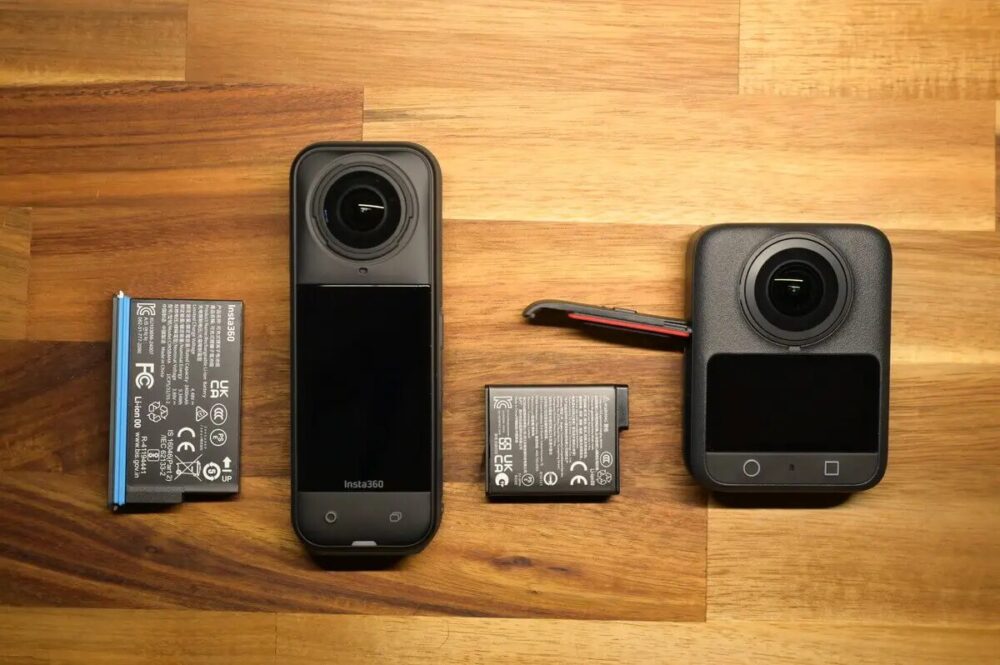
DJI Osmo Action 5 Pro and Osmo 360 Battery Compatibility
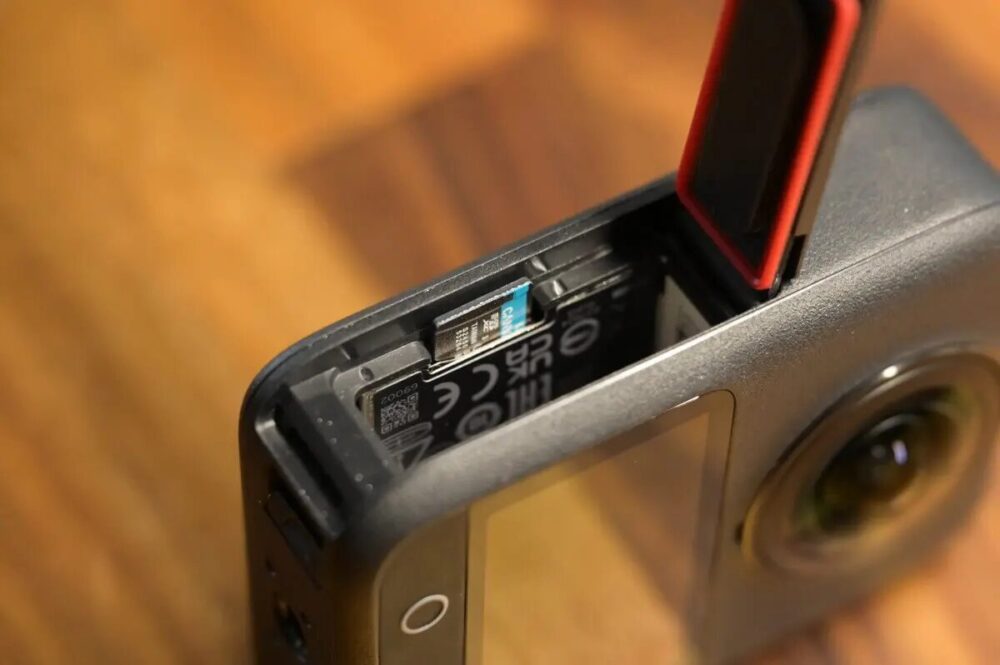
One of the key advantages of the DJI Osmo 360 is its built-in 128GB internal storage (approximately 105GB usable), allowing you to continue shooting without interruption even if your memory card runs out of space or you forget to insert one.
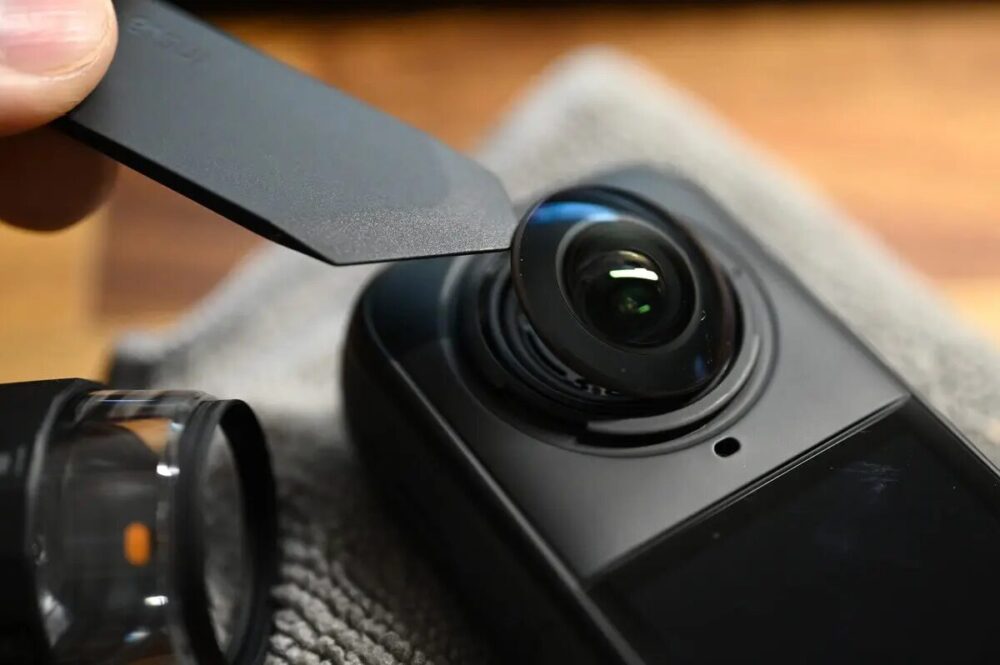
Both cameras are equipped with protruding (convex) lenses.
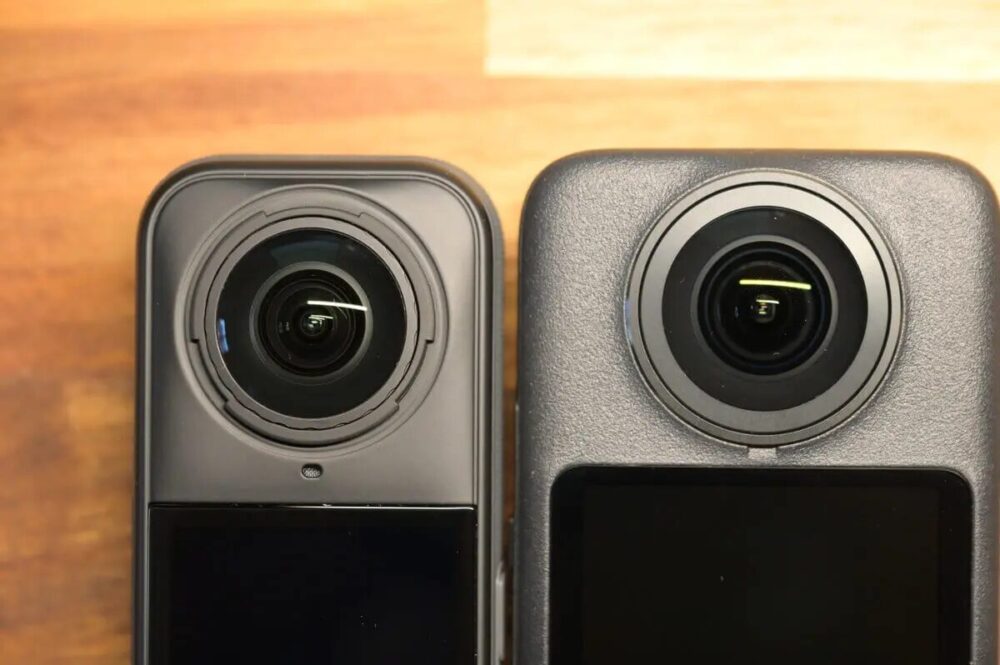
The Insta360 X5 supports user-replaceable lenses. Considering that 360° camera lenses are especially prone to scratches, this design is highly innovative.
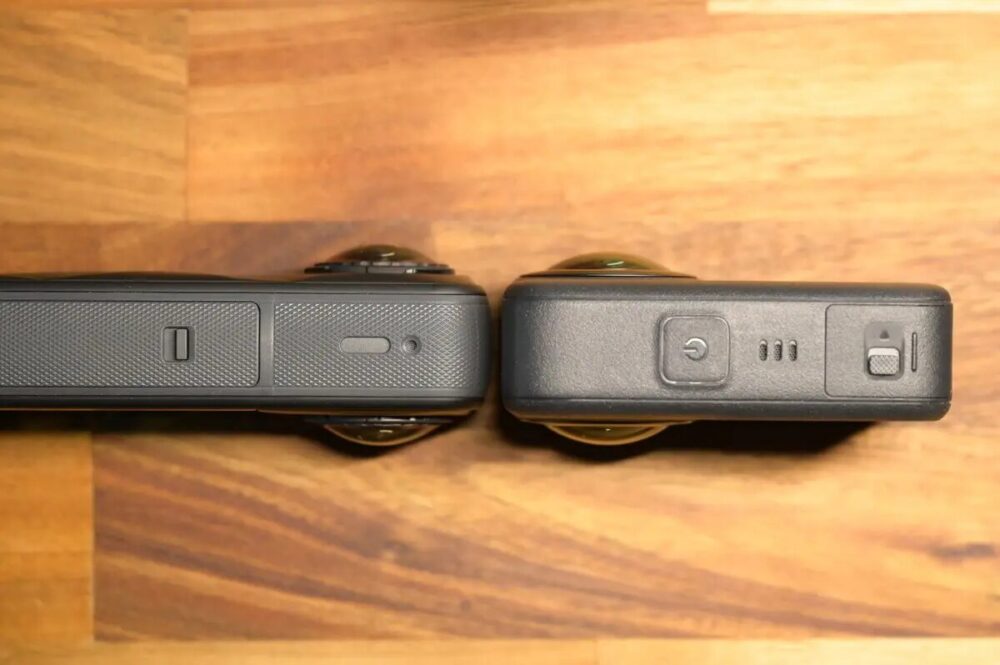
Both cameras have a similar thickness.
Including the SD memory card, the Insta360 X5 has an actual weight of 200.1 g, while the DJI Osmo 360 weighs 184.1 g — an exact difference of 16 g between the two.
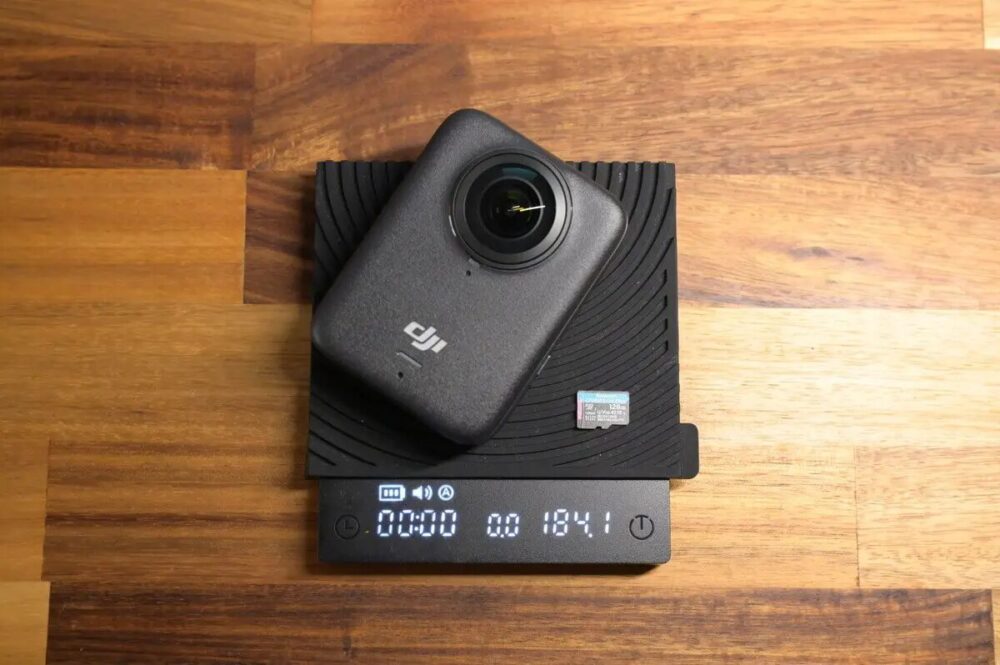
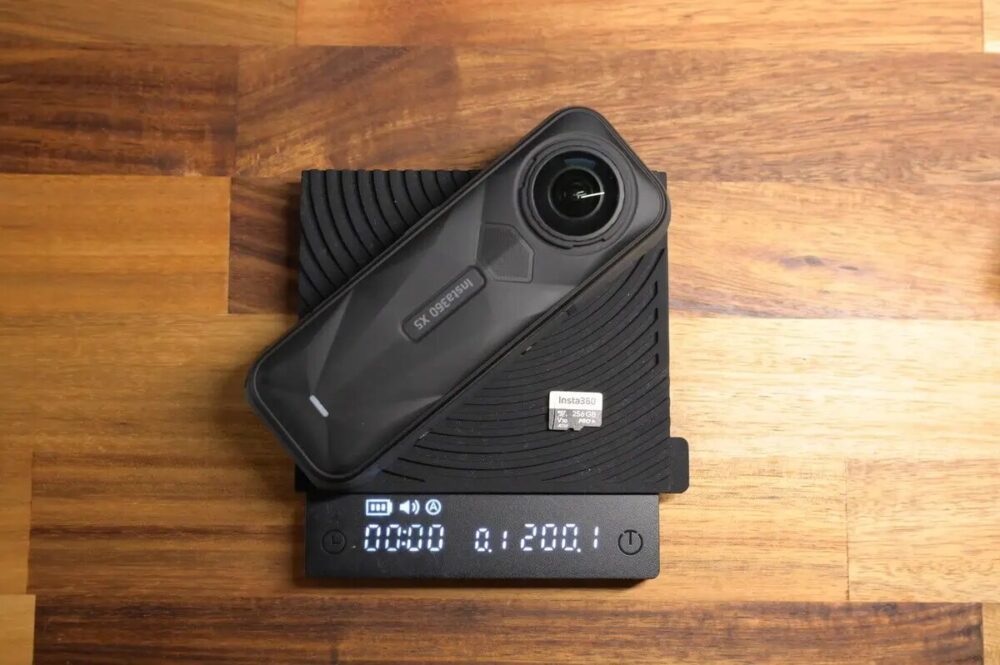
The lightweight and compact design of the DJI Osmo 360 offers a clear advantage for helmet-mounted use, significantly reducing bulk while improving overall wearing comfort.
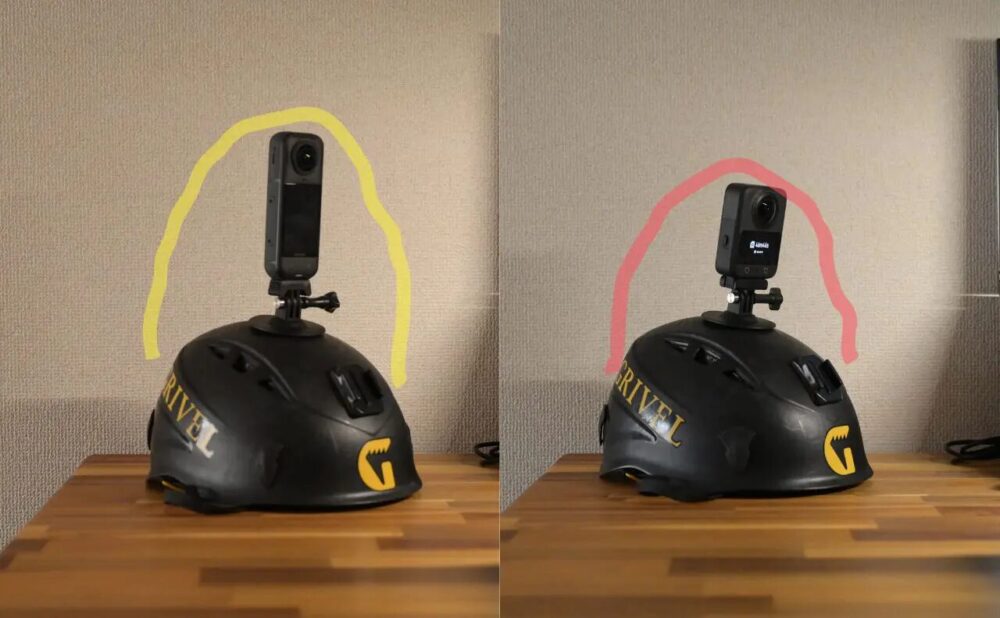
On the other hand, many users find that the X5’s vertical design is more ergonomic, making it easier to operate. By comparison, the DJI Osmo 360’s wider body makes it more likely to accidentally touch the lenses when holding it with one hand, which can be less convenient in practical use.
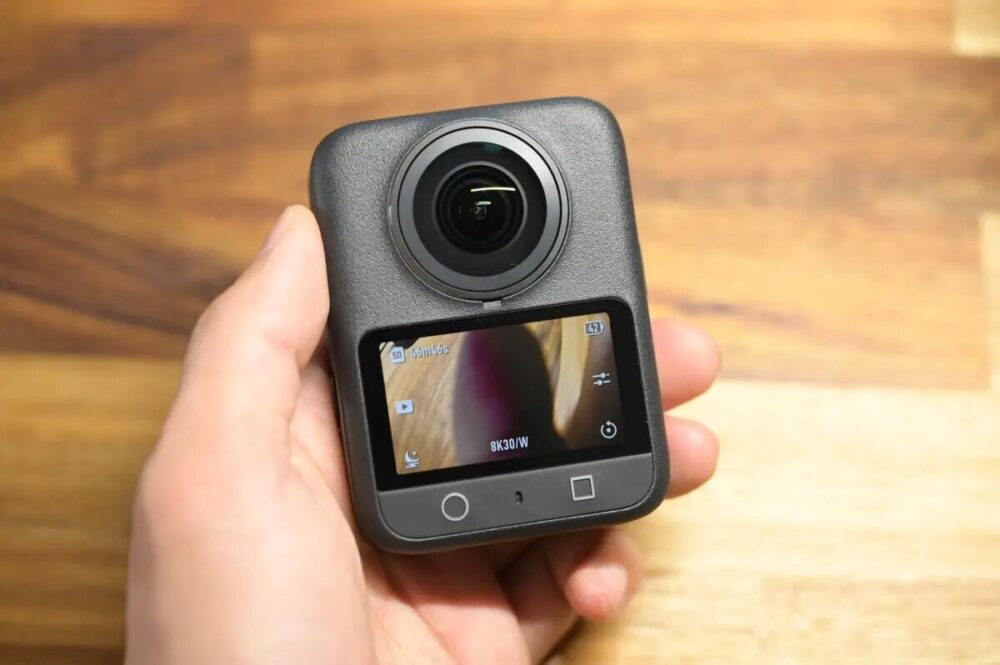
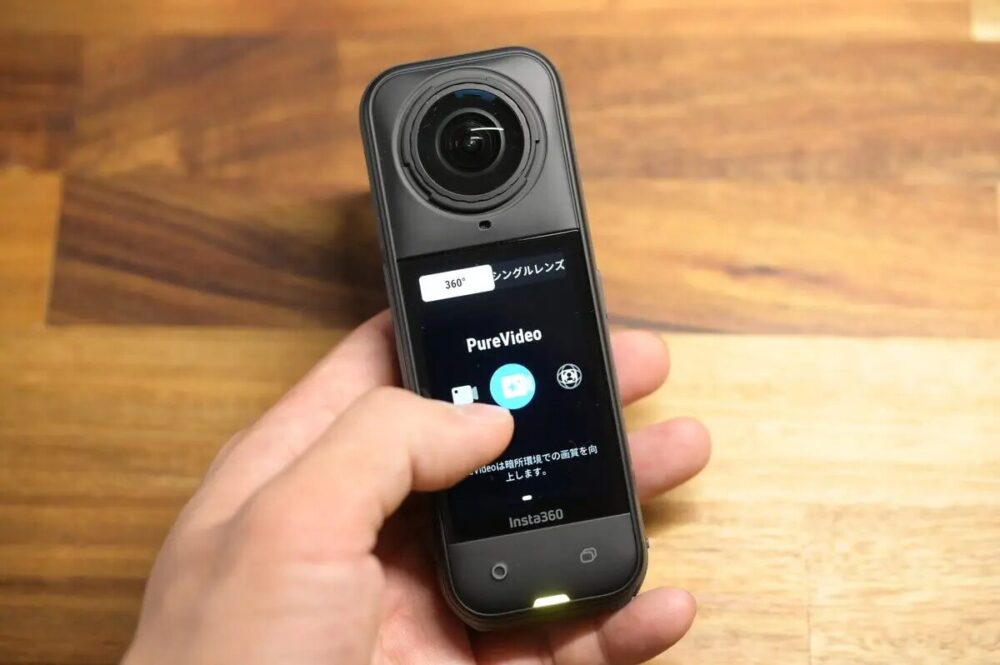
The Insta360 X5 is slim and smartphone-like, with a sleek design that allows even female users to operate it comfortably with one hand.
Both the Insta360 X5 and the DJI Osmo 360 support magnetic quick-release mounts.
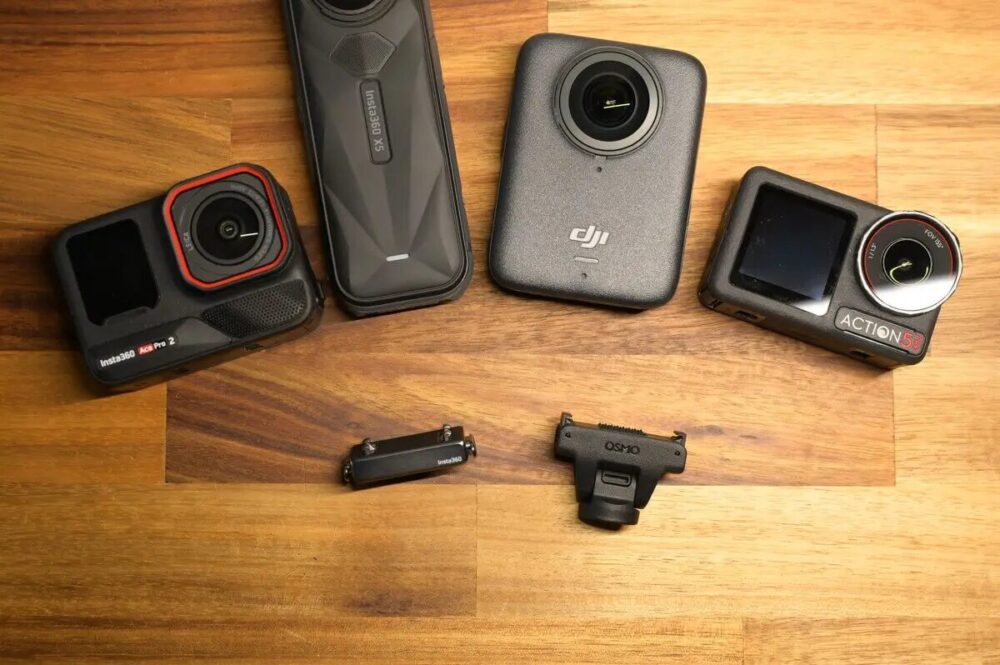
From an exterior design perspective, I have the following impressions.
- Osmo 360 Suitable for helmets and professional sports photography
- X5 More comfort and convenience in daily use
DJI Osmo 360 vs Insta360 X5 [Picture Quality Comparison
Picture Quality Comparison
When it comes to image quality, to be honest, everyone has their own preferred visual style — it largely comes down to personal taste. Let’s first look at the differences between the two. This footage was shot at 2:00 PM on a hot afternoon in August under clear, sunny conditions. Both cameras were set to their default 8K mode, with no adjustments made to white balance or saturation. The Insta360 X5 delivers a vivid, cooler blue-toned look, while the DJI Osmo 360 leans toward a warmer color tone.
Under bright, sunny conditions, the color of the sky is closer to the vivid blue tones rendered by the Insta360 X5.
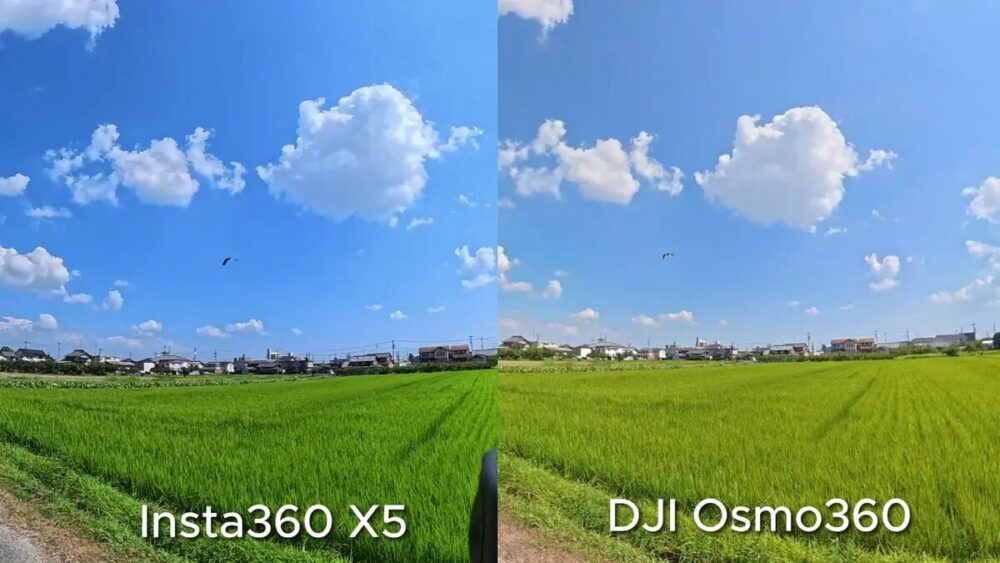
In terms of detail resolution, although both cameras record in 8K, the X5 preserves textures more effectively, giving clouds a stronger sense of depth and dimensionality.
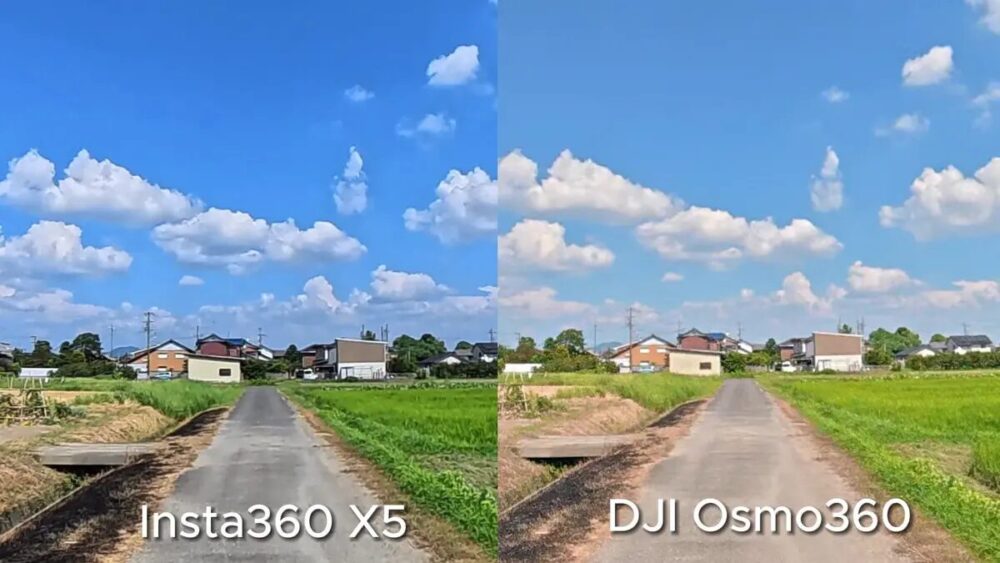
However, the DJI Osmo 360 has HDR enabled by default, which helps preserve color information in distant scenes as well.
Personally, I feel that the DJI Osmo 360 delivers richer color detail, which is especially noticeable during selfie shooting, where you can clearly tell that HDR is enabled. With the X5, shooting toward the sun often results in noticeable white halos, whereas the Osmo 360 is less affected by direct sunlight. In addition, even when shooting against strong backlight, the Osmo 360 keeps faces from appearing dark. Although both 360° cameras perform similarly in backlit conditions, the Osmo 360 produces a visibly brighter image overall.
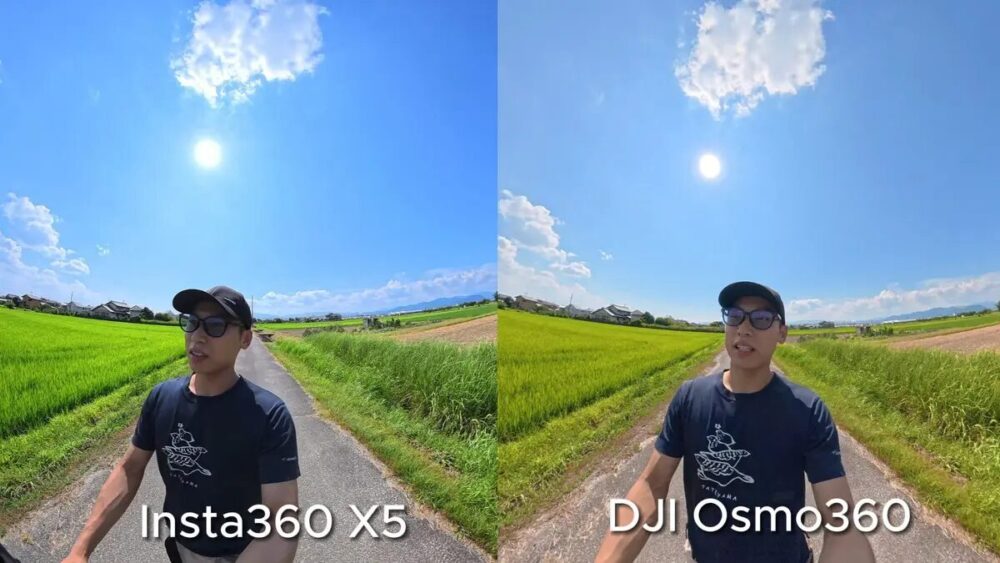
The Insta360 X5 delivers punchier contrast, giving the footage a more “camera-like” look, while the DJI Osmo 360 features softer contrast, resulting in a more comfortable, portrait-style visual feel.
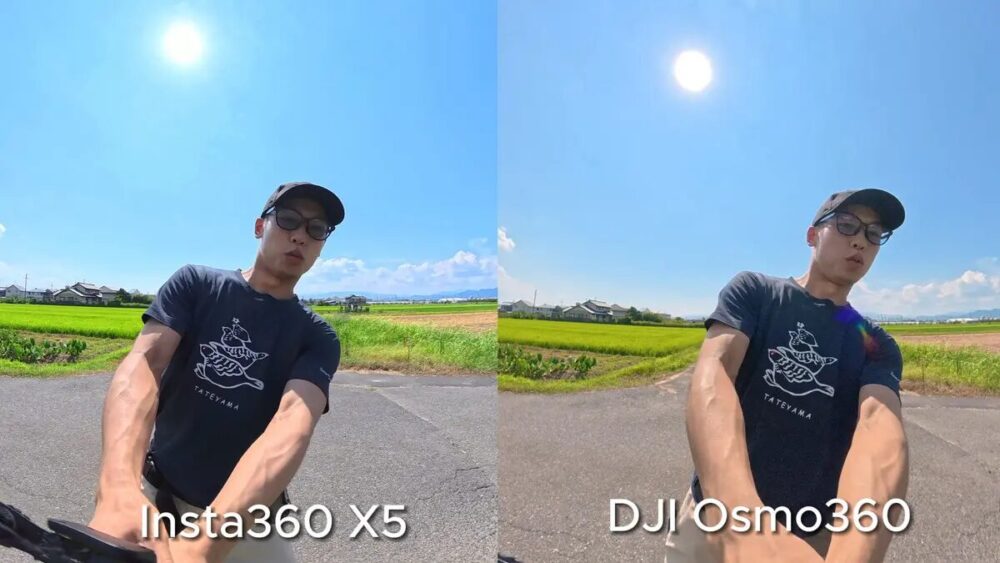
When taking selfies under strong backlighting, the DJI Osmo 360 performs impressively. Whether shooting with the light or against it, the sky’s color remains consistent, thanks to HDR being enabled automatically.
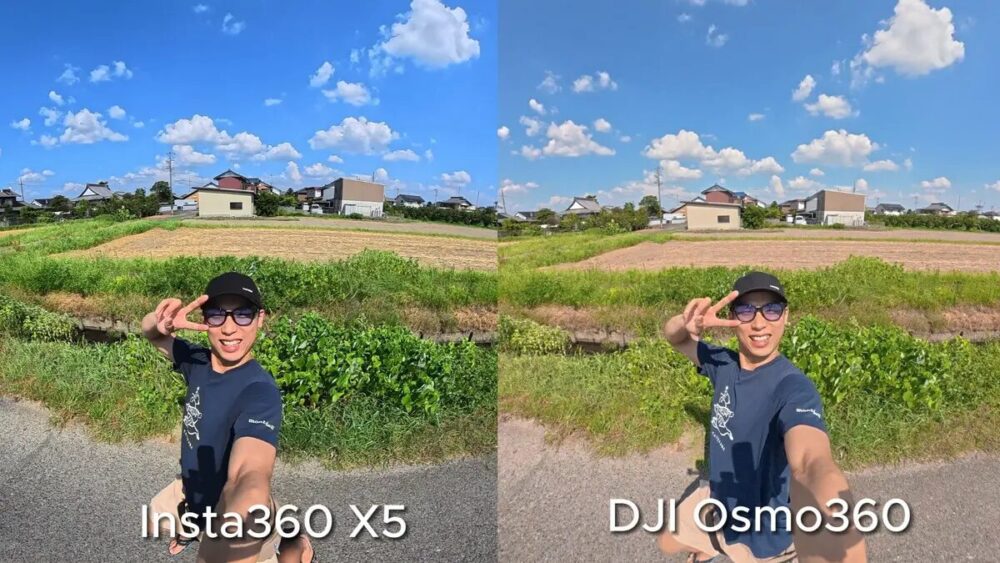
That said, it’s worth noting that when HDR is enabled, some noise can appear in shadow areas, making facial details more pronounced. For example, the right side of my face looked slightly rough in the footage — a common minor trade-off when HDR lifts darker areas. The Insta360 X5 achieves higher apparent resolution in 8K mode, likely because HDR is not enabled. utm_term=INRSGD7ZP82">Insta360 X5 achieves higher apparent resolution in 8K mode, likely because HDR is not enabled.
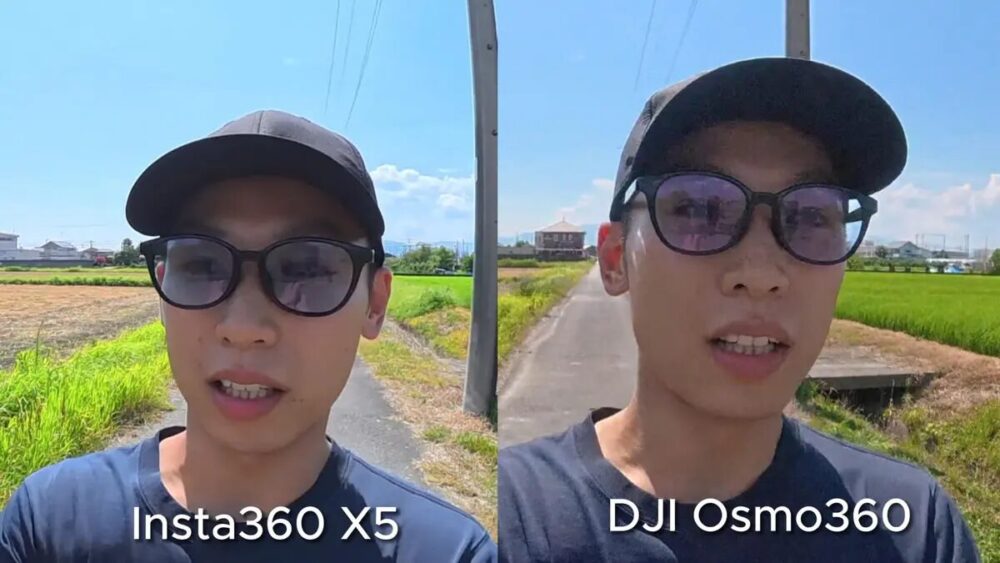
Because the X5 needs to drop down to 5.7K resolution in order to enable HDR, we will next focus on a comparison based on this aspect.
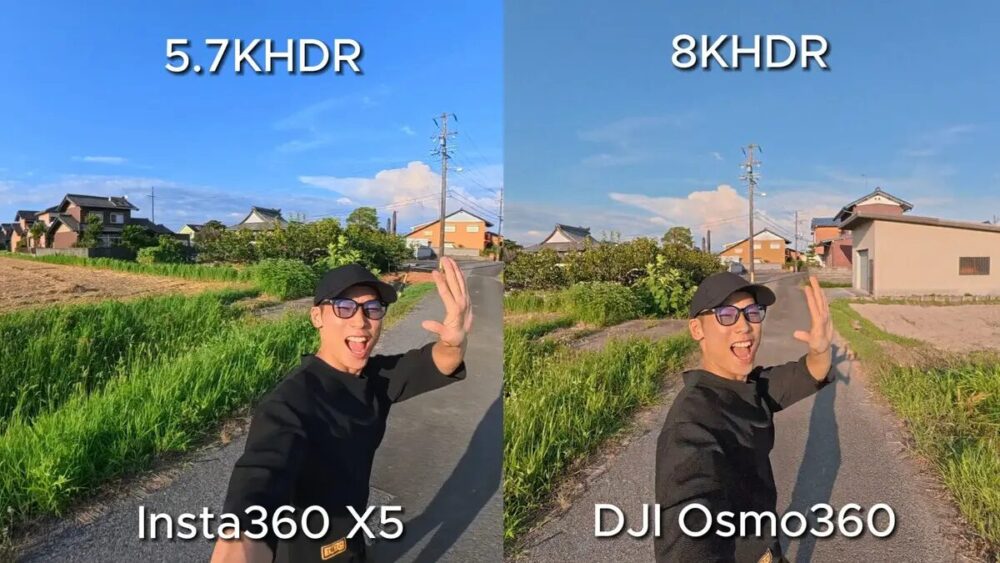
HDR Comparison
Based on my personal shooting habits, I tend to use the Insta360 X5 in 5.7K HDR mode rather than 8K mode, so in everyday use I record almost entirely in 5.7K.
After enabling HDR, the Insta360 X5’s overall image style becomes much closer to that of the DJI Osmo 360, with only slight differences in white balance. Overexposed highlights around the sun are also significantly reduced. More thoughtfully, in selfie scenarios it can effectively soften dark circles under the eyes, improving overall skin tone and complexion rendering.
Although neither camera delivers perfect results in strong backlit scenes, both provide a solid shooting experience for selfie use and are more than capable of meeting everyday needs.
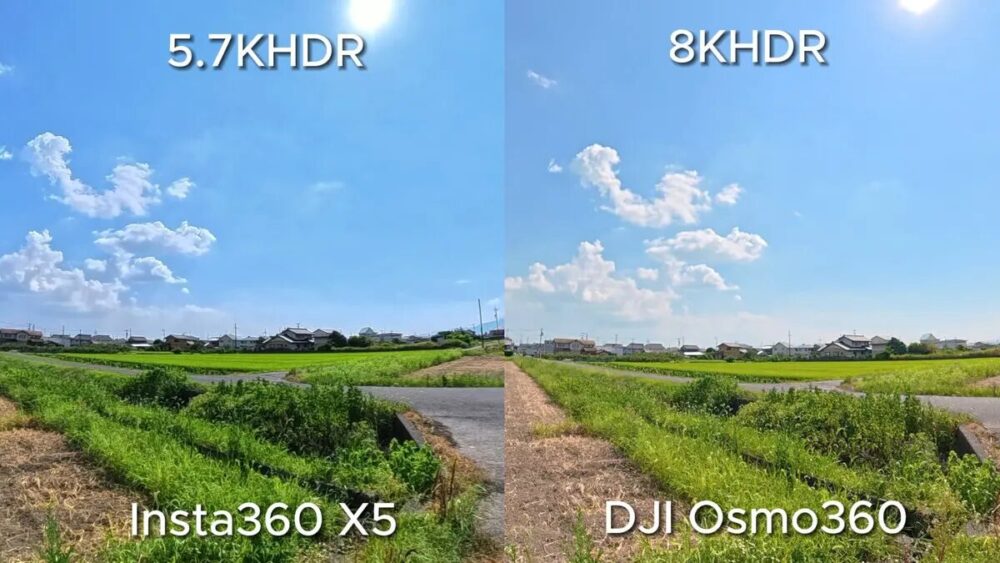
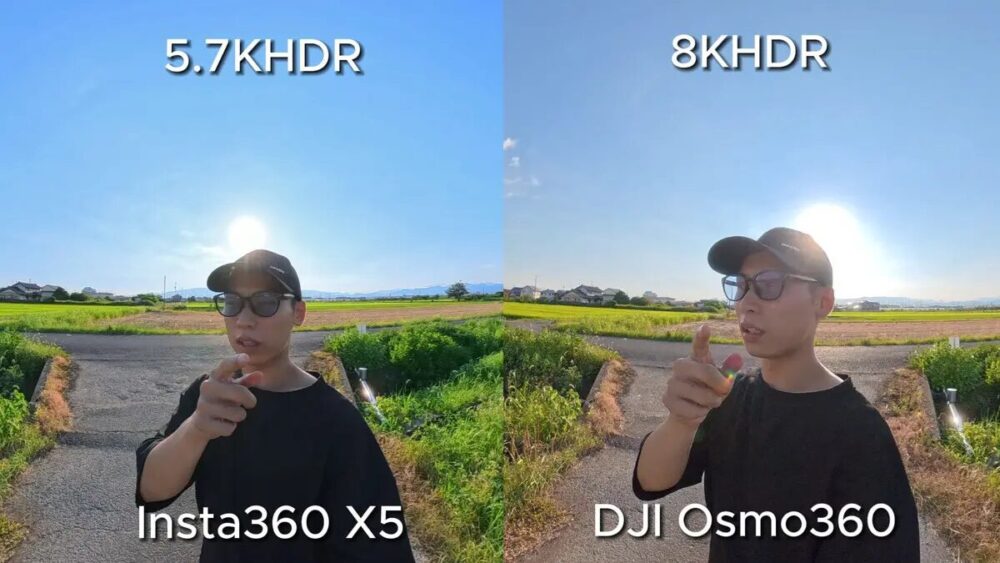
When set to 5.7K HDR, the X5 is very convenient for selfie shooting.
But if the resolution is lowered to 5.7K, will the image quality actually degrade?
I personally don’t mind it much. In fact, even at 5.7K, the X5 still delivers excellent detail in cloud textures as well as grassland and field scenery. Although the DJI Osmo 360 also uses HDR, its lower contrast results in a softer, more HDR-style image overall. When zooming in, the DJI Osmo 360 does show more noticeable detail in distant buildings when shooting in 8K mode, but this may also be because its lower contrast makes fine details easier to perceive.
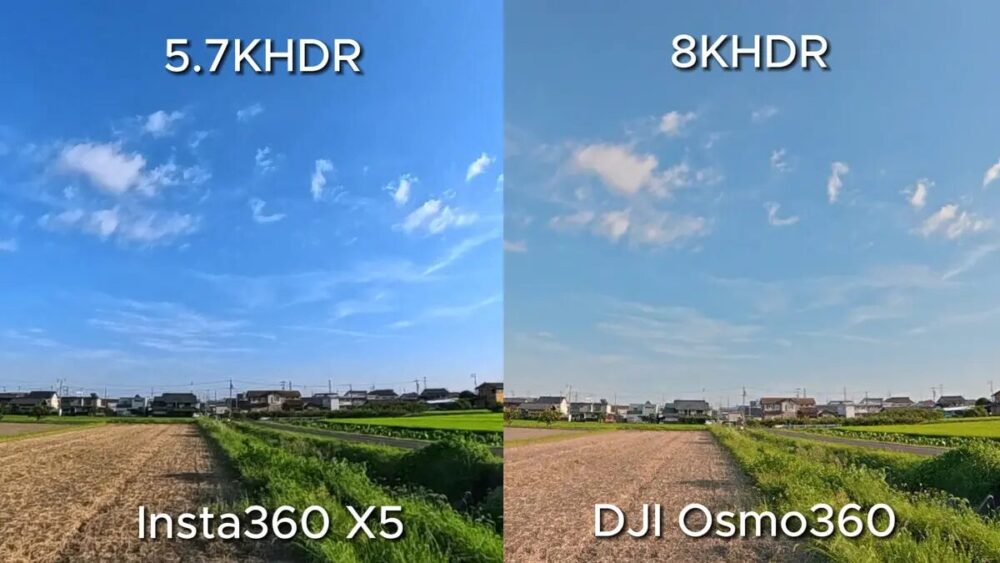
The Insta360 X5 delivers excellent contrast and a strong sense of depth, making it particularly well-suited for scenic shots and landscape selfies. However, if your shooting style is primarily focused on selfies, the DJI Osmo 360 is also a solid option. For outdoor enthusiasts, selfie performance is often less of a priority, which is why I personally lean more toward the X5.
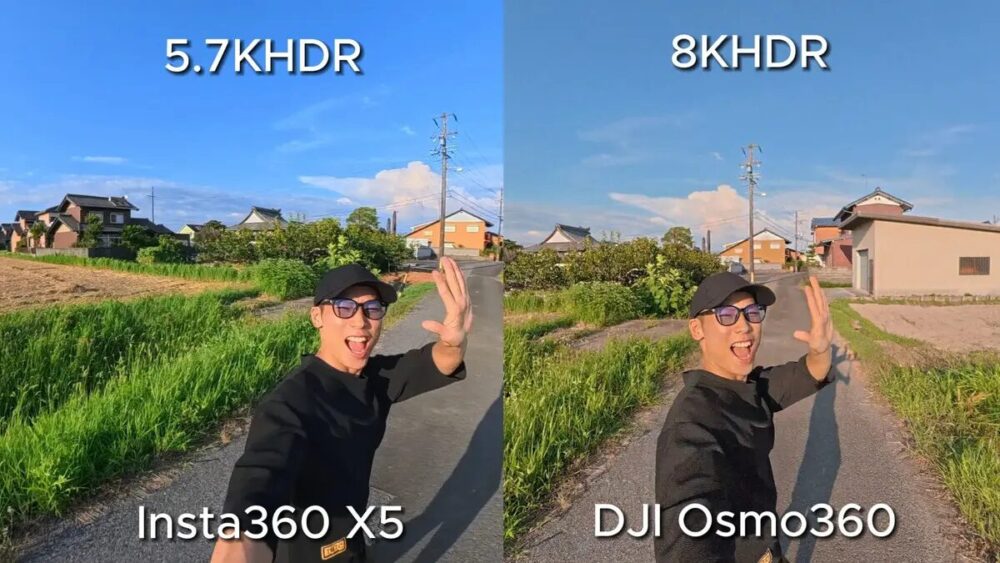
When it comes to color tone, the Insta360 X5 feels closer to real life. For example, the color of asphalt appears more accurate to what the naked eye sees on the X5, both in terms of color reproduction and detail. In addition, when shooting photos with HDR enabled, the X5 does a better job of suppressing overexposure from the sun. In a photo I took around 5:00 PM, the X5 handled backlighting and highlight control more effectively, resulting in noticeably less blown-out areas.
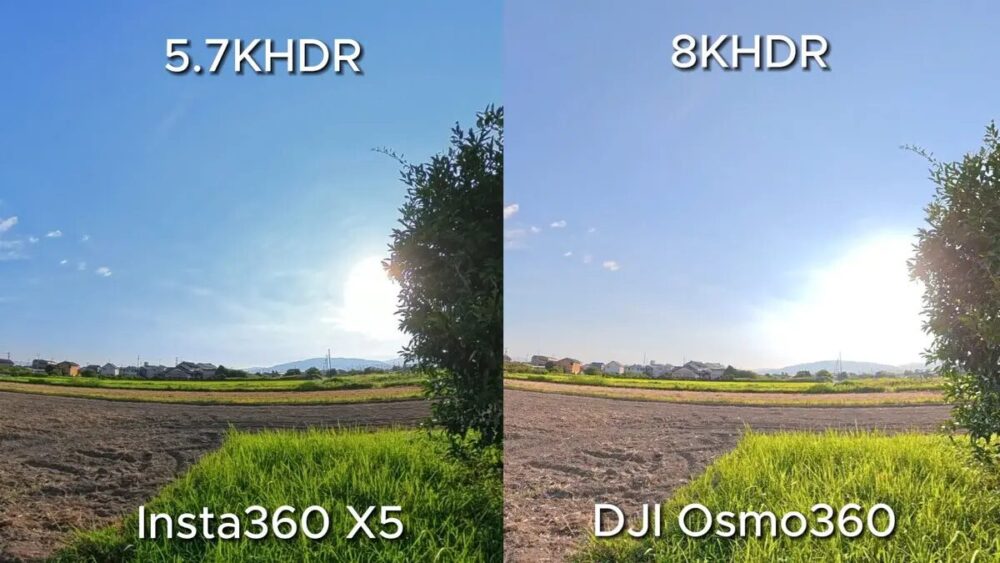
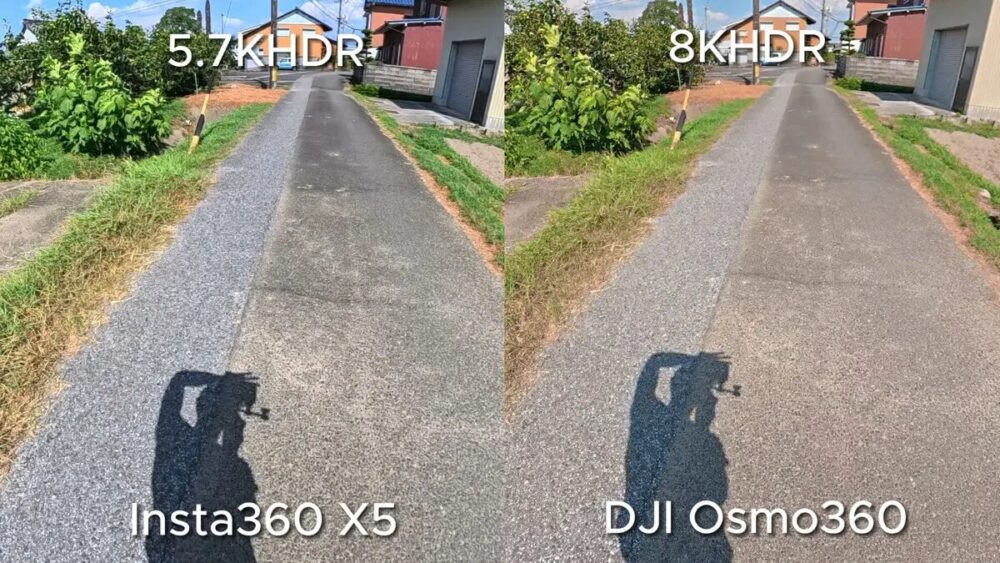
The Insta360 X5’s adaptive color tone quickly adjusts areas with strong contrast, resulting in a more natural-looking image. Color overlap is minimal, and unnatural purple tones between the sky and ground are rarely seen. Even when I move quickly into direct sunlight, the camera captures the changing light effectively, delivering stable and consistent results.
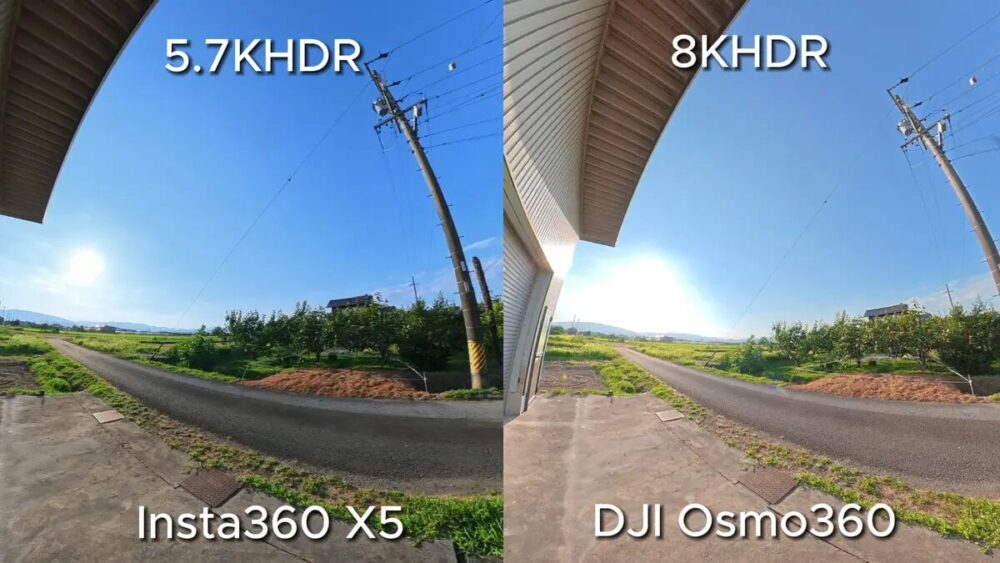
However, adaptive color tone appears to increase camera heat buildup, making it less suitable for long, continuous recording sessions (over one hour). Below is a comparison video showcasing HDR performance.
Night Shot Quality Comparison] DJI Osmo 360 vs Insta360 X5
Performance differences become more apparent in low-light and nighttime image quality, so understanding how each camera performs in these conditions can help you decide which color rendering style suits you best.
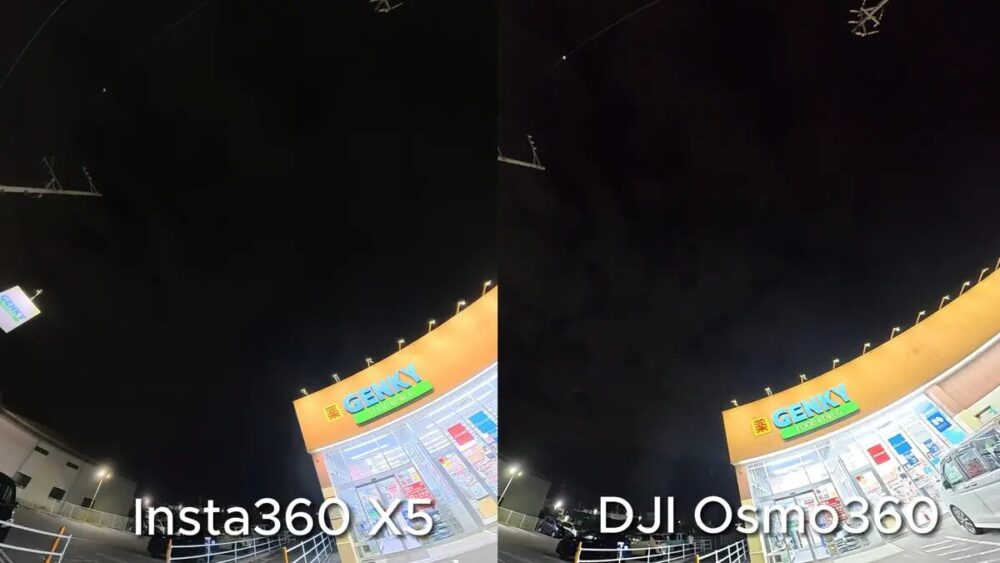
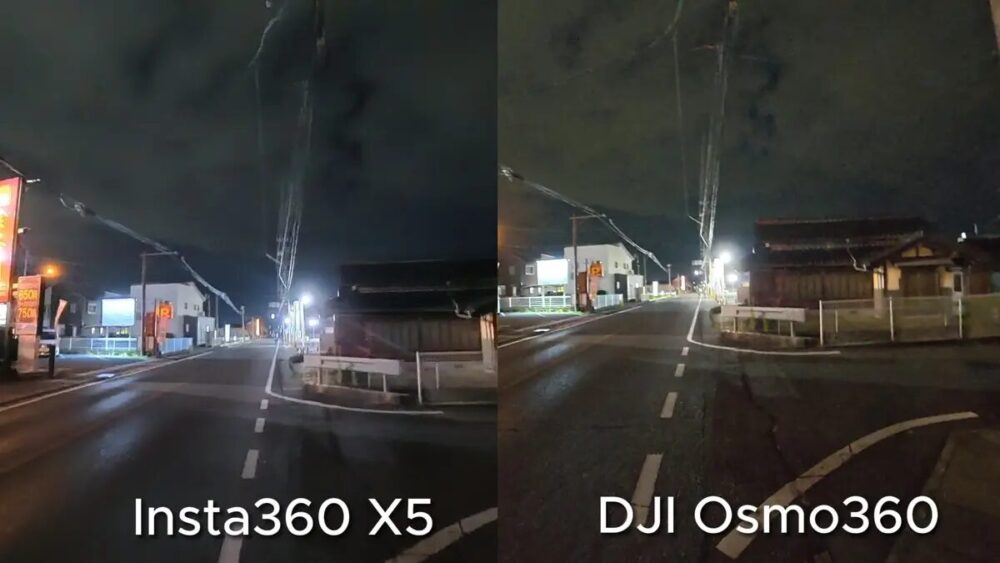
In terms of low-light performance, the Insta360 X5 performs better. Dark areas retain their depth without being affected by stray light, and details in bright areas are preserved. When zooming in, overexposure is noticeable in the DJI Osmo 360, whereas the X5 maintains both color information and resolution.
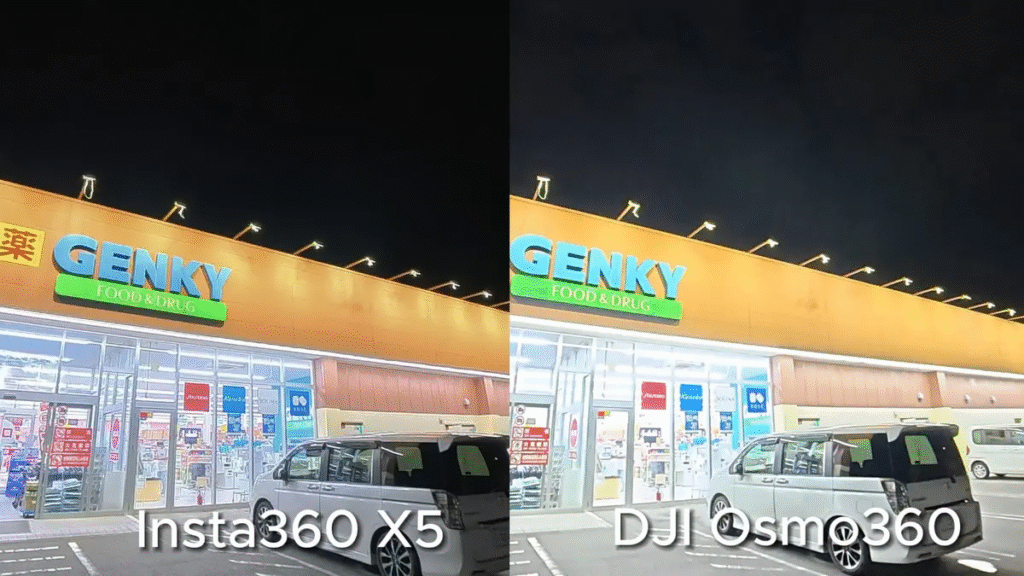
The letters “GENKY” are reproduced with distinct blue, green, and orange tones on the Insta360 X5. On the DJI Osmo 360, however, the orange tends to bleed into the blue and green, affecting color separation.

The Insta360 X5 delivers excellent color reproduction and light suppression in dim environments, and its wide-angle lens also maintains outstanding image quality.
Insta360 X5 Benefits
Easy-to-use vertical shapes
Although the Insta360 X5 is 16 grams heavier than the DJI Osmo 360, its vertical design makes it feel more comfortable to hold. Single-handed operation is easier and less prone to slipping. For me, these usability advantages outweigh the slight weight difference, providing a better overall hand feel. If your primary content is short videos for IG or YouTube Shorts, reviewing footage on a vertically oriented screen is also more intuitive.
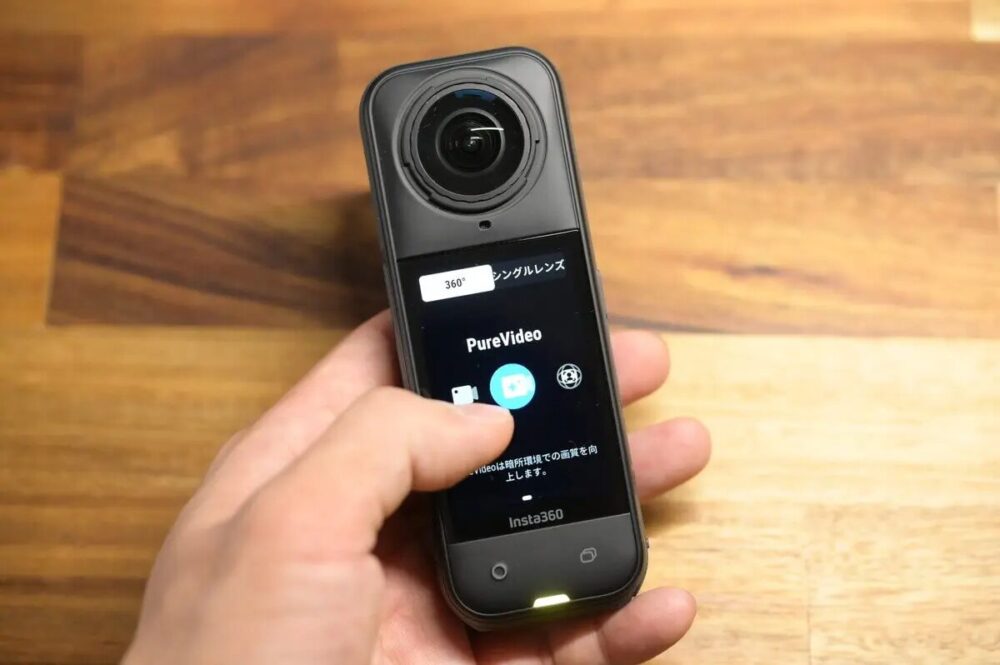
Sliding Touch
The DJI Osmo 360 starts up faster, but the Insta360 X5 offers smoother touch and swipe operation. Both are among the most comfortable and user-friendly action cameras on the market, with simplicity of operation being a shared strength.
HDR colour processing
Although the Osmo 360 boasts higher specifications, I feel that the X5 delivers superior actual image quality. A standout feature of the X5 is the ability to freely switch between high-performance HDR and full 8K resolution. While the Osmo 360 also supports HDR in 8K, its performance seems to sit somewhere between the X5’s HDR and 8K modes, slightly lagging behind.
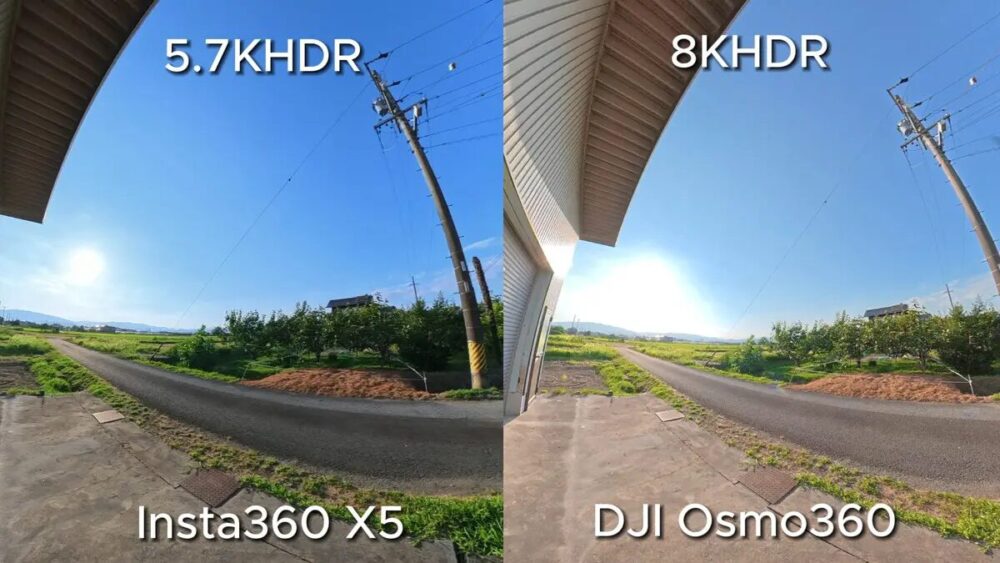
Image Quality for Landscape Photography
I feel that the DJI Osmo 360 is better suited for selfies, while the X5 excels at capturing landscapes. For me, a 360° camera is primarily used to capture scenery and people, rather than being dedicated to selfies. Proper resolution and contrast are what truly bring out beautiful, deep, and immersive images.
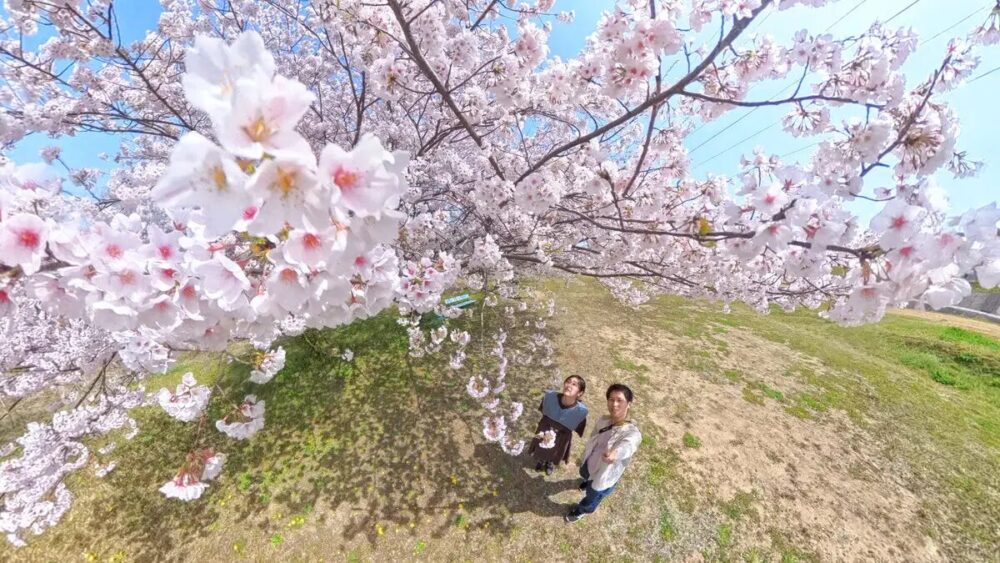
InstaFrame Mode
With traditional 360° cameras, footage always requires post-shoot reframing (selecting and cropping the desired portion from the 360° video) before it can be shared. Using the Insta360 X5, the InstaFrame mode allows you to skip the reframing step during shooting.
APP
From a hardware specifications perspective, some parameters of the Insta360 X5 may not match those of the DJI Osmo 360. However, its standout advantage lies in its highly user-friendly companion app — even complete beginners with no prior experience using 360° cameras can quickly learn to operate it.
This ease of use is a core strength that Insta360 has cultivated through years of experience in the 360° camera field. The Insta360 app makes the entire workflow — from video recording and post-production editing to publishing on IG or YouTube — smooth and effortless. If you lack confidence in your video editing skills and seek a worry-free, efficient experience, the Insta360 X5 is the more suitable choice.
Low-Light Shooting
The Insta360 X5 delivers impressive performance in night shooting mode, which is actually not surprising.
In fact, Insta360 has consistently outperformed DJI in low-light color reproduction and light management. Even before the X5 was released, the brand had already optimized low-light shooting experiences through its self-developed PureShot technology, which was successfully applied to models like the Ace Pro 2. This demonstrates Insta360’s long-standing technical expertise in low-light imaging. Overall, not only does the X5 deliver stable and excellent night-time image quality, but its companion app also runs reliably, allowing users to confidently focus on image quality during night or low-light shoots without worrying about software lag, ensuring a smoother and more secure shooting experience.

DJI Osmo 360 Benefits
Compact and lightweight
For everyday travelling, the vertical shape of the Insta360 X5 makes it easier to hold. DJI Osmo 360 Its square and lightweight design makes it easier to mount on a helmet. Like the Osmo Action 5 Pro, DJI enjoys high popularity among extreme sports enthusiasts.
Quick Start
The Insta360 X5 offers smoother and more comfortable swipe operation, but the DJI Osmo 360 boasts lightning-fast startup, which is another major attraction. The Osmo 360 starts in 0 seconds — or more precisely, it powers up in -0.1 seconds.
High Spec 8K 50 fps
The DJI Osmo 360 truly impresses with its high-end specifications. It defaults to 8K shooting, supports 50fps and HDR, placing considerable demands on the camera, yet it operates stably without any overheating issues, and the battery life is also solid. If its companion app and desktop software were just a bit more stable, it would be virtually flawless.
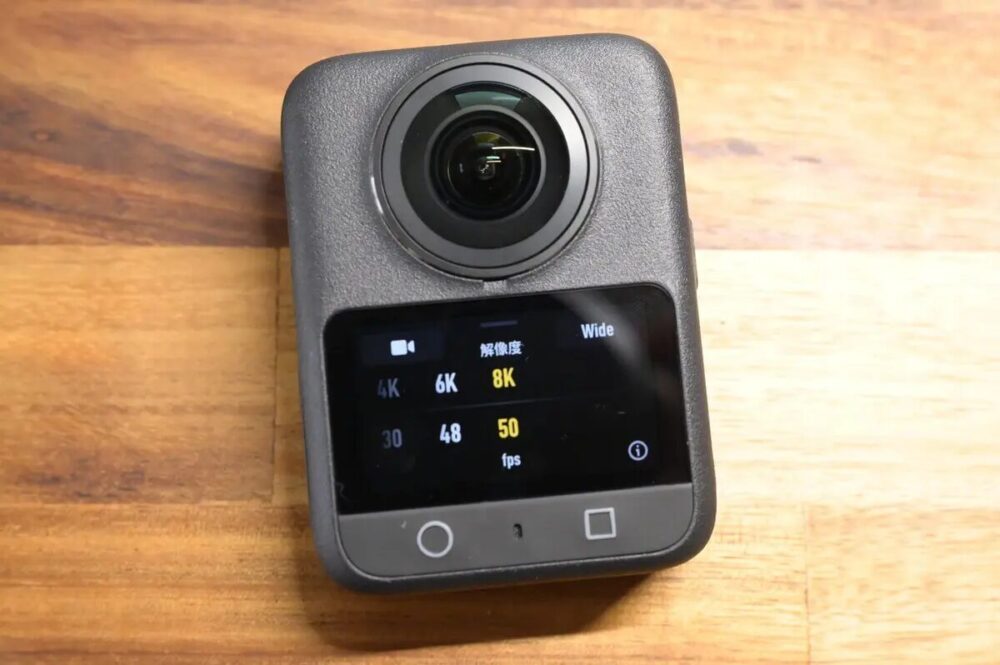
take a picture of oneself
The Insta360 X5 delivers image quality better suited for landscape photography, while the DJI Osmo 360 produces lower-contrast images that are more favorable for selfies. This is because the DJI Osmo 360 handles backlit photography exceptionally well, effectively suppressing lens flare and ghosting.
Continuity, Internal Storage, Microphone
DJI Osmo 360 Another advantage is its long battery life. Although its battery capacity is only 1950mAh, it's enough for nearly two hours of continuous shooting, longer than the X5. It not only accepts SD memory cards but also supports 105GB of built-in memory (equivalent to 90 minutes of 8K 30fps or 4 hours of 4K 30fps). It can also connect to two wireless microphones (the X5 only supports one).
However, Insta360 has released an enhanced battery for the X5 (2700mAh), which, when installed, boosts its battery life to a comparable level.
10 Bit for greater editing flexibility
As previously discussed regarding HDR color and noise control, if you have professional post-production needs, DJI might be the more suitable choice. The DJI Osmo 360 supports 10-bit and Log format shooting in Pro mode, preserving maximum color detail and tonal range, providing greater flexibility for color grading and creative post-production.
I am currently learning the professional editing software DaVinci Resolve, aiming to better leverage the potential of Osmo 360 footage and fully unlock its post-production advantages.
Comparison of DJI Osmo 360 vs Insta360 X5
After talking about so many advantages, let’s now discuss the drawbacks of the DJI Osmo 360 and the Insta360 X5.
DJI Osmo 360 Disadvantages
- Lens composites may still be broken or deformed.Splice Line Problems」
- Lens is not replaceableLens is damaged, need to send the whole machine for repair; the lens bulge is easy to be hit, occasionally fogging problem under the high temperature
- Insufficient accessories and storageStandard adapters are not compatible with the Action Series; the lens cap is dusty.
- Editing and Audio IssuesDJI Studio for PC has noise, lagging, lack of FCPX/Premiere plug-in support; wind noise is obvious when riding at high speed, need external microphone.
- Recording cannot be cancelled when the record button is pressed.
- The built-in 128GB storage capacity is actually about 105GB, panoramic video takes up a lot of space and requires frequent memory expansion.Continuity and Storage Limitations
- Dive recording is not as good as X5, no dedicated dive mode, dive case and ND filter.
Insta360 X5 Disadvantages
- The maximum support is only 8K 30fps, which is not a significant improvement over the X4;8 Bit Log is not supported, limiting post-toning.
- X4 batteries are not supported, additional batteries are required.
- The battery needs to be removed to replace the card (Osmo 360 can also replace the card while the battery is still in the device).
- Lens protrudes and is vulnerable to impacts; however, the lens can be replaced on its own.
- The price of the machine is on the high side, and specialised accessories (e.g. diving shells, extension rods) need to be purchased additionally, which increases the total cost.
- Single-lens mode is not as good as shooting panoramic videos.
Which panoramic camera to get?
How to choose a 360 Panorama Camera ?
When choosing a 360° camera, the Insta360 X5 would be my top recommendation — it scores highly across several key areas:
- Excellent image quality
- A wide range of shooting modes, even in auto mode.
- Video Post-Production APP for smooth and comfortable operation
- Superior lens durability and water resistance
Although it is slightly more expensive than the DJI Osmo 360, considering the superior experience it provides, the Insta360 X5 is far from an overpriced choice. In fact, from shooting to post-production and sharing, it delivers value that exceeds its price, making it a highly cost-effective filming companion. During promotional periods, the X5 is often offered at a 10% discount, narrowing the price gap with the DJI Osmo 360.
Why Insta360 X5?
The Insta360 X5 not only offers intuitive and smooth camera operation, but its companion app and software are also highly stable and reliable. It supports freely toggling HDR, and with AI-powered light adjustment technology, it can effortlessly capture high-quality 360° footage in varied lighting conditions and complex scenes, providing an uninterrupted and seamless user experience.
Even better, the X5 excels in night shooting and underwater recording, allowing you to capture high-quality footage from morning to night with minimal setup. From these perspectives, the Insta360 X5 is well-built and an ideal choice for beginners in 360° cameras and action cameras.
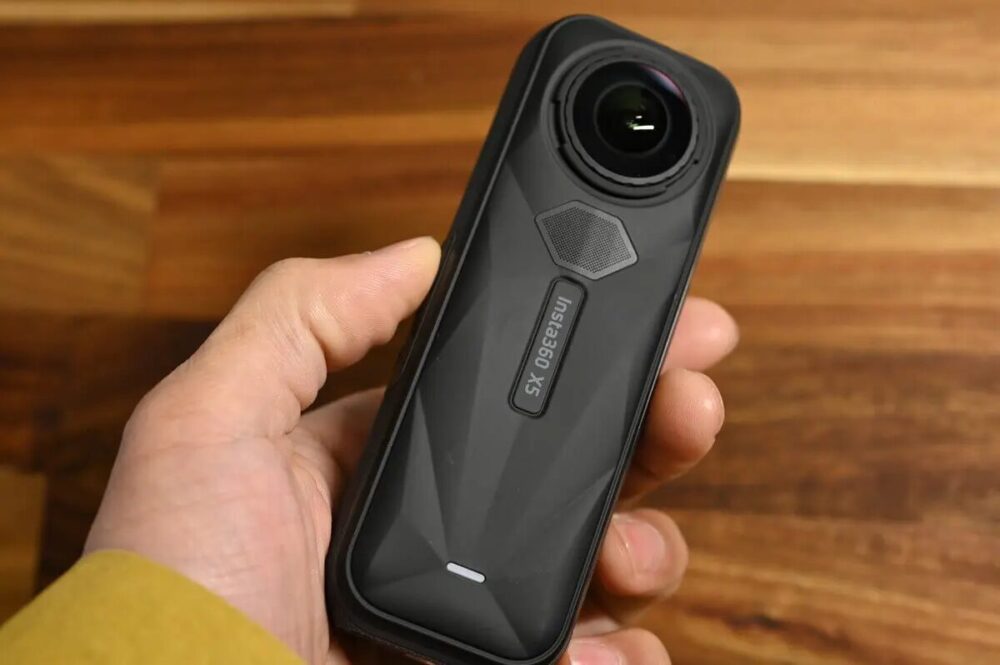
For beginners looking to get started with 360° cameras, the Insta360 X5 is the top choice.
Why buy DJI Osmo 360?
If you have some editing skills and a suitable shooting environment, I believe the DJI Osmo 360 is the best choice. Considering its price, it comes highly recommended.
For users who already own the X3 or X4, the DJI Osmo 360 stands out with its distinctive features, and having both cameras together will make you love them even more. Additionally, for sports enthusiasts, the DJI Osmo 360’s lightweight design is also a significant advantage.