



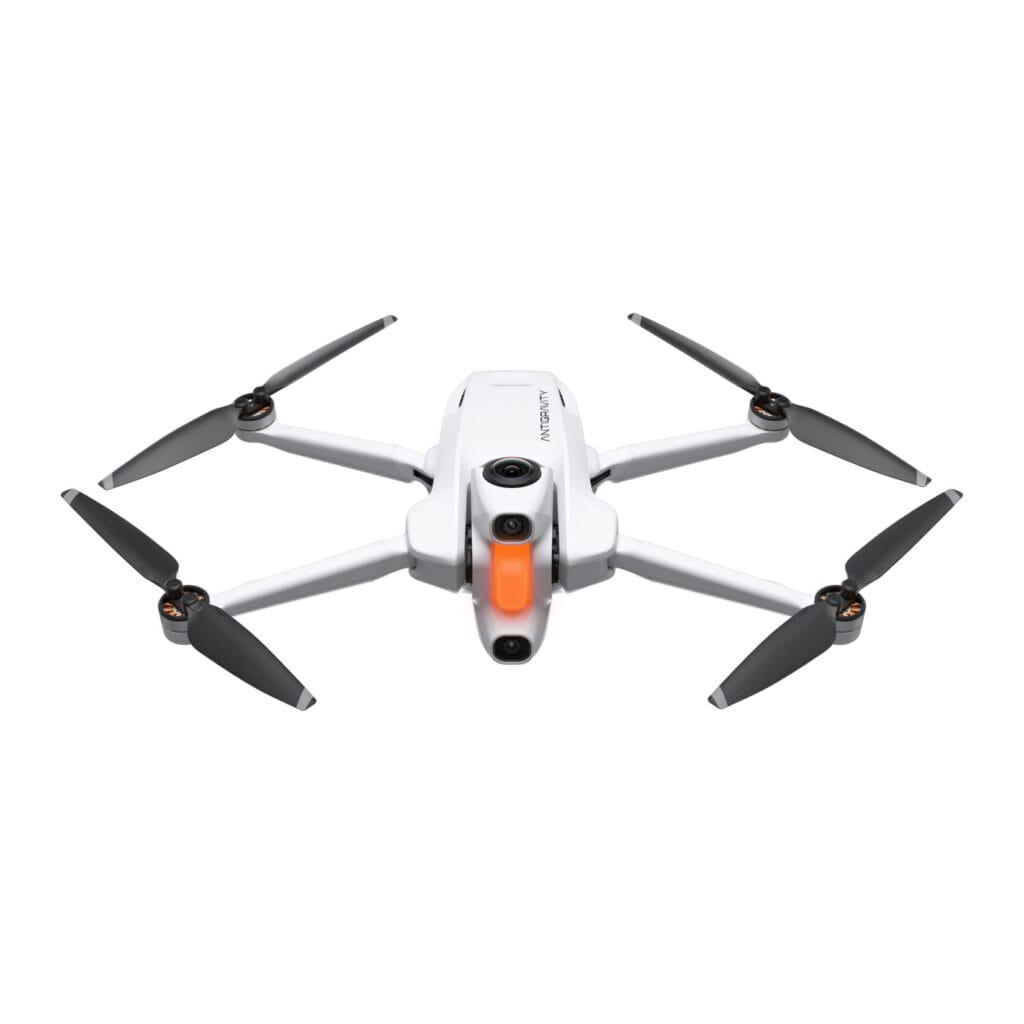
Insta360 officially announced the launch of its new sub-brand. AntigravityAnd on December 4, 2025, they released their first revolutionary product—Antigravity A1The A1 is the world's first drone to support 8K 360° panoramic video, integrating intuitive controls, an immersive flight perspective, and superior image quality, bringing a new breakthrough to aerial photography technology. Its biggest highlight is its...8K 360° imagingIt can capture a complete panoramic image with one click, and allow for free framing and editing in post-production, no longer limited by traditional perspectives, completely changing and improving creative flexibility and efficiency.
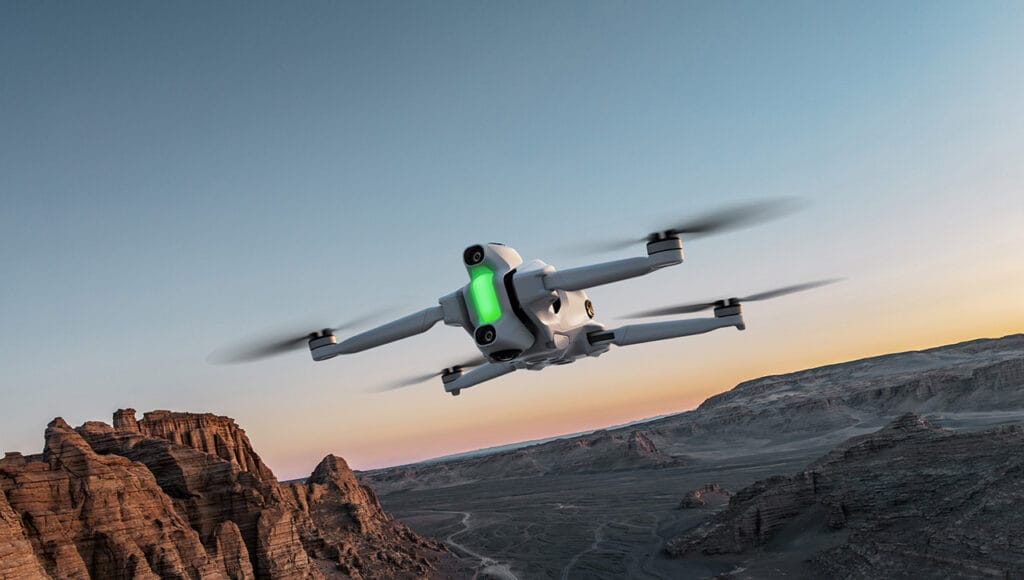
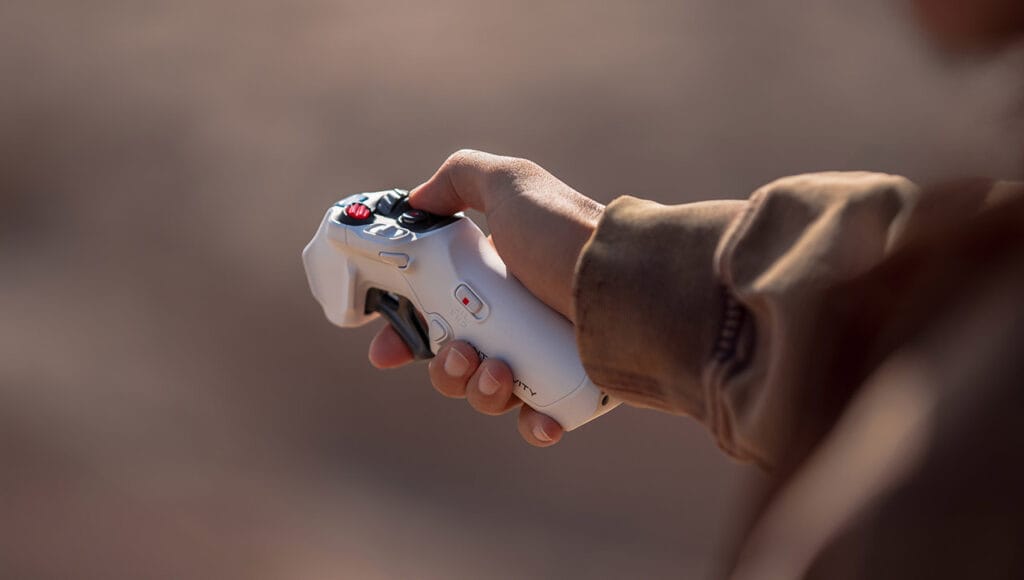
The design philosophy of A1 emphasizes "simplicity, intuitiveness, and accessibility for everyone".Unlike traditional joysticks,A1 uses a grip controllerIt can accurately sense natural hand movements and is easy to operate in complex terrain or narrow spaces. Even beginners with no drone experience can quickly get started.
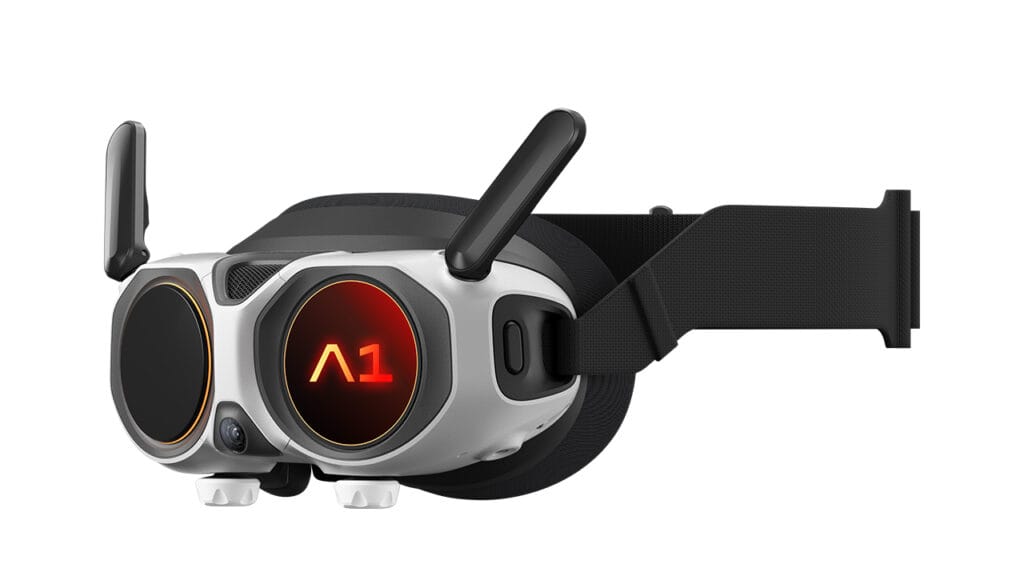
When the A1 is connected to the Vision Goggles glasses, the user can obtain...Instant 360° immersive viewIt's like being in the air, enabling an unprecedented way to explore by flight. Whether it's outdoor activities, tourism, terrain surveying, or content creation, you'll experience an unparalleled sense of presence and freedom.
Antigravity A1 Product Highlights
360° immersive flight experience
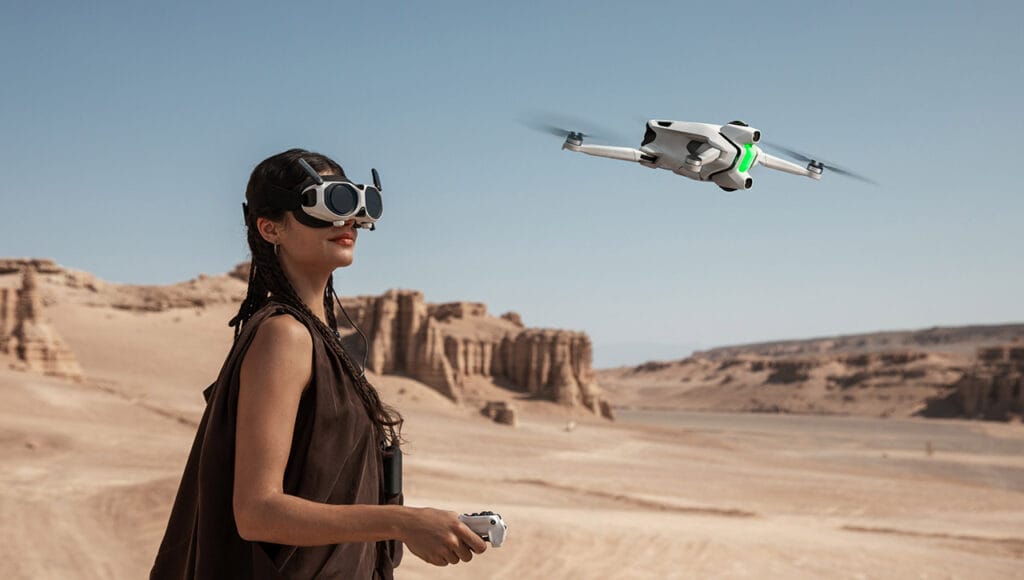
- Supports dual cameras (top and bottom). 8K 360° panoramic shootingFilming captures the entire surrounding environment, providing an immersive flight experience; filming first, then framing the shot.
- Ultra-lightweight design weighing only 249 gramsIt is portable and easy to carry, and can be flown without registration in most countries and regions.
- Advanced AI splicing algorithm Can generate "Stealth drone effectThis allows the camera to disappear from the frame, resulting in cleaner, more immersive images.
- grip controller It offers intuitive point-and-shoot flight controls, making it easy for beginners to get started quickly.
- Vision Goggles The visual goggles support 360° real-time view and head FPV tracking, delivering an immersive flight experience.
- Flexible post-production, allowing you to freely change the framing angle of the film after shooting.
- Multiple safety protection mechanisms, including automatic reset and load detection functions, enhance flight safety and stability.
Antigravity A1 Who is it suitable for?
If you need to create VR content, panoramic videos, travel documentaries, or projects that require a complete scene presentation, the Antigravity A1 is the answer. One shot, multiple angle outputs It can significantly improve work efficiency and shooting flexibility, making it a very worthwhile choice in the field of panoramic aerial photography.
Is a weight of 249 grams and a battery life of 24 minutes really reasonable?
Antigravity A1 weighs only 249 gramsIn the consumer drone market, it falls into the "ultra-lightweight" category. Most mainstream drones (such as the DJI Air series and FPV series) typically fall into the category of... 430–900 gramsWeighing between 249 grams, the Antigravity A1 not only allows for registration-free flight in many countries, but also makes it a more suitable portable 360° drone for beginners and travel vloggers.
However, its battery life is only 24 minutesThat's indeed a bit short. If you're using it to shoot short films, travel footage, or general life documentation, 24 minutes is generally enough. But if your needs lean towards:
- Shooting long-duration aerial footage
- 360° VR video recording
- Live broadcast or continuous flight
- Long take needs to be completed in one take
24 minutes might not be enough, and could even affect the creative process.
Motion control vs. traditional remote control
It flies wherever you point it, making it easy for beginners to get started.
Antigravity A1 adopts a brand new Grip motion grip controllerIt allows for intuitive flight maneuvers such as "side-flying camera movement," "circling camera movement," and "skyward camera movement" through human body movements, and uses mechanical wheels for fine-tuning of the course. This type of control is indeed innovative and more immersive, but there are still some limitations in the actual experience.
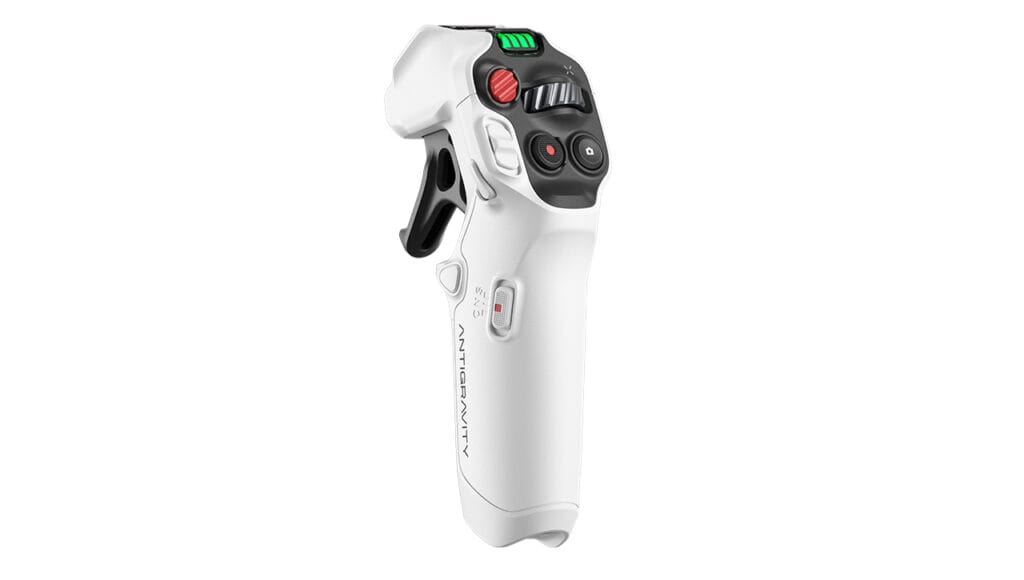
- The operation is intuitive, and even beginners can quickly get started.
- The camera movement experience is more free and more creative.
- The combination of 360° imaging creates a more immersive and lifelike experience.
- The accuracy is not as high as that of traditional remote controls.
- Fast or delicate movements are difficult to control
- Prolonged hand-raising operation can cause fatigue.
- Performance may be unstable in windy or complex environments.
Looking for new experiences and enjoying immersive flight? → Select motion controls for Antigravity A1; ; Pursuing precise, professional flight and stable camera movement → DJI traditional remotes are more suitable
Advantages of Antigravity A1
Recommended for people who don't want to do post-production editing.
In contrast, theThe core advantage of the Antigravity A1 lies in Insta360's long-standing expertise in panoramic imaging technology.The performance of the Insta360 X5 and DJI Osmo 360 clearly demonstrates Insta360's strength in panoramic video detail, stitching quality, and creative features. In terms of post-production, Insta360's software is more beginner-friendly. If you're looking for extremely simple 360° creative shooting and a lightweight, portable camera, then the Antigravity A1 would be an ideal choice.
If you value the versatility of a drone, its enhanced shock resistance, battery life, and professional FPV flight experience, then the DJI Avata 360 would be a better fit.
Antigravity A1 disadvantages
Insta360's technological prowess in the fields of action cameras and 360-degree panoramic cameras is beyond doubt, but The Antigravity A1 marks Insta360's first foray into the drone market.Compared to established powerhouse DJI, the A1, while possessing distinct advantages, also reveals some limitations of its initial product.
- Short battery lifeWith only 24 minutes, it can feel quite restrictive during actual filming.
- No traditional omnidirectional obstacle avoidance systemIts safety and operational fault tolerance are not as mature as DJI's technology system.
- The overall system maturity is low.Insta360's first foray into the drone field still requires time to verify its stability and flight control system's sophistication.
Overall, the Antigravity A1 is more suitable for users who seek creative panoramic content, lightweight design, and immersive motion-based flight experiences.If you prioritize range, safety, wind resistance, and professional-grade flight control, DJI still has an advantage.
Antigravity A1 Kit
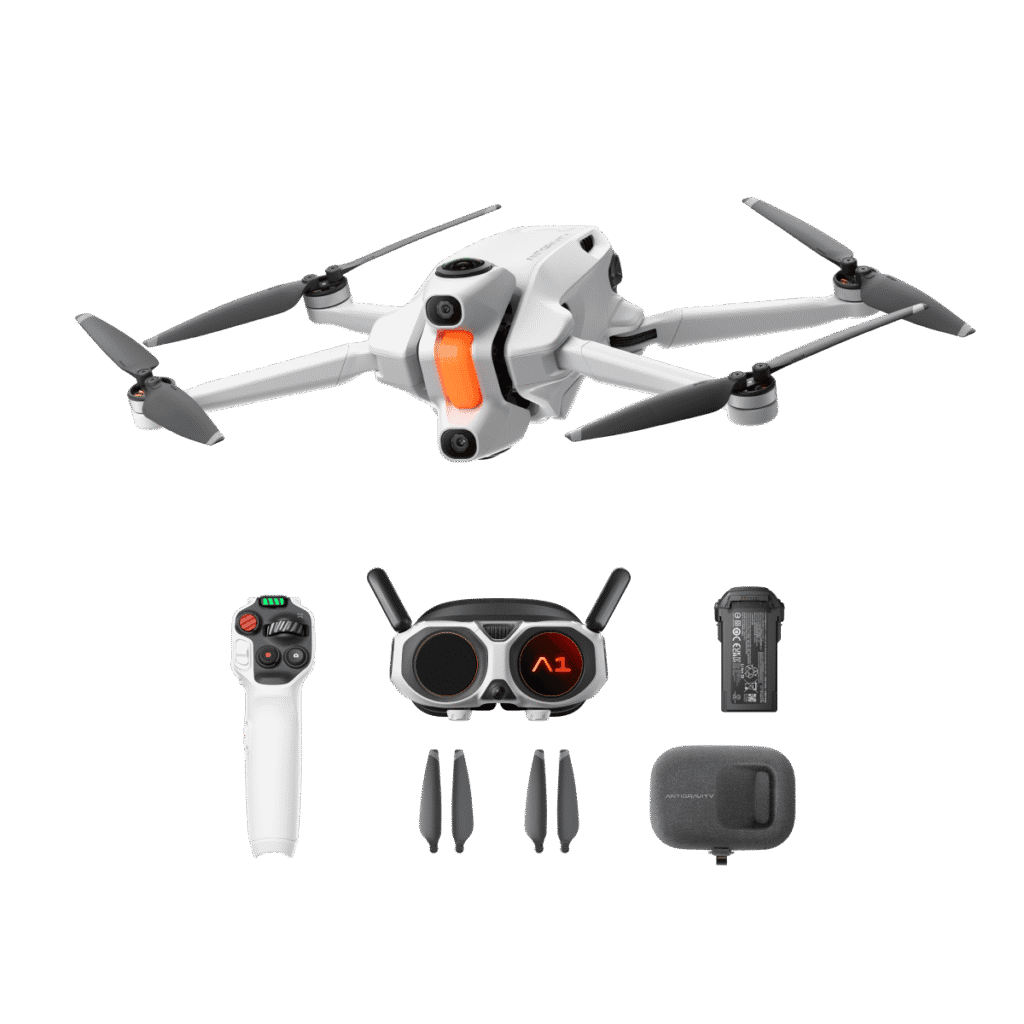
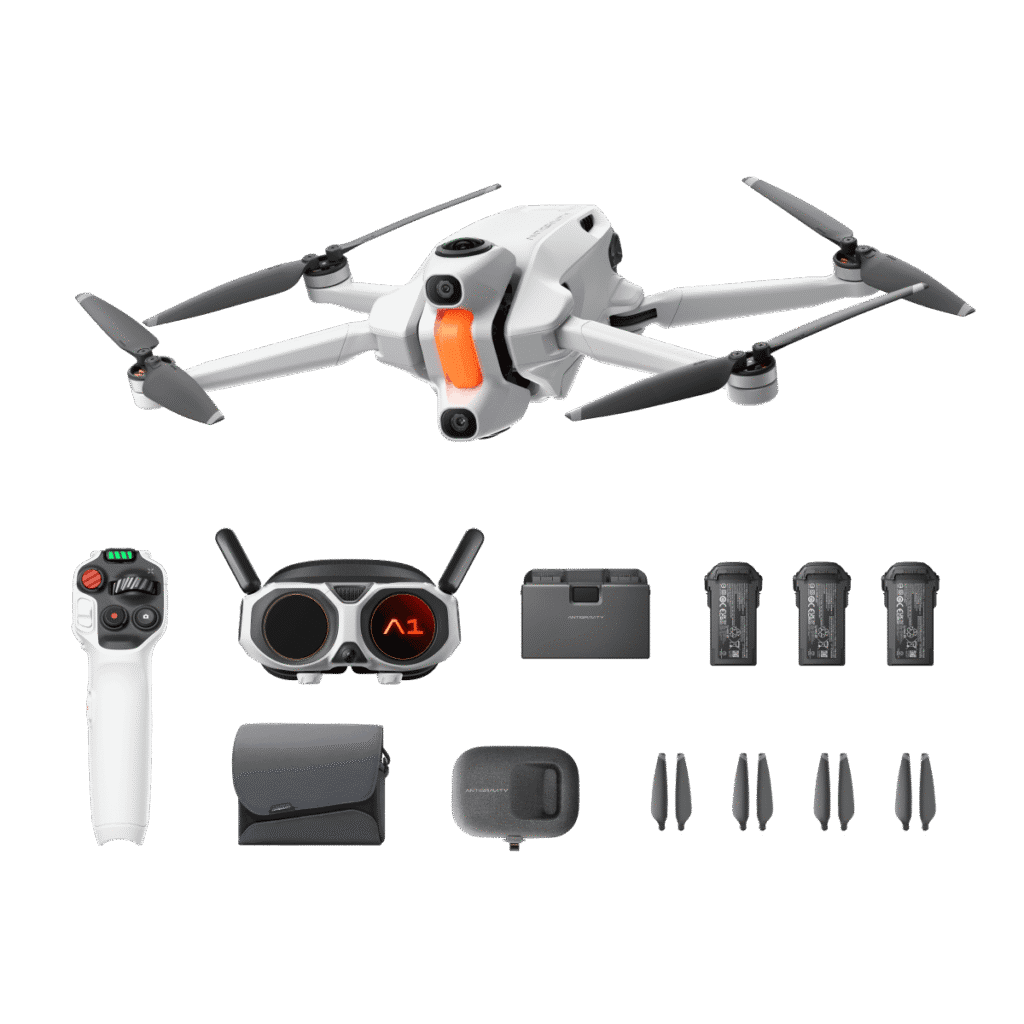
The A1 was launched with three different sets, compared to the standard set:Explorer SetIt also includes 4 propellers and 1 charging hub;Infinite SetIt also comes with 2 high-capacity flight batteries, 4 propellers, 1 charging assistant, and 1 flash transfer companion.
If you have high requirements for "battery life",Explorer SetThat would be a good choice; if you want to solve the problems of "battery life" and "fast material transfer" with this trip, you can directly get the Infinite Set and solve them all in one go.
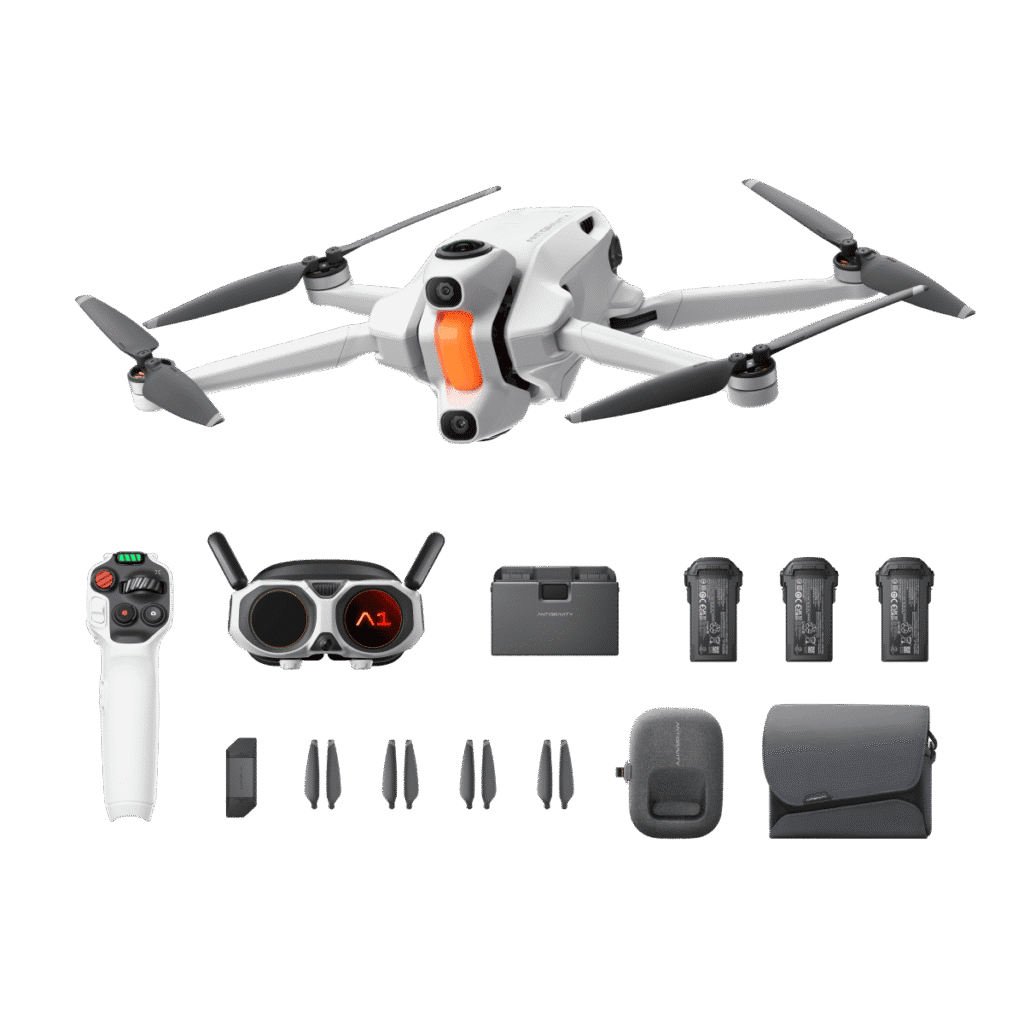
Antigravity memory card
Supports SDXC, UHS-I, V30 or higher specifications, formatted as exFAT. Maximum capacity: 1TB.
It can be kept consistent with the Insta360 Ace Pro 2 action camera.
The memory card specifications used in drones mainly depend on the drone's positioning and shooting needs. The core focus should be on three key dimensions: "physical type, speed level, and capacity." The specification requirements vary significantly in different scenarios. Most drones on the market (such as the DJI Air series and Mini series) have different specifications.All of them use microSD cards (also known as TF cards) as the mainstream standard.Antigravity A1 also remains consistent.。
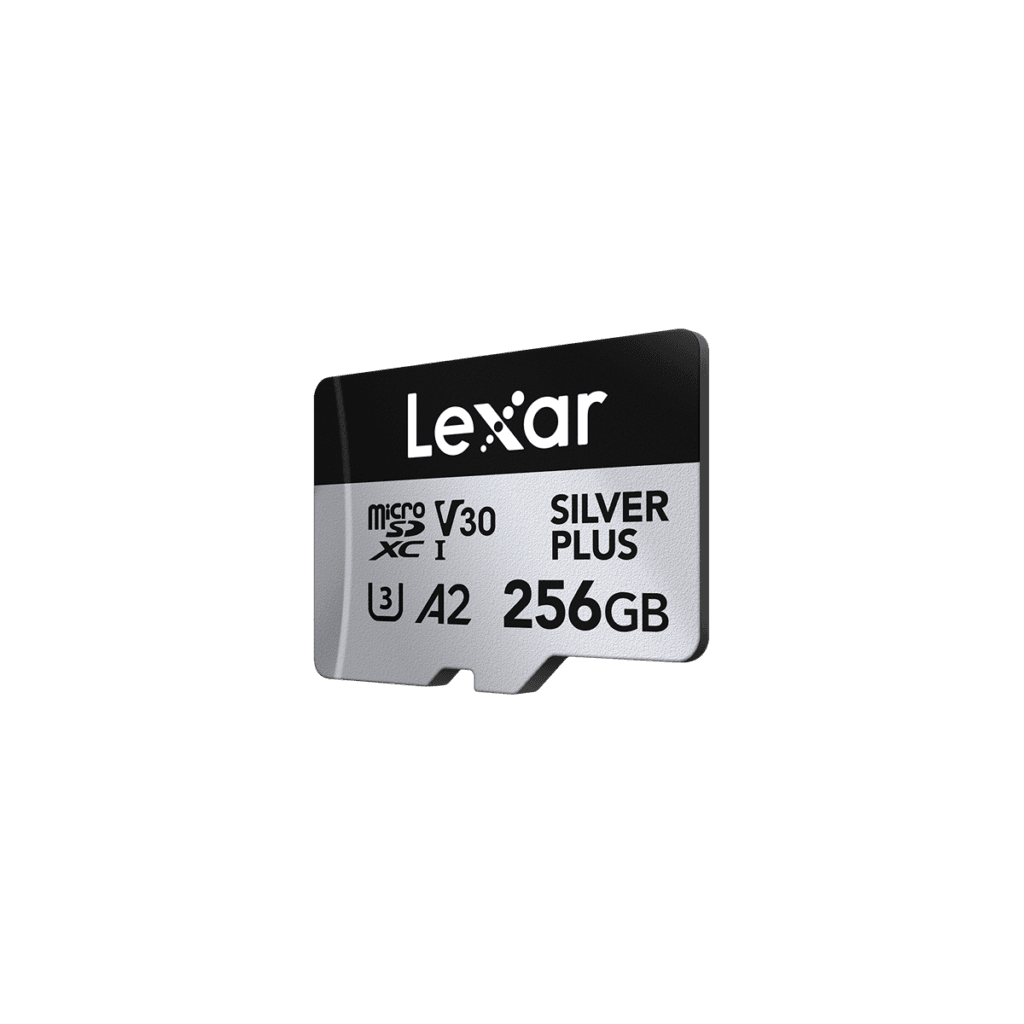
Speed Rating
| Speed Rating | Minimum write speed | Applicable Scenarios | Compatible models |
|---|---|---|---|
| C10/U1 | ≥10MB/s | Entry-level scenario: 720P video, regular photography, no need for high-speed continuous shooting. | Micro drones weighing less than 250 g |
| V30/U3 | ≥30MB/s | Mainstream scenarios: 1080P HD video, 4K/30fps video, and regular high-speed continuous shooting. | DJI Mini 5 Pro, Antigravity A1 |
| V60 | ≥60MB/s | 4K/60fps high bitrate video, 4K slow motion shooting | DJI Mavic series and other high-end consumer drones |
| V90 | ≥90MB/s | Flagship professional scenarios: 8K video, Cinema DNG RAW and other ultra-high definition and ultra-high bitrate video shooting | DJI Inspire series and other film and surveying-grade drones |
Size selection (matches shooting duration and video file size)
The storage capacity should be selected flexibly according to shooting needs:
- 64GBThis is the ideal choice for beginners, suitable for shooting 720P short videos with a micro drone, and occasional aerial photography for families. It can store 1-2 hours of ordinary footage at a time.
- 128GBIt has a mainstream consumer-grade capacity, capable of storing approximately 4 hours of footage, which can cover the needs of short-haul flight filming in a single day.
- 256GB (Highly Recommended): Consumer-grade models are the top choice, supporting approximately 8 hours of continuous recording, reducing the hassle of changing memory cards during flights.
- 512GB/1TBDesigned for professional-grade needs, it can store approximately 50 minutes of footage; suitable for professional film production or long-term work in remote locations.
Antigravity A1 Price
Due to policy subsidies, the Antigravity A1 is currently most affordable in mainland China. If you have the opportunity to visit mainland China, it is recommended to purchase it directly from an official offline store. Not only can you try it out, but the price is also the lowest. After subsidies, you can own this first 8K 360° panoramic drone for RMB 6,799 (approximately HKD 7,500).
In contrast, due to the impact of tariffs and import costs,Prices outside mainland China will be relatively higher.For example, the standard package in the United States costs [price missing].Starting from US$1,599The standard set is currently priced at [price missing] on the Hong Kong official website. HKD 9,999The official price and release date have not yet been announced on the Taiwan website.
If you wish to purchase the most reputable and convenient pipes, we recommend purchasing directly through the Antigravity A1 official website.Official purchases not only offer free shipping to over 60 countries worldwide, but also guarantee a full warranty and accessories. Click the link below to visit the official website for product details and purchase information.
Antigravity A1 VS DJI Avata 360
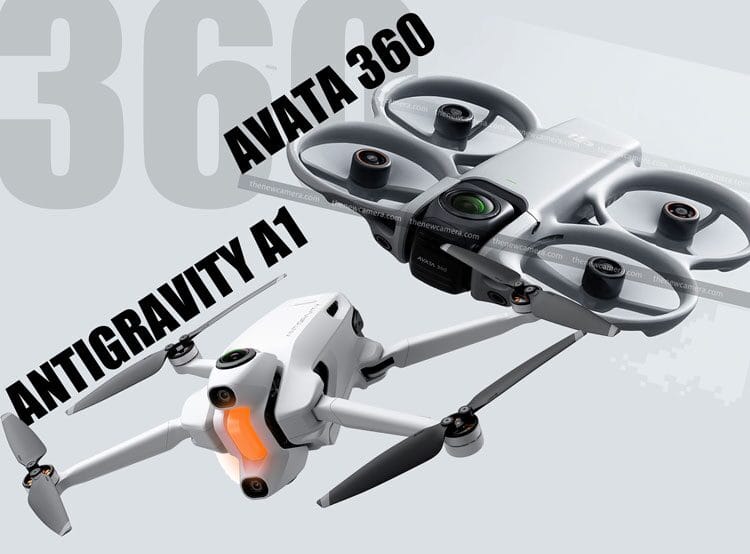
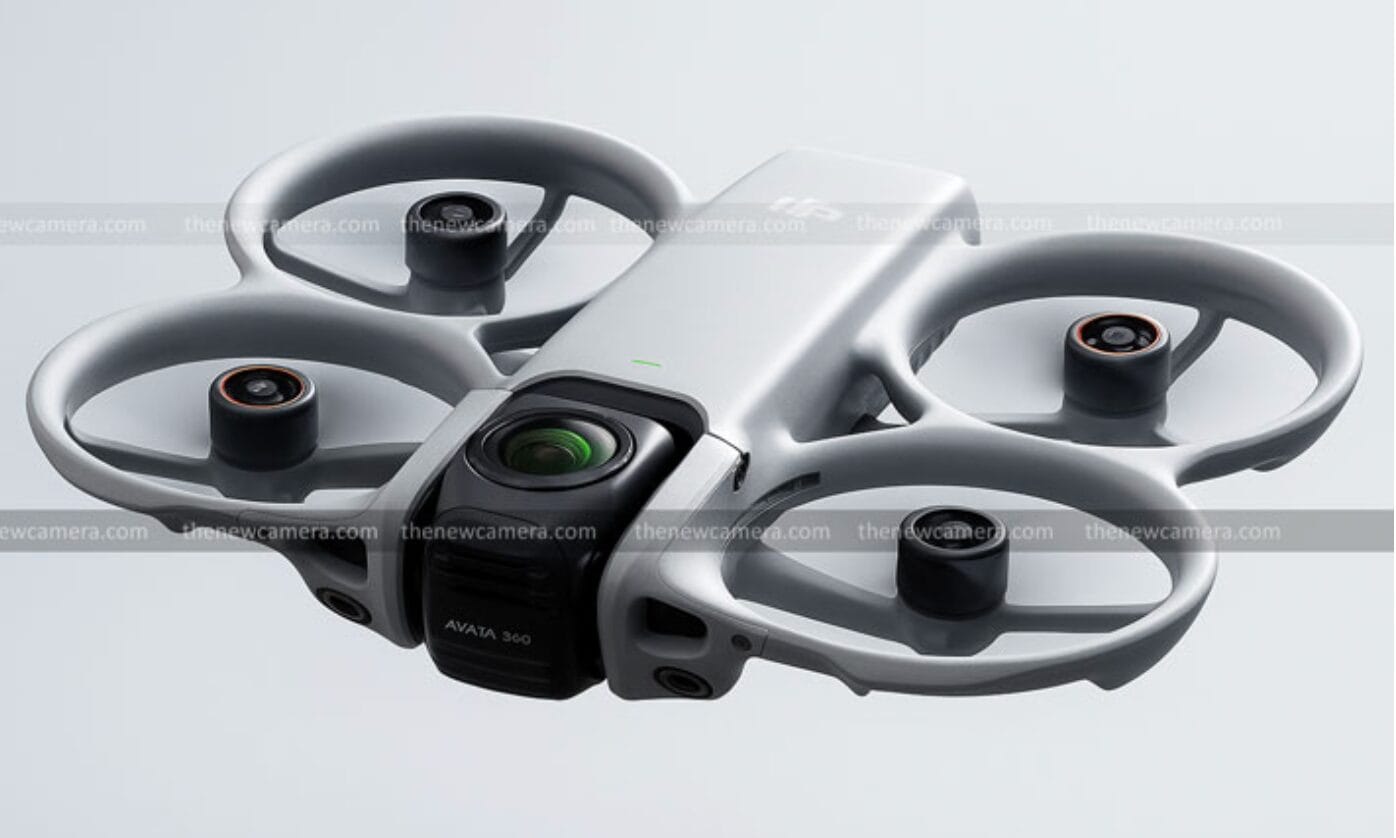
With the official launch of the Antigravity A1, the market response has been enthusiastic, and competitor DJI has clearly begun to make its moves. Recently, spy photos of DJI's first panoramic drone, the "DJI Avata 360," have been circulating online, indicating that a new round of competition is about to begin in the panoramic aerial photography market.
The following is a preliminary comparison of the core product highlights of the Antigravity A1 versus the DJI Avata 360. Rumors suggest the DJI Avata 360 may feature a large 1/1.1-inch image sensor, but this has not yet been officially confirmed. Based on currently available specifications, the DJI Avata 360's overall imaging specifications are quite similar to the DJI OSMO 360 action camera, especially in low-light performance and dynamic range. Thanks to its larger image sensor, it is expected to capture superior video.
| Insta360 Antigravity A1 | DJI Avata 360 | |
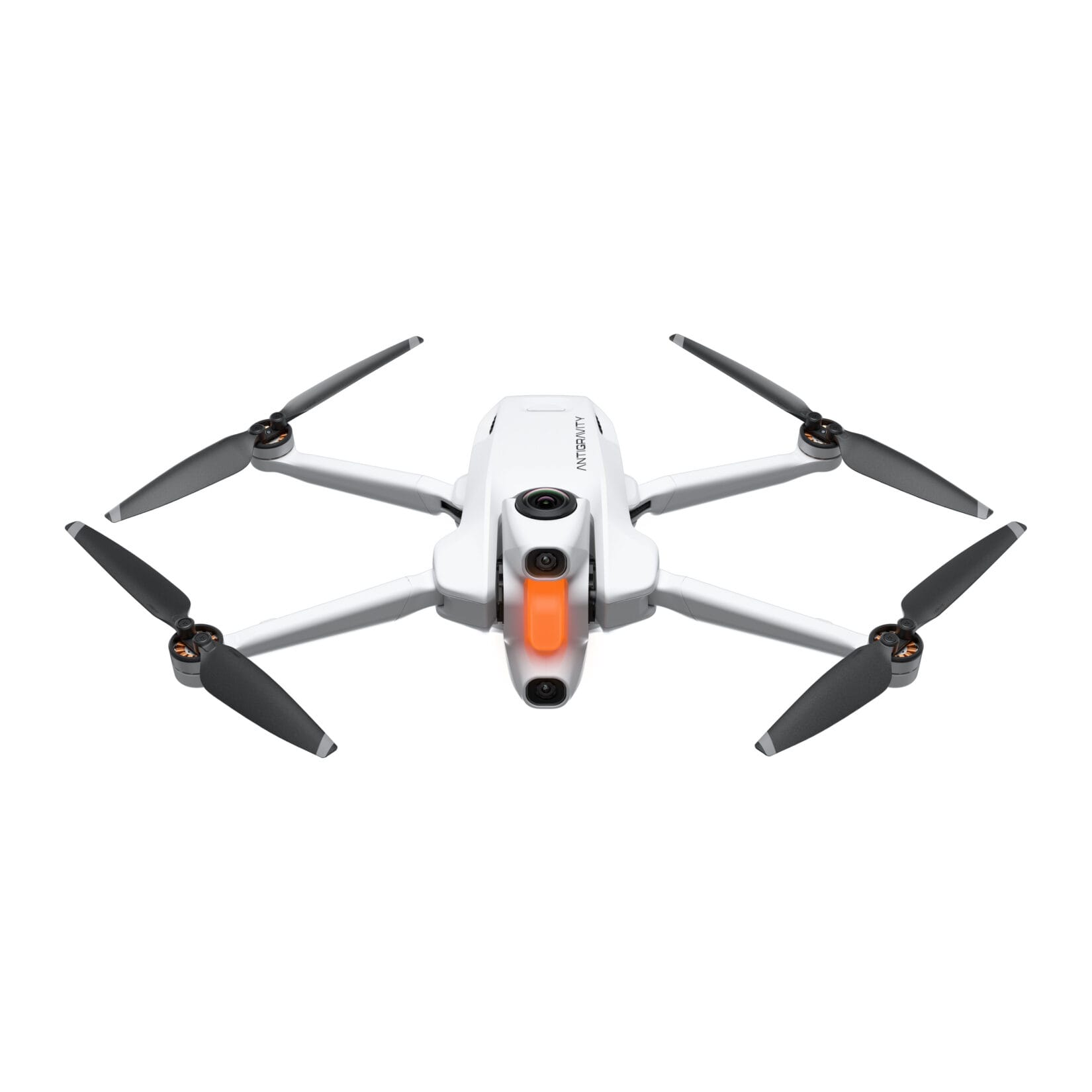 |  | |
| Weights | 249g | Not yet announced., Rumored to weigh approximately 377 grams, it requires flight registration and supports OcuSync 4.0 image transmission. Rumor has it that the weight is less than 250g. |
| sensor | Dual 1/1.28-inch fisheye lenses | Dual 1/1.1-inch CMOS sensors |
| resolution (of image, monitor etc) | 8K/30fps 360° (The image can be recomposed after flight) | 8K/50fps 360° 4K/120fps |
| Stability and earthquake resistance | Through artificial intelligence Computational and digital vibration damping technology Complete image stitching and achieve a stable effect.No mechanical gimbal required | useMechanical three-axis gimbal combined with digital anti-vibration technologyIt significantly reduces shaking during flight, ensuring extremely stable and smooth filming even during high-speed flight or in complex environments. |
| Battery life | Each battery lasts approximately 24 minutes. | Each battery lasts approximately 20 to 25 minutes (battery specifications have not yet been released). |
| Flight range | 10km | 10KM |
| Automatic return | ✅ | ✅ |
| Control method | Motion Grip controller + Vision glasses, Head-tracking FPV experience | Standard remote control + DJI Goggles glasses, Switchable between FPV and traditional remote control modes |
| Autonomous mode | Free movement (manual exploration) Payload detection | ActiveTrack, QuickShots, Waypoints |
| Price | Starting from US$1,599 | Not yet announced |
| release date | December 4 | December 2025 to January 2026 |
From a structural design perspective, I personally feel The DJI Avata 360's hardware configuration is also quite forward-thinking.Because its lens uses a mechanical gimbal design, it can be tilted or rotated according to the user's needs. According to leaks, the Avata 360 even supports shooting with a single lens in FPV mode, effectively giving it the dual identity of a traditional FPV drone and a 360° panoramic drone, thus broadening its application range. As for the price of the Avata 360, external predictions suggest it will be between 1099 and 1299 USD; DJI has not yet released any information.
Insta360 Buying Guide Conclusion
The emergence of the entirely new category of "panoramic drones" has broken down the functional boundaries between traditional action cameras and drones, enabling shooting experiences that neither can cover and expanding into richer usage scenarios. It is evident that in 2026, DJI and Insta360 will engage in fierce competition across multiple product lines—the former holding over 70% of the global drone market share, and the latter being the absolute champion in the panoramic camera field. Having firmly established themselves at the top of their respective sectors, both leading manufacturers have chosen to attack each other's areas of strength.
As a review blogger, I will also conduct in-depth testing and break down the core differences and advantages and disadvantages of the two products in detail. I will strive to help everyone accurately select the product that truly matches their needs through objective and detailed content.